Gear Coupling Types
Rokee is a Gear Coupling Manufacturer from China, design & custom-made gear coupling with reasonable price and high-end quality, learn more about gear coupling types information, please email us, Rokee's technical engineer will reply as soon as possible.
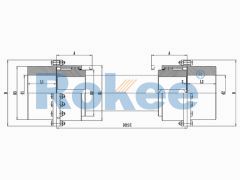
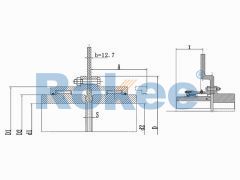
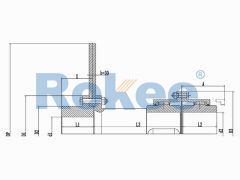
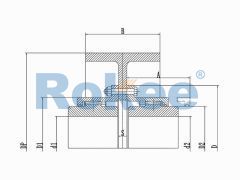
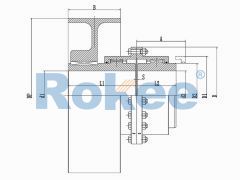
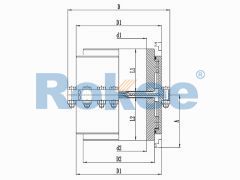
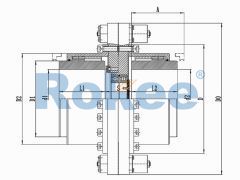
The Drum Gear Coupling is a specially designed advanced Gear Coupling. Its outer teeth are made into a sphere, with the center of the sphere on the axis of the gear. The teeth clearance is slightly larger than the general products and can transfer a greater torque and allow greater angular displacement, enjoying excellent performance and longer life.
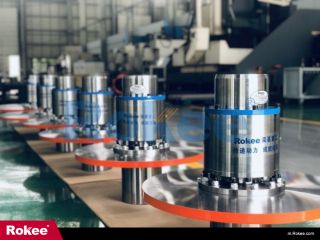


ROD Curved-tooth Gear Coupling is one of the transmission products with core technology independently developed by Rokee and has established and reported corporate technical standards in the country. By combining with the standard coupling technology of advanced countries such as Japan and Germany, we optimized many detailed dimensions, and adopted the toothed design with a large pressure angle and short shaft design for the shaft hole, which reduces the length-diameter ratio, and has a more compact structure and excellent speed performance.
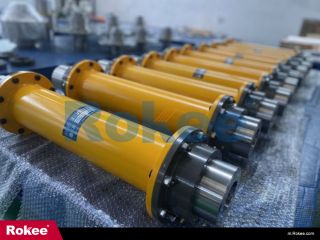


The bolts of similar types are standardized and the parts are universal. Compared with the national standard couplings, our Toothed Couplings can transfer more torque, with greatly reduced mass and small moment of inertia. It meets the European explosion-proof requirements and the comprehensive performance is greatly advanced. We highly recommend you to choose our Crown Gear Couplings for better transmission performance.
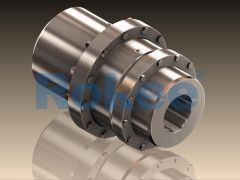
![Gear Coupling Types,RODA Drum Gear Coupling]()
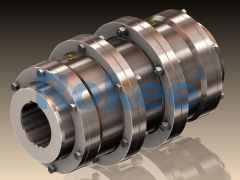
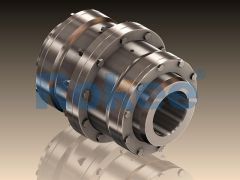
RODA Drum Gear Coupling
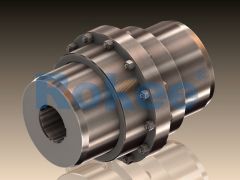
The RODA Drum Gear Coupling is the basic type of ROD series coupling, suitable for most situations where the compensation of transmission distance and motion position does not require special increase.![Gear Coupling Types,RODT Indirect Tube Drum Gear Coupling]()
RODT Indirect Tube Drum Gear Coupling
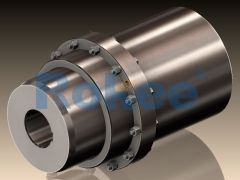
The RODT Drum Gear Coupling is an extended type of ROD series coupling, suitable for increasing transmission distance.![Gear Coupling Types,RODX Intermediate Shaft Drum Gear Coupling]()
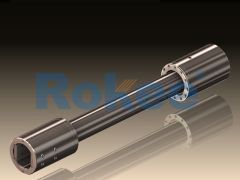
RODX Intermediate Shaft Drum Gear Coupling
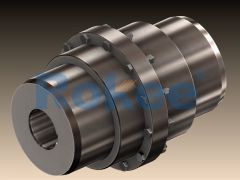
RODX Drum Gear Coupling is an extended type of ROD series coupling with a floating shaft design in the middle, suitable for increasing transmission distance.![Gear Coupling Types,RODP Brake Disc Drum Gear Coupling]()
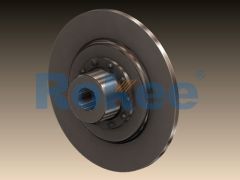
RODP Brake Disc Drum Gear Coupling
The RODP Drum Gear Coupling is a type of ROD series coupling with a brake disc, suitable for transmission situations where braking needs to be used in conjunction with disc brakes.![Gear Coupling Types,RODF Split Brake Disc Drum Gear Coupling]()
RODF Split Brake Disc Drum Gear Coupling
The RODF Drum Gear Coupling is a type of ROD series coupling with split brake discs, suitable for transmission situations where there is braking demand and the braking position changes when used in conjunction with disc brakes.![Gear Coupling Types,RODW Brake Wheel Drum Gear Coupling]()
RODW Brake Wheel Drum Gear Coupling
The RODW Drum Gear Coupling is a type of ROD series coupling with brake wheels, suitable for transmission situations where braking needs to be used in conjunction with wheel brakes.![Gear Coupling Types,RODU Brake Wheel Drum Gear Coupling]()
RODU Brake Wheel Drum Gear Coupling
The RODU Drum Gear Coupling is another type of ROD series coupling with brake wheels, suitable for transmission situations where braking needs to be used in conjunction with wheel brakes and applied to one end of the axle, achieving smoother and more reliable braking performance.![Gear Coupling Types,RODV Vertical Installation Drum Gear Coupling]()
RODV Vertical Installation Drum Gear Coupling
The RODV Drum Gear Coupling is a vertical installation type of the ROD series coupling, suitable for transmission situations that require vertical transmission torque.![Gear Coupling Types,RODM Torsion Protection Drum Gear Coupling]()
RODM Torsion Protection Drum Gear Coupling
The RODM Drum Gear Coupling is a torque setting form of the ROD series coupling. By adjusting relevant components, the maximum transmission torque can be easily set within a certain range. Suitable for shafting transmission situations that require safe torque operation to protect important machine components from excessive damage.
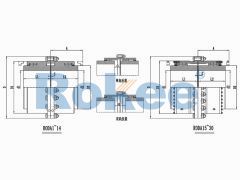
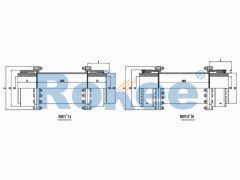
![Gear Coupling Types,GICL Drum Gear Coupling]()
GICL Drum Gear Coupling
GICL drum gear coupling has larger inner teeth width, which can transfer torque while compensating for larger axial displacement.![Gear Coupling Types,GICLZ Drum Gear Coupling]()
GICLZ Drum Gear Coupling
Half of the GICLZ drum gear coupling adopts a non-toothed semi-coupling sleeve structure, which is usually connected in pairs or used in occasions with small angular displacement.![Gear Coupling Types,GIICL Drum Gear Coupling]()
GIICL Drum Gear Coupling
GIICL drum gear coupling has small inner teeth width, which can transfer torque while compensating for small axial displacement. Also, its structure is compact and the moment of inertia is low.![Gear Coupling Types,GIICLZ Drum Gear Coupling]()
GIICLZ Drum Gear Coupling
Half of the GIICLZ drum gear coupling adopts a non-toothed semi-coupling sleeve structure, which is usually connected in pairs or used in occasions with small angular displacement. Also, its structure is compact and the moment of inertia is low.![Gear Coupling Types,GCLD Drum Gear Coupling]()
GCLD Drum Gear Coupling
GCLD drum gear coupling is generally used for direct connection with the motor, so it generally has a higher speed and compact structure.![Gear Coupling Types,NGCL Drum Gear Coupling]()
NGCL Drum Gear Coupling
NGCL drum gear coupling is designed with a brake wheel, suitable for situations where braking is required.![Gear Coupling Types,NGCLZ Drum Gear Coupling]()
NGCLZ Drum Gear Coupling
NGCLZ drum gear coupling is designed with a brake wheel, suitable for situations where braking is required. Half of its structure adopts a semi-coupling sleeve design, with smaller angular displacement compensation but more stable braking.![Gear Coupling Types,WG Drum Gear Coupling]()
WG Drum Gear Coupling
The overall characteristics of WG drum gear coupling are similar to those of other drum gear couplings, but with a larger modulus design, which can generally transmit greater torque.![Gear Coupling Types,WGZ Drum Gear Coupling]()
WGZ Drum Gear Coupling
WGZ drum gear coupling is designed with a brake wheel, suitable for shoe type braking.![Gear Coupling Types,WGP Drum Gear Coupling]()
WGP Drum Gear Coupling
WGP drum gear coupling is designed with a brake disc, suitable for disc type braking.![Gear Coupling Types,WGT Drum Gear Coupling]()
WGT Drum Gear Coupling
WGT drum gear coupling is designed with indirect tube, suitable for long distance torque transfer.![Gear Coupling Types,WGC Drum Gear Coupling]()
WGC Drum Gear Coupling
WGC drum gear coupling is specially designed for situations where vertical transmission is required, suitable for some vertical transmission systems.![Gear Coupling Types,WGJ Drum Gear Coupling]()
WGJ Drum Gear Coupling
WGJ drum gear coupling is designed with intermediate shaft, suitable for long distance torque transmission, and some are equipped with axial buffers.
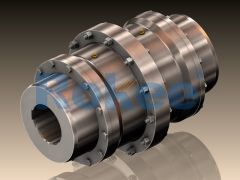
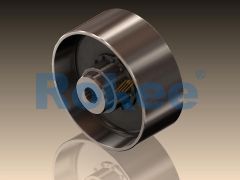
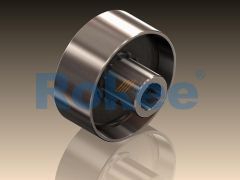
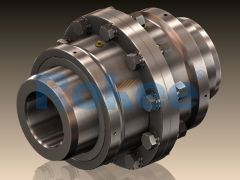
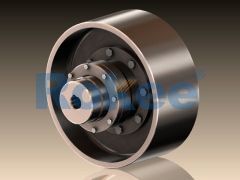
In the realm of mechanical power transmission, gear couplings stand out as robust and versatile components designed to connect rotating shafts while accommodating misalignments and transmitting high torque. Unlike other coupling types such as elastomeric or jaw couplings, gear couplings leverage the meshing of gear teeth to transfer power, making them ideal for heavy-duty industrial applications where reliability and torque capacity are paramount. The performance of a gear coupling is largely determined by its design type, which dictates its ability to handle misalignment, operational speed, and environmental conditions.
Fundamental Principles of Gear Couplings
Before delving into specific types, it is essential to understand the basic operating principles that unify all gear couplings. A standard gear coupling consists of two gear hubs, each attached to a shaft, and an outer sleeve (or cover) that encloses the meshing gears. The gear teeth on the hubs engage with corresponding teeth on the sleeve, creating a positive drive that efficiently transfers torque. To minimize friction and wear between the meshing surfaces, gear couplings require lubrication, typically in the form of grease or oil, which also helps dissipate heat generated during operation.
One of the key functions of gear couplings is to accommodate three types of misalignment between shafts: angular misalignment (where shafts intersect at an angle), parallel misalignment (where shafts are offset parallel to each other), and axial misalignment (where shafts move along their axial direction). The ability to handle these misalignments varies by type, with some designs optimized for specific misalignment scenarios. Additionally, gear couplings are known for their high torque density, meaning they can transmit large amounts of torque relative to their size, making them suitable for use in large industrial machinery such as pumps, compressors, and conveyors.
Primary Gear Coupling Types
Gear couplings are classified into several distinct types based on their gear design, sleeve configuration, and misalignment capabilities. The most common types include straight tooth gear couplings, curved tooth gear couplings, flexible gear couplings, rigid gear couplings, and split sleeve gear couplings. Each type has unique structural features that make it suitable for specific operational requirements, as detailed below.
1. Straight Tooth Gear Couplings
Straight tooth gear couplings, also known as spur gear couplings, are the simplest and most basic type of gear coupling. As the name suggests, these couplings feature straight gear teeth cut parallel to the axis of the shaft. The gear teeth on the hubs are designed to mesh with straight teeth on the outer sleeve, creating a direct and efficient torque transfer mechanism.
Structurally, a straight tooth gear coupling consists of two identical gear hubs with external straight teeth and a single outer sleeve with internal straight teeth. The hubs are mounted on the shafts using keys, set screws, or interference fits, ensuring a secure connection. The sleeve is typically bolted or clamped around the hubs to maintain engagement between the teeth. One of the defining characteristics of straight tooth gear couplings is their limited ability to accommodate misalignment. Due to the straight orientation of the teeth, they can handle only small amounts of angular misalignment (usually up to 1 degree) and minimal parallel misalignment. Axial misalignment is also limited, as the straight teeth do not allow for significant axial movement without causing excessive wear on the tooth surfaces.
Advantages of straight tooth gear couplings include their simplicity of design, ease of manufacturing, and lower cost compared to other gear coupling types. They are also highly efficient in torque transmission when shafts are properly aligned, making them suitable for applications where misalignment is minimal. Typical applications include small industrial pumps, fans, and light-duty conveyors, as well as in power transmission systems where cost is a primary consideration and operational conditions are relatively mild.
However, the limited misalignment capability of straight tooth gear couplings is a significant drawback. In applications where shaft misalignment is inevitable, such as in large machinery with thermal expansion or vibration, straight tooth couplings tend to experience rapid tooth wear, increased noise, and reduced service life. As a result, they are generally not recommended for heavy-duty or high-speed applications.
2. Curved Tooth Gear Couplings
Curved tooth gear couplings, also referred to as crowned tooth gear couplings, are an advanced variant of gear couplings designed to address the misalignment limitations of straight tooth types. The key difference lies in the tooth profile: the gear teeth on the hubs are curved (crowned) along their length, while the internal teeth on the sleeve are also curved to match the hub teeth profile.
The curved tooth design allows for greater flexibility in accommodating misalignment. The crowned teeth act like a spherical joint, enabling the hubs to pivot relative to the sleeve, thereby handling larger angular misalignments (up to 3 degrees or more, depending on the design). Additionally, the curved teeth distribute the load more evenly across the tooth surface, reducing stress concentrations and improving wear resistance. This even load distribution also enhances the coupling's ability to handle parallel misalignment, as the curved teeth can slide slightly relative to each other without excessive friction.
Structurally, curved tooth gear couplings are similar to straight tooth types, consisting of two gear hubs and an outer sleeve. However, the manufacturing process for curved teeth is more complex, involving specialized cutting tools and precision machining to ensure proper meshing between the hub and sleeve teeth. The sleeve may also be designed with split halves to facilitate installation and maintenance, particularly in large machinery where disassembling the entire shaft system is impractical.
Advantages of curved tooth gear couplings include their superior misalignment capability, higher torque capacity, and longer service life compared to straight tooth couplings. They are also quieter in operation, as the curved teeth mesh more smoothly than straight teeth, reducing noise and vibration. These characteristics make curved tooth gear couplings ideal for heavy-duty industrial applications, such as large compressors, turbines, rolling mills, and marine propulsion systems, where high torque transmission and significant misalignment are common.
The main disadvantage of curved tooth gear couplings is their higher cost, due to the complex manufacturing process. They also require regular lubrication and maintenance to ensure optimal performance, as the curved tooth surfaces are more susceptible to wear if lubrication is inadequate. However, the increased reliability and longer service life often offset the higher initial cost in industrial applications where downtime is costly.
3. Flexible Gear Couplings
Flexible gear couplings are a specialized type of gear coupling designed to maximize misalignment capability and dampen vibration. Unlike straight or curved tooth couplings, which rely on rigid gear meshing, flexible gear couplings incorporate additional flexible elements or modified gear designs to enhance flexibility.
One common design of flexible gear coupling features gear hubs with flexible teeth made from a resilient material, such as polyurethane or rubber, or a combination of metal and flexible materials. The flexible teeth absorb vibration and shock, reducing the transmission of noise and vibration to other components in the system. Another design uses a split sleeve with flexible segments that allow for greater misalignment while maintaining gear meshing. Some flexible gear couplings also incorporate bellows or diaphragms to accommodate axial misalignment and provide additional flexibility.
The key advantage of flexible gear couplings is their ability to handle large amounts of misalignment (both angular and parallel) and dampen vibration, making them suitable for applications where vibration is a concern, such as in diesel engines, electric motors with unbalanced rotors, and vibrating screens. They also offer better protection for connected equipment, as the flexible elements absorb shock loads and reduce stress on shafts and bearings.
However, flexible gear couplings have lower torque capacity compared to rigid curved tooth couplings, as the flexible elements are not as strong as solid metal gears. They also have a limited temperature range, as the flexible materials can degrade at high temperatures. Typical applications include medium-duty machinery, such as small generators, pumps, and agricultural equipment, where vibration dampening is more important than maximum torque transmission.
4. Rigid Gear Couplings
Rigid gear couplings are designed for applications where shaft alignment is precise and no misalignment is expected. Unlike flexible or curved tooth couplings, rigid gear couplings have no flexibility and are intended to maintain a fixed connection between two shafts. The gear teeth in rigid couplings are typically straight and mesh tightly, ensuring that the shafts rotate in perfect synchronization.
Structurally, rigid gear couplings consist of two gear hubs that are bolted directly together, eliminating the need for an outer sleeve. The gear teeth on the hubs mesh with each other, creating a rigid joint that transmits torque without any relative movement between the shafts. To ensure precise alignment, rigid gear couplings require careful installation, often using laser alignment tools to ensure that the shafts are coaxial.
Advantages of rigid gear couplings include their high torque capacity, compact design, and low maintenance requirements. Since there is no relative movement between the shafts, there is minimal wear on the gear teeth, resulting in a long service life. Rigid gear couplings are also highly efficient, as almost all of the input torque is transmitted to the output shaft without loss due to flexibility.
The primary limitation of rigid gear couplings is their inability to accommodate any misalignment. Even small amounts of angular or parallel misalignment can cause excessive stress on the shafts, bearings, and gear teeth, leading to premature failure. As a result, rigid gear couplings are only suitable for applications where shafts are permanently aligned and there is no thermal expansion or vibration that could cause misalignment. Typical applications include precision machinery, such as machine tools, optical equipment, and small electric motors where alignment is critical.
5. Split Sleeve Gear Couplings
Split sleeve gear couplings are a practical variant of gear couplings designed to simplify installation and maintenance. The key feature of these couplings is the split outer sleeve, which is divided into two or more halves that can be bolted together around the gear hubs. This design eliminates the need to disassemble the entire shaft system when installing or replacing the coupling, making them ideal for large machinery or applications where shaft access is limited.
Split sleeve gear couplings are available in both straight and curved tooth designs, combining the misalignment capabilities of their respective tooth profiles with the convenience of split sleeve installation. The split sleeve is typically made from high-strength steel to ensure durability and torque capacity, and the mating surfaces of the sleeve halves are precision machined to ensure a tight fit when bolted together.
Advantages of split sleeve gear couplings include ease of installation and maintenance, reduced downtime, and compatibility with a wide range of shaft sizes. They are particularly useful in industrial applications where large shafts are involved, such as in power plants, steel mills, and mining equipment, where disassembling the shaft system to install a traditional coupling would be time-consuming and costly. Additionally, split sleeve couplings can be easily inspected and lubricated without removing the shafts, further reducing maintenance time and costs.
Disadvantages of split sleeve gear couplings include slightly lower torque capacity compared to solid sleeve couplings, due to the presence of bolt holes and the split in the sleeve, which can create stress concentrations. However, this limitation is often offset by the convenience of installation and maintenance. Another consideration is the need for precise machining of the split sleeve halves to ensure proper meshing with the gear hubs, which can increase the manufacturing cost.
Factors to Consider When Selecting Gear Coupling Types
Selecting the appropriate gear coupling type for a specific application requires careful consideration of several key factors, including torque requirements, misalignment type and magnitude, operational speed, environmental conditions, and maintenance accessibility. The following guidelines can help in the selection process:
- Torque Capacity: The coupling must be capable of transmitting the maximum torque generated by the driving shaft without failure. Curved tooth and rigid gear couplings are best suited for high torque applications, while flexible gear couplings are more suitable for medium torque requirements.
- Misalignment Requirements: Applications with significant angular or parallel misalignment should use curved tooth or flexible gear couplings, while applications with precise alignment can use straight tooth or rigid couplings.
- Operational Speed: High-speed applications require couplings with smooth gear meshing to reduce vibration and noise. Curved tooth couplings are preferred for high-speed operation, as their curved teeth mesh more smoothly than straight teeth.
- Environmental Conditions: Couplings used in harsh environments, such as high temperatures, corrosive substances, or dusty conditions, require materials and lubrication that can withstand these conditions. Split sleeve couplings may be easier to maintain in such environments, as they can be inspected and lubricated without disassembly.
- Maintenance Accessibility: Applications where shaft access is limited should use split sleeve couplings to simplify installation and maintenance. Straight tooth couplings are easier to maintain than curved tooth couplings due to their simpler design.
Maintenance and Care of Gear Couplings
Proper maintenance is essential to ensure the long service life and reliable performance of gear couplings, regardless of type. Key maintenance practices include regular lubrication, alignment checks, and inspection for wear or damage.
Lubrication is critical to reduce friction between the meshing gear teeth and prevent wear. The type of lubricant (grease or oil) should be selected based on the operating temperature, speed, and environmental conditions. Lubrication intervals should be followed strictly, and the coupling should be cleaned before re-lubrication to remove any debris or old lubricant that could cause abrasion.
Alignment checks are important to ensure that the shafts remain properly aligned during operation. Misalignment can cause excessive wear on the gear teeth, bearings, and shafts, leading to premature failure. Laser alignment tools are recommended for precise alignment, particularly for high-speed or high-torque applications.
Regular inspection of the coupling components is also essential. The gear teeth should be checked for signs of wear, pitting, or chipping, which can indicate misalignment, inadequate lubrication, or overload. The sleeve and hubs should be inspected for cracks or deformation, and the bolts or set screws should be checked for tightness.
Conclusion
Gear couplings are essential components in mechanical power transmission systems, offering high torque capacity and the ability to accommodate misalignment. The selection of the appropriate gear coupling type depends on the specific requirements of the application, including torque transmission needs, misalignment capabilities, operational speed, and maintenance accessibility. Straight tooth gear couplings are ideal for cost-sensitive, low-misalignment applications, while curved tooth couplings excel in heavy-duty, high-misalignment scenarios. Flexible gear couplings are preferred for vibration-dampening requirements, rigid couplings for precise alignment, and split sleeve couplings for easy installation and maintenance.
By understanding the characteristics and applications of each gear coupling type, engineers and industry professionals can make informed decisions that optimize the performance, reliability, and service life of power transmission systems. Proper maintenance, including regular lubrication, alignment checks, and inspections, further ensures that gear couplings operate efficiently and effectively, minimizing downtime and reducing maintenance costs. As industrial machinery continues to evolve, gear couplings will remain a critical component, with ongoing advancements in design and materials further enhancing their capabilities and performance.
« Gear Coupling Types » Post Date: 2023/10/13
URL: https://www.rokeecoupling.com/en/blog/gear-coupling-types.html
Tags: Internal Gear Couplings, Flexible Gear Couplings, Rubber Gear Coupling, Brake Drum Gear Coupling, Crown Gear Couplings, Curved-tooth Gear Couplings, Flange Gear Coupling, Face Gear Couplings, Crown Gear Coupling, pu sandwich panel line
- Gear Coupling Brake Wheel For Sale
- Stiffness of Crown Gear Coupling
- Curved-tooth Gear Coupling Use
- Tooth Block Type Of End Face Gear Coupling
- Buy Drum Gear Coupling Wholesale
- Internal Gear Coupling Customized
- Flange Gear Coupling Efficiency
- Shearing Gear Coupling
- Flange Gear Coupling Application
- Gap Chart of Crown Gear Couplings