Flexible Couplings
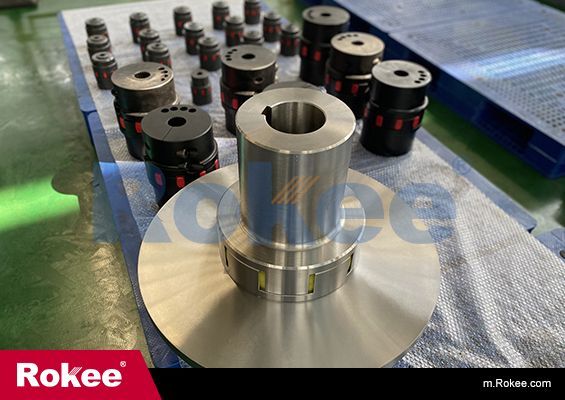
Rokee® is Flexible Couplings Supplier from China, Support Customization and Export, due to excellent quality, complete technical services and superior cost performance, Rokee® Flexible Couplings have been serving more than 60 countries and regions in the world, effectively operating in many corners of the world.
Flexible Coupling misalignment is expressed, as an order of magnitude, in thousandths of an inch. Actual misalignment, expressed in coupling terms, is angular in nature and expressed in angular units, that is, degrees. Flexible Couplings are one of the major types of couplings. They find use to connect two shafts, end-to-end in the same line to transmit power that is torque from one shaft to another, thereby causing both to rotate in unison, at the same rpm.
-
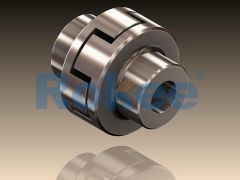
LM Plum-shaped Flexible Coupling
LM Plum-shaped Flexible Coupling is the basic form of this series of couplings. -
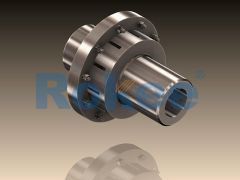
LMD Plum-shaped Flexible Coupling
LMD Plum-shaped Flexible Coupling is added with transition connection, which eliminates the need of axially moving the semi-coupling when replacing the elastomer. -
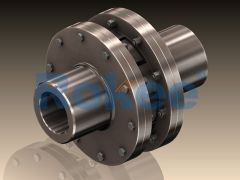
LMS Plum-shaped Flexible Coupling
LMS Plum-shaped Flexible Coupling adopts double transition flange connection, which eliminates the need of axially moving the semi-coupling when replacing the elastomer. -
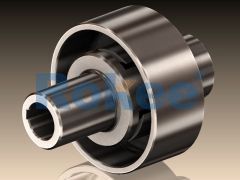
LMZ-I Plum-shaped Flexible Coupling
LMZ-I Plum-shaped Flexible Coupling adopts split brake wheel design, suitable for situations where braking is required. -
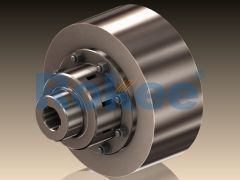
LMZ-II Plum-shaped Flexible Coupling
LMZ-II Plum-shaped Flexible Coupling adopts integral brake wheel design, suitable for situations where braking is required. -
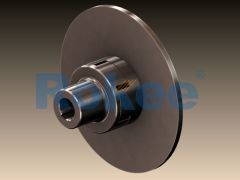
LMPK Plum-shaped Flexible Coupling
LMPK Plum-shaped Flexible Coupling adopts split brake disc design, suitable for situations where braking is required and eliminating the need of axially moving the semi-coupling when replacing the elastomer. -
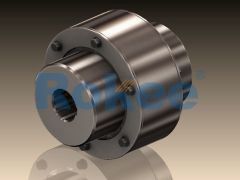
LZ/ZL Pin Gear Coupling
LZ Pin Gear Coupling is the basic form of this series of couplings. -
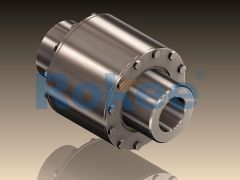
LZD/ZLD Pin Gear Coupling
One end of the LZD Pin Gear Coupling is designed with a conical shaft hole, and the clearance between the semi-couplings is increased to facilitate the fixing space at the shaft end. -
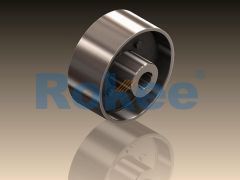
LZZ/ZLL Pin Gear Coupling
LZZ Pin Gear Coupling is designed with a brake wheel, suitable for situations where braking is required. -
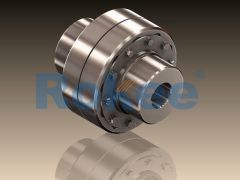
LX(HL) Flexible Pin Coupling
LX(HL) Flexible Pin Coupling is the basic form of this series of couplings. -
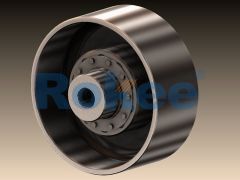
LXZ(HLL) Flexible Pin Coupling
LXZ(HLL) Flexible Pin Coupling is designed with a brake wheel, suitable for situations where braking is required. -
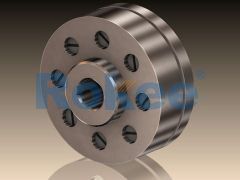
LT/TL Elastic Sleeve Pin Coupling
LT/TL Elastic Sleeve Pin Coupling is the basic form of this series of couplings. -
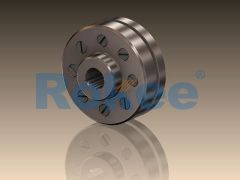
LTZ/TLL Elastic Sleeve Pin Coupling
LTZ/TLL Elastic Sleeve Pin Coupling is designed with a brake wheel, suitable for situations where braking is required. -
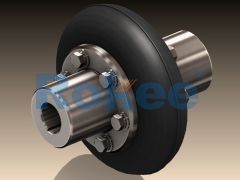
UL Elastic Tyre Coupling
UL Tyre Coupling adopts the structure of vulcanizing and bonding the tyre body with the metal connecting plate with threaded holes, which is then directly connected to the two semi-couplings by bolts for torque transmission and other displacement compensation. -
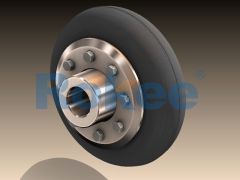
LLA Elastic Tyre Coupling
The LLA Tyre Coupling uses two semi-couplings to connect both sides of the elastic tyre body through internal pressing plates and bolts, making it easy to replace the elastic tyre body. -
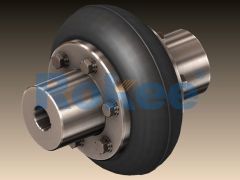
LLB Elastic Tyre Coupling
In the realm of mechanical power transmission, the ability to efficiently transfer rotational motion between shafts while accommodating misalignments and mitigating vibrations is paramount. Among the various components designed to fulfill this critical function, flexible couplings stand out as indispensable elements in countless industrial, automotive, and aerospace systems. Unlike rigid couplings, which require precise alignment of connected shafts and offer no tolerance for deviation, flexible couplings introduce a degree of elasticity that allows for relative movement between shafts, thereby protecting machinery from excessive stress, reducing wear, and enhancing overall system reliability.
1. Fundamental Principles of Flexible Couplings
At its core, a flexible coupling serves two primary purposes: transmitting torque from a driving shaft (e.g., from an electric motor, engine, or turbine) to a driven shaft (e.g., to a pump, gearbox, or conveyor) and accommodating misalignments between the two shafts. Misalignments in rotating machinery can arise from a variety of factors, including installation errors, thermal expansion and contraction during operation, structural deflection under load, and wear of supporting components such as bearings. Left unaddressed, these misalignments can lead to increased friction, excessive vibration, premature failure of bearings and seals, and even catastrophic damage to the connected machinery.
Flexible couplings address this challenge by incorporating elastic or flexible elements that can deform slightly under load, allowing for three main types of misalignment: angular misalignment (where the shafts are inclined relative to each other), parallel misalignment (where the shafts are offset but parallel), and axial misalignment (where the shafts move along their axial direction). In addition to accommodating misalignments, many flexible couplings also possess damping properties, which help to absorb shock loads and reduce the transmission of vibrations from the driving shaft to the driven shaft. This vibration damping capability is particularly valuable in systems where the driving source (such as an internal combustion engine) generates significant torsional vibrations, as it helps to stabilize the system and extend the lifespan of sensitive components.
The torque transmission capability of a flexible coupling is determined by the strength and design of its flexible elements and the material from which they are made. The flexible elements must be able to withstand the torsional forces exerted during operation without permanent deformation or failure.同时, the coupling must be designed to maintain its flexibility over an extended period, even under cyclic loading conditions, to ensure consistent performance.
2. Common Types of Flexible Couplings
Flexible couplings are available in a wide range of designs, each tailored to specific application requirements such as torque capacity, misalignment tolerance, operating speed, environmental conditions, and cost. The following are some of the most widely used types, categorized based on their flexible element design:
2.1 Elastomeric Couplings
Elastomeric couplings are among the most common types of flexible couplings, characterized by the use of an elastomeric (rubber or polymer) element that serves as the flexible medium. The elastomeric element is typically bonded or clamped between two metal hubs, which are attached to the driving and driven shafts. The elastomer material provides both flexibility and vibration damping, making these couplings suitable for a wide range of industrial applications.
One of the most popular subtypes of elastomeric couplings is the jaw coupling. Jaw couplings consist of two hubs with protruding "jaws" that interlock with each other, with an elastomeric spider (a star-shaped element) placed between the jaws. The spider absorbs misalignments and vibrations, while the jaws transmit torque. Jaw couplings are known for their simplicity, compact design, and ease of installation and maintenance. They are commonly used in applications such as electric motors, pumps, compressors, and conveyors, where moderate torque and misalignment requirements exist.
Another common elastomeric coupling is the tire coupling, which uses a flexible tire-shaped elastomeric element to connect the two hubs. Tire couplings offer high misalignment tolerance, particularly for angular and parallel misalignments, and excellent vibration damping. They are often used in heavy-duty applications such as industrial fans, crushers, and large pumps, where shock loads and significant misalignments may occur. The elastomeric tire can be easily replaced when worn, making maintenance straightforward.
2.2 Metallic Flexible Couplings
Metallic flexible couplings use metal components (such as springs, diaphragms, or bellows) as the flexible elements. These couplings are typically used in applications where high torque capacity, high operating temperatures, or resistance to harsh environmental conditions (such as chemicals or extreme temperatures) is required. Unlike elastomeric couplings, metallic flexible couplings do not degrade over time due to material fatigue from exposure to oils or chemicals, making them suitable for long-term use in demanding environments.
Diaphragm couplings are a common type of metallic flexible coupling. They consist of one or more thin metal diaphragms (usually made of stainless steel) that are bolted to the hubs of the driving and driven shafts. The diaphragms flex to accommodate misalignments while transmitting torque. Diaphragm couplings offer high precision and are capable of transmitting torque without backlash, making them ideal for applications such as precision machinery, aerospace systems, and high-speed rotating equipment (such as gas turbines). They also have the advantage of not requiring lubrication, which reduces maintenance requirements.
Bellows couplings are another type of metallic flexible coupling, featuring a metallic bellows (a cylindrical, corrugated tube) as the flexible element. The bellows is welded or brazed to the hubs, providing flexibility in all three axes (angular, parallel, and axial). Bellows couplings are known for their high axial misalignment capacity and are often used in applications where significant axial movement between shafts is expected, such as in hydraulic systems or machinery with thermal expansion/contraction. Like diaphragm couplings, bellows couplings are backlash-free and require no lubrication.
2.3 Grid Couplings
Grid couplings consist of two hubs with serrated outer surfaces and a flexible steel grid that fits into the serrations of both hubs. The grid acts as the flexible element, transmitting torque while accommodating misalignments and absorbing shock loads. Grid couplings are known for their high torque capacity and durability, making them suitable for heavy-duty industrial applications such as steel mills, mining equipment, and large gearboxes. They require periodic lubrication to reduce friction and wear between the grid and the hubs, which is a key maintenance consideration.
3. Key Applications of Flexible Couplings
Flexible couplings find applications across a broad spectrum of industries, ranging from small-scale household appliances to large-scale industrial machinery and aerospace systems. Their ability to accommodate misalignments, dampen vibrations, and transmit torque efficiently makes them versatile components in any system involving rotational power transmission. The following are some of the key application areas:
3.1 Industrial Machinery
In industrial settings, flexible couplings are used in a wide range of equipment, including pumps, compressors, fans, conveyors, mixers, and crushers. For example, in pump systems, flexible couplings connect the electric motor to the pump shaft, accommodating any misalignments that may occur during installation or operation and reducing vibration, which helps to prevent premature failure of the pump's bearings and seals. In conveyor systems, grid couplings or tire couplings are often used to transmit torque from the drive motor to the conveyor rollers, as they can withstand the shock loads and misalignments that are common in these applications.
3.2 Automotive Industry
The automotive industry relies heavily on flexible couplings for various applications, such as connecting the engine to the transmission (via the drive shaft) and connecting the transmission to the differential. In rear-wheel-drive vehicles, for example, a flexible coupling (often a universal joint or a constant velocity joint, which are specialized types of flexible couplings) is used in the drive shaft to accommodate the angular misalignment between the transmission and the differential as the vehicle's suspension moves. These couplings ensure smooth power transmission even when the vehicle is turning or traveling over uneven terrain. Additionally, flexible couplings are used in auxiliary systems such as power steering pumps and air conditioning compressors.
3.3 Aerospace and Defense
In aerospace and defense applications, where reliability, precision, and lightweight design are critical, metallic flexible couplings (such as diaphragm or bellows couplings) are widely used. For example, in aircraft engines, diaphragm couplings connect the turbine to the gearbox, transmitting high torque at high speeds while accommodating minimal misalignments and ensuring backlash-free operation. In missile systems and satellite components, flexible couplings are used to transmit torque between rotating parts while withstanding the extreme environmental conditions (such as high temperatures and vacuum) encountered in space.
3.4 Renewable Energy Systems
Renewable energy systems, such as wind turbines and solar tracking systems, also rely on flexible couplings. In wind turbines, for example, flexible couplings connect the rotor to the gearbox and the gearbox to the generator. These couplings must accommodate the significant misalignments that occur due to the wind load and the deflection of the turbine tower, while also transmitting high torque. Metallic flexible couplings, such as diaphragm or bellows couplings, are often used in these applications due to their high reliability and resistance to harsh environmental conditions (such as wind, rain, and temperature fluctuations).
3.5 Household and Commercial Appliances
Flexible couplings are also present in many household and commercial appliances, such as washing machines, dryers, and air conditioners. In a washing machine, for example, a small elastomeric coupling connects the motor to the drum, accommodating misalignments and reducing vibration during the spin cycle. These couplings are typically low-cost, compact, and designed for quiet operation, making them suitable for residential and commercial use.
4. Selection Criteria for Flexible Couplings
Selecting the appropriate flexible coupling for a given application requires careful consideration of several key factors. The following are the most important criteria to consider during the selection process:
4.1 Torque Capacity
The primary function of a coupling is to transmit torque, so the first and most critical factor to consider is the torque capacity of the coupling. The coupling must be able to handle the maximum torque generated by the driving source, as well as any peak or shock torques that may occur during operation. Oversizing or undersizing the coupling can lead to premature failure or unnecessary cost. It is important to calculate the actual torque requirements of the system, including factors such as the power of the driving motor, the operating speed, and the load characteristics of the driven equipment.
4.2 Misalignment Tolerance
The type and magnitude of misalignment expected between the driving and driven shafts is another key factor in coupling selection. Different types of couplings have varying levels of tolerance for angular, parallel, and axial misalignments. For example, tire couplings and bellows couplings offer high misalignment tolerance, while jaw couplings are better suited for moderate misalignments. It is important to measure or estimate the maximum misalignment that may occur during installation and operation, and select a coupling that can accommodate these misalignments without excessive stress or wear.
4.3 Operating Speed
The operating speed of the shafts (measured in revolutions per minute, RPM) is an important consideration, as high-speed applications require couplings that can maintain balance and stability to avoid excessive vibration. Metallic flexible couplings, such as diaphragm and bellows couplings, are typically better suited for high-speed applications due to their rigid construction and lack of backlash. Elastomeric couplings may be limited in high-speed applications due to the potential for the elastomeric element to degrade or fail under centrifugal forces.
4.4 Environmental Conditions
The environmental conditions in which the coupling will operate can have a significant impact on its performance and lifespan. Factors such as temperature, humidity, exposure to chemicals (such as oils, solvents, or corrosive substances), and dust or debris can affect the choice of coupling material and design. For example, in high-temperature applications (such as near industrial furnaces or aircraft engines), metallic couplings are preferred over elastomeric couplings, as elastomers can degrade at high temperatures. In corrosive environments (such as marine or chemical processing applications), stainless steel or corrosion-resistant alloys should be used for the coupling components.
4.5 Maintenance Requirements
The maintenance requirements of the coupling should also be considered, particularly in applications where downtime is costly. Some couplings, such as diaphragm and bellows couplings, require no lubrication and have minimal maintenance needs, making them ideal for remote or hard-to-access locations. Other couplings, such as grid couplings, require periodic lubrication to reduce wear, which adds to the maintenance workload. Additionally, the ease of replacing worn components (such as the elastomeric spider in jaw couplings or the grid in grid couplings) should be considered when selecting a coupling.
4.6 Cost and Availability
Cost is always a consideration in any engineering application, and flexible couplings vary widely in price depending on their design, material, and torque capacity. Elastomeric couplings (such as jaw couplings) are generally the most cost-effective option for moderate applications, while metallic couplings (such as diaphragm and bellows couplings) are more expensive but offer higher performance and durability. It is important to balance cost with performance requirements to select the most appropriate coupling for the application. Additionally, the availability of replacement parts should be considered to ensure that the coupling can be maintained or repaired quickly if necessary.
5. Maintenance Practices for Flexible Couplings
Proper maintenance is essential to ensure the long-term performance and reliability of flexible couplings. Neglecting maintenance can lead to premature failure of the coupling, which can result in costly downtime and damage to other components in the system. The following are some key maintenance practices for flexible couplings:
5.1 Regular Inspection
Regular visual inspections are the first line of defense in detecting potential issues with flexible couplings. Inspections should be conducted periodically (depending on the application and operating conditions) to check for signs of wear, damage, or misalignment. Key items to inspect include: the flexible element (for cracks, tears, or degradation), the hubs and fasteners (for looseness or corrosion), and the shafts (for misalignment or excessive vibration). In addition to visual inspections, vibration analysis can be used to detect early signs of coupling wear or misalignment, particularly in high-speed or critical applications.
5.2 Lubrication
Couplings that require lubrication (such as grid couplings) should be lubricated regularly according to the manufacturer's recommendations. The type and amount of lubricant used should be appropriate for the operating conditions (such as temperature and load). Over-lubrication or under-lubrication can lead to increased friction, wear, and overheating. It is also important to ensure that the lubricant does not come into contact with elastomeric elements, as this can cause degradation of the elastomer.
5.3 Alignment Checks
Proper alignment of the driving and driven shafts is critical to the performance of flexible couplings. Even though flexible couplings can accommodate misalignments, excessive or persistent misalignment can lead to premature wear of the coupling and other components (such as bearings and seals). Alignment checks should be conducted during installation and periodically during operation, particularly after any maintenance work or changes to the system. Various tools can be used to check alignment, including straightedges, dial indicators, and laser alignment tools (which offer the highest precision).
5.4 Replacement of Worn Components
Worn or damaged components (such as the elastomeric spider in jaw couplings, the grid in grid couplings, or the diaphragms in diaphragm couplings) should be replaced promptly to prevent further damage to the coupling or the connected machinery. When replacing components, it is important to use genuine replacement parts that are compatible with the coupling model, as using non-genuine parts can affect the performance and reliability of the coupling.
5.5 Environmental Protection
In harsh environmental conditions, it is important to protect the coupling from exposure to chemicals, dust, debris, and extreme temperatures. This can be achieved by installing protective covers or shields around the coupling, or by selecting a coupling with appropriate material coatings (such as corrosion-resistant coatings for marine applications). Regular cleaning of the coupling can also help to prevent the buildup of debris, which can cause friction and wear.
6. Conclusion
Flexible couplings play a vital role in modern mechanical systems, enabling efficient power transmission while accommodating misalignments and mitigating vibrations. Their versatility and adaptability make them indispensable across a wide range of industries, from industrial machinery and automotive systems to aerospace and renewable energy applications. By understanding the fundamental principles, common types, selection criteria, and maintenance practices of flexible couplings, engineers and maintenance professionals can ensure that the right coupling is selected for each application, maximizing system reliability, minimizing downtime, and extending the lifespan of machinery.
As technology continues to advance, the design and materials of flexible couplings are also evolving, with ongoing efforts to improve torque capacity, misalignment tolerance, and durability while reducing weight and cost. Whether in a small household appliance or a large industrial turbine, flexible couplings will remain a critical component in power transmission systems for years to come, contributing to the efficiency and reliability of modern technology.
« Flexible Couplings » Post Date: 2023/8/18
URL: https://www.rokeecoupling.com/en/tags/flexible-couplings.html
- 2024-07-01High Quality Jaw Flexible Couplings
- 2024-07-01Installation of Jaw Flexible Coupling
- 2024-07-01Jaw Flexible Coupling Advantages
- 2024-07-01Jaw Flexible Coupling Assembly Drawing
- 2024-07-01Jaw Flexible Coupling Calculation
- 2024-07-01Jaw Flexible Coupling Design
- 2024-07-01Jaw Flexible Coupling Pictures
- 2024-07-01Jaw Flexible Coupling Price
- 2024-07-01Jaw Flexible Coupling Sales
- 2024-07-01Jaw Flexible Coupling Standard Sizes
- 2024-07-01Jaw Flexible Couplings Factory
- 2024-07-01Jaw Flexible Couplings For Sale
- 2024-07-01Lubrication of Jaw Flexible Coupling
- 2024-07-01Machine Drawing of Jaw Flexible Couplings
- 2024-07-01Maintenance of Jaw Flexible Coupling
- 2024-07-01Misalignment Tolerance of Jaw Flexible Coupling
- 2024-06-18Gap Chart of Jaw Flexible Couplings
- 2024-06-18Function of Jaw Flexible Couplings
- 2024-06-18Exploded View of Jaw Flexible Couplings
- 2024-06-18Disadvantages of Jaw Flexible Coupling
- 2024-06-18Customized Jaw Flexible Couplings
- 2024-06-18Components of Jaw Flexible Coupling
- 2024-06-18Coaxiality of Jaw Flexible Coupling
- 2024-06-18Application of Jaw Flexible Couplings
- 2024-06-18Angle of Jaw Flexible Coupling
- 2024-06-18Alignment of Jaw Flexible Coupling
- 2024-06-12Parts of Jaw Flexible Coupling
- 2024-06-12Procurement of Jaw Flexible Coupling
- 2024-06-12Size Calculation of Jaw Flexible Coupling
- 2024-06-12Size Chart of Jaw Flexible Couplings
- 2024-06-12Specifications of Jaw Flexible Coupling
- 2024-06-12Stiffness of Jaw Flexible Coupling
- 2024-06-12Tagging of Jaw Flexible Coupling
- 2024-06-12Torque of Jaw Flexible Coupling
- 2024-06-12Types of Jaw Flexible Coupling
- 2024-06-07Grease of Jaw Flexible Coupling
- 2024-06-07Structural Diagram of Jaw Flexible Couplings
- 2024-06-07Jaw Flexible Couplings Manufacturer
- 2024-06-07Purpose of Jaw Flexible Couplings
- 2024-06-07Uses of Jaw Flexible Couplings
- 2024-06-07Jaw Flexible Couplings Wholesale
- 2024-06-07Jaw Flexible Couplings Drawing
- 2024-06-07Jaw Flexible Coupling Manufacturing
- 2024-06-07Classification of Jaw Flexible Couplings
- 2024-06-07Engineering Drawing of Jaw Flexible Couplings
- 2024-06-04Working Principle of Jaw Flexible Coupling
- 2024-06-04Material of Jaw Flexible Coupling
- 2024-06-043D Model of Jaw Flexible Couplings
- 2024-06-04Catalogue of Jaw Flexible Couplings
- 2024-06-04Efficiency of Jaw Flexible Coupling
- 2024-06-04Jaw Flexible Coupling Brands
- 2024-06-04Jaw Flexible Couplings Company
- 2024-06-04Supply of Jaw Flexible Couplings
- 2024-06-04Schematic Diagram of Jaw Flexible Couplings
- 2024-06-04Jaw Flexible Coupling Models
- 2024-06-04High Performance Jaw Flexible Couplings
- 2024-06-04Jaw Flexible Couplings Supplier
- 2024-05-20Specifications of Bush Pin Type Flexible Coupling
- 2024-05-20Size Chart of Bush Pin Type Flexible Couplings
- 2024-05-20Size Calculation of Bush Pin Type Flexible Coupling
- 2024-05-20Schematic Diagram of Bush Pin Type Flexible Couplings
- 2024-05-20Purpose of Bush Pin Type Flexible Coupling
- 2024-05-20Procurement of Bush Pin Type Flexible Coupling
- 2024-05-20Parts of Bush Pin Type Flexible Coupling
- 2024-05-20Misalignment Tolerance of Bush Pin Type Flexible Coupling
- 2024-05-17Material of Bush Pin Type Flexible Coupling
- 2024-05-17Maintenance of Bush Pin Type Flexible Coupling
- 2024-05-17Machine Drawing of Bush Pin Type Flexible Couplings
- 2024-05-17Lubrication of Bush Pin Type Flexible Coupling
- 2024-05-17Installation of Bush Pin Type Flexible Coupling
- 2024-05-13Components of Bush Pin Type Flexible Coupling
- 2024-05-13Custom-made Bush Pin Type Flexible Couplings
- 2024-05-13Disadvantages of Bush Pin Type Flexible Coupling
- 2024-05-13Efficiency of Bush Pin Type Flexible Coupling
- 2024-05-13Engineering Drawing of Bush Pin Type Flexible Couplings
- 2024-05-13Exploded View of Bush Pin Type Flexible Couplings
- 2024-05-13Function of Bush Pin Type Flexible Couplings
- 2024-05-13Gap Chart of Bush Pin Type Flexible Coupling
- 2024-05-13Grease of Bush Pin Type Flexible Coupling
- 2024-05-13Uses of Bush Pin Type Flexible Coupling
- 2024-05-13Working Principle of Bush Pin Type Flexible Coupling
- 2024-05-10Classification of Bush Pin Type Flexible Couplings
- 2024-05-10Bush Pin Type Flexible Couplings Supplier
- 2024-05-10Bush Pin Type Flexible Couplings Manufacturer
- 2024-05-10Bush Pin Type Flexible Couplings Factory
- 2024-05-10Bush Pin Type Flexible Couplings Company
- 2024-05-10Bush Pin Type Flexible Coupling Standard Sizes
- 2024-05-10Bush Pin Type Flexible Coupling Sales
- 2024-05-10Bush Pin Type Flexible Coupling Price
- 2024-05-10Bush Pin Type Flexible Coupling Picture
- 2024-05-10Bush Pin Type Flexible Coupling Models
- 2024-05-10Bush Pin Type Flexible Coupling Manufacturing
- 2024-05-10Bush Pin Type Flexible Coupling Drawing
- 2024-05-10Bush Pin Type Flexible Coupling Design
- 2024-05-10Bush Pin Type Flexible Coupling Calculation
- 2024-05-10Bush Pin Type Flexible Coupling Brands
- 2024-05-10Bush Pin Type Flexible Coupling Assembly Drawing
- 2024-05-10Bush Pin Type Flexible Coupling Advantages
- 2024-05-10Application of Bush Pin Type Flexible Couplings
- 2024-05-10Alignment of Bush Pin Type Flexible Coupling
- 2024-05-103D Model of Bush Pin Type Flexible Coupling
- 2024-05-08Size Calculation of Bush Pin Flexible Coupling
- 2024-05-08Schematic Diagram of Bush Pin Flexible Couplings
- 2024-05-08Purpose of Bush Pin Flexible Coupling
- 2024-05-08Procurement of Bush Pin Flexible Coupling
- 2024-05-08Parts of Bush Pin Flexible Coupling
- 2024-05-08Material of Bush Pin Flexible Coupling
- 2024-05-08Maintenance of Bush Pin Flexible Coupling
- 2024-05-08Machine Drawing of Bush Pin Flexible Couplings
- 2024-05-08Lubrication of Bush Pin Flexible Coupling
- 2024-05-08High Quality Bush Pin Flexible Couplings
- 2024-05-08High Performance Bush Pin Flexible Couplings
- 2024-05-08Working Principle of Bush Type Flexible Couplings
- 2024-05-08Uses of Bush Type Flexible Coupling
- 2024-05-08Types of Bush Type Flexible Coupling
- 2024-05-08Torque of Bush Type Flexible Coupling
- 2024-05-08Tagging of Bush Type Flexible Coupling
- 2024-05-08Supply of Bush Type Flexible Couplings
- 2024-05-08Size Chart of Bush Type Flexible Couplings
- 2024-05-08Size Calculation of Bush Type Flexible Coupling
- 2024-05-08Schematic Diagram of Bush Type Flexible Couplings
- 2024-05-08Purpose of Bush Type Flexible Coupling
- 2024-05-08Procurement of Bush Type Flexible Coupling
- 2024-05-08Parts of Bush Type Flexible Coupling
- 2024-05-08Material of Bush Type Flexible Coupling
- 2024-05-08Maintenance of Bush Type Flexible Couplings
- 2024-05-08Machine Drawing of Bush Type Flexible Couplings
- 2024-05-08Lubrication of Bush Type Flexible Coupling
- 2024-05-08Installation of Bush Type Flexible Coupling
- 2024-05-08High Quality Bush Type Flexible Couplings
- 2024-05-08Grease of Bush Type Flexible Coupling
- 2024-05-08Function of Bush Type Flexible Coupling
- 2024-05-08Exploded View of Bush Type Flexible Couplings
- 2024-05-08Engineering Drawing of Bush Type Flexible Couplings
- 2024-05-08Efficiency of Bush Type Flexible Couplings
- 2024-05-08Disadvantages of Bush Type Flexible Coupling
- 2024-05-08Custom Bush Type Flexible Couplings
- 2024-05-08Components of Bush Type Flexible Coupling
- 2024-05-08Coaxiality of Bush Type Flexible Coupling
- 2024-05-08Classification of Bush Type Flexible Couplings
- 2024-05-08Bush Type Flexible Couplings Wholesale
- 2024-05-08Bush Type Flexible Couplings Supplier
- 2024-05-08Bush Type Flexible Couplings Manufacturer
- 2024-05-08Bush Type Flexible Couplings For Sale
- 2024-05-08Bush Type Flexible Couplings Factory
- 2024-05-08Bush Type Flexible Coupling Standard Sizes
- 2024-05-08Bush Type Flexible Coupling Sales
- 2024-05-08Bush Type Flexible Coupling Picture
- 2024-05-08Bush Type Flexible Coupling Models
- 2024-05-08Bush Type Flexible Coupling Drawing
- 2024-05-08Bush Type Flexible Coupling Design
- 2024-05-08Bush Type Flexible Coupling Calculation
- 2024-05-05Bushed Pin Type Flexible Coupling Brands
- 2024-05-05Bushed Pin Type Flexible Coupling Calculation
- 2024-05-05Bushed Pin Type Flexible Coupling Design
- 2024-05-05Bushed Pin Type Flexible Coupling Drawing
- 2024-05-05Bushed Pin Type Flexible Coupling Manufacturing
- 2024-05-05Bushed Pin Type Flexible Coupling Picture
- 2024-05-05Bushed Pin Type Flexible Coupling Price
- 2024-05-05Bushed Pin Type Flexible Coupling Sales
- 2024-05-05Bushed Pin Type Flexible Coupling Standard Sizes
- 2024-05-05Bushed Pin Type Flexible Couplings Company
- 2024-05-05Disadvantages of Bushed Pin Type Flexible Coupling
- 2024-05-05Efficiency of Bushed Pin Type Flexible Couplings
- 2024-05-05Engineering Drawing of Bushed Pin Type Flexible Couplings
- 2024-05-05Function of Bushed Pin Type Flexible Couplings
- 2024-05-05Gap Chart of Bushed Pin Type Flexible Couplings
- 2024-05-05Grease of Bushed Pin Type Flexible Coupling
- 2024-05-05High Performance Bushed Pin Type Flexible Couplings
- 2024-05-05High Quality Bushed Pin Type Flexible Couplings
- 2024-05-05Installation of Bushed Pin Type Flexible Coupling
- 2024-05-05Machine Drawing of Bushed Pin Type Flexible Couplings
- 2024-05-05Maintenance of Bushed Pin Type Flexible Coupling
- 2024-05-05Material of Bushed Pin Type Flexible Coupling
- 2024-05-05Misalignment Tolerance of Bushed Pin Type Flexible Coupling
- 2024-05-05Parts of Bushed Pin Type Flexible Coupling
- 2024-05-05Procurement of Bushed Pin Type Flexible Coupling
- 2024-05-05Purpose of Bushed Pin Type Flexible Couplings
- 2024-05-05Size Calculation of Bushed Pin Type Flexible Coupling
- 2024-05-05Specifications of Bushed Pin Type Flexible Coupling
- 2024-05-05Stiffness of Bushed Pin Type Flexible Coupling
- 2024-05-05Structural Diagram of Bushed Pin Type Flexible Couplings
- 2024-05-05Supply of Bushed Pin Type Flexible Coupling
- 2024-05-05Tagging of Bushed Pin Type Flexible Couplings
- 2024-05-05Torque of Bushed Pin Type Flexible Coupling
- 2024-05-05Uses of Bushed Pin Type Flexible Coupling
- 2024-05-05Working Principle of Bushed Pin Type Flexible Couplings
- 2024-04-26Alignment of Bush Pin Flexible Coupling
- 2024-04-26Angle of Bush Pin Flexible Coupling
- 2024-04-26Application of Bush Pin Flexible Couplings
- 2024-04-26Bush Pin Flexible Coupling Advantages
- 2024-04-26Bush Pin Flexible Coupling Brands
- 2024-04-26Bush Pin Flexible Coupling Calculation
- 2024-04-26Bush Pin Flexible Coupling Design
- 2024-04-26Bush Pin Flexible Coupling Drawing
- 2024-04-26Bush Pin Flexible Coupling Manufacturing
- 2024-04-26Bush Pin Flexible Coupling Models
- 2024-04-24Stiffness of Bush Pin Type Flexible Coupling
- 2024-04-24Structural Diagram of Bush Pin Type Flexible Couplings
- 2024-04-24Supply of Bush Pin Type Flexible Couplings
- 2024-04-24Tagging of Bush Pin Type Flexible Coupling
- 2024-04-24Torque of Bush Pin Type Flexible Coupling
- 2024-04-24Types of Bush Pin Type Flexible Coupling
- 2024-04-24Angle of Bush Pin Type Flexible Coupling
- 2024-04-24Coaxiality of Bush Pin Type Flexible Coupling
- 2024-04-24High Performance Bush Pin Type Flexible Couplings
- 2024-04-24High Quality Bush Pin Type Flexible Couplings
- 2024-04-15Bushed Pin Flexible Coupling Sales
- 2024-04-15Bushed Pin Flexible Coupling Standard Sizes
- 2024-04-15Bushed Pin Flexible Couplings Company
- 2024-04-15Bushed Pin Flexible Couplings Factory
- 2024-04-15Bushed Pin Flexible Couplings For Sale
- 2024-04-15Bushed Pin Flexible Couplings Supplier
- 2024-04-15Bushed Pin Flexible Couplings Wholesale
- 2024-04-15Catalogue of Bushed Pin Flexible Couplings
- 2024-04-15Classification of Bushed Pin Flexible Couplings
- 2024-04-15Coaxiality of Bushed Pin Flexible Coupling
- 2024-04-15Components of Bushed Pin Flexible Coupling
- 2024-04-15Disadvantages of Bushed Pin Flexible Coupling
- 2024-04-15Efficiency of Bushed Pin Flexible Couplings
- 2024-04-15Engineering Drawing of Bushed Pin Flexible Couplings
- 2024-04-15Exploded View of Bushed Pin Flexible Couplings
- 2024-04-15Function of Bushed Pin Flexible Couplings
- 2024-04-15Gap Chart of Bushed Pin Flexible Couplings
- 2024-04-15Grease of Bushed Pin Flexible Coupling
- 2024-04-07Bush Type Flexible Coupling Assembly Drawing
- 2024-04-07Bush Type Flexible Coupling Advantages
- 2024-04-07Application of Bush Type Flexible Couplings
- 2024-04-07Angle of Bush Type Flexible Coupling
- 2024-04-07Alignment of Bush Type Flexible Coupling
- 2024-04-073D Model of Bush Type Flexible Couplings
- 2024-04-07Specifications of Bush Pin Flexible Coupling
- 2024-04-07Stiffness of Bush Pin Flexible Coupling
- 2024-04-07Structural Diagram of Bush Pin Flexible Couplings
- 2024-04-07Supply of Bush Pin Flexible Couplings
- 2024-04-07Tagging of Bush Pin Flexible Coupling
- 2024-04-07Torque of Bush Pin Flexible Coupling
- 2024-04-02High Quality Bushed Pin Flexible Couplings
- 2024-04-02Installation of Bushed Pin Flexible Coupling
- 2024-04-02Lubrication of Bushed Pin Flexible Couplings
- 2024-04-02Machine Drawing of Bushed Pin Flexible Couplings
- 2024-04-02Maintenance of Bushed Pin Flexible Couplings
- 2024-04-02Material of Bushed Pin Flexible Coupling
- 2024-04-02Parts of Bushed Pin Flexible Coupling
- 2024-04-02Procurement of Bushed Pin Flexible Coupling
- 2024-04-02Purpose of Bushed Pin Flexible Couplings
- 2024-04-02Schematic Diagram of Bushed Pin Flexible Couplings
- 2024-04-02Size Calculation of Bushed Pin Flexible Coupling
- 2024-04-02Size Chart of Bushed Pin Flexible Couplings
- 2024-04-02Stiffness of Bushed Pin Flexible Coupling
- 2024-04-02Structural Diagram of Bushed Pin Flexible Couplings
- 2024-03-26Working Principle of Bush Pin Flexible Coupling
- 2024-03-26Uses of Bush Pin Flexible Coupling
- 2024-03-26Grease of Bush Pin Flexible Coupling
- 2024-03-26Gap Chart of Bush Pin Flexible Couplings
- 2024-03-26Bush Pin Flexible Coupling Price
- 2024-03-26Bush Pin Flexible Coupling Sales
- 2024-03-26Bush Pin Flexible Coupling Standard Sizes
- 2024-03-26Function of Bush Pin Flexible Couplings
- 2024-03-26Exploded View of Bush Pin Flexible Couplings
- 2024-03-26Engineering Drawing of Bush Pin Flexible Couplings
- 2024-03-26Efficiency of Bush Pin Flexible Coupling
- 2024-03-11Supply of Bushed Pin Flexible Couplings
- 2024-03-11Tagging of Bushed Pin Flexible Coupling
- 2024-03-11Torque of Bushed Pin Flexible Coupling
- 2024-03-11Types of Bushed Pin Flexible Couplings
- 2024-03-11Uses of Bushed Pin Flexible Couplings
- 2024-03-07Components of Bushed Pin Type Flexible Coupling
- 2024-03-07Coaxiality of Bushed Pin Type Flexible Coupling
- 2024-03-07Classification of Bushed Pin Type Flexible Couplings
- 2024-03-07Catalogue of Bushed Pin Type Flexible Couplings
- 2024-03-07Bushed Pin Type Flexible Couplings Wholesale
- 2024-03-07Bushed Pin Type Flexible Couplings Supplier
- 2024-03-07Bushed Pin Type Flexible Couplings Manufacturer
- 2024-03-07Bushed Pin Type Flexible Couplings For Sale
- 2024-03-07Bushed Pin Flexible Coupling Pictures
- 2024-03-07Bushed Pin Flexible Coupling Models
- 2024-03-07Bushed Pin Flexible Coupling Manufacturing
- 2024-03-07Bushed Pin Flexible Coupling Drawing
- 2024-03-07Bushed Pin Flexible Coupling Design
- 2024-03-07Bushed Pin Flexible Coupling Calculation
- 2024-03-07Bushed Pin Flexible Coupling Brands
- 2024-03-04Size Chart of Bushed Pin Type Flexible Couplings
- 2024-03-04High Performance Bush Type Flexible Couplings
- 2024-03-04Catalogue of Bush Pin Type Flexible Couplings
- 2024-03-04Bush Pin Type Flexible Couplings Wholesale
- 2024-03-04Bush Pin Flexible Couplings Company
- 2024-03-043D Model of Bush Pin Flexible Coupling
- 2024-03-04Bush Pin Flexible Coupling Assembly Drawing
- 2024-03-04Types of Bush Pin Flexible Coupling
- 2024-03-04Size Chart of Bush Pin Flexible Couplings
- 2024-03-04Misalignment Tolerance of Bush Pin Flexible Coupling
- 2024-03-04Installation of Bush Pin Flexible Coupling
- 2024-03-02Structural Diagram of Bush Type Flexible Couplings
- 2024-03-02Stiffness of Bush Type Flexible Coupling
- 2024-03-02Specifications of Bush Type Flexible Coupling
- 2024-03-02Bush Type Flexible Coupling Price
- 2024-03-02Misalignment Tolerance of Bush Type Flexible Coupling
- 2024-03-02Bush Type Flexible Couplings Company
- 2024-03-02Gap Chart of Bush Type Flexible Couplings
- 2024-03-02Bush Type Flexible Coupling Manufacturing
- 2024-03-02Catalogue of Bush Type Flexible Couplings
- 2024-03-02Bushed Pin Type Flexible Coupling Advantages
- 2024-03-02Application of Bushed Pin Type Flexible Coupling
- 2024-03-02Angle of Bushed Pin Type Flexible Coupling
- 2024-03-02Alignment of Bushed Pin Type Flexible Coupling
- 2024-03-023D Model of Bushed Pin Type Flexible Coupling
- 2024-03-02Disadvantages of Bush Pin Flexible Coupling
- 2024-03-02Bush Pin Flexible Couplings Factory
- 2024-03-02Custom Bush Pin Flexible Couplings
- 2024-03-02Bush Pin Flexible Couplings For Sale
- 2024-03-02Components of Bush Pin Flexible Coupling
- 2024-03-02Bush Pin Flexible Couplings Manufacturer
- 2024-03-02Coaxiality of Bush Pin Flexible Coupling
- 2024-03-02Bush Pin Flexible Couplings Supplier
- 2024-03-02Classification of Bush Pin Flexible Couplings
- 2024-03-02Bush Pin Flexible Couplings Wholesale
- 2024-03-02Catalogue of Bush Pin Flexible Couplings
- 2024-01-22Types of Bushed Pin Type Flexible Coupling
- 2024-01-22Schematic Diagram of Bushed Pin Type Flexible Couplings
- 2024-01-22Lubrication of Bushed Pin Type Flexible Coupling
- 2024-01-22Bushed Pin Type Flexible Coupling Models
- 2024-01-22Custom Bushed Pin Type Flexible Couplings
- 2024-01-22Bushed Pin Type Flexible Couplings Factory
- 2024-01-22Bushed Pin Type Flexible Coupling Assembly Drawing
- 2024-01-20Working Principle of Bushed Pin Flexible Coupling
- 2024-01-20Specifications of Bushed Pin Flexible Couplings
- 2024-01-20Misalignment Tolerance of Bushed Pin Flexible Coupling
- 2024-01-20High Performance Bushed Pin Flexible Couplings
- 2024-01-20Bushed Pin Flexible Couplings Manufacturer
- 2024-01-20Bushed Pin Flexible Coupling Price
- 2024-01-20Bushed Pin Flexible Coupling Assembly Drawing
- 2024-01-20Bushed Pin Flexible Coupling Advantages
- 2024-01-20Application of Bushed Pin Flexible Couplings
- 2024-01-20Angle of Bushed Pin Flexible Coupling
- 2024-01-20Alignment of Bushed Pin Flexible Coupling
- 2024-01-203D Model of Bushed Pin Flexible Couplings
- 2024-01-17Custom Bushed Pin Flexible Couplings
- 2024-01-17Exploded View of Bushed Pin Type Flexible Couplings
- 2024-01-17Bush Type Flexible Coupling Brands
- 2024-01-17Bush Pin Type Flexible Couplings For Sale
- 2024-01-17Bush Pin Flexible Coupling Picture
- 2024-01-04Pin Bush Type Flexible Coupling Structural Diagram
- 2024-01-04Pin Bush Type Flexible Coupling Stiffness
- 2024-01-04Pin Bush Type Flexible Coupling Size Chart
- 2024-01-04Pin Bush Type Flexible Coupling Size Calculation
- 2024-01-04Pin Bush Type Flexible Coupling Sales
- 2024-01-04Pin Bush Type Flexible Coupling Price
- 2024-01-04Pin Bush Type Flexible Coupling Parts
- 2024-01-04Pin Bush Type Flexible Coupling Calculation
- 2024-01-04Pin Bush Type Flexible Coupling Brands
- 2024-01-04Pin Bush Type Flexible Coupling Applications
- 2024-01-04Pin Bush Type Flexible Coupling Alignment
- 2024-01-04Pin Bush Type Flexible Coupling 3D Model
- 2024-01-04Grease of Pin Bush Type Flexible Couplings
- 2024-01-04Efficiency of Pin Bush Type Flexible Couplings
- 2024-01-04Disadvantages of Pin Bush Type Flexible Couplings
- 2024-01-04Components of Pin Bush Type Flexible Couplings
- 2023-12-25Pin Bush Type Flexible Coupling Material
- 2023-12-25Pin Bush Type Flexible Coupling Maintenance
- 2023-12-25Pin Bush Type Flexible Coupling Machine Drawing
- 2023-12-25Pin Bush Type Flexible Coupling Lubrication
- 2023-12-25Pin Bush Type Flexible Coupling Gap Chart
- 2023-12-25Pin Bush Type Flexible Coupling Function
- 2023-12-25Pin Bush Type Flexible Coupling Engineering Drawing
- 2023-12-25Pin Bush Type Flexible Coupling Drawing
- 2023-12-25Pin Bush Type Flexible Coupling Torque
- 2023-12-25Pin Bush Type Flexible Coupling Uses
- 2023-12-24Pin Bush Type Flexible Couplings Classification
- 2023-12-24Pin Bush Type Flexible Couplings Company
- 2023-12-24Pin Bush Type Flexible Couplings For Sale
- 2023-12-24Pin Bush Type Flexible Couplings Manufacturer
- 2023-12-24Pin Bush Type Flexible Couplings Supplier
- 2023-12-24Pin Bush Type Flexible Couplings Supply
- 2023-12-24Pin Bush Type Flexible Couplings Wholesale
- 2023-12-24Types of Pin Bush Type Flexible Couplings
- 2023-12-24Exploded View of Pin Bush Type Flexible Couplings
- 2023-12-24Catalogue of Pin Bush Type Flexible Couplings
- 2023-12-23Pin Bush Type Flexible Coupling Advantages
- 2023-12-23Pin Bush Type Flexible Couplings Manufacturing Enterprise
- 2023-12-23Pin Bush Type Flexible Coupling Working Principle
- 2023-12-23Purpose of Pin Bush Type Flexible Couplings
- 2023-12-23Pin Bush Type Flexible Couplings Factory
- 2023-12-23Pin Bush Type Flexible Coupling Specifications
- 2023-12-23Pin Bush Type Flexible Coupling Misalignment Tolerance
- 2023-12-23Models of Pin Bush Type Flexible Couplings
- 2023-12-23Pin Bush Type Flexible Coupling Design
- 2023-11-20Structural Diagram of Flexible Couplings
- 2023-11-20Size Chart of Flexible Couplings
- 2023-11-20Purpose of Flexible Couplings
- 2023-11-20Parts of Flexible Coupling
- 2023-11-20Misalignment Tolerance of Flexible Coupling
- 2023-11-20Installation of Flexible Coupling
- 2023-11-20Function of Flexible Couplings
- 2023-11-20Flexible Couplings Supply
- 2023-11-20Flexible Couplings Manufacturing Enterprise
- 2023-11-20Flexible Coupling Tagging
- 2023-11-20Flexible Coupling Size Calculation
- 2023-11-20Flexible Coupling Material
- 2023-11-20Flexible Coupling Lubrication
- 2023-11-20Flexible Coupling Grease
- 2023-11-20Flexible Coupling For Sale
- 2023-11-20Flexible Coupling Design
- 2023-11-20Flexible Coupling Components
- 2023-11-20Flexible Coupling Calculation
- 2023-11-20Flexible Coupling Assembly Drawing
- 2023-11-20Flexible Coupling Alignment
- 2023-11-20Flexible Coupling 3D Model
- 2023-11-20Exploded View of Flexible Couplings
- 2023-11-20Engineering Drawing of Flexible Couplings
- 2023-11-16Uses of Flexible Couplings
- 2023-11-16Torque of Flexible Coupling
- 2023-11-16Price of Flexible Coupling
- 2023-11-16Flexible Couplings Factory
- 2023-11-16Flexible Coupling Working Principle
- 2023-11-16Flexible Coupling Gap Chart
- 2023-11-16Flexible Coupling Applications
- 2023-11-16Flexible Coupling Advantages
- 2023-11-16Efficiency of Flexible Couplings
- 2023-11-16Disadvantages of Flexible Couplings
- 2023-11-16Classification of Flexible Couplings
- 2023-11-15Flexible Coupling Procurement
- 2023-11-15Flexible Coupling Stiffness
- 2023-11-15Specifications of Flexible Couplings
- 2023-11-15Sales of Flexible Couplings
- 2023-11-15Maintenance of Flexible Couplings
- 2023-11-15Flexible Couplings Manufacturer
- 2023-11-15Flexible Couplings Catalogue
- 2023-11-15Flexible Couplings Wholesale
- 2023-11-15Models of Flexible Couplings
- 2023-11-15Types of Flexible Couplings
- 2023-11-15Flexible Couplings Supplier
- 2023-11-15Flexible Couplings Company
- 2023-11-15Flexible Coupling Machine Drawing
- 2023-11-15Flexible Coupling Brands
- 2023-11-15Custom Flexible Coupling
- 2023-11-15Flexible Coupling For Pumps
- 2023-11-14Purpose of Pin Bush Flexible Couplings
- 2023-11-14Pin Bush Flexible Couplings Manufacturing Enterprise
- 2023-11-14Pin Bush Flexible Couplings For Sale
- 2023-11-14Pin Bush Flexible Coupling Structural Diagram
- 2023-11-14Pin Bush Flexible Coupling Size Chart
- 2023-11-14Pin Bush Flexible Coupling Price
- 2023-11-14Pin Bush Flexible Coupling Make
- 2023-11-14Pin Bush Flexible Coupling Application
- 2023-11-14Pin Bush Flexible Coupling Advantages
- 2023-11-14Disadvantages of Pin Bush Flexible Coupling
- 2023-11-11Pin Bush Type Flexible Coupling Tagging
- 2023-11-11Pin Bush Type Flexible Coupling Procurement
- 2023-11-11Customized Pin Bush Type Flexible Coupling
- 2023-11-11Pin Bush Type Flexible Coupling Assembly Drawing
- 2023-11-11Pin Bush Type Flexible Coupling Installation
- 2023-11-10Pin Bush Flexible Couplings Supply
- 2023-11-10Pin Bush Flexible Coupling Parts
- 2023-11-10Pin Bush Flexible Coupling Function
- 2023-11-09Customized Pin Bush Flexible Coupling
- 2023-11-09Pin Bush Flexible Coupling Company
- 2023-11-09Pin Bush Flexible Coupling Design
- 2023-11-08Pin Bush Flexible Couplings Supplier
- 2023-11-08Pin Bush Flexible Coupling Specifications
- 2023-11-08Pin Bush Flexible Coupling Models
- 2023-11-08Pin Bush Flexible Couplings Wholesale
- 2023-11-08Pin Bush Flexible Couplings Factory
- 2023-11-08Pin Bush Flexible Coupling Catalogue
- 2023-11-08Pin Bush Flexible Coupling Drawing
- 2023-11-08Pin Bush Flexible Coupling Manufacturer
- 2023-11-08Types of Pin Bush Flexible Couplings
- 2023-10-31Types of Pump Flexible Couplings
- 2023-10-31Pump Flexible Couplings Wholesale
- 2023-10-31Pump Flexible Couplings Supply
- 2023-10-31Pump Flexible Coupling Supplier
- 2023-10-31Pump Flexible Coupling Diagram
- 2023-10-31Pump Flexible Coupling Specifications
- 2023-10-31Purpose of Pump Flexible Coupling
- 2023-10-31Pump Flexible Coupling Price
- 2023-10-31Pump Flexible Coupling Model
- 2023-10-31Pump Flexible Coupling Manufacturer
- 2023-10-31Pump Flexible Coupling Making Enterprise
- 2023-10-31Pump Flexible Coupling on Sales
- 2023-10-31Pump Flexible Coupling Factory
- 2023-10-31Pump Flexible Coupling Function
- 2023-10-31Pump Flexible Coupling Drawing
- 2023-10-31Pump Flexible Coupling Disadvantages
- 2023-10-31Pump Flexible Coupling Design
- 2023-10-31Custom Pump Flexible Coupling
- 2023-10-31Pump Flexible Coupling Company
- 2023-10-31Pump Flexible Coupling Application
- 2023-10-31Pump Flexible Coupling Advantages
- 2023-10-28Diaphragm Flexible Coupling Manufacturer
- 2023-10-28Diaphragm Flexible Coupling Price
- 2023-10-24Pin Flexible Couplings Supply
- 2023-10-24Pin Flexible Couplings For Sale
- 2023-10-24Pin Flexible Couplings Dimensions
- 2023-10-24Pin Flexible Couplings Company
- 2023-10-24Pin Flexible Coupling Factory
- 2023-10-24Pin Flexible Couplings
- 2023-10-24Pillar Pin Flexible Coupling Enterprise
- 2023-10-24Custom Column Pin Flexible Coupling
- 2023-10-24Column Pin Flexible Couplings Wholesale
- 2023-10-24Column Pin Flexible Couplings Design
- 2023-10-24Column Pin Flexible Coupling Supplier
- 2023-10-24Column Pin Flexible Coupling Processing
- 2023-10-24Column Pin Flexible Coupling Parameters
- 2023-10-24Column Pin Flexible Coupling Model
- 2023-10-24Column Pin Flexible Coupling Manufacturer
- 2023-10-24Column Pin Flexible Coupling Drawing
- 2023-10-24Chinese Column Pin Flexible Coupling
- 2023-10-24Cheap Pin Flexible Coupling
- 2023-10-24Professional Pin Flexible Coupling
- 2023-10-24Pin Type Flexible Coupling Manufacturer
- 2023-10-24Pin Type Flexible Coupling Factory
- 2023-10-24Pin Type Flexible Coupling Company
- 2023-10-24Pin Type Flexible Couplings
- 2023-10-20Wholesale Flexible Coupling
- 2023-10-20Pin Type Flexible Coupling Drawing
- 2023-10-20Jaw Flexible Coupling
- 2023-10-20Industrial Flexible Couplings
- 2023-10-20How To Install Flexible Coupling
- 2023-10-20High Temperature Flexible Coupling
- 2023-10-20High Speed Flexible Coupling
- 2023-10-20Flexible Coupling Drawing
- 2023-10-20Flexible Coupling Diagram
- 2023-10-20Flexible Coupling Assembly
- 2023-10-19Bushed Pin Type Flexible Coupling
- 2023-10-19Bushed Pin Flexible Coupling
- 2023-10-19Bush Type Flexible Coupling
- 2023-10-19Bush Pin Type Flexible Coupling
- 2023-10-19Bush Pin Flexible Couplings
- 2023-10-12Diaphragm Flexible Coupling Factory
- 2023-10-11Claw Flexible Coupling Factory
- 2023-10-10Diaphragm Flexible Couplings
- 2023-10-10Diaphragm Flexible Coupling Design
- 2023-10-10Diaphragm Flexible Coupling Processing
- 2023-10-10Diaphragm Flexible Couplings Company
- 2023-10-10Diaphragm Flexible Couplings For Sale
- 2023-10-10Diaphragm Steel Flexible Couplings
- 2023-10-10Claw Shaped Flexible Couplings
- 2023-10-10Claw Flexible Coupling Company
- 2023-10-09Advantages Of Laminated Flexible Couplings
- 2023-10-09Application Of Laminated Flexible Couplings
- 2023-10-07Metal Diaphragm Flexible Coupling Function
- 2023-10-07Centering Range Of Laminated Flexible Coupling
- 2023-10-07Assembly Method Of Laminated Flexible Coupling
- 2023-09-26Metal Diaphragm Flexible Coupling
- 2023-09-25Specification Of Laminated Flexible Coupling
- 2023-09-25Permissible Deviation Of Laminated Flexible Couplings
- 2023-09-22Function Of Laminated Flexible Coupling
- 2023-09-22How To Install The Laminated Flexible Coupling
- 2023-09-22Laminated Flexible Coupling Bolt Direction
- 2023-09-22Model Of Laminated Flexible Coupling
- 2023-09-22Service Life Of Laminated Flexible Couplings
- 2023-09-22Technical Parameters Of Laminated Flexible Couplings
- 2023-09-22Standard For Lamination Of Laminated Flexible Couplings
- 2023-09-22Manufacturer Of Laminated Flexible Couplings
- 2023-09-22Laminated Flexible Coupling Torque
- 2023-09-22Description Of Laminated Flexible Couplings
- 2023-09-22Benefits Of Laminated Flexible Couplings
- 2023-09-22Clearance Of Laminated Flexible Coupling
- 2023-09-22Alignment Method For Laminated Flexible Couplings
- 2023-09-22Advantages & Disadvantages Of Laminated Flexible Couplings
- 2023-09-21Double Diaphragm Flexible Coupling