Universal Couplings
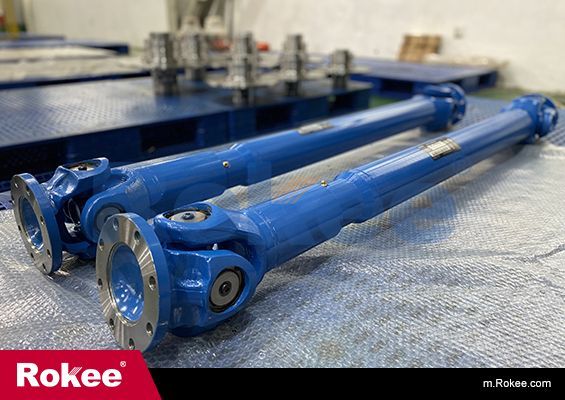
Rokee® is Universal Couplings Supplier from China, Support Customization and Export, due to excellent quality, complete technical services and superior cost performance, Rokee® Universal Couplings have been serving more than 60 countries and regions in the world, effectively operating in many corners of the world.
Due to its unique structure, Universal Coupling can realize the connection of two axes when the drive shaft and the driven shaft are not on the same axis, and there is a large axial angle error, reliably transmit torque and compensate for angular, axial and radial errors. Excellent comprehensive compensation ability makes Universal Coupling become irreplaceable transmission components in the field of industrial drives, which are widely used in various torque transmission systems.
-
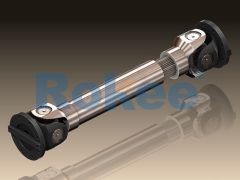
SWC-BH Standard Telescopic Welded Universal Coupling
SWC-BH Universal Coupling adopts integrated fork head layout, with the rotary diameter of 1600mm and torque transmission distance of more than 30m. SWC-BH Cardan Shaft is widely used in steel rolling machinery, crane transport machinery and other heavy equipment fields. -
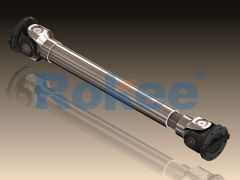
SWC-CH Long Telescopic Welded Universal Coupling
SWC-CH Universal Coupling adopts integrated fork head layout, with the rotary diameter of 1600mm and torque transmission distance of more than 30m. SWC-CH Cardan Shaft is widely used in steel rolling machinery, crane transport machinery and other heavy equipment fields. -
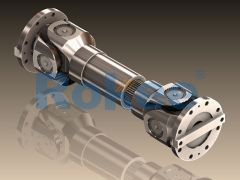
SWC-DH Short Telescopic Welded Universal Coupling
SWC-DH Universal Coupling adopts integrated fork head layout, with the rotary diameter of 1600mm and torque transmission distance of more than 30m. SWC-DH Cardan Shaft is widely used in steel rolling machinery, crane transport machinery and other heavy equipment fields. -
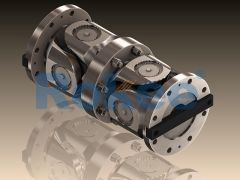
SWC-WD Non-telescopic Short Universal Coupling
SWC-WD Universal Coupling adopts integrated fork head layout, with the rotary diameter of 1600mm and torque transmission distance of more than 30m. SWC-WD Cardan Shaft is widely used in steel rolling machinery, crane transport machinery and other heavy equipment fields. -
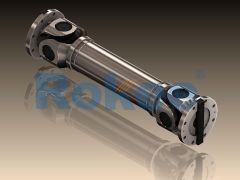
SWC-WH Non-telescopic Welded Universal Coupling
SWC-WH Universal Coupling adopts integrated fork head layout, with the rotary diameter of 1600mm and torque transmission distance of more than 30m. SWC-WH Cardan Shaft is widely used in steel rolling machinery, crane transport machinery and other heavy equipment fields. -
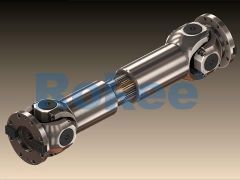
SWP-A Universal Coupling
SWP-A Universal Coupling adopts integrated fork head layout. Similar to the use of the SWC universal coupling, SWP-A Cardan Shaft is mainly used in the field of heavy-duty large equipment, with a rotary diameter of up to 1200mm. -
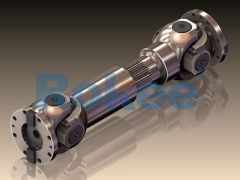
SWP-B Universal Coupling
SWP-B Universal Coupling adopts integrated fork head layout. Similar to the use of the SWC universal coupling, SWP-B Cardan Shaft is mainly used in the field of heavy-duty large equipment, with a rotary diameter of up to 1200mm. -
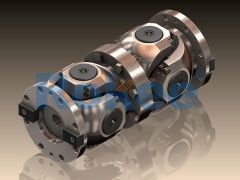
SWP-C Universal Coupling
SWP-C Universal Coupling adopts integrated fork head layout. Similar to the use of the SWC universal coupling, SWP-C Cardan Shaft is mainly used in the field of heavy-duty large equipment, with a rotary diameter of up to 1200mm. -
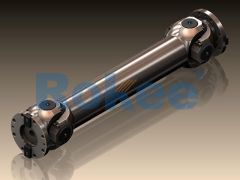
SWP-D Universal Coupling
SWP-D Universal Coupling adopts integrated fork head layout. Similar to the use of the SWC universal coupling, SWP-D Cardan Shaft is mainly used in the field of heavy-duty large equipment, with a rotary diameter of up to 1200mm.
In the realm of mechanical power transmission, couplings serve as the critical link between rotating shafts, enabling the seamless transfer of torque while accommodating various forms of misalignment. Among the diverse range of coupling designs available, the universal coupling stands out for its unique ability to transmit power between shafts that are not collinear, making it an indispensable component in numerous industrial, automotive, and aerospace systems.
At its core, a universal coupling—also known as a Cardan coupling, after the Italian mathematician Gerolamo Cardano who first documented its principles—is a mechanical device designed to connect two shafts whose axes intersect at a certain angle, allowing for the transmission of rotational motion and torque between them. Unlike rigid couplings, which require precise alignment of shafts, universal couplings can accommodate angular misalignment, and in some cases, axial and radial misalignment, making them highly versatile in applications where perfect shaft alignment is either impossible or impractical. The basic structure of a universal coupling consists of two yokes (or forks) attached to the ends of the shafts being connected, a cross-shaped component (known as the cross or spider) that links the two yokes, and bearings that allow the cross to rotate freely within the yokes. This simple yet ingenious design enables the conversion of rotational motion from one shaft to another, even when the shafts are at an angle to each other.
To understand the functionality of a universal coupling, it is essential to examine its operating principle. When torque is applied to one of the shafts, the yoke attached to that shaft imparts rotational force to the cross. The cross, in turn, transfers this force to the second yoke, which then drives the second shaft. The bearings within the yokes ensure that the cross can rotate smoothly as the shafts turn, even as the angle between the shafts changes during operation. However, a key characteristic of a single universal coupling is that it introduces a certain degree of velocity fluctuation, or angular velocity variation, in the driven shaft. This is because the effective radius at which the torque is transmitted changes as the cross rotates, leading to a periodic variation in the speed of the driven shaft relative to the driving shaft. The magnitude of this velocity fluctuation increases with the angle between the shafts; larger angles result in more significant speed variations, which can cause vibration, noise, and increased wear on the coupling and other components in the system.
To mitigate the issue of velocity fluctuation, engineers often employ a double universal coupling, which consists of two single universal couplings connected by an intermediate shaft. The key to the effectiveness of a double universal coupling lies in the proper alignment of the yokes. When the yokes of the two couplings are aligned in a specific manner—typically with the yokes on the intermediate shaft being in the same plane—the velocity fluctuations introduced by each single coupling cancel each other out, resulting in a nearly constant angular velocity in the driven shaft. This configuration allows for the transmission of power between shafts at larger angles while maintaining smooth operation, making double universal couplings suitable for applications that require high precision and minimal vibration.
Universal couplings are available in several design variations, each tailored to specific application requirements. The most common types include the single universal coupling, double universal coupling, and the constant velocity (CV) joint—a specialized type of universal coupling designed to eliminate velocity fluctuation entirely. While single and double universal couplings are widely used in industrial and automotive applications, CV joints are particularly prevalent in front-wheel-drive vehicles, where they enable the transmission of power to the wheels while accommodating the up-and-down motion of the suspension and the turning of the wheels. Unlike traditional universal couplings, CV joints use a more complex design, often involving ball bearings or roller bearings arranged in a way that ensures the distance between the driving and driven shafts remains constant, thereby eliminating angular velocity variation.
Material selection is a critical factor in the design and performance of universal couplings, as the materials used must be able to withstand the torque, load, and environmental conditions of the application. The most commonly used materials for universal coupling components include steel, stainless steel, aluminum, and various alloys. Steel is preferred for most industrial applications due to its high strength, durability, and resistance to wear and fatigue. Carbon steel and alloy steel are often used for yokes and crosses, as they can withstand high torque loads without deformation. Stainless steel is chosen for applications where corrosion resistance is essential, such as in marine environments or food processing facilities, where exposure to moisture, chemicals, or harsh cleaning agents is common. Aluminum is used in applications where weight reduction is a priority, such as in aerospace or automotive components, as it offers a good balance of strength and light weight. In addition to the base materials, the bearings used in universal couplings are typically made from hardened steel or ceramic, which provide low friction and high wear resistance.
The performance of a universal coupling is influenced by several key factors, including the maximum operating angle, torque capacity, speed rating, and misalignment capacity. The maximum operating angle refers to the maximum angle between the two shafts that the coupling can accommodate without excessive wear or loss of performance. This angle varies depending on the design of the coupling; single universal couplings typically have a maximum operating angle of 30 to 45 degrees, while double universal couplings can handle angles up to 90 degrees or more. Torque capacity is the maximum amount of torque that the coupling can transmit without failure, and it is determined by the size and material of the coupling components. Speed rating refers to the maximum rotational speed at which the coupling can operate safely, which is influenced by the balance of the components, the type of bearings used, and the centrifugal forces generated at high speeds. Misalignment capacity refers to the coupling’s ability to accommodate axial (linear) and radial (lateral) misalignment between the shafts, in addition to angular misalignment. While most universal couplings can handle small amounts of axial and radial misalignment, some designs are specifically engineered to accommodate larger variations.
Universal couplings find applications in a wide range of industries, owing to their versatility and ability to transmit power between misaligned shafts. In the automotive industry, universal couplings are used in the drive shafts of rear-wheel-drive and four-wheel-drive vehicles, where they connect the transmission to the differential. They are also used in steering systems, where they enable the transmission of rotational motion from the steering wheel to the steering rack, even when the shafts are at an angle. In the industrial sector, universal couplings are employed in conveyor systems, pumps, compressors, and industrial machinery, where they connect motors to gearboxes or other rotating components. They are particularly useful in applications where the shafts may become misaligned due to thermal expansion, vibration, or structural movement. In the aerospace industry, universal couplings are used in aircraft engines, landing gear systems, and flight control systems, where they must operate reliably under extreme conditions, including high temperatures, high pressures, and high vibration levels. Other applications include agricultural machinery, such as tractors and harvesters, where universal couplings connect engines to various implements, and marine systems, where they are used in propeller shafts and other power transmission components.
Proper maintenance is essential to ensure the long-term performance and reliability of universal couplings. Regular maintenance practices include lubrication, inspection for wear and damage, and alignment checks. Lubrication is critical to reduce friction between the cross and the yokes, as well as in the bearings. The type of lubricant used depends on the application conditions, such as operating temperature, load, and environmental factors. Grease is the most common lubricant for universal couplings, as it provides a long-lasting lubricating film and helps to prevent the ingress of dirt and moisture. Regular inspection involves checking for signs of wear on the cross, yokes, and bearings, such as excessive play, corrosion, or damage to the bearing races. If wear is detected, the affected components should be replaced promptly to prevent further damage to the coupling or other parts of the system. Alignment checks are also important, as improper alignment can increase wear and reduce the efficiency of the coupling. In applications where the shafts are subject to misalignment due to thermal expansion or other factors, regular alignment adjustments may be necessary to ensure optimal performance.
Despite their many advantages, universal couplings are not without limitations. As mentioned earlier, single universal couplings introduce velocity fluctuation, which can cause vibration and noise. While double universal couplings mitigate this issue, they are more complex and require precise alignment, which can increase installation and maintenance costs. Additionally, universal couplings have a limited maximum operating angle, and exceeding this angle can lead to premature wear and failure. In applications that require high precision or zero velocity fluctuation, CV joints or other types of couplings, such as flexible couplings, may be more suitable. However, for most applications that require the transmission of power between misaligned shafts, universal couplings offer an optimal balance of performance, versatility, and cost-effectiveness.
Looking to the future, advancements in materials science and manufacturing technology are likely to further improve the performance and reliability of universal couplings. The development of new high-strength, lightweight materials, such as composite materials, may enable the design of universal couplings that are lighter, stronger, and more resistant to wear and corrosion. Advances in additive manufacturing (3D printing) may also allow for the production of complex coupling designs that are tailored to specific applications, reducing material waste and improving performance. Additionally, the integration of sensors and condition monitoring technology into universal couplings may enable real-time monitoring of their performance, allowing for predictive maintenance and reducing the risk of unexpected failure.
In conclusion, universal couplings are a vital component in mechanical power transmission systems, enabling the seamless transfer of torque between misaligned shafts. Their simple yet effective design, versatility, and wide range of applications make them indispensable in numerous industries, from automotive and industrial to aerospace and agricultural. By understanding the fundamental principles, design variations, material considerations, and maintenance practices of universal couplings, engineers can select and implement the appropriate coupling for their specific application, ensuring optimal performance, reliability, and longevity. As technology continues to advance, universal couplings are likely to become even more efficient, durable, and adaptable, further solidifying their role in modern mechanical engineering.
« Universal Couplings » Post Date: 2023/11/15
URL: https://www.rokeecoupling.com/en/tags/universal-couplings.html
- 2025-08-05Use Of Universal Coupling
- 2023-10-31Universal Coupling Supply
- 2023-10-31Universal Couplings Wholesale
- 2023-10-31Universal Coupling Supplier
- 2023-10-31Universal Coupling Specifications
- 2023-10-31Universal Coupling Purpose
- 2023-10-31Universal Coupling Model
- 2023-10-31Universal Coupling Manufacturer
- 2023-10-31Universal Coupling Make
- 2023-10-31Universal Coupling For Sale
- 2023-10-31Universal Coupling Factory
- 2023-10-31Effect of Universal Coupling
- 2023-10-31Universal Coupling Disadvantages
- 2023-10-31Universal Coupling Design
- 2023-10-31Custom Universal Coupling
- 2023-10-31Universal Coupling Company
- 2023-10-31Universal Coupling Advantages
- 2023-10-26Custom Cross Shaft Universal Coupling
- 2023-10-26Cross Shaft Universal Couplings Wholesale
- 2023-10-26Cross Shaft Universal Couplings Standard
- 2023-10-26Cross Shaft Universal Couplings Manufacturing
- 2023-10-26Cross Shaft Universal Couplings Dimensions
- 2023-10-26Cross Shaft Universal Couplings Classification
- 2023-10-26Cross Shaft Universal Coupling With Unequal Speed
- 2023-10-26Cross Shaft Universal Coupling With Constant Speed
- 2023-10-26Cross Shaft Universal Coupling Weight
- 2023-10-26Cross Shaft Universal Coupling Type
- 2023-10-26Cross Shaft Universal Coupling Torque
- 2023-10-26Cross Shaft Universal Coupling Technology
- 2023-10-26Cross Shaft Universal Coupling Supply
- 2023-10-26Cross Shaft Universal Coupling Supplier
- 2023-10-26Cross Shaft Universal Coupling Structure
- 2023-10-26Cross Shaft Universal Coupling Structural Diagram
- 2023-10-26Cross Shaft Universal Coupling Speed
- 2023-10-26Cross Shaft Universal Coupling Specification
- 2023-10-26Cross Shaft Universal Coupling Service Life
- 2023-10-26Cross Shaft Universal Coupling Price
- 2023-10-26Cross Shaft Universal Coupling Picture
- 2023-10-26Cross Shaft Universal Coupling Performance
- 2023-10-26Cross Shaft Universal Coupling Parameters
- 2023-10-26Cross Shaft Universal Coupling Model Diagram
- 2023-10-26Cross Shaft Universal Coupling Manufacturer
- 2023-10-26Cross Shaft Universal Coupling Machining
- 2023-10-26Cross Shaft Universal Coupling Lubrication
- 2023-10-26Cross Shaft Universal Coupling Length
- 2023-10-26Cross Shaft Universal Coupling Installation
- 2023-10-26Cross Shaft Universal Coupling Hole Tolerance
- 2023-10-26Cross Shaft Universal Coupling Hardness
- 2023-10-26Cross Shaft Universal Coupling Function
- 2023-10-26Cross Shaft Universal Coupling For Sale
- 2023-10-26Cross Shaft Universal Coupling Fixation
- 2023-10-26Cross Shaft Universal Coupling Failure
- 2023-10-26Cross Shaft Universal Coupling Factory
- 2023-10-26Cross Shaft Universal Coupling Exploded View
- 2023-10-26Cross Shaft Universal Coupling Expansion And Contraction
- 2023-10-26Cross Shaft Universal Coupling Dynamic Balance
- 2023-10-26Cross Shaft Universal Coupling Drawing
- 2023-10-26Cross Shaft Universal Coupling Disadvantages
- 2023-10-26Cross Shaft Universal Coupling Diameter
- 2023-10-26Cross Shaft Universal Coupling Diagram
- 2023-10-26Cross Shaft Universal Coupling Construction
- 2023-10-26Cross Shaft Universal Coupling Connection
- 2023-10-26Cross Shaft Universal Coupling Composition
- 2023-10-26Cross Shaft Universal Coupling Compensation
- 2023-10-26Cross Shaft Universal Coupling Company
- 2023-10-26Cross Shaft Universal Coupling Bearing
- 2023-10-26Cross Shaft Universal Coupling Ball Joint
- 2023-10-26Cross Shaft Universal Coupling Assembly
- 2023-10-26Cross Shaft Universal Coupling Application
- 2023-10-26Cross Shaft Universal Coupling Angle
- 2023-10-26Cross Shaft Universal Couplings
- 2023-10-26Cross Axle Universal Couplings Sales
- 2023-10-26Cross Axle Universal Coupling Quotation
- 2023-10-26Cross Axle Universal Coupling Principle
- 2023-10-26Cross Axle Universal Coupling Design
- 2023-10-26Cross Axle Universal Coupling Characteristics
- 2023-10-26Cross Axle Universal Coupling Application
- 2023-10-20Universal Coupling Uses
- 2023-10-20Universal Coupling Types
- 2023-10-20Universal Coupling Price
- 2023-10-20Universal Coupling Machine Drawing
- 2023-10-20Universal Coupling Joint
- 2023-10-20Universal Coupling Drawing
- 2023-10-20Universal Coupling Diagram
- 2023-10-20Universal Coupling Assembly
- 2023-10-20Universal Coupling Application
- 2023-10-20China Universal Coupling
- 2023-10-19Assembly Of Universal Coupling
- 2023-10-17Roller Universal Coupling
- 2023-10-17Cross Pin Universal Coupling
- 2023-10-12Cross Type Universal Coupling Supplier
- 2023-10-12Cross Type Universal Coupling Manufacturer
- 2023-10-12Cross Joint Universal Coupling Company
- 2023-10-09Rolling Mill Universal Coupling Sleeve
- 2023-10-09Roller Press Universal Coupling Company
- 2023-10-09Short Shaft Universal Coupling
- 2023-10-09Industrial Cross Wrapped Universal Coupling
- 2023-10-09Industrial Universal Coupling Supplier
- 2023-10-08Cross Double Joint Universal Coupling
- 2023-10-08Cross Type Universal Coupling
- 2023-10-07Cross Slide Universal Coupling
- 2023-10-07Industrial Cross Wrap Universal Coupling Factory
- 2023-10-07Industrial Cross Universal Coupling Manufacturer
- 2023-10-07Executive Standard For Industrial Universal Couplings
- 2023-10-07Customized Industrial Cross Wrap Universal Coupling
- 2023-10-07Drawing Of Universal Coupling For Roller Press
- 2023-10-07Universal Couplings For Rolling Mills
- 2023-09-27Industrial Cross Shaft Universal Coupling
- 2023-09-27Industrial Heavy-duty Universal Couplings
- 2023-09-26Cross Joint Universal Coupling
- 2023-09-26Universal Coupling Of Roller Press
- 2023-09-26Industrial Universal Coupling
- 2023-09-26Cross Spline Universal Coupling
- 2023-09-26Cross Drive Universal Coupling
- 2023-09-25Universal Coupling Brand
- 2023-09-25Rolling Steel Universal Coupling
- 2023-09-25Short Telescopic Universal Coupling
- 2023-09-23Ball Gear Universal Coupling
- 2023-09-23Compensation Limit For Universal Coupling Of Roller Press
- 2023-09-23Correction Angle Of Universal Coupling Of Roller Press
- 2023-09-23High Speed & High Torque Universal Coupling
- 2023-09-23High Speed Cross Shaft Universal Coupling
- 2023-09-23Supplier Of Universal Couplings For Rolling Mills
- 2023-09-23How To Adjust The Universal Coupling Of The Roller Press
- 2023-09-23High Speed Universal Coupling
- 2023-09-23Rolling Mill Cross Universal Coupling
- 2023-09-23Universal Coupling Of Rolling Mill
- 2023-09-23Flattening Machine Universal Coupling
- 2023-09-22Telescopic Sliding Universal Coupling
- 2023-09-22Telescopic Double Joint Universal Coupling
- 2023-09-22Telescopic Heavy-duty Universal Coupling
- 2023-09-22Telescopic Precision Universal Coupling
- 2023-09-22Telescopic Spline Universal Coupling
- 2023-09-22Telescopic Universal Coupling
- 2023-09-22Scalable Cross Shaft Universal Coupling
- 2023-09-22Scalable Cross Universal Coupling
- 2023-09-22Scalable Small Universal Coupling
- 2023-09-22Drawing Of Telescopic Universal Coupling
- 2023-09-22Application Of Telescopic Universal Couplings
- 2023-09-22Small Ball Gear Universal Coupling
- 2023-09-19Cross Universal Couplings For Construction Machinery
- 2023-09-19Roller Press Universal Coupling Manufacturer
- 2023-09-19Short Universal Coupling
- 2023-09-19Customized Universal Coupling For Rolling Mill
- 2023-09-19Types Of Universal Couplings For Rolling Mills
- 2023-09-19Universal Couplings For Construction Machinery
- 2023-09-19Characteristics Of Universal Coupling For Roller Press
- 2023-09-19Cross Universal Coupling Of Roller Press
- 2023-09-19Disassembly Sequence Of Universal Coupling Of Roller Press
- 2023-09-19Function Of Universal Coupling Of Roller Press
- 2023-09-14Material Of Industrial Cross Universal Coupling
- 2023-09-13Industrial Universal Couplings
- 2023-09-13Customized Industrial Universal Couplings
- 2023-09-13Industrial Cross Wrapped Universal Coupling Manufacturer
- 2023-09-13Industrial Universal Coupling Manufacturer
- 2023-08-31How Many Types Of Cross Universal Couplings
- 2023-08-31Machining Of Cross Universal Coupling End Face Teeth
- 2023-08-31Cross Universal Coupling Transmits 500NM
- 2023-08-31Cross Universal Coupling Transmits Torque
- 2023-08-31Customization Of Cross Universal Coupling
- 2023-08-31Cross Groove Universal Coupling
- 2023-08-19Cross Universal Coupling Supplier
- 2023-08-19Customized Cross Universal Coupling
- 2023-08-19Cross Universal Coupling Manufacturer
- 2023-08-18Cross Universal Coupling Factory