Universal Joint Couplings
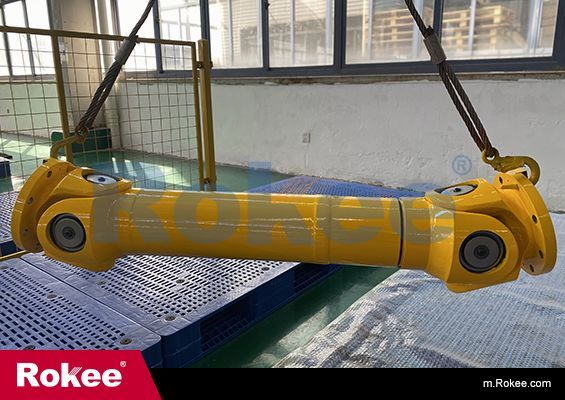
Rokee® is Universal Joint Couplings Supplier from China, Support Customization and Export, due to excellent quality, complete technical services and superior cost performance, Rokee® Universal Joint Couplings have been serving more than 60 countries and regions in the world, effectively operating in many corners of the world.
The Universal Joint Coupling uses cross bearings to connect the flanges at both ends, which can transmit torque that is not on the same axis. The diagonal compensation can reach more than 25°, and the spline connection can compensate for the axial displacement in a large distance. With high carrying capacity and excellent transmission efficiency, it is widely used in modern industrial fields.
-
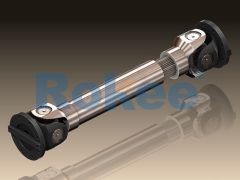
SWC-BH Standard Telescopic Welded Universal Coupling
SWC-BH Universal Coupling adopts integrated fork head layout, with the rotary diameter of 1600mm and torque transmission distance of more than 30m. SWC-BH Cardan Shaft is widely used in steel rolling machinery, crane transport machinery and other heavy equipment fields. -
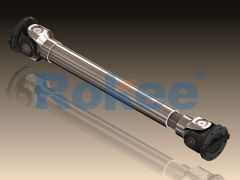
SWC-CH Long Telescopic Welded Universal Coupling
SWC-CH Universal Coupling adopts integrated fork head layout, with the rotary diameter of 1600mm and torque transmission distance of more than 30m. SWC-CH Cardan Shaft is widely used in steel rolling machinery, crane transport machinery and other heavy equipment fields. -
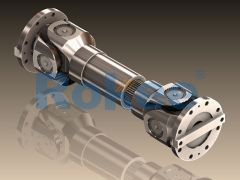
SWC-DH Short Telescopic Welded Universal Coupling
SWC-DH Universal Coupling adopts integrated fork head layout, with the rotary diameter of 1600mm and torque transmission distance of more than 30m. SWC-DH Cardan Shaft is widely used in steel rolling machinery, crane transport machinery and other heavy equipment fields. -
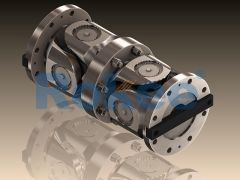
SWC-WD Non-telescopic Short Universal Coupling
SWC-WD Universal Coupling adopts integrated fork head layout, with the rotary diameter of 1600mm and torque transmission distance of more than 30m. SWC-WD Cardan Shaft is widely used in steel rolling machinery, crane transport machinery and other heavy equipment fields. -
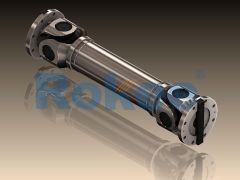
SWC-WH Non-telescopic Welded Universal Coupling
SWC-WH Universal Coupling adopts integrated fork head layout, with the rotary diameter of 1600mm and torque transmission distance of more than 30m. SWC-WH Cardan Shaft is widely used in steel rolling machinery, crane transport machinery and other heavy equipment fields. -
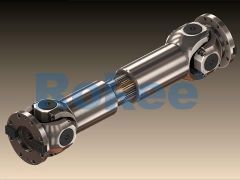
SWP-A Universal Coupling
SWP-A Universal Coupling adopts integrated fork head layout. Similar to the use of the SWC universal coupling, SWP-A Cardan Shaft is mainly used in the field of heavy-duty large equipment, with a rotary diameter of up to 1200mm. -
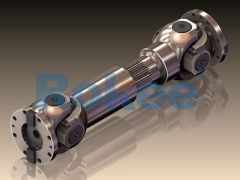
SWP-B Universal Coupling
SWP-B Universal Coupling adopts integrated fork head layout. Similar to the use of the SWC universal coupling, SWP-B Cardan Shaft is mainly used in the field of heavy-duty large equipment, with a rotary diameter of up to 1200mm. -
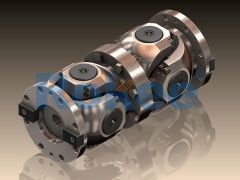
SWP-C Universal Coupling
SWP-C Universal Coupling adopts integrated fork head layout. Similar to the use of the SWC universal coupling, SWP-C Cardan Shaft is mainly used in the field of heavy-duty large equipment, with a rotary diameter of up to 1200mm. -
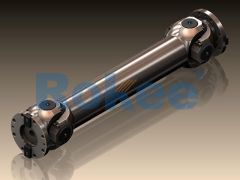
SWP-D Universal Coupling
SWP-D Universal Coupling adopts integrated fork head layout. Similar to the use of the SWC universal coupling, SWP-D Cardan Shaft is mainly used in the field of heavy-duty large equipment, with a rotary diameter of up to 1200mm.
In the realm of mechanical transmission systems, the ability to transfer rotational motion between shafts that are not perfectly aligned is a critical requirement for countless industrial, automotive, and aerospace applications. Among the various components designed to address this challenge, the universal joint coupling—often simply referred to as a universal joint or U-joint—stands out as a versatile and time-tested solution. This mechanical device, characterized by its compact structure, robust performance, and ability to accommodate angular misalignment, has become an indispensable part of modern machinery. From powering the wheels of a car to driving conveyor belts in a factory, universal joint couplings play a pivotal role in ensuring efficient and reliable power transmission.
To begin with, it is essential to define what a universal joint coupling is and clarify its core function. At its most basic level, a universal joint coupling is a mechanical connection that transmits torque and rotational motion between two shafts that may be oriented at an angle to each other, or that experience relative movement during operation. Unlike rigid couplings, which require precise alignment between shafts and cannot tolerate any misalignment, universal joint couplings are designed to accommodate three main types of misalignment: angular misalignment (where the shafts intersect at an angle), parallel misalignment (where the shafts are offset but parallel), and axial misalignment (where the shafts move along their axial direction). This flexibility makes them ideal for use in systems where perfect alignment is difficult to achieve or maintain, such as in vehicles with suspension systems that cause the drive shaft to move relative to the transmission, or in industrial machinery where thermal expansion and contraction can shift shaft positions.
The working principle of a basic universal joint coupling revolves around the concept of converting rotational motion through a set of pivoting joints. A simple universal joint, also known as a Hooke's joint, consists of four main components: two yokes (also called forks), a cross (or spider), and four bearing assemblies. Each yoke is attached to one of the two shafts that need to be connected. The cross, which is a central component with four arms (one extending from each side), fits into the forks of the yokes. The bearing assemblies—typically ball bearings or needle bearings—are installed between the ends of the cross arms and the yoke forks, allowing the cross to rotate freely within the yokes. When one shaft rotates, it drives the attached yoke, which in turn rotates the cross. The cross then transfers this rotational motion to the other yoke, which drives the second shaft. The key to the universal joint's ability to accommodate angular misalignment lies in the pivoting action of the cross within the yokes; as the angle between the shafts changes, the cross rotates around the bearing axes, ensuring that torque is still transmitted smoothly.
However, it is important to note that a single universal joint coupling has a limitation known as angular velocity fluctuation. When the input shaft rotates at a constant speed, the output shaft does not rotate at a perfectly constant speed if there is an angle between the shafts. This is because the effective radius of the cross arms, as seen from the yoke, changes as the joint rotates, leading to variations in the output speed. The degree of this fluctuation increases with the angle of misalignment; larger angles result in more significant speed variations, which can cause vibration, noise, and increased wear on the coupling and other components in the transmission system. To address this issue, engineers often use a double universal joint coupling, which consists of two single universal joints connected by an intermediate shaft. When the two universal joints are properly aligned (i.e., the angles of the two joints are equal and the yokes on the intermediate shaft are in the same plane), the angular velocity fluctuations from the first joint are canceled out by the second joint, resulting in a constant output speed. This configuration is widely used in applications where smooth, constant speed transmission is essential, such as in automotive drive shafts.
Universal joint couplings come in a variety of types, each designed to meet specific application requirements. The most common types include Hooke's joints (simple universal joints), constant velocity (CV) joints, and Cardan joints (which are a type of double universal joint). Hooke's joints, as mentioned earlier, are the simplest and most widely used type. They are relatively inexpensive to manufacture and can accommodate moderate angular misalignments (typically up to 30 degrees, though some designs can handle larger angles). However, as noted, they suffer from angular velocity fluctuation when used alone, making them more suitable for applications where small misalignments are present and speed fluctuation is not a critical concern, such as in some agricultural machinery or light-duty industrial equipment.
Constant velocity (CV) joints are a more advanced type of universal joint coupling that eliminates the angular velocity fluctuation problem entirely, even when used as a single joint. This is achieved through a more complex internal design that ensures the velocity of the output shaft is exactly equal to the velocity of the input shaft, regardless of the angle between the shafts. There are several different designs of CV joints, including ball-and-cage CV joints, tripod CV joints, and Rzeppa joints. Ball-and-cage CV joints, for example, use a set of steel balls held in a cage between an inner race (attached to the input shaft) and an outer race (attached to the output shaft). The grooves in the inner and outer races are designed such that the balls always lie in a plane that bisects the angle between the two shafts, ensuring constant velocity transmission. CV joints are capable of accommodating large angular misalignments (up to 45 degrees or more) and are widely used in front-wheel-drive vehicles, where the drive shafts need to articulate with the steering and suspension systems. They are also used in rear-wheel-drive vehicles with independent rear suspension and in various aerospace and industrial applications where smooth, constant speed transmission is critical.
Cardan joints, named after the Italian mathematician Gerolamo Cardano who first described the principle, are essentially double Hooke's joints connected by an intermediate shaft. As mentioned earlier, when properly aligned, they provide constant velocity transmission. Cardan joints are often used in applications where a longer distance exists between the two shafts that need to be connected, or where the misalignment angle is too large for a single Hooke's joint to handle effectively. They are commonly found in industrial machinery, marine propulsion systems, and some heavy-duty vehicles. In addition to these main types, there are also specialized universal joint couplings, such as flexible universal joints (which incorporate rubber or elastomeric components to dampen vibration and absorb shock) and precision universal joints (designed for high-speed, high-precision applications such as machine tools and robotics).
The selection of materials for universal joint couplings is a critical factor that directly impacts their performance, durability, and suitability for specific applications. The choice of materials depends on a variety of factors, including the torque and load requirements, operating speed, environmental conditions (such as temperature, humidity, and exposure to corrosive substances), and cost considerations. The main components of a universal joint coupling—the yokes, cross, and bearings—are typically made from metallic materials, while elastomeric components (in flexible designs) are made from rubber or polyurethane.
For the yokes and cross, high-strength steels are the most commonly used materials. Carbon steel, such as A36 or 1045 steel, is often used for light-duty applications where torque requirements are moderate. For heavy-duty applications, such as in industrial machinery or automotive drive shafts, alloy steels (such as 4140 or 4340 steel) are preferred due to their higher strength, toughness, and wear resistance. These alloy steels are often heat-treated (through processes such as quenching and tempering) to further enhance their mechanical properties. In some cases, for applications where weight is a critical factor (such as in aerospace), aluminum alloys may be used for the yokes, though they are not as strong as steel and are typically limited to lower torque applications.
The bearings in universal joint couplings are crucial for ensuring smooth rotation and reducing friction between the cross and yokes. Needle bearings are commonly used in many universal joint designs due to their compact size and ability to handle high radial loads. They are typically made from high-carbon chromium steel (such as SUJ2) for excellent wear resistance and hardness. Ball bearings may be used in applications where higher axial loads need to be accommodated. In some harsh environments, such as those exposed to moisture or chemicals, stainless steel bearings may be used to prevent corrosion. The bearing seals, which protect the bearings from dirt, dust, and moisture, are usually made from rubber or synthetic elastomers such as nitrile rubber (NBR) or氟橡胶 (FKM), depending on the operating temperature and chemical exposure.
Flexible universal joint couplings incorporate elastomeric elements, which are typically made from natural rubber, synthetic rubber (such as neoprene or EPDM), or polyurethane. These materials provide flexibility, dampen vibration, and absorb shock, making them ideal for applications where noise reduction or vibration isolation is important. The choice of elastomeric material depends on the operating temperature range, chemical resistance requirements, and the level of flexibility needed.
Universal joint couplings find applications in a wide range of industries and systems, owing to their versatility and ability to accommodate misalignment. One of the most common applications is in the automotive industry. In rear-wheel-drive vehicles, a single or double universal joint coupling is used in the drive shaft to transmit power from the transmission to the rear differential. In front-wheel-drive vehicles, CV joints are used in the half-shafts (drive shafts) that connect the transaxle to the front wheels, allowing the wheels to turn and move up and down with the suspension while still receiving power. Universal joints are also used in steering systems, where they transmit rotational motion from the steering wheel to the steering rack or box, accommodating the misalignment between the steering column and the steering mechanism.
The industrial sector is another major user of universal joint couplings. They are widely used in conveyor systems, where they connect the motor to the conveyor belt drive shaft, accommodating misalignment caused by thermal expansion or minor shifts in the conveyor structure. Universal joints are also used in pumps and compressors, where they connect the motor to the pump or compressor shaft, ensuring reliable power transmission even if the shafts are not perfectly aligned. In machine tools, such as lathes, milling machines, and grinders, precision universal joint couplings are used to transmit rotational motion from the motor to the spindle, ensuring smooth and accurate operation. Other industrial applications include agricultural machinery (such as tractors and harvesters), where they are used in power take-off (PTO) shafts to transmit power from the tractor engine to various implements, and in material handling equipment (such as forklifts and cranes).
The aerospace industry also relies on universal joint couplings for various applications. They are used in aircraft landing gear systems, where they transmit power to actuate the landing gear, accommodating the misalignment between the hydraulic or electric actuators and the landing gear mechanism. Universal joints are also used in aircraft engine systems, such as in the accessory drives that power components like fuel pumps, oil pumps, and generators. In these applications, the couplings must be lightweight, high-strength, and capable of operating in extreme temperature and pressure conditions.
Marine applications also utilize universal joint couplings, particularly in boat propulsion systems. They are used to connect the engine to the propeller shaft, accommodating the misalignment between the engine and the propeller, which may be caused by the boat's hull flexing or minor shifts in the engine mount. Universal joints are also used in small boats with outboard motors, where they allow the motor to be tilted and trimmed while still transmitting power to the propeller.
Proper maintenance of universal joint couplings is essential to ensure their longevity, reliability, and safe operation. Neglecting maintenance can lead to premature wear, failure of the coupling, and potentially costly damage to other components in the transmission system. The key maintenance practices for universal joint couplings include lubrication, inspection, and replacement of worn components.
Lubrication is perhaps the most important maintenance task for universal joint couplings. The bearings and the contact surfaces between the cross and yokes require regular lubrication to reduce friction, prevent wear, and protect against corrosion. Most universal joints are equipped with grease fittings (zerk fittings) that allow grease to be injected into the bearing assemblies. The type of grease used should be appropriate for the operating conditions, including temperature, load, and environmental factors. For example, high-temperature grease should be used in applications where the coupling operates at elevated temperatures, such as in automotive engines or industrial furnaces. Grease should be applied at regular intervals, as specified by the equipment manufacturer, or whenever the coupling shows signs of dryness or wear. It is also important to ensure that the bearing seals are intact, as damaged seals can allow grease to leak out and dirt, dust, and moisture to enter, causing premature bearing failure.
Regular inspection is another critical maintenance practice. Inspections should be performed periodically to check for signs of wear, damage, or misalignment. During an inspection, the coupling should be visually examined for cracks in the yokes or cross, excessive play in the bearings (which indicates wear), and damage to the seals. The shafts connected to the coupling should also be checked for misalignment, as excessive misalignment can put additional stress on the coupling and lead to premature failure. In addition to visual inspections, operational inspections should be conducted while the machinery is running, checking for unusual noise (such as squeaking, grinding, or clunking), vibration, or overheating—all of which can be signs of a faulty universal joint coupling. If any of these issues are detected, the machinery should be shut down immediately to prevent further damage, and the coupling should be inspected and repaired or replaced as necessary.
Replacement of worn components is necessary when inspection reveals that parts of the universal joint coupling are damaged or excessively worn. Common worn components include the bearings, seals, cross, and yokes. When replacing components, it is important to use parts that are compatible with the original coupling design, as using incompatible parts can lead to poor performance or premature failure. In some cases, it may be more cost-effective to replace the entire coupling rather than individual components, especially if multiple parts are worn or damaged. After replacement, the coupling should be properly lubricated and aligned to ensure optimal performance.
In conclusion, universal joint couplings are essential components in mechanical transmission systems, providing a versatile and reliable solution for transmitting rotational motion between misaligned shafts. Their working principle, based on pivoting joints and cross components, allows them to accommodate various types of misalignment, making them suitable for a wide range of applications across automotive, industrial, aerospace, and marine industries. With different types available—including Hooke's joints, CV joints, and Cardan joints—there is a universal joint coupling designed to meet the specific requirements of nearly any application. The selection of appropriate materials, based on factors such as torque, speed, and environmental conditions, is critical to ensuring the coupling's performance and durability. Finally, proper maintenance, including regular lubrication, inspection, and replacement of worn components, is essential to maximize the lifespan of universal joint couplings and ensure the safe and efficient operation of the machinery they power. As technology continues to advance, universal joint couplings are likely to be further optimized for higher performance, lighter weight, and greater efficiency, continuing to play a vital role in the world of mechanical engineering for years to come.
« Universal Joint Couplings » Post Date: 2023/8/18
URL: https://www.rokeecoupling.com/en/tags/universal-joint-couplings.html
- 2025-06-27Small Universal Joint Couplings
- 2023-10-20Flange Universal Joint Coupling
- 2023-10-20Double Universal Joint Coupling Design
- 2023-10-17Universal Joint Coupling Drawing
- 2023-10-17Universal Joint Coupling Material
- 2023-10-17Cross Bearing Universal Joint Coupling
- 2023-10-13Small Cross Universal Joint Couplings
- 2023-10-13Universal Joint Coupling Machining Center
- 2023-10-13Universal Joint Coupling Hub
- 2023-10-13Universal Joint Coupling Specifications
- 2023-10-13Universal Joint Coupling Usage Speed
- 2023-10-13Universal Joint Coupling Working Principle
- 2023-10-13Universal Joint Coupling Shaft Center
- 2023-10-13Universal Joint Coupling Selection
- 2023-10-13Universal Joint Coupling Spline Model
- 2023-10-13Universal Joint Coupling Transmission Efficiency
- 2023-10-12Cross Universal Joint Couplings
- 2023-10-12Universal Joint Coupling Speed
- 2023-10-12Universal Joint Coupling Structure
- 2023-10-11Universal Joint Coupling Transition Plate
- 2023-10-11Universal Joint Coupling Transmission Shaft
- 2023-10-11Universal Joint Coupling Type
- 2023-10-11Universal Joint Coupling Support Bearing
- 2023-10-11Universal Joint Coupling Slider
- 2023-10-11Universal Joint Coupling Sales
- 2023-10-11Universal Joint Coupling Model
- 2023-10-11Universal Joint Coupling Customization
- 2023-10-11Universal Joint Coupling Dimensions
- 2023-10-11Universal Joint Coupling Diagram
- 2023-10-11Universal Joint Coupling Buffer
- 2023-10-11Universal Joint Coupling Bearing
- 2023-10-11Universal Joint Coupling Assembly
- 2023-10-11Universal Joint Coupling Angle
- 2023-10-11Universal Joint Coupling Adapter
- 2023-10-11Universal Joint Coupling Accessories
- 2023-10-11Universal Joint Coupling Accuracy
- 2023-10-11Universal Joint Couplings Structural Drawing
- 2023-10-11Universal Joint Couplings Calculation Torque
- 2023-10-11Universal Joint Couplings Professional Manufacturer
- 2023-10-11Axial Stress Of Universal Joint Coupling
- 2023-10-09Universal Joint Coupling Company
- 2023-10-09Universal Joint Coupling Cross Wrap
- 2023-10-09Universal Joint Coupling Cross Shaft
- 2023-10-09Universal Joint Coupling Flange
- 2023-10-09Universal Joint Coupling Processing
- 2023-10-09Short Shaft Cross Universal Joint Coupling
- 2023-10-09Wholesale Of Universal Joint Couplings
- 2023-10-09Universal Joint Coupling Sleeve
- 2023-10-08Universal Joint Coupling Brand
- 2023-10-08Advantages Of Universal Joint Couplings
- 2023-10-08Characteristics Of Universal Joint Couplings
- 2023-10-08Design Of Universal Joint Couplings
- 2023-10-08Professional Manufacturer Of Universal Joint Couplings
- 2023-10-08Universal Joint Coupling Supplier
- 2023-10-08Universal Joint Coupling Production
- 2023-10-08Universal Joint Coupling Price
- 2023-10-08Universal Joint Coupling Manufacturer
- 2023-10-08Universal Joint Coupling Factory
- 2023-09-27Cross Slide Universal Joint Coupling
- 2023-09-25Rolling Mill Universal Joint Coupling
- 2023-09-25Universal Joint Coupling Of Roller Press
- 2023-09-23High Speed Universal Joint Coupling
- 2023-09-22Telescopic Cross Universal Joint Coupling
- 2023-09-22Telescopic Universal Joint Coupling
- 2023-09-22Telescopic Universal Joint Coupling Factory
- 2023-09-22Price Of Telescopic Universal Joint Couplings
- 2023-09-13Industrial Universal Joint Coupling