Cardan Shaft Couplings
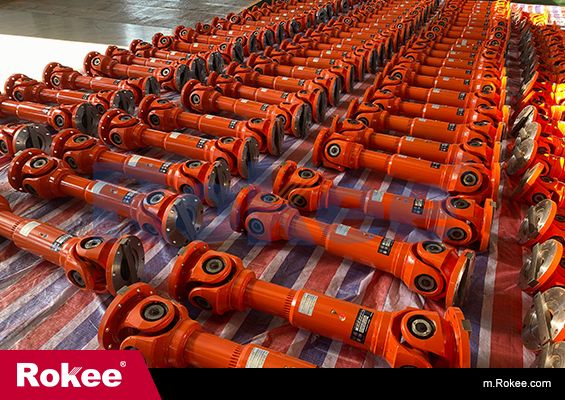
Rokee® is Cardan Shaft Couplings Supplier from China, Support Customization and Export, due to excellent quality, complete technical services and superior cost performance, Rokee® Cardan Shaft Couplings have been serving more than 60 countries and regions in the world, effectively operating in many corners of the world.
Our Cardan Shaft Coupling is widely used and have many impressive records. From micro products for modern logistics, artificial intelligence machinery, light products used in the paper industry, high speed and high performance products for engineering and railway vehicles, to super heavy duty products used in metallurgical rolling system systems, Rokee has won us with mature products and quality Long-term trust of customers, widely exported to Europe, America and other parts of the world.
-
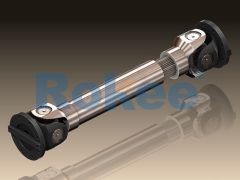
SWC-BH Standard Telescopic Welded Universal Coupling
SWC-BH Universal Coupling adopts integrated fork head layout, with the rotary diameter of 1600mm and torque transmission distance of more than 30m. SWC-BH Cardan Shaft is widely used in steel rolling machinery, crane transport machinery and other heavy equipment fields. -
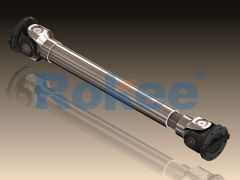
SWC-CH Long Telescopic Welded Universal Coupling
SWC-CH Universal Coupling adopts integrated fork head layout, with the rotary diameter of 1600mm and torque transmission distance of more than 30m. SWC-CH Cardan Shaft is widely used in steel rolling machinery, crane transport machinery and other heavy equipment fields. -
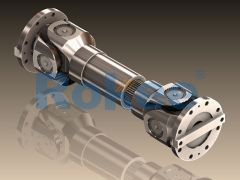
SWC-DH Short Telescopic Welded Universal Coupling
SWC-DH Universal Coupling adopts integrated fork head layout, with the rotary diameter of 1600mm and torque transmission distance of more than 30m. SWC-DH Cardan Shaft is widely used in steel rolling machinery, crane transport machinery and other heavy equipment fields. -
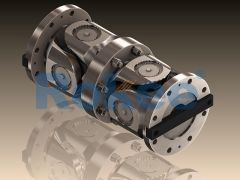
SWC-WD Non-telescopic Short Universal Coupling
SWC-WD Universal Coupling adopts integrated fork head layout, with the rotary diameter of 1600mm and torque transmission distance of more than 30m. SWC-WD Cardan Shaft is widely used in steel rolling machinery, crane transport machinery and other heavy equipment fields. -
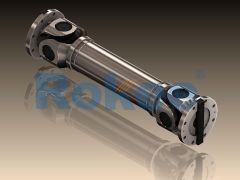
SWC-WH Non-telescopic Welded Universal Coupling
SWC-WH Universal Coupling adopts integrated fork head layout, with the rotary diameter of 1600mm and torque transmission distance of more than 30m. SWC-WH Cardan Shaft is widely used in steel rolling machinery, crane transport machinery and other heavy equipment fields. -
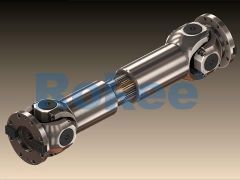
SWP-A Universal Coupling
SWP-A Universal Coupling adopts integrated fork head layout. Similar to the use of the SWC universal coupling, SWP-A Cardan Shaft is mainly used in the field of heavy-duty large equipment, with a rotary diameter of up to 1200mm. -
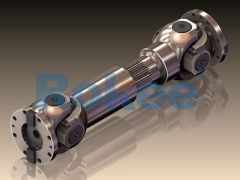
SWP-B Universal Coupling
SWP-B Universal Coupling adopts integrated fork head layout. Similar to the use of the SWC universal coupling, SWP-B Cardan Shaft is mainly used in the field of heavy-duty large equipment, with a rotary diameter of up to 1200mm. -
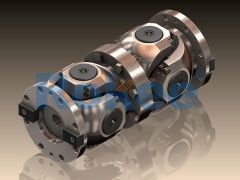
SWP-C Universal Coupling
SWP-C Universal Coupling adopts integrated fork head layout. Similar to the use of the SWC universal coupling, SWP-C Cardan Shaft is mainly used in the field of heavy-duty large equipment, with a rotary diameter of up to 1200mm. -
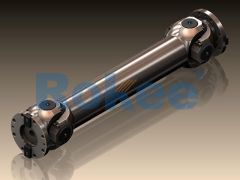
SWP-D Universal Coupling
SWP-D Universal Coupling adopts integrated fork head layout. Similar to the use of the SWC universal coupling, SWP-D Cardan Shaft is mainly used in the field of heavy-duty large equipment, with a rotary diameter of up to 1200mm.
In the realm of mechanical power transmission, the ability to transfer torque efficiently between rotating shafts that are not perfectly aligned is a critical requirement for countless industrial and automotive systems. Among the various components designed to meet this need, the cardan shaft coupling stands out as a robust, versatile, and time-tested solution. Also known as a universal joint coupling, this mechanical device has played a pivotal role in advancing machinery design, enabling the development of complex systems that rely on misaligned shaft configurations. From the drivetrains of automobiles and trucks to the rotating mechanisms of industrial pumps, conveyors, and agricultural equipment, the cardan shaft coupling has become an indispensable component in modern engineering.
Fundamental Principles of Cardan Shaft Coupling
At its core, the cardan shaft coupling is designed to transmit rotational motion and torque between two shafts that are offset at an angle, parallel but misaligned, or both. The key to its functionality lies in the universal joint (U-joint), which forms the basic building block of the coupling. A simple universal joint consists of two yokes—one attached to each shaft—and a cross-shaped component (known as a spider) that connects the yokes. The spider’s arms fit into bearings within the yoke ears, allowing the yokes to pivot relative to each other around multiple axes. This pivoting capability accommodates angular misalignment between the shafts, ensuring that torque is transferred smoothly even when the shafts are not in perfect alignment.
However, a single universal joint has a limitation: it introduces a phenomenon known as angular velocity fluctuation. As the driving shaft rotates at a constant speed, the driven shaft’s speed varies slightly, especially as the angle of misalignment increases. This fluctuation can cause vibration, noise, and increased wear on other components in the system. To mitigate this issue, most practical cardan shaft coupling systems use two universal joints connected by an intermediate shaft (the cardan shaft itself). When the two U-joints are properly aligned (i.e., the angles of misalignment at both ends are equal and the yokes are phased correctly), the velocity fluctuations from the first U-joint are canceled out by the second, resulting in a constant angular velocity at the driven shaft. This configuration is known as a constant-velocity (CV) cardan shaft coupling, though it is important to note that true constant velocity is achieved only when the alignment conditions are met.
The torque transmission capacity of a cardan shaft coupling depends on several factors, including the size of the cross and yokes, the strength of the bearings, and the material properties of the components. The angle of misalignment also affects performance: while most standard cardan shaft couplings can accommodate angular misalignments of up to 30 degrees, higher angles may lead to increased wear, reduced efficiency, and greater velocity fluctuations (even with dual U-joints). Parallel misalignment, where the shafts are parallel but offset along their radial axes, is typically accommodated by the length of the intermediate shaft or by combining the cardan shaft coupling with other components such as sliding splines.
Structural Variations of Cardan Shaft Coupling
Cardan shaft couplings are available in a range of structural configurations to suit different application requirements, varying in terms of the number of U-joints, the presence of sliding components, and the design of the yokes and intermediate shaft. The most common variations include single U-joint couplings, double U-joint (cardan shaft) couplings, and telescopic cardan shaft couplings.
Single U-joint couplings, as the name suggests, consist of a single universal joint connecting two shafts. These are the simplest form of cardan shaft coupling and are used primarily in applications where the angle of misalignment is small (typically less than 15 degrees) and velocity fluctuation is not a critical concern. Examples include small agricultural machinery, light-duty industrial fans, and some automotive auxiliary systems. Due to their simplicity, single U-joint couplings are cost-effective and easy to install, but their limited ability to handle misalignment and velocity fluctuations restricts their use in high-performance or heavy-duty applications.
Double U-joint (cardan shaft) couplings are the most widely used configuration, consisting of two U-joints connected by an intermediate shaft. As mentioned earlier, this configuration cancels out velocity fluctuations when properly aligned, making it suitable for applications that require smooth torque transmission between significantly misaligned shafts. The intermediate shaft can be solid or hollow: solid shafts are used for high-torque applications, while hollow shafts are lighter and more suitable for high-speed rotations, as they reduce inertia. The yokes in double U-joint couplings can be forged, cast, or machined, depending on the load requirements and cost constraints. Forged yokes are stronger and more durable, making them ideal for heavy-duty industrial and automotive applications, while cast yokes are more cost-effective for lighter loads.
Telescopic cardan shaft couplings incorporate a sliding spline mechanism into the intermediate shaft, allowing for axial movement between the shafts. This is particularly useful in applications where the distance between the driving and driven shafts varies during operation, such as in automotive drivetrains where suspension movement causes changes in shaft length. The sliding spline consists of a male spline on one end of the intermediate shaft and a female spline on the other, allowing the shaft to extend or contract while maintaining torque transmission. Telescopic cardan shaft couplings are commonly used in trucks, buses, and off-road vehicles, as well as in industrial equipment such as cranes and excavators, where axial movement is inevitable.
Another variation is the rigid cardan shaft coupling, which combines the cardan shaft with rigid flanges at the ends. This configuration is used when both angular misalignment and radial misalignment need to be accommodated, and it provides a more secure connection than flexible couplings in certain high-torque applications. However, rigid cardan shaft couplings require precise alignment to avoid excessive wear and vibration.
Material Considerations for Cardan Shaft Coupling Components
The performance and durability of a cardan shaft coupling are heavily dependent on the materials used for its components. The selection of materials is influenced by factors such as the application’s torque requirements, operating speed, environmental conditions (temperature, humidity, corrosion), and cost. The key components that require careful material selection include the yokes, cross (spider), bearings, and intermediate shaft.
For yokes and intermediate shafts, the most common materials are carbon steel, alloy steel, and aluminum alloys. Carbon steel (such as A36 or 1045 steel) is widely used for light to medium-duty applications due to its good strength, ductility, and cost-effectiveness. Alloy steel (such as 4140 or 4340 steel) is preferred for heavy-duty applications, as it offers higher tensile strength, fatigue resistance, and hardness than carbon steel. Alloy steel components are often heat-treated (quenched and tempered) to further enhance their mechanical properties. Aluminum alloys (such as 6061 or 7075) are used in applications where weight reduction is critical, such as in high-speed machinery or automotive racing components. Aluminum is lighter than steel but has lower tensile strength, so it is typically used for light-load, high-speed applications.
The cross (spider) is a critical component that bears significant shear and bending loads during operation. As such, it is usually made from high-strength materials such as alloy steel or forged steel. Some spiders are also coated with wear-resistant materials (such as nickel plating or chrome plating) to reduce friction and extend service life. In applications where corrosion resistance is important (such as marine or food processing equipment), stainless steel (such as 304 or 316 stainless steel) may be used for the cross and yokes, though this increases the cost of the coupling.
The bearings in the U-joints are essential for reducing friction between the spider and yokes, allowing smooth pivoting. The most common bearing materials are steel (for rolling elements) and brass or steel (for bearing races). For high-temperature applications (such as in industrial furnaces or exhaust systems), ceramic bearings may be used, as they can withstand higher temperatures than steel bearings. In addition, the bearings are often lubricated with grease or oil to further reduce friction and wear. The choice of lubricant depends on the operating temperature and speed: high-temperature greases are used for applications where temperatures exceed 150°C, while synthetic lubricants are preferred for high-speed rotations.
In corrosive environments, such as coastal areas or chemical plants, additional protective measures may be taken, such as painting the yokes and intermediate shaft, using corrosion-resistant coatings, or selecting materials with inherent corrosion resistance. For example, in marine applications, galvanized steel or stainless steel components are commonly used to prevent rust and degradation due to saltwater exposure.
Applications of Cardan Shaft Coupling
The versatility of the cardan shaft coupling makes it suitable for a wide range of applications across various industries, including automotive, industrial, agricultural, marine, and aerospace. Its ability to accommodate misalignment and transmit torque efficiently makes it an ideal choice for systems where shafts cannot be perfectly aligned.
In the automotive industry, cardan shaft couplings are a key component of drivetrains. In rear-wheel-drive (RWD) and four-wheel-drive (4WD) vehicles, the cardan shaft (also known as the propeller shaft) connects the transmission to the differential, transferring torque from the engine to the rear wheels. Telescopic cardan shafts are used in these applications to accommodate axial movement caused by suspension compression and extension. In addition, cardan shaft couplings are used in steering systems, where they connect the steering wheel to the steering gear, allowing for misalignment between the steering column and the gearbox. High-performance vehicles, such as racing cars, often use lightweight aluminum or carbon fiber cardan shafts to reduce inertia and improve acceleration.
The industrial sector is another major user of cardan shaft couplings. They are widely used in machinery such as pumps, compressors, conveyors, mixers, and generators. For example, in a conveyor system, the cardan shaft coupling connects the motor to the conveyor drive, accommodating misalignment between the motor shaft and the drive shaft. In pumps and compressors, which operate at high speeds, cardan shaft couplings with balanced intermediate shafts are used to reduce vibration and ensure smooth operation. Heavy-duty industrial applications, such as steel mills and mining equipment, use large-diameter alloy steel cardan shaft couplings to transmit high torques between massive rotating components.
Agricultural machinery also relies heavily on cardan shaft couplings. Tractors use cardan shafts to connect the engine to various implements, such as plows, harvesters, and sprayers. These applications often involve significant misalignment and axial movement, making telescopic cardan shaft couplings ideal. Agricultural cardan shaft couplings must be durable and able to withstand harsh environmental conditions, such as dust, dirt, and moisture, so they are typically made from high-strength steel with protective coatings.
In the marine industry, cardan shaft couplings are used in ship propulsion systems, connecting the engine to the propeller shaft. Marine cardan shafts must be corrosion-resistant (due to saltwater exposure) and able to transmit high torques, so they are often made from stainless steel or galvanized steel. They also need to accommodate misalignment caused by hull flexing during navigation. In addition, cardan shaft couplings are used in marine auxiliary systems, such as pumps and winches.
The aerospace industry uses cardan shaft couplings in various aircraft systems, such as engine accessories (pumps, generators) and landing gear mechanisms. Aerospace cardan shafts are typically lightweight (made from aluminum or titanium alloys) and designed to withstand high temperatures and vibrations. They must meet strict performance and reliability requirements, as failure can have catastrophic consequences.
Maintenance Practices for Cardan Shaft Coupling
Proper maintenance is essential to ensure the longevity and reliable performance of cardan shaft couplings. Neglecting maintenance can lead to premature wear, vibration, noise, and even component failure, which can result in costly downtime and repairs. The key maintenance practices for cardan shaft couplings include lubrication, alignment checks, wear inspection, and torque verification.
Lubrication is the most critical maintenance task for cardan shaft couplings, as it reduces friction between the spider, bearings, and yokes. The bearings in the U-joints must be regularly lubricated with the appropriate grease or oil to prevent metal-to-metal contact, which can cause excessive wear and overheating. The frequency of lubrication depends on the operating conditions: high-speed, high-torque, or dusty environments require more frequent lubrication (often every 500 to 1,000 operating hours), while low-load, clean environments may require lubrication every 2,000 to 5,000 hours. It is important to use the lubricant recommended by the coupling manufacturer, as using the wrong type can reduce lubrication effectiveness and cause component damage. In addition, the lubrication points (grease fittings) should be cleaned before applying new lubricant to prevent dirt and debris from entering the bearings.
Alignment checks are another important maintenance practice. As mentioned earlier, double U-joint cardan shaft couplings require proper alignment to ensure constant angular velocity and minimize wear. Misalignment can occur over time due to component wear, vibration, or changes in the machinery’s structure (such as foundation settlement in industrial equipment or suspension wear in vehicles). Alignment should be checked regularly using tools such as dial indicators, laser alignment systems, or optical alignment tools. If misalignment is detected, the shafts should be realigned immediately to prevent excessive wear on the U-joints, bearings, and other components.
Regular wear inspection is also necessary to identify potential issues before they lead to failure. The components to inspect include the yokes, cross, bearings, and sliding splines (in telescopic couplings). Signs of wear include excessive play in the U-joints, cracks or deformations in the yokes or cross, corrosion, and abnormal noise or vibration during operation. The bearings should be checked for smooth rotation and absence of noise; if a bearing is seized or noisy, it should be replaced immediately. The sliding splines in telescopic couplings should be inspected for wear, corrosion, and proper lubrication; worn splines can cause jerky movement or loss of torque transmission.
Torque verification is important for the fasteners (bolts, nuts) that secure the yokes to the shafts. These fasteners can loosen over time due to vibration, which can cause misalignment or even detachment of the coupling. The fasteners should be checked regularly and tightened to the manufacturer’s recommended torque specifications. In some cases, lock washers, cotter pins, or thread-locking compounds may be used to prevent fastener loosening.
In addition to these regular maintenance tasks, cardan shaft couplings should be inspected after any major machinery overhaul or accident, as these events can cause misalignment or component damage. It is also important to keep the coupling clean, as dirt, debris, and moisture can accelerate wear and corrosion. In dusty or dirty environments, protective covers may be installed over the U-joints to prevent contamination.
Evolving Trends in Cardan Shaft Coupling Design and Technology
As technology advances and industries demand higher performance, efficiency, and reliability, the design and technology of cardan shaft couplings continue to evolve. Several key trends are shaping the future of cardan shaft coupling development, including lightweight design, improved material technology, advanced manufacturing processes, and smart monitoring systems.
Lightweight design is a major trend in many industries, particularly automotive and aerospace, where reducing weight is critical for improving fuel efficiency and performance. Manufacturers are increasingly using lightweight materials such as aluminum alloys, titanium alloys, and carbon fiber composites for cardan shaft components. Carbon fiber composite cardan shafts, in particular, offer significant weight reduction compared to steel shafts (up to 50% lighter) while maintaining high strength and stiffness. These composite shafts also have lower inertia, which improves acceleration and reduces vibration at high speeds. However, the high cost of carbon fiber composites currently limits their use to high-performance and aerospace applications, though ongoing research is expected to reduce costs and expand their use.
Improved material technology is another key trend. Advances in alloy development have led to the creation of high-strength, high-fatigue-resistance steels that can withstand higher torques and operating speeds. For example, microalloyed steels, which contain small amounts of elements such as vanadium, niobium, and titanium, offer improved strength and ductility compared to traditional carbon steels, making them ideal for heavy-duty cardan shaft components. In addition, advances in corrosion-resistant materials, such as duplex stainless steels and corrosion-resistant coatings, are expanding the use of cardan shaft couplings in harsh environmental conditions.
Advanced manufacturing processes are also driving innovation in cardan shaft coupling design. Additive manufacturing (3D printing) is being used to produce complex yoke and cross designs that are difficult or impossible to manufacture using traditional methods. 3D printing allows for the creation of lightweight, optimized geometries that reduce material usage and improve performance. For example, 3D-printed yokes can have internal lattice structures that reduce weight while maintaining strength. In addition, 3D printing enables rapid prototyping, allowing manufacturers to test new designs quickly and efficiently. Other advanced manufacturing processes, such as precision forging and CNC machining, are improving the dimensional accuracy and surface finish of cardan shaft components, reducing wear and improving performance.
Smart monitoring systems are becoming increasingly common in industrial machinery, and cardan shaft couplings are no exception. Manufacturers are integrating sensors into cardan shaft components to monitor parameters such as temperature, vibration, and torque. These sensors transmit real-time data to a central monitoring system, allowing operators to detect potential issues (such as excessive wear, misalignment, or lubrication failure) before they lead to failure. Predictive maintenance, enabled by these smart monitoring systems, can significantly reduce downtime and maintenance costs by allowing maintenance to be performed only when necessary, rather than on a fixed schedule. In automotive applications, smart cardan shaft couplings can also provide data to the vehicle’s electronic control unit (ECU) to optimize performance and fuel efficiency.
Another trend is the development of high-speed cardan shaft couplings for applications such as high-speed centrifuges, turbines, and aerospace engines. These couplings require precise balancing, high-strength materials, and advanced bearings to withstand the high rotational speeds (often exceeding 10,000 RPM). Manufacturers are using computer-aided design (CAD) and finite element analysis (FEA) to optimize the design of high-speed cardan shafts, ensuring that they are balanced, stiff, and able to withstand the forces generated at high speeds.
Conclusion
The cardan shaft coupling is a fundamental component in mechanical power transmission, enabling the efficient transfer of torque between misaligned shafts across a wide range of industries. Its robust design, versatility, and ability to accommodate angular and parallel misalignment make it an indispensable part of modern machinery, from automotive drivetrains to industrial pumps and agricultural equipment. Understanding the fundamental principles, structural variations, material considerations, and maintenance practices of cardan shaft couplings is essential for ensuring their reliable performance and longevity.
As technology continues to advance, the cardan shaft coupling is evolving to meet the growing demands of high-performance, lightweight, and smart machinery. Advances in materials, manufacturing processes, and monitoring systems are improving the efficiency, reliability, and lifespan of cardan shaft couplings, making them suitable for increasingly challenging applications. Whether in heavy-duty industrial settings or high-tech aerospace systems, the cardan shaft coupling will continue to play a critical role in powering the machinery that drives our world.
In summary, the cardan shaft coupling’s enduring relevance is a testament to its simple yet effective design, and its ongoing evolution ensures that it will remain a key component in mechanical engineering for years to come. By staying abreast of the latest trends and best practices in cardan shaft coupling design, material selection, and maintenance, engineers and operators can maximize the performance and reliability of their power transmission systems.
« Cardan Shaft Couplings » Post Date: 2023/8/19
URL: https://www.rokeecoupling.com/en/tags/cardan-shaft-couplings.html
- 2023-11-07Customized Cardan Shaft Coupling
- 2023-11-07Cardan Shaft Coupling Manufacturing Enterprise
- 2023-11-07Types of Cardan Shaft Couplings
- 2023-11-07Cardan Shaft Couplings Supply
- 2023-11-07Cardan Shaft Coupling Structural Diagram
- 2023-11-07Cardan Shaft Coupling Specifications
- 2023-11-07Cardan Shaft Coupling Purpose
- 2023-11-07Cardan Shaft Coupling Price
- 2023-11-07Cardan Shaft Coupling Parts
- 2023-11-07Cardan Shaft Coupling Manufacturer
- 2023-11-07Cardan Shaft Couplings Factory
- 2023-11-07Cardan Shaft Coupling Drawing
- 2023-11-07Cardan Shaft Coupling Design
- 2023-11-07Cardan Shaft Coupling Application
- 2023-11-07Cardan Shaft Couplings Company
- 2023-11-07Disadvantages of Cardan Shaft Coupling
- 2023-11-07Cardan Shaft Couplings For Sale
- 2023-11-07Cardan Shaft Couplings Wholesale
- 2023-11-07Cardan Shaft Couplings Supplier
- 2023-11-07Cardan Shaft Coupling Size Chart
- 2023-11-07Models of Cardan Shaft Couplings
- 2023-11-07Cardan Shaft Coupling Function
- 2023-11-07Cardan Shaft Couplings Catalogue
- 2023-11-07Cardan Shaft Coupling Advantages
- 2023-10-13Cross Cardan Shaft Couplings