Curved-tooth Gear Couplings
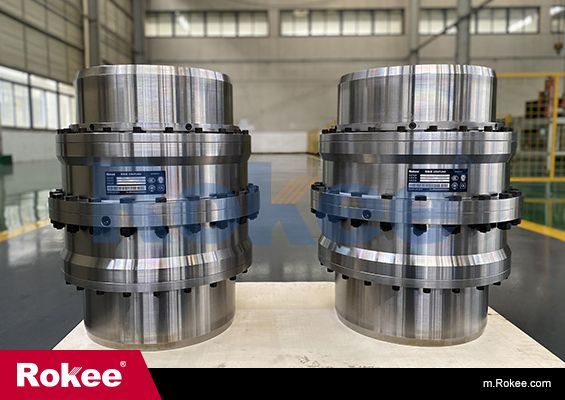
Rokee® is Curved-tooth Gear Couplings Supplier from China, Support Customization and Export, due to excellent quality, complete technical services and superior cost performance, Rokee® Curved-tooth Gear Couplings have been serving more than 60 countries and regions in the world, effectively operating in many corners of the world.
The Curved-tooth Gear Coupling is a specially designed advanced gear coupling. Its outer teeth are made into a sphere, with the center of the sphere on the axis of the gear. The teeth clearance is slightly larger than the general products and can transfer a greater torque and allow greater angular displacement, enjoying excellent performance and longer life.
-
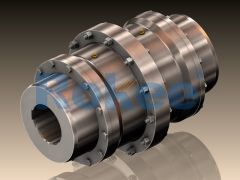
GICL Drum Gear Coupling
GICL drum gear coupling has larger inner teeth width, which can transfer torque while compensating for larger axial displacement. -
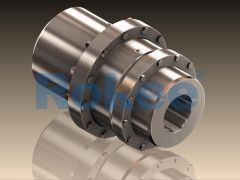
GICLZ Drum Gear Coupling
Half of the GICLZ drum gear coupling adopts a non-toothed semi-coupling sleeve structure, which is usually connected in pairs or used in occasions with small angular displacement. -
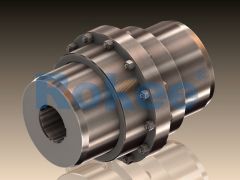
GIICL Drum Gear Coupling
GIICL drum gear coupling has small inner teeth width, which can transfer torque while compensating for small axial displacement. Also, its structure is compact and the moment of inertia is low. -
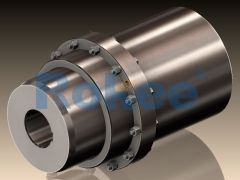
GIICLZ Drum Gear Coupling
Half of the GIICLZ drum gear coupling adopts a non-toothed semi-coupling sleeve structure, which is usually connected in pairs or used in occasions with small angular displacement. Also, its structure is compact and the moment of inertia is low. -
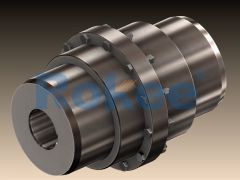
GCLD Drum Gear Coupling
GCLD drum gear coupling is generally used for direct connection with the motor, so it generally has a higher speed and compact structure. -
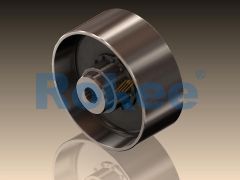
NGCL Drum Gear Coupling
NGCL drum gear coupling is designed with a brake wheel, suitable for situations where braking is required. -
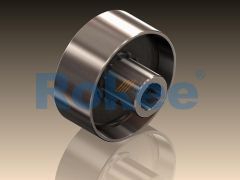
NGCLZ Drum Gear Coupling
NGCLZ drum gear coupling is designed with a brake wheel, suitable for situations where braking is required. Half of its structure adopts a semi-coupling sleeve design, with smaller angular displacement compensation but more stable braking. -
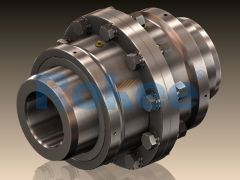
WG Drum Gear Coupling
The overall characteristics of WG drum gear coupling are similar to those of other drum gear couplings, but with a larger modulus design, which can generally transmit greater torque. -
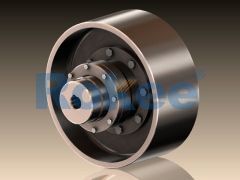
WGZ Drum Gear Coupling
WGZ drum gear coupling is designed with a brake wheel, suitable for shoe type braking. -
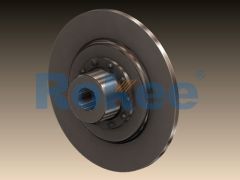
WGP Drum Gear Coupling
WGP drum gear coupling is designed with a brake disc, suitable for disc type braking. -
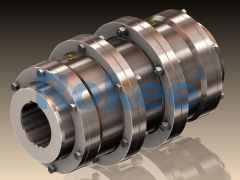
WGT Drum Gear Coupling
WGT drum gear coupling is designed with indirect tube, suitable for long distance torque transfer. -
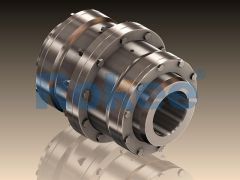
WGC Drum Gear Coupling
WGC drum gear coupling is specially designed for situations where vertical transmission is required, suitable for some vertical transmission systems. -
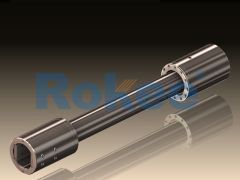
WGJ Drum Gear Coupling
WGJ drum gear coupling is designed with intermediate shaft, suitable for long distance torque transmission, and some are equipped with axial buffers. -
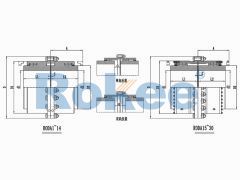
RODA Drum Gear Coupling
The RODA Drum Gear Coupling is the basic type of ROD series coupling, suitable for most situations where the compensation of transmission distance and motion position does not require special increase. -
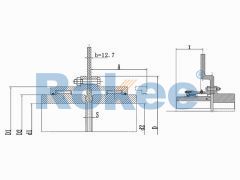
RODP Brake Disc Drum Gear Coupling
The RODP Drum Gear Coupling is a type of ROD series coupling with a brake disc, suitable for transmission situations where braking needs to be used in conjunction with disc brakes. -
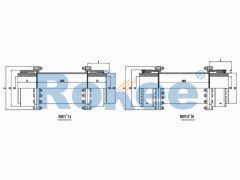
RODT Indirect Tube Drum Gear Coupling
The RODT Drum Gear Coupling is an extended type of ROD series coupling, suitable for increasing transmission distance. -
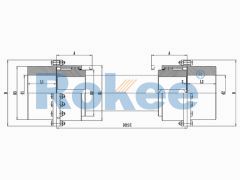
RODX Intermediate Shaft Drum Gear Coupling
RODX Drum Gear Coupling is an extended type of ROD series coupling with a floating shaft design in the middle, suitable for increasing transmission distance. -
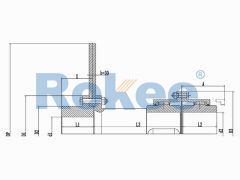
RODF Split Brake Disc Drum Gear Coupling
The RODF Drum Gear Coupling is a type of ROD series coupling with split brake discs, suitable for transmission situations where there is braking demand and the braking position changes when used in conjunction with disc brakes. -
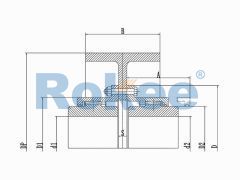
RODW Brake Wheel Drum Gear Coupling
The RODW Drum Gear Coupling is a type of ROD series coupling with brake wheels, suitable for transmission situations where braking needs to be used in conjunction with wheel brakes. -
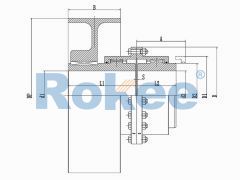
RODU Brake Wheel Drum Gear Coupling
The RODU Drum Gear Coupling is another type of ROD series coupling with brake wheels, suitable for transmission situations where braking needs to be used in conjunction with wheel brakes and applied to one end of the axle, achieving smoother and more reliable braking performance. -
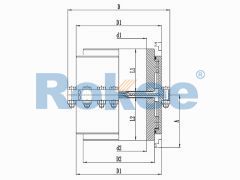
RODV Vertical Installation Drum Gear Coupling
The RODV Drum Gear Coupling is a vertical installation type of the ROD series coupling, suitable for transmission situations that require vertical transmission torque. -
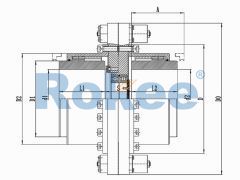
RODM Torsion Protection Drum Gear Coupling
The RODM Drum Gear Coupling is a torque setting form of the ROD series coupling. By adjusting relevant components, the maximum transmission torque can be easily set within a certain range. Suitable for shafting transmission situations that require safe torque operation to protect important machine components from excessive damage.
In the realm of power transmission systems, couplings play an indispensable role as mechanical components that connect two rotating shafts, enabling torque transfer while accommodating misalignments and absorbing operational shocks. Among the diverse range of couplings available, curved-tooth gear couplings stand out for their exceptional performance in heavy-duty and high-torque applications. Unlike their straight-tooth counterparts, the curved tooth profile of these couplings offers enhanced load-bearing capacity, improved misalignment compensation, and reduced wear, making them a preferred choice in industries such as manufacturing, mining, energy, and transportation.
The fundamental design of a curved-tooth gear coupling revolves around two main components: a pair of gear hubs with curved external teeth and a corresponding pair of sleeve couplings (or flanges) with internal curved teeth. The gear hubs are typically mounted on the ends of the shafts that need to be connected, while the sleeve couplings engage with the gear hubs to form a rigid yet flexible connection. The curvature of the teeth is the defining feature of this coupling type, with the tooth profile designed to follow a circular arc or a spiral path. This curved design differs significantly from the linear tooth profile of straight-tooth gear couplings, and it is this difference that gives curved-tooth couplings their unique performance characteristics.
One of the critical design considerations for curved-tooth gear couplings is the tooth contact pattern. The curved teeth are engineered to ensure that contact between the hub and sleeve teeth occurs along a line rather than a single point, as is often the case with straight-tooth couplings. This line contact distributes the transmitted torque over a larger surface area, reducing the stress per unit area and minimizing tooth wear. Additionally, the curvature radius of the teeth is carefully calculated to accommodate different types of misalignments, including angular misalignment (where the shafts are not colinear but intersect at a point), parallel misalignment (where the shafts are parallel but offset), and axial misalignment (where the shafts are displaced along their axial direction). The flexibility provided by the curved teeth allows the coupling to absorb these misalignments without imposing excessive forces on the connected shafts or bearings.
Material selection is another vital aspect of curved-tooth gear coupling design. Given their application in heavy-duty environments, the components of these couplings are typically manufactured from high-strength alloy steels. These materials offer excellent tensile strength, fatigue resistance, and wear resistance, ensuring that the coupling can withstand the high torques and cyclic loads encountered in industrial operations. The gear teeth are often subjected to heat treatment processes such as carburizing, quenching, and tempering to further enhance their surface hardness and core toughness. This heat treatment ensures that the teeth can resist abrasion and indentation while maintaining the flexibility required to accommodate misalignments. In some cases, the tooth surfaces may also be coated with anti-friction materials or lubricants to reduce friction and extend the service life of the coupling.
The working principle of a curved-tooth gear coupling is based on the meshing of the curved teeth on the hub and sleeve components. When torque is applied to one of the shafts, the gear hub connected to that shaft rotates, and the meshing curved teeth transfer this torque to the sleeve coupling. The sleeve coupling then transmits the torque to the other gear hub, which in turn drives the second shaft. The curved tooth profile plays a crucial role in this torque transfer process by ensuring smooth and efficient power transmission. Unlike straight-tooth couplings, which can experience sudden changes in tooth contact during rotation, the curved teeth maintain continuous contact, resulting in a more uniform torque distribution and reduced vibration.
Another key aspect of the working principle is the coupling's ability to accommodate misalignments. When the connected shafts are misaligned, the curved teeth slide and rotate relative to each other within the sleeve coupling. The curvature of the teeth allows for this relative movement without causing binding or excessive stress. For example, in the case of angular misalignment, the curved teeth tilt slightly to maintain contact with the sleeve teeth, ensuring that torque transfer is not interrupted. Similarly, for parallel misalignment, the curved teeth move laterally within the sleeve, accommodating the offset between the shafts. This ability to compensate for misalignments is critical in industrial applications where perfect shaft alignment is often difficult to achieve due to factors such as thermal expansion, structural deflection, or installation errors.
Curved-tooth gear couplings offer a range of advantages over other types of couplings, making them suitable for a wide variety of heavy-duty applications. One of the most significant advantages is their high torque-carrying capacity. The line contact between the curved teeth distributes the torque over a larger surface area, allowing the coupling to handle higher torques than straight-tooth couplings of the same size. This makes curved-tooth gear couplings ideal for use in large machinery such as industrial motors, pumps, compressors, and gearboxes, where high torque transmission is required.
Another major advantage is their excellent misalignment compensation capability. Curved-tooth gear couplings can accommodate greater amounts of angular, parallel, and axial misalignment compared to straight-tooth couplings and many other coupling types. This flexibility reduces the need for precise shaft alignment during installation, saving time and labor costs. It also helps to protect the connected equipment, such as bearings and shafts, from excessive forces and wear caused by misalignment. In addition, the curved tooth profile reduces vibration and noise during operation, resulting in a smoother and more efficient power transmission system.
Durability and long service life are also key benefits of curved-tooth gear couplings. The use of high-strength materials and heat-treated teeth ensures that the coupling can withstand the harsh conditions of industrial environments, including high temperatures, heavy loads, and abrasive particles. The reduced wear due to line contact and smooth tooth meshing further extends the service life of the coupling, minimizing downtime and maintenance costs. Compared to flexible couplings made from elastomeric materials, which can degrade over time due to heat, oil, or chemical exposure, curved-tooth gear couplings are more resistant to environmental factors, making them suitable for use in extreme conditions.
The industrial applications of curved-tooth gear couplings are diverse, spanning multiple sectors where heavy-duty power transmission is essential. In the manufacturing industry, these couplings are widely used in machine tools such as lathes, milling machines, and grinders, where they ensure precise torque transfer and accommodate the misalignments that can occur during machining operations. They are also used in conveyor systems, which are critical for material handling in factories and warehouses. Conveyor systems often experience misalignments due to the long length of the shafts and the weight of the materials being transported, making curved-tooth gear couplings an ideal choice for reliable torque transmission.
The mining industry is another major user of curved-tooth gear couplings. Mining equipment such as excavators, bulldozers, and crushers operate under extreme conditions, requiring couplings that can handle high torques and severe misalignments. Curved-tooth gear couplings are used in these machines to connect the engine to the transmission system, ensuring that power is efficiently transmitted even in rough terrain. They are also used in mining pumps and fans, which are essential for maintaining a safe working environment in mines.
In the energy sector, curved-tooth gear couplings play a crucial role in power generation systems. They are used in thermal power plants to connect the turbine to the generator, transmitting the high torque produced by the turbine to the generator for electricity production. They are also used in wind turbines, where they connect the rotor to the gearbox, accommodating the misalignments caused by the wind load and the rotation of the rotor. The durability and reliability of curved-tooth gear couplings make them well-suited for these applications, where downtime can result in significant financial losses.
The transportation industry also benefits from the use of curved-tooth gear couplings. They are used in heavy-duty vehicles such as trucks, buses, and locomotives, where they connect the engine to the drivetrain. These vehicles often operate under varying load conditions and encounter misalignments due to the movement of the suspension system, making curved-tooth gear couplings an ideal choice for reliable power transmission. They are also used in marine applications, such as ships and boats, where they connect the engine to the propeller shaft, accommodating the misalignments caused by the movement of the vessel in water.
Proper maintenance is essential to ensure the optimal performance and long service life of curved-tooth gear couplings. One of the most important maintenance tasks is regular lubrication. The meshing teeth of the coupling require a continuous supply of lubricant to reduce friction, prevent wear, and dissipate heat. The type of lubricant used should be compatible with the material of the coupling and the operating conditions, such as temperature and load. It is important to follow the manufacturer's recommendations for lubricant type and lubrication intervals to ensure that the coupling remains properly lubricated.
Regular inspection is another key maintenance practice. Inspections should be carried out to check for signs of wear, such as tooth damage, pitting, or corrosion. The coupling should also be checked for proper alignment, as excessive misalignment can lead to increased wear and reduced performance. During inspection, it is important to check the tightness of the bolts and other fasteners, as loose fasteners can cause vibration and damage to the coupling. If any signs of damage or wear are detected, the coupling should be repaired or replaced immediately to prevent further damage to the connected equipment.
In addition to regular lubrication and inspection, proper installation is critical for the performance of curved-tooth gear couplings. During installation, the shafts should be aligned as accurately as possible, even though the coupling can accommodate misalignments. Proper alignment reduces the stress on the coupling and the connected equipment, extending their service life. The coupling should also be installed according to the manufacturer's instructions, ensuring that the gear hubs are properly seated on the shafts and that the sleeve couplings are correctly engaged with the hubs. Improper installation can lead to premature wear, vibration, and failure of the coupling.
Looking ahead, the development of curved-tooth gear couplings is likely to focus on improving their performance and efficiency through advanced design and material technologies. The use of computer-aided design (CAD) and finite element analysis (FEA) tools is already helping to optimize the tooth profile and structure of the coupling, ensuring that it can handle higher torques and misalignments while reducing weight and size. The development of new high-strength and wear-resistant materials is also expected to further enhance the durability and service life of curved-tooth gear couplings. In addition, the integration of condition monitoring technologies, such as sensors and IoT devices, is likely to become more common, allowing for real-time monitoring of the coupling's performance and early detection of potential issues.
In conclusion, curved-tooth gear couplings are essential components in heavy-duty power transmission systems, offering high torque-carrying capacity, excellent misalignment compensation, and long service life. Their unique curved tooth profile ensures smooth and efficient torque transfer, while their robust design makes them suitable for use in a wide range of industrial applications, including manufacturing, mining, energy, and transportation. Proper maintenance and installation are critical to ensuring the optimal performance of these couplings, and ongoing advancements in design and material technologies are likely to further improve their capabilities in the future. As industrial machinery continues to become more powerful and complex, the role of curved-tooth gear couplings in ensuring reliable and efficient power transmission is set to become even more important.
« Curved-tooth Gear Couplings » Post Date: 2023/8/17
URL: https://www.rokeecoupling.com/en/tags/curved-tooth-gear-couplings.html
- 2023-10-27Curved-tooth Gear Coupling Installation Method
- 2023-10-27Internal Structure Of Curved-tooth Gear Coupling
- 2023-10-27Curved-tooth Gear Coupling Radial Error
- 2023-10-27Curved-tooth Gear Couplings Specification
- 2023-10-27Oil Filling Amount Of Curved-tooth Gear Coupling
- 2023-10-27Oil Filling Method For Curved-tooth Gear Coupling
- 2023-10-27Curved-tooth Gear Coupling Shaving Reasons
- 2023-10-27Curved-tooth Gear Coupling Teeth Number
- 2023-10-27Mechanical Drawing Of Curved-tooth Gear Couplings
- 2023-10-27Curved-tooth Gear Couplings Manufacturing Standard
- 2023-10-27Curved-tooth Gear Coupling Load Capacity
- 2023-10-27Curved-tooth Gear Coupling Lubrication Cycle
- 2023-10-27Curved-tooth Gear Coupling Lubrication Hole
- 2023-10-27Curved-tooth Gear Coupling Lubrication Method
- 2023-10-27Main Parts Of Curved-tooth Gear Coupling
- 2023-10-27Curved-tooth Gear Coupling Maintenance Method
- 2023-10-27Curved-tooth Gear Coupling Main Applications
- 2023-10-27Curved-tooth Gear Coupling Installation Clearance
- 2023-10-27Curved-tooth Gear Coupling Installation Accuracy
- 2023-10-27Inspection Standard For Curved-tooth Gear Couplings
- 2023-10-27Curved-tooth Gear Couplings Produce
- 2023-10-27How To Use Curved-tooth Gear Coupling
- 2023-10-27Inner Gear Ring Of Curved-tooth Gear Coupling
- 2023-10-27How To Install The Curved-tooth Gear Coupling
- 2023-10-27How To Drive Curved-tooth Gear Couplings
- 2023-10-27How To Draw A Curved-tooth Gear Coupling
- 2023-10-27How To Disassemble The Curved-tooth Gear Coupling
- 2023-10-27How To Choose A Curved-tooth Gear Coupling
- 2023-10-27How To Calibrate The Curved-tooth Gear Coupling
- 2023-10-27How To Brake The Curved-tooth Gear Coupling
- 2023-10-27How To Align The Curved-tooth Gear Coupling
- 2023-10-27How To Adjust The Curved-tooth Gear Coupling
- 2023-10-27How To Add Oil To The Curved-tooth Gear Coupling
- 2023-10-27Hot Installation Of Curved-tooth Gear Coupling
- 2023-10-27Height Difference Of Curved-tooth Gear Coupling
- 2023-10-27Heat Treatment Requirements For Curved-tooth Gear Couplings
- 2023-10-27Tooth Surface Hardness Of Curved-tooth Gear Couplings
- 2023-10-27Curved-tooth Gear Couplings Hardness Requirements
- 2023-10-27Gear Backlash Of Curved-tooth Gear Coupling
- 2023-10-27Gear Action Of Curved-tooth Gear Coupling
- 2023-10-27Curved-tooth Gear Coupling Franchise
- 2023-10-27Engineering Drawing Of Curved-tooth Gear Coupling
- 2023-10-27Fault Analysis Of Curved-tooth Gear Coupling
- 2023-10-27Failure Forms Of Curved-tooth Gear Couplings
- 2023-10-27Factory Price Of Curved-tooth Gear Coupling
- 2023-10-27External Tooth Surface Triangle Of Curved-tooth Gear Coupling
- 2023-10-27End Face Clearance Of Curved-tooth Gear Coupling
- 2023-10-27Drum Tooth orientation Of Curved-tooth Gear Coupling
- 2023-10-27Drum Shape Of Curved-tooth Gear Coupling
- 2023-10-27Curved-tooth Gear Coupling Drawing Method
- 2023-10-27Curved-tooth Gear Coupling Displacement
- 2023-10-27Curved-tooth Gear Coupling Disassembly Method
- 2023-10-27Curved-tooth Gear Coupling Disadvantages
- 2023-10-27Curved-tooth Gear Couplings Dimensions
- 2023-10-27Curved-tooth Gear Coupling Design Requirements
- 2023-10-27Curved-tooth Gear Coupling Design Method
- 2023-10-27Curved-tooth Gear Coupling Description
- 2023-10-27Curved-tooth Gear Coupling Deflection
- 2023-10-27C-value Of Curved-tooth Gear Coupling
- 2023-10-27Curved-tooth Gear Coupling With Internal Gear Ring
- 2023-10-27Curved-tooth Gear Coupling With Nylon External Teeth
- 2023-10-27Curved-tooth Gear Coupling Upper Gland
- 2023-10-27Curved-tooth Gear Coupling Torque
- 2023-10-27Curved-tooth Gear Coupling Tooth Tip Arc
- 2023-10-27Curved-tooth Gear Coupling Tooth Number Modulus
- 2023-10-27Curved-tooth Gear Coupling Tooth Height
- 2023-10-27Curved-tooth Gear Coupling Technology
- 2023-10-27Curved-tooth Gear Coupling Structure
- 2023-10-27Curved-tooth Gear Coupling Specialty
- 2023-10-27Curved-tooth Gear Coupling Slipping
- 2023-10-27Curved-tooth Gear Coupling Shaft Extension
- 2023-10-27Curved-tooth Gear Coupling Outer Sleeve
- 2023-10-27Curved-tooth Gear Coupling Nylon Sleeve
- 2023-10-27Curved-tooth Gear Coupling Model
- 2023-10-27Curved-tooth Gear Coupling Making Company
- 2023-10-27Curved-tooth Gear Coupling Lubricating Oil
- 2023-10-27Curved-tooth Gear Coupling Lubricating Grease
- 2023-10-27Curved-tooth Gear Coupling Inspection
- 2023-10-27Curved-tooth Gear Coupling Housing
- 2023-10-27Curved-tooth Gear Coupling Gear Module
- 2023-10-27Curved-tooth Gear Coupling Forward & Reverse
- 2023-10-27Curved-tooth Gear Coupling Direct Pin
- 2023-10-27Curved-tooth Gear Coupling Deflection Angle
- 2023-10-27Curved-tooth Gear Coupling Connecting Bolts
- 2023-10-27Curved-tooth Gear Coupling Code
- 2023-10-27Curved-tooth Gear Coupling Centering Ball
- 2023-10-27Curved-tooth Gear Coupling Bulge Amount
- 2023-10-27Curved-tooth Gear Coupling Brake Wheel
- 2023-10-27Curved-tooth Gear Coupling Concentricity
- 2023-10-27Curved-tooth Gear Coupling Composition
- 2023-10-27Curved-tooth Gear Coupling Compensation Range
- 2023-10-27Compensation Calculation Of Curved-tooth Gear Coupling
- 2023-10-27Common Problems With Curved-tooth Gear Couplings
- 2023-10-27Common Pressure Angles For Curved-tooth Gear Couplings
- 2023-10-27Common Faults Of Curved-tooth Gear Coupling
- 2023-10-27Coaxiality Requirements For Curved-tooth Gear Couplings
- 2023-10-27Curved-tooth Gear Coupling Clearance
- 2023-10-27Centering Standard For Curved-tooth Gear Couplings
- 2023-10-27Centering Requirements For Curved-tooth Gear Couplings
- 2023-10-27Curved-tooth Gear Coupling Centering Method
- 2023-10-27Can The Curved-tooth Gear Coupling Be Disassembled
- 2023-10-27Curved-tooth Gear Coupling Calibration
- 2023-10-27Curved-tooth Gear Coupling Calculation
- 2023-10-27Bolt Strength Of Curved-tooth Gear Coupling
- 2023-10-27Curved-tooth Gear Coupling Bolts
- 2023-10-27Part Name Of Curved-tooth Gear Coupling
- 2023-10-27Curved-tooth Gear Coupling Parameter
- 2023-10-27Process Standard For Curved-tooth Gear Coupling
- 2023-10-27Curved-tooth Gear Coupling Pressure Angle
- 2023-10-27Curved-tooth Gear Coupling Principle
- 2023-10-27Curved-tooth Gear Coupling Service Life
- 2023-10-27Shaft End Dimensions Of Curved-tooth Gear Coupling
- 2023-10-27Strength Verification Of Curved-tooth Gear Coupling
- 2023-10-27Curved-tooth Gear Coupling Structural Characteristics
- 2023-10-27Curved-tooth Gear Coupling Structural Composition
- 2023-10-27Curved-tooth Gear Coupling Structural Schematic Diagram
- 2023-10-27Technical Data Of Curved-tooth Gear Coupling
- 2023-10-27Technical Requirements For Curved-tooth Gear Couplings
- 2023-10-27Curved-tooth Gear Coupling Technical Specifications
- 2023-10-27Technical Standard For Curved-tooth Gear Couplings
- 2023-10-27Curved-tooth Gear Coupling Function
- 2023-10-27Curved-tooth Gear Coupling Outer Gear Sleeve
- 2023-10-27Tooth Detachment Of Curved-tooth Gear Coupling
- 2023-10-27Curved-tooth Gear Coupling Triangle Tooth Surface
- 2023-10-27Advantages Of Curved-tooth Gear Couplings
- 2023-10-27Curved-tooth Gear Coupling Modulus
- 2023-10-27Curved-tooth Gear Couplings Material
- 2023-10-27What Oil Is Used For Curved-tooth Gear Couplings
- 2023-10-27Curved-tooth Gear Coupling Working Condition Coefficient
- 2023-10-27Wear Standard For Curved-tooth Gear Couplings
- 2023-10-27Inner Teeth Of Curved-tooth Gear Coupling
- 2023-10-27Curved-tooth Gear Coupling Use
- 2023-10-25Curved-tooth Gear Couplings Wholesale Factory
- 2023-10-18Tooth Surface Hardness Of Curved-tooth Gear Coupling
- 2023-10-18Curved-tooth Gear Couplings For Sale
- 2023-10-18Curved-tooth Gear Couplings From China
- 2023-10-18Curved-tooth Gear Couplings Wholesale
- 2023-10-18Curved-tooth Gear Coupling Make
- 2023-10-18Curved-tooth Gear Coupling Drawing
- 2023-10-16Curved-tooth Gear Coupling Sectional View
- 2023-10-16Curved-tooth Gear Coupling Purpose
- 2023-10-16High Performance Curved-tooth Gear Coupling
- 2023-10-16Curved-tooth Gear Coupling Module
- 2023-10-16Gear Processing Of Curved-tooth Gear Coupling
- 2023-10-16Curved-tooth Gear Coupling External Gear Sleeve
- 2023-10-16Curved-tooth Gear Coupling Exploded View
- 2023-10-16Curved-tooth Gear Coupling Tolerance
- 2023-10-16Cheaper Curved-tooth Gear Couplings
- 2023-10-16Curved-tooth Gear Coupling Wear Condition
- 2023-10-13Curved-tooth Gear Coupling Tooth Clearance
- 2023-10-13Curved-tooth Gear Couplings Transmission Efficiency
- 2023-10-13Curved-tooth Gear Couplings Vertical Application
- 2023-10-09Material Of Curved-tooth Gear Coupling
- 2023-10-09Opening Degree Of Curved-tooth Gear Coupling
- 2023-10-09Shape Of Curved-tooth Gear Coupling
- 2023-10-09Standard Model Of Curved-tooth Gear Coupling
- 2023-10-09Strength Of Curved-tooth Gear Coupling
- 2023-10-08Price Of Curved-tooth Gear Coupling
- 2023-10-08Production Of Curved-tooth Gear Couplings
- 2023-10-08Specification Of Curved-tooth Gear Coupling
- 2023-10-07Wholesale Manufacturer Of Curved-tooth Gear Couplings
- 2023-10-07Supply Of Curved-tooth Gear Coupling
- 2023-10-07Distributor Of Curved-tooth Gear Couplings
- 2023-10-07Curved-tooth Gear Coupling Enterprise
- 2023-10-07Coaxiality Of Curved-tooth Gear Coupling
- 2023-10-07Clearance Standard For Curved-tooth Gear Couplings
- 2023-10-07Causes Of Abnormal Noise In Curved-tooth Gear Couplings
- 2023-10-07Brand Of Curved-tooth Gear Coupling
- 2023-10-07Bolt Specifications For Curved-tooth Gear Coupling
- 2023-10-07Basic Structure Of Curved-tooth Gear Coupling
- 2023-10-07Axial Positioning Of Curved-tooth Gear Coupling
- 2023-10-07Axial Movement Of Curved-tooth Gear Coupling
- 2023-09-27Center Deviation Of Curved-tooth Gear Coupling
- 2023-09-27Can The Curved-tooth Gear Coupling Retract And Retract
- 2023-09-27Basic Knowledge Of Curved-tooth Gear Couplings
- 2023-09-27Axial Displacement Of Curved-tooth Gear Coupling
- 2023-09-27Axial Direction Of Curved-tooth Gear Coupling
- 2023-09-27Curved-tooth Gear Coupling Bears Bending Moment
- 2023-09-27Curved-tooth Gear Coupling Balance
- 2023-09-27Curved-tooth Gear Coupling Baffle
- 2023-09-27Curved-tooth Gear Coupling And Internal And External Teeth
- 2023-09-27Curved-tooth Gear Coupling & Half Coupling
- 2023-09-27Curved-tooth Gear Coupling & All Steel Gear Coupling
- 2023-09-27Curved-tooth Gear Coupling Accessories
- 2023-09-27Cost Of Curved-tooth Gear Coupling
- 2023-09-27Compensation For Angular Displacement Of Curved-tooth Gear Coupling
- 2023-09-27Characteristics Of Curved-tooth Gear Coupling
- 2023-09-27Circular Arc Radius Of Curved-tooth Gear Coupling
- 2023-09-27Calculation Method For Curved-tooth Gear Coupling
- 2023-09-27Calculation Formula For Curved-tooth Gear Coupling
- 2023-09-27Axial Compensation Of Curved-tooth Gear Coupling
- 2023-09-27Axial Compensation Amount Of Curved-tooth Gear Coupling
- 2023-09-27Assembly Tolerance Of Curved-tooth Gear Coupling
- 2023-09-27Assembly Requirements For Curved-tooth Gear Couplings
- 2023-09-27Application Approaches Of Curved-tooth Gear Couplings
- 2023-09-27Angular Vibration Of Curved-tooth Gear Coupling
- 2023-09-27Angular Displacement Of Curved-tooth Gear Coupling
- 2023-09-25Sales Of Curved-tooth Gear Couplings
- 2023-09-25Processing Of Curved-tooth Gear Coupling
- 2023-09-25Curved-tooth Gear Coupling With Brake Disc
- 2023-09-25Curved-tooth Gear Coupling Processing Factory
- 2023-09-25Curved-tooth Gear Coupling Company
- 2023-09-25Coaxiality Standard For Curved-tooth Gear Couplings
- 2023-09-25Compensation Amount Of Curved-tooth Gear Coupling
- 2023-09-25Classification Of Curved-tooth Gear Couplings
- 2023-09-25Bolt Model Of Curved-tooth Gear Coupling
- 2023-09-23Axial Clearance Of Curved-tooth Gear Coupling
- 2023-09-23Application Range Of Curved-tooth Gear Coupling
- 2023-09-23Assembly Method For Curved-tooth Gear Coupling
- 2023-09-23Angle Of Curved-tooth Gear Coupling
- 2023-09-23Analysis Of Curved-tooth Gear Coupling
- 2023-09-23Allowable Deviation Of Curved-tooth Gear Coupling
- 2023-09-23Alignment Standard For Curved-tooth Gear Couplings
- 2023-09-23Alignment Range Of Curved-tooth Gear Coupling
- 2023-09-23Alignment Of Concentricity For Curved-tooth Gear Couplings
- 2023-09-23Alignment Method For Curved-tooth Gear Coupling
- 2023-09-23Adjusting The Direction Of The Curved-tooth Gear Coupling
- 2023-09-23Advantages And Disadvantages Of Curved-tooth Gear Coupling
- 2023-09-23Adjustment Of Coaxiality Of Curved-tooth Gear Coupling
- 2023-09-23Adjusting The Clearance Of The Curved-tooth Gear Coupling
- 2023-09-23Add Springs Inside The Curved-tooth Gear Coupling
- 2023-09-23Accuracy Requirements For Curved-tooth Gear Couplings
- 2023-09-23Acceptance Standards For Curved-tooth Gear Couplings
- 2023-09-23Customized Curved-tooth Gear Coupling
- 2023-09-23Curved-tooth Gear Coupling Transmission Method
- 2023-09-23Design Standard For Curved-tooth Gear Couplings
- 2023-09-23How Much Is The Curved-tooth Gear Coupling
- 2023-09-23Effective Tooth Height Of Curved-tooth Gear Coupling
- 2023-09-23Force Analysis Of Curved-tooth Gear Coupling
- 2023-09-22External Teeth Of Curved-tooth Gear Coupling
- 2023-09-22Manufacturer Of Curved-tooth Gear Coupling
- 2023-09-22Profile Of Curved-tooth Gear Coupling
- 2023-09-22Selection Of Curved-tooth Gear Coupling
- 2023-09-22Structural Diagram Of Curved-tooth Gear Coupling
- 2023-09-22Transmission Method Of Curved-tooth Gear Coupling
- 2023-09-22Tooth Parameters Of Curved-tooth Gear Coupling
- 2023-09-22Wholesale Of Curved-tooth Gear Couplings
- 2023-09-22Types Of Curved-tooth Gear Couplings
- 2023-09-22Requirements For Shaft Alignment Of Curved-tooth Gear Couplings
- 2023-09-22Preferred Enterprise For Curved-tooth Gear Coupling
- 2023-09-22High Quality Merchants Of Curved-tooth Gear Couplings
- 2023-09-22Drawing Of Curved-tooth Gear Coupling
- 2023-09-22Design Of Curved-tooth Gear Coupling
- 2023-09-22Curved-tooth Gear Coupling Supplier
- 2023-09-22Curved-tooth Gear Coupling Manufacturer
- 2023-09-22Curved-tooth Gear Coupling Factory
- 2023-09-22Advantages Of Curved-tooth Gear Coupling