Cardan Couplings
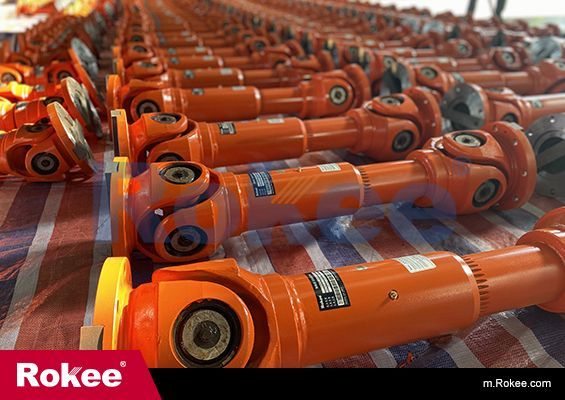
Rokee® is Cardan Couplings Supplier from China, Support Customization and Export, due to excellent quality, complete technical services and superior cost performance, Rokee® Cardan Couplings have been serving more than 60 countries and regions in the world, effectively operating in many corners of the world.
Our Cardan Coupling is widely used and have many impressive records. From micro products for modern logistics, artificial intelligence machinery, light products used in the paper industry, high speed and high performance products for engineering and railway vehicles, to super heavy duty products used in metallurgical rolling system systems, Rokee has won us with mature products and quality Long-term trust of customers, widely exported to Europe, America and other parts of the world.
-
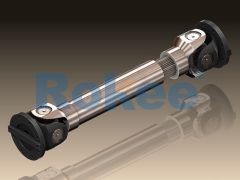
SWC-BH Standard Telescopic Welded Universal Coupling
SWC-BH Universal Coupling adopts integrated fork head layout, with the rotary diameter of 1600mm and torque transmission distance of more than 30m. SWC-BH Cardan Shaft is widely used in steel rolling machinery, crane transport machinery and other heavy equipment fields. -
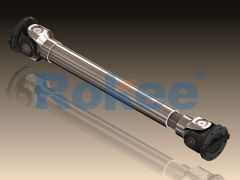
SWC-CH Long Telescopic Welded Universal Coupling
SWC-CH Universal Coupling adopts integrated fork head layout, with the rotary diameter of 1600mm and torque transmission distance of more than 30m. SWC-CH Cardan Shaft is widely used in steel rolling machinery, crane transport machinery and other heavy equipment fields. -
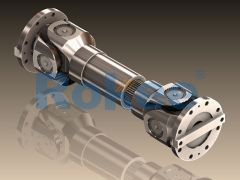
SWC-DH Short Telescopic Welded Universal Coupling
SWC-DH Universal Coupling adopts integrated fork head layout, with the rotary diameter of 1600mm and torque transmission distance of more than 30m. SWC-DH Cardan Shaft is widely used in steel rolling machinery, crane transport machinery and other heavy equipment fields. -
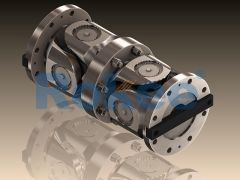
SWC-WD Non-telescopic Short Universal Coupling
SWC-WD Universal Coupling adopts integrated fork head layout, with the rotary diameter of 1600mm and torque transmission distance of more than 30m. SWC-WD Cardan Shaft is widely used in steel rolling machinery, crane transport machinery and other heavy equipment fields. -
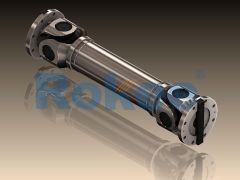
SWC-WH Non-telescopic Welded Universal Coupling
SWC-WH Universal Coupling adopts integrated fork head layout, with the rotary diameter of 1600mm and torque transmission distance of more than 30m. SWC-WH Cardan Shaft is widely used in steel rolling machinery, crane transport machinery and other heavy equipment fields. -
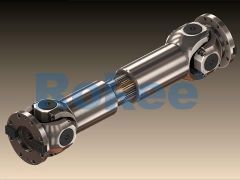
SWP-A Universal Coupling
SWP-A Universal Coupling adopts integrated fork head layout. Similar to the use of the SWC universal coupling, SWP-A Cardan Shaft is mainly used in the field of heavy-duty large equipment, with a rotary diameter of up to 1200mm. -
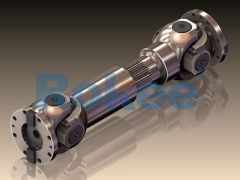
SWP-B Universal Coupling
SWP-B Universal Coupling adopts integrated fork head layout. Similar to the use of the SWC universal coupling, SWP-B Cardan Shaft is mainly used in the field of heavy-duty large equipment, with a rotary diameter of up to 1200mm. -
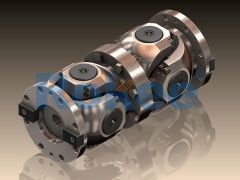
SWP-C Universal Coupling
SWP-C Universal Coupling adopts integrated fork head layout. Similar to the use of the SWC universal coupling, SWP-C Cardan Shaft is mainly used in the field of heavy-duty large equipment, with a rotary diameter of up to 1200mm. -
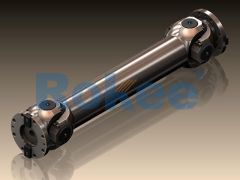
SWP-D Universal Coupling
SWP-D Universal Coupling adopts integrated fork head layout. Similar to the use of the SWC universal coupling, SWP-D Cardan Shaft is mainly used in the field of heavy-duty large equipment, with a rotary diameter of up to 1200mm.
In the realm of mechanical power transmission, the ability to transfer rotational motion between misaligned shafts stands as a critical challenge. From industrial machinery to automotive drivetrains, many applications require torque to be transmitted efficiently even when the input and output shafts are not perfectly colinear. Among the various solutions developed to address this issue, the Cardan coupling has emerged as a reliable and versatile component. Also known as a universal joint or Hooke's joint, the Cardan coupling has a long history of innovation and adaptation, making it an indispensable part of countless mechanical systems.
The concept of the Cardan coupling traces back to the 16th century, with its name derived from the Italian mathematician and physicist Gerolamo Cardano, who first documented its mechanical principles. However, historical records suggest that similar devices were used in ancient civilizations, such as the Chinese Han Dynasty, for applications like water mills. Despite its ancient origins, the Cardan coupling has undergone significant refinements over the centuries, adapting to the increasing demands of industrialization and advanced technology. Today, it remains a cornerstone of power transmission systems, valued for its simplicity, durability, and ability to accommodate angular misalignment.
Fundamental Principles and Structural Design
At its core, a basic Cardan coupling consists of two yokes (also referred to as forks), a cross-shaped intermediate component (known as the cross or spider), and four bearing assemblies. Each yoke is attached to one of the shafts that need to be connected—one to the input shaft and the other to the output shaft. The cross component features four trunnions (cylindrical projections), one at each end of its perpendicular arms. These trunnions fit into the bearings mounted within the yokes, allowing the cross to rotate freely relative to each yoke. This design enables the coupling to accommodate angular misalignment between the two shafts, as the cross can pivot within the yokes to adjust to the angle between the shafts.
The key principle behind the Cardan coupling's operation lies in its ability to convert the rotational motion of the input shaft into a corresponding rotational motion of the output shaft, even when the shafts are misaligned. When the input shaft rotates, it drives the attached yoke, which in turn rotates the cross. The cross then transmits this rotational force to the output yoke, causing the output shaft to rotate. The bearing assemblies play a crucial role in reducing friction between the trunnions and the yokes, ensuring smooth operation and minimizing wear. It is important to note, however, that a single Cardan coupling introduces a degree of velocity fluctuation in the output shaft. This phenomenon, known as angular velocity variation, occurs because the angle between the cross and each yoke changes as the coupling rotates, leading to periodic changes in the output speed. To mitigate this issue, engineers often use a double Cardan coupling, which consists of two single Cardan couplings connected by an intermediate shaft. The intermediate shaft ensures that the angular misalignment of the first coupling is canceled out by the second, resulting in a constant output velocity.
The structural design of Cardan couplings can vary significantly based on the specific application requirements. For example, in applications with high torque demands, the yokes and cross are often designed with larger dimensions and thicker walls to withstand the mechanical stress. In contrast, applications with limited space may use compact Cardan couplings with smaller profiles. The bearing assemblies also vary, with options including needle bearings, ball bearings, and bushings, each offering different levels of load capacity, friction resistance, and durability. Additionally, some Cardan couplings feature protective covers or shields to prevent the ingress of dust, debris, and moisture, which can damage the bearings and other components over time.
Material Considerations for Cardan Couplings
The selection of materials for Cardan couplings is a critical aspect of their design, as it directly impacts their performance, durability, and suitability for specific applications. The choice of materials depends on various factors, including the torque and speed requirements, operating environment (temperature, humidity, corrosive substances), and weight constraints. The most common materials used in the construction of Cardan couplings include carbon steel, alloy steel, stainless steel, and aluminum alloys, each with its own unique properties and advantages.
Carbon steel is a popular choice for many standard Cardan coupling applications due to its high strength, durability, and cost-effectiveness. It offers excellent torque-carrying capacity and is relatively easy to machine, making it suitable for a wide range of industrial and automotive applications. However, carbon steel is prone to corrosion, so it is often coated with materials like zinc or paint to protect it from environmental damage.
Alloy steel, which contains additional elements like chromium, nickel, and molybdenum, offers enhanced mechanical properties compared to carbon steel. It has higher strength, better toughness, and improved wear resistance, making it ideal for high-torque and high-speed applications. Alloy steel Cardan couplings are commonly used in heavy machinery, such as construction equipment, mining machinery, and industrial gearboxes, where reliability and durability are paramount.
Stainless steel is chosen for applications that require resistance to corrosion and oxidation. It is particularly suitable for use in harsh environments, such as marine applications, food processing plants, and chemical facilities, where exposure to moisture, saltwater, or corrosive chemicals is common. Stainless steel Cardan couplings offer good strength and durability while maintaining their performance in corrosive conditions, though they are generally more expensive than carbon or alloy steel alternatives.
Aluminum alloys are used in applications where weight reduction is a priority, such as in aerospace, automotive, and robotics. Aluminum is lightweight yet offers sufficient strength for many low to medium torque applications. It also has good thermal conductivity, which helps dissipate heat generated during operation. However, aluminum alloys have lower torque-carrying capacity and wear resistance compared to steel, so they are not suitable for heavy-duty applications.
In addition to the main structural components, the bearing assemblies of Cardan couplings also require careful material selection. Bearings are typically made from high-carbon chromium steel or stainless steel, with rolling elements (balls or needles) made from hardened steel to ensure durability and low friction. The choice of bearing material is often influenced by the operating temperature and load conditions, with high-temperature applications requiring materials that can withstand thermal expansion and maintain their properties at elevated temperatures.
Applications of Cardan Couplings Across Industries
The versatility and reliability of Cardan couplings have made them indispensable across a wide range of industries and applications. Their ability to accommodate angular misalignment, transmit high torque, and operate in various environmental conditions has led to their adoption in numerous mechanical systems. Below are some of the key industries and applications where Cardan couplings play a critical role.
Automotive Industry
The automotive industry is one of the largest users of Cardan couplings, where they are primarily used in drivetrains to transmit torque from the engine to the wheels. In rear-wheel-drive and four-wheel-drive vehicles, the drivetrain consists of a transmission, a propeller shaft (drive shaft), and a differential. Cardan couplings are used at both ends of the propeller shaft to connect it to the transmission and the differential, allowing for angular misalignment between these components. This misalignment occurs due to the movement of the suspension as the vehicle travels over uneven terrain, and the Cardan coupling ensures that torque is transmitted smoothly despite these changes.
In addition to drivetrains, Cardan couplings are also used in other automotive components, such as steering systems and power take-off (PTO) units. In steering systems, they help transmit rotational motion from the steering wheel to the steering rack or box, accommodating the misalignment between the steering column and the steering mechanism. PTO units, which are used to transfer power from the vehicle's engine to auxiliary equipment like pumps or generators, also rely on Cardan couplings to connect the PTO shaft to the engine or transmission.
Industrial Machinery
Industrial machinery is another major application area for Cardan couplings, where they are used in a wide range of equipment, including conveyors, pumps, compressors, mixers, and gearboxes. In conveyor systems, which are used to transport materials in factories, warehouses, and mining operations, Cardan couplings connect the motor to the conveyor belt drive, accommodating misalignment between the motor shaft and the conveyor drive shaft. This ensures that the conveyor operates smoothly and efficiently, even if the shafts are not perfectly aligned due to installation errors or structural movement.
Pumps and compressors, which are used to move fluids and gases in industrial processes, also rely on Cardan couplings to transmit torque from the motor to the pump or compressor shaft. These applications often require high torque transmission and may involve misalignment due to the mounting of the motor and pump/compressor. Cardan couplings provide a reliable solution, ensuring that the equipment operates efficiently and with minimal downtime. Similarly, mixers and agitators, which are used in chemical, pharmaceutical, and food processing industries, use Cardan couplings to connect the motor to the mixing shaft, accommodating the misalignment that may occur due to the weight of the mixing impeller or the movement of the tank.
Aerospace and Defense
In the aerospace and defense industries, Cardan couplings are used in a variety of applications, including aircraft engines, helicopter rotor systems, and military vehicles. Aircraft engines require precise and reliable power transmission between various components, such as the turbine and the accessory gearbox. Cardan couplings are used to connect these components, accommodating the slight misalignments that may occur due to thermal expansion and contraction during engine operation. Similarly, helicopter rotor systems use Cardan couplings to transmit torque from the engine to the rotor, allowing for the angular misalignment between the engine shaft and the rotor shaft.
Military vehicles, such as tanks and armored personnel carriers, also use Cardan couplings in their drivetrains and auxiliary systems. These vehicles operate in harsh and demanding environments, requiring components that can withstand high torque, vibration, and extreme temperatures. Cardan couplings, made from high-strength alloy steel or stainless steel, provide the necessary durability and reliability, ensuring that the vehicles can operate effectively in challenging conditions.
Marine Industry
The marine industry uses Cardan couplings in ship propulsion systems, where they connect the engine to the propeller shaft. Ship propulsion systems often involve significant misalignment between the engine and the propeller shaft due to the ship's hull flexing during operation. Cardan couplings accommodate this misalignment, ensuring that torque is transmitted efficiently from the engine to the propeller. They are also used in other marine equipment, such as pumps, winches, and cranes, where reliable power transmission is essential.
In marine applications, corrosion resistance is a critical factor, so Cardan couplings are often made from stainless steel or other corrosion-resistant materials. They may also feature protective covers to prevent the ingress of saltwater and marine debris, which can damage the bearings and other components.
Evolving Trends and Innovations in Cardan Coupling Design
As technology advances and engineering requirements become more demanding, the design and performance of Cardan couplings continue to evolve. Recent innovations focus on improving efficiency, reducing maintenance requirements, enhancing durability, and adapting to new application environments. Below are some of the key trends shaping the future of Cardan couplings.
Advancements in Material Technology
The development of new materials and material processing techniques is driving improvements in Cardan coupling performance. For example, the use of advanced high-strength steels and composite materials is allowing for the design of lighter, stronger, and more durable couplings. Composite materials, such as carbon fiber-reinforced polymers, offer high strength-to-weight ratios, making them ideal for applications where weight reduction is critical, such as aerospace and automotive. These materials also have good corrosion resistance and fatigue strength, reducing the need for maintenance and extending the service life of the coupling.
Additionally, advancements in heat treatment and surface engineering techniques are improving the wear resistance and durability of Cardan coupling components. Processes like carburizing, nitriding, and hard chrome plating are used to enhance the surface hardness of the yokes, cross, and trunnions, reducing wear and extending the life of the coupling. These techniques are particularly beneficial in high-torque and high-speed applications, where wear and fatigue are major concerns.
Integration of Smart Technologies
The integration of smart technologies, such as sensors and condition monitoring systems, is becoming increasingly common in Cardan couplings. These technologies allow for real-time monitoring of the coupling's performance, including temperature, vibration, and torque levels. By detecting early signs of wear, misalignment, or damage, condition monitoring systems can help prevent unexpected failures and reduce downtime. This is particularly important in critical applications, such as power generation, aerospace, and industrial manufacturing, where equipment failure can have significant economic and safety consequences.
Some advanced Cardan couplings are equipped with wireless sensors that transmit data to a central monitoring system, allowing for remote monitoring and predictive maintenance. This enables maintenance teams to schedule repairs and replacements before a failure occurs, improving the reliability and efficiency of the mechanical system. Additionally, the use of IoT (Internet of Things) technology allows for the integration of Cardan coupling data with other system data, providing a comprehensive view of the entire mechanical system's performance.
Optimization for Energy Efficiency
With the growing focus on energy efficiency and sustainability, there is a growing demand for Cardan couplings that minimize energy loss. Energy loss in Cardan couplings primarily occurs due to friction in the bearing assemblies and the angular velocity variation in single couplings. To address this, engineers are developing new bearing designs with lower friction coefficients, such as ceramic bearings and self-lubricating bearings. These bearings reduce friction, improving the overall efficiency of the coupling.
Additionally, the optimization of the cross and yoke design is helping to reduce angular velocity variation, minimizing energy loss and improving the smoothness of operation. The use of double Cardan couplings is also increasing in applications where constant output velocity is critical, as they eliminate the velocity fluctuation associated with single couplings. These advancements are helping to reduce the energy consumption of mechanical systems, making them more sustainable and cost-effective.
Customization for Specialized Applications
As new industries and applications emerge, there is a growing need for customized Cardan couplings tailored to specific requirements. For example, the renewable energy sector, particularly wind and solar power, requires Cardan couplings that can operate in harsh outdoor environments and accommodate the unique misalignment and torque requirements of wind turbines and solar trackers. Similarly, the robotics and automation industry requires compact, lightweight Cardan couplings that can transmit torque with high precision.
Manufacturers are responding to this demand by offering customized Cardan coupling designs, including custom sizes, materials, and configurations. Advanced manufacturing techniques, such as 3D printing, are also enabling the production of complex, customized components with tight tolerances. This allows for the development of Cardan couplings that are perfectly suited to the specific needs of each application, improving performance and reliability.
Conclusion
The Cardan coupling has come a long way since its ancient origins, evolving into a sophisticated and versatile component that plays a critical role in modern power transmission systems. Its ability to accommodate angular misalignment, transmit high torque, and operate in a wide range of environments has made it indispensable across industries such as automotive, industrial machinery, aerospace, defense, and marine.
The design and performance of Cardan couplings continue to evolve, driven by advancements in material technology, the integration of smart technologies, the focus on energy efficiency, and the demand for customization. These innovations are improving the reliability, efficiency, and durability of Cardan couplings, making them well-suited to meet the evolving needs of modern engineering.
As industries continue to advance and new challenges emerge, the Cardan coupling will undoubtedly remain a key component in power transmission systems. Its simplicity, versatility, and proven reliability ensure that it will continue to be used in a wide range of applications for years to come, adapting to the changing demands of the global engineering landscape.
« Cardan Couplings » Post Date: 2023/8/18
URL: https://www.rokeecoupling.com/en/tags/cardan-couplings.html
- 2023-11-06Cardan Couplings Wholesale
- 2023-11-06Types of Cardan Couplings
- 2023-11-06Cardan Couplings Supply
- 2023-11-06Cardan Coupling Suppliers
- 2023-11-06Cardan Coupling Structural Diagram
- 2023-11-06Cardan Coupling Specifications
- 2023-11-06Cardan Coupling Size Chart
- 2023-11-06Cardan Coupling Purpose
- 2023-11-06Cardan Coupling Price
- 2023-11-06Cardan Coupling Parts
- 2023-11-06Model of Cardan Couplings
- 2023-11-06Cardan Couplings Manufacturer
- 2023-11-06Cardan Coupling Make
- 2023-11-06Cardan Couplings For Sale
- 2023-11-06Cardan Couplings Factory
- 2023-11-06Cardan Coupling Function
- 2023-11-06Cardan Coupling Drawing
- 2023-11-06Cardan Coupling Disadvantages
- 2023-11-06Cardan Coupling Design
- 2023-11-06Custom Cardan Coupling
- 2023-11-06Cardan Couplings Company
- 2023-11-06Cardan Couplings Catalogue
- 2023-11-06Cardan Coupling Application
- 2023-11-06Advantages of Cardan Couplings