Plum Blossom Couplings
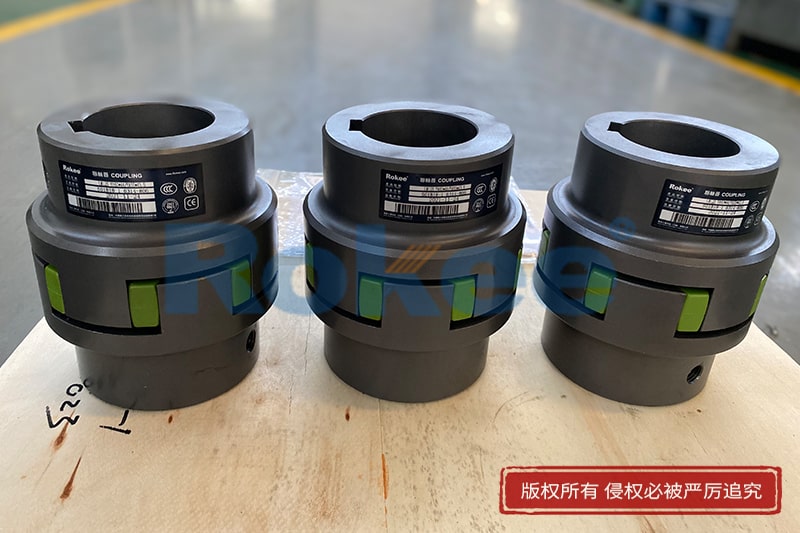
Rokee® is Plum Blossom Couplings Supplier from China, Support Customization and Export, due to excellent quality, complete technical services and superior cost performance, Rokee® Plum Blossom Couplings have been serving more than 60 countries and regions in the world, effectively operating in many corners of the world.
Plum Blossom Coupling is composed of two semi-couplings with convex claws and a plum-shaped flexible non-metallic element whose hardness can be adjusted. By embedding the plum-shaped flexible element into the two semi-couplings to realize the connection, Plum Blossom Coupling has the characteristics of compensating the relative displacement of the two axes, reducing vibration and buffering, simple structure and easy maintenance without lubrication.
-
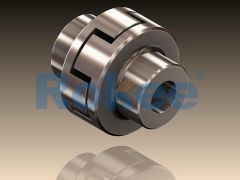
LM Plum-shaped Flexible Coupling
LM Plum-shaped Flexible Coupling is the basic form of this series of couplings. -
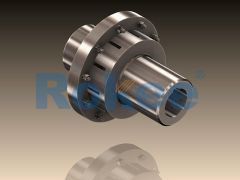
LMD Plum-shaped Flexible Coupling
LMD Plum-shaped Flexible Coupling is added with transition connection, which eliminates the need of axially moving the semi-coupling when replacing the elastomer. -
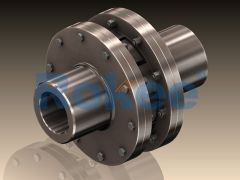
LMS Plum-shaped Flexible Coupling
LMS Plum-shaped Flexible Coupling adopts double transition flange connection, which eliminates the need of axially moving the semi-coupling when replacing the elastomer. -
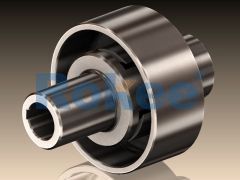
LMZ-I Plum-shaped Flexible Coupling
LMZ-I Plum-shaped Flexible Coupling adopts split brake wheel design, suitable for situations where braking is required. -
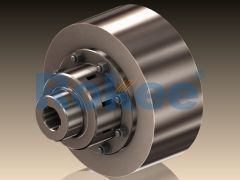
LMZ-II Plum-shaped Flexible Coupling
LMZ-II Plum-shaped Flexible Coupling adopts integral brake wheel design, suitable for situations where braking is required. -
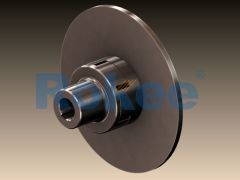
LMPK Plum-shaped Flexible Coupling
LMPK Plum-shaped Flexible Coupling adopts split brake disc design, suitable for situations where braking is required and eliminating the need of axially moving the semi-coupling when replacing the elastomer.
In the realm of mechanical power transmission, couplings serve as the unsung heroes that bridge rotating shafts, ensuring the seamless transfer of torque while accommodating misalignments and reducing operational stress. Among the diverse array of coupling designs, the plum blossom coupling stands out for its unique combination of simplicity, reliability, and adaptability. Named for the petal-like elastomeric element that forms its core, this coupling has become a staple in countless industrial, automotive, and precision machinery applications.
At the heart of a plum blossom coupling lies a straightforward yet ingenious design, consisting of three primary components: two metal hubs, an elastomeric insert (often referred to as the "plum blossom" element), and a series of fastening bolts or screws. The metal hubs, typically crafted from high-strength materials such as carbon steel, alloy steel, or aluminum alloy, feature a series of evenly spaced grooves or teeth along their inner circumference. These grooves are specifically shaped to mate with the lobes of the elastomeric insert, creating a secure mechanical connection that transmits torque from one shaft to the other. The elastomeric insert, which gives the coupling its name, is molded into a shape resembling a plum blossom, with multiple lobes (usually 3 to 6) extending outward to fit into the hub grooves. This insert is commonly made from durable, flexible materials like natural rubber, nitrile rubber (NBR), hydrogenated nitrile rubber (HNBR), or polyurethane, each selected based on the specific operational requirements of the application, such as temperature resistance, chemical compatibility, and load-bearing capacity.
The assembly of a plum blossom coupling is relatively simple, contributing to its widespread adoption. The two metal hubs are first mounted onto the respective shafts using keyways, set screws, or hydraulic expansion sleeves to ensure a tight, slip-free fit. The elastomeric insert is then placed between the two hubs, with its lobes aligning with the grooves in each hub. Finally, fastening bolts are inserted through the flanges of the hubs to clamp the assembly together, compressing the elastomeric insert slightly to maintain a secure connection. This modular design not only facilitates easy installation but also simplifies maintenance and replacement, as the elastomeric insert can be swapped out without disassembling the entire coupling or removing the shafts from their mounts.
The working principle of a plum blossom coupling revolves around the complementary roles of its metal hubs and elastomeric insert. When torque is applied to the input shaft, the corresponding hub rotates, transferring the force to the elastomeric insert via the engagement between the hub grooves and the insert lobes. The insert then transmits this torque to the output hub, which in turn drives the output shaft. What sets this coupling apart is the ability of the elastomeric insert to accommodate various types of misalignment between the two shafts, a common issue in mechanical systems caused by installation errors, thermal expansion, shaft deflection, or vibration. The flexibility of the insert allows for angular misalignment (where the shafts are not collinear but intersect at a point), parallel misalignment (where the shafts are parallel but offset), and axial misalignment (where the shafts move toward or away from each other). As the shafts rotate, the elastomeric lobes compress and flex slightly to absorb the misalignment, reducing the stress on the shafts, bearings, and other components of the power transmission system.
Another key function of the elastomeric insert is vibration damping. In many mechanical systems, rotating components generate vibrations that can cause noise, reduce the lifespan of machinery, and even lead to structural damage. The elastomeric material of the plum blossom coupling acts as a buffer, absorbing and dissipating vibrational energy before it is transmitted from one shaft to the other. This damping effect not only improves the smoothness of operation but also enhances the overall reliability of the system by minimizing wear and tear on critical components. Additionally, the elastomeric insert can help to mitigate shock loads, such as those caused by sudden starts, stops, or load fluctuations, by absorbing the impact and distributing the force evenly across the coupling.
The performance advantages of plum blossom couplings are numerous, making them suitable for a wide range of applications. One of the most notable benefits is their high torque capacity relative to their compact size. The robust metal hubs and the positive engagement between the hubs and the elastomeric insert allow plum blossom couplings to transmit significant amounts of torque without slipping, even in high-load applications. This compact design is particularly advantageous in machinery where space is limited, such as in automotive transmissions, small industrial gearboxes, and precision robotics.
Versatility is another key strength of plum blossom couplings. By selecting different materials for the elastomeric insert, engineers can tailor the coupling to meet the specific requirements of the application. For example, nitrile rubber inserts are ideal for applications involving oil or fuel, as they offer excellent chemical resistance, while polyurethane inserts provide higher wear resistance and better dimensional stability at higher temperatures. Additionally, plum blossom couplings are available in a wide range of sizes, from small couplings used in household appliances to large industrial couplings used in heavy machinery, ensuring that there is a suitable option for nearly any shaft diameter and torque requirement.
Reliability and low maintenance are also important advantages of plum blossom couplings. The simple design with fewer moving parts reduces the likelihood of mechanical failure, and the elastomeric insert is the only component that typically requires replacement over time. Unlike some other types of couplings, such as gear couplings or universal joints, plum blossom couplings do not require regular lubrication, which simplifies maintenance and reduces operational costs. The ease of replacing the elastomeric insert also means that downtime is minimized when maintenance is needed, a critical factor in industrial applications where productivity is paramount.
The application range of plum blossom couplings is extremely broad, spanning across multiple industries and sectors. In the industrial sector, they are widely used in conveyors, pumps, compressors, fans, and machine tools. For example, in a conveyor system, a plum blossom coupling connects the motor shaft to the gearbox shaft, accommodating the slight misalignments that may occur due to the installation of the components and damping the vibrations generated by the rotating motor. In machine tools, such as lathes and milling machines, plum blossom couplings are used to transmit torque from the spindle motor to the cutting tool, ensuring precise and smooth operation.
The automotive industry is another major user of plum blossom couplings. They are commonly found in drive shafts, transmission systems, and auxiliary components such as water pumps and alternators. In electric vehicles (EVs), plum blossom couplings are increasingly being used to connect the electric motor to the reduction gearbox, as their compact size and vibration damping capabilities are well-suited to the tight spaces and high-efficiency requirements of EV powertrains. The ability to accommodate misalignments also helps to extend the lifespan of the motor and gearbox components in EVs, where reliability is crucial.
Precision machinery and robotics are additional areas where plum blossom couplings excel. In robotic arms, for example, the coupling must transmit torque accurately while accommodating the small misalignments that occur as the arm moves through its range of motion. The flexibility of the plum blossom coupling ensures that the robotic arm can move smoothly and precisely, without putting excessive stress on the motors or gears. Similarly, in precision measuring equipment and laboratory instruments, plum blossom couplings are used to transmit torque with minimal backlash, ensuring the accuracy of the measurements.
Household appliances and consumer electronics also benefit from the use of plum blossom couplings. They can be found in washing machines, refrigerators, air conditioners, and power tools, where they connect the motor to the various components of the appliance. For example, in a washing machine, a plum blossom coupling connects the motor to the drum, accommodating the misalignments that occur during the spin cycle and damping the vibrations that would otherwise cause noise and instability.
Despite their many advantages, plum blossom couplings are not suitable for every application, and there are certain limitations that engineers must consider. One of the primary limitations is their relatively low tolerance for high temperatures. Most elastomeric materials used in plum blossom couplings have a maximum operating temperature range of between -40°C and 120°C. Beyond this range, the material may degrade, losing its flexibility and load-bearing capacity, which can lead to coupling failure. For high-temperature applications, such as in furnaces or steam turbines, alternative coupling designs, such as metal bellows couplings or disc couplings, may be more appropriate.
Another limitation is the limited axial displacement capacity of plum blossom couplings. While they can accommodate small amounts of axial misalignment, they are not designed to handle large axial movements. In applications where significant axial displacement is expected, such as in systems with thermal expansion and contraction of long shafts, couplings with greater axial flexibility, such as sliding sleeve couplings, may be better suited.
Maintenance considerations for plum blossom couplings are relatively straightforward, but proper care is essential to ensure their long-term performance and reliability. The most important maintenance task is regular inspection of the elastomeric insert. Over time, the insert may become worn, cracked, or deformed due to constant flexing, vibration, and exposure to environmental factors such as heat, oil, or chemicals. Engineers should inspect the insert periodically for signs of damage, and replace it if any wear or deterioration is detected. The frequency of inspection depends on the application, with high-load, high-vibration applications requiring more frequent checks.
In addition to inspecting the elastomeric insert, it is also important to check the tightness of the fastening bolts regularly. Loose bolts can cause the coupling to slip or vibrate excessively, leading to premature wear and potential failure. Engineers should ensure that the bolts are tightened to the recommended torque specification, and re-tighten them if necessary. It is also advisable to inspect the metal hubs for signs of wear, corrosion, or damage, as any defects in the hubs can affect the performance of the coupling.
When replacing the elastomeric insert, it is important to select the correct material and size for the application. Using an insert that is not compatible with the operating conditions (such as high temperature or chemical exposure) can lead to premature failure. Additionally, the insert must be properly aligned with the grooves in the metal hubs to ensure a secure fit and efficient torque transmission. Improper installation of the insert can cause vibration, noise, and reduced coupling performance.
Looking to the future, the development of plum blossom couplings is likely to focus on improving their performance in extreme conditions and enhancing their compatibility with emerging technologies. Advances in elastomeric material science are expected to result in inserts with higher temperature resistance, better chemical compatibility, and longer service life. For example, the development of new polymer composites may allow plum blossom couplings to be used in high-temperature applications that were previously beyond their capabilities. Additionally, the integration of smart sensors into plum blossom couplings could enable real-time monitoring of their performance, allowing engineers to detect signs of wear or damage before they lead to failure. This predictive maintenance capability would further reduce downtime and improve the reliability of mechanical systems.
In conclusion, the plum blossom coupling is a remarkable example of engineering simplicity and efficiency. Its unique design, combining robust metal hubs with a flexible elastomeric insert, provides a winning combination of torque transmission, misalignment accommodation, vibration damping, and low maintenance. These characteristics have made it an indispensable component in a wide range of applications, from industrial machinery and automotive systems to precision robotics and household appliances. While it has certain limitations, such as temperature and axial displacement constraints, ongoing advancements in material science and technology are likely to expand its capabilities even further. As mechanical systems continue to evolve, the plum blossom coupling will undoubtedly remain a key player in power transmission, offering reliable and cost-effective solutions for engineers and manufacturers around the world. Whether in a large industrial plant, a modern electric vehicle, or a household washing machine, the plum blossom coupling quietly performs its essential role, ensuring the smooth and efficient operation of the machinery that powers our daily lives.
« Plum Blossom Couplings » Post Date: 2023/11/15
URL: https://www.rokeecoupling.com/en/tags/plum-blossom-couplings.html
- 2024-07-11High-end Plum Blossom Couplings
- 2024-04-01Working Principle of Flexible Plum Blossom Coupling
- 2024-04-01Uses of Flexible Plum Blossom Coupling
- 2024-04-01Torque of Flexible Plum Blossom Coupling
- 2024-04-01Tagging of Flexible Plum Blossom Coupling
- 2024-04-01Supply of Flexible Plum Blossom Couplings
- 2024-04-01Structural Diagram of Flexible Plum Blossom Couplings
- 2024-04-01Gap Chart of Flexible Plum Blossom Couplings
- 2024-04-01Function of Flexible Plum Blossom Couplings
- 2024-04-01Flexible Plum Blossom Couplings Wholesale
- 2024-04-01Flexible Plum Blossom Couplings Supplier
- 2024-04-01Flexible Plum Blossom Couplings Factory
- 2024-04-01Flexible Plum Blossom Couplings Company
- 2024-04-01Flexible Plum Blossom Coupling Standard Sizes
- 2024-04-01Flexible Plum Blossom Coupling Sales
- 2024-04-01Flexible Plum Blossom Coupling Price
- 2024-04-01Flexible Plum Blossom Coupling Picture
- 2024-04-01Flexible Plum Blossom Coupling Manufacturing
- 2024-04-01Flexible Plum Blossom Coupling Drawing
- 2024-04-01Flexible Plum Blossom Coupling Design
- 2024-04-01Flexible Plum Blossom Coupling Calculation
- 2024-04-01Flexible Plum Blossom Coupling Brands
- 2024-04-01Flexible Plum Blossom Coupling Assembly Drawing
- 2024-03-26Exploded View of Flexible Plum Blossom Couplings
- 2024-03-26Engineering Drawing of Flexible Plum Blossom Couplings
- 2024-03-26Efficiency of Flexible Plum Blossom Coupling
- 2024-03-26Disadvantages of Flexible Plum Blossom Coupling
- 2024-03-26Custom Flexible Plum Blossom Couplings
- 2024-03-26Components of Flexible Plum Blossom Coupling
- 2024-03-26Classification of Flexible Plum Blossom Couplings
- 2024-03-26Catalogue of Flexible Plum Blossom Couplings
- 2024-03-26Application of Flexible Plum Blossom Couplings
- 2024-03-26Angle of Flexible Plum Blossom Coupling
- 2024-03-26Alignment of Flexible Plum Blossom Coupling
- 2024-03-263D Model of Flexible Plum Blossom Coupling
- 2024-03-19Size Chart of Flexible Plum Blossom Couplings
- 2024-03-19Size Calculation of Flexible Plum Blossom Coupling
- 2024-03-19Schematic Diagram of Flexible Plum Blossom Couplings
- 2024-03-19Purpose of Flexible Plum Blossom Coupling
- 2024-03-19Procurement of Flexible Plum Blossom Coupling
- 2024-03-19Parts of Flexible Plum Blossom Coupling
- 2024-03-19Material of Flexible Plum Blossom Coupling
- 2024-03-19Maintenance of Flexible Plum Blossom Coupling
- 2024-03-19Machine Drawing of Flexible Plum Blossom Couplings
- 2024-03-19Lubrication of Flexible Plum Blossom Coupling
- 2024-03-19Installation of Flexible Plum Blossom Coupling
- 2024-03-19High Quality Flexible Plum Blossom Couplings
- 2024-03-04Grease of Flexible Plum Blossom Coupling
- 2024-03-04Stiffness of Flexible Plum Blossom Coupling
- 2024-03-04Flexible Plum Blossom Couplings Manufacturer
- 2024-03-04Types of Flexible Plum Blossom Coupling
- 2024-03-04Specifications of Flexible Plum Blossom Coupling
- 2024-03-04Misalignment Tolerance of Flexible Plum Blossom Coupling
- 2024-03-04High Performance Flexible Plum Blossom Couplings
- 2024-03-04Coaxiality of Flexible Plum Blossom Coupling
- 2024-03-04Flexible Plum Blossom Coupling Advantages
- 2024-03-04Flexible Plum Blossom Coupling Models
- 2024-03-04Flexible Plum Blossom Couplings For Sale
- 2023-12-04Torque of Plum Blossom Coupling
- 2023-12-04Specifications of Plum Blossom Couplings
- 2023-12-04Purpose of Plum Blossom Couplings
- 2023-12-04Plum Blossom Couplings Supply
- 2023-12-04Plum Blossom Couplings Supplier
- 2023-12-04Plum Blossom Couplings Manufacturing Enterprise
- 2023-12-04Plum Blossom Couplings For Sale
- 2023-12-04Plum Blossom Couplings Company
- 2023-12-04Plum Blossom Couplings 3D Model
- 2023-12-04Plum Blossom Coupling Tagging
- 2023-12-04Plum Blossom Coupling Stiffness
- 2023-12-04Plum Blossom Coupling Size Chart
- 2023-12-04Plum Blossom Coupling Sales
- 2023-12-04Plum Blossom Coupling Procurement
- 2023-12-04Plum Blossom Coupling Principle
- 2023-12-04Plum Blossom Coupling Price
- 2023-12-04Plum Blossom Coupling Parts
- 2023-12-04Plum Blossom Coupling Misalignment Tolerance
- 2023-12-04Plum Blossom Coupling Maintenance
- 2023-12-04Plum Blossom Coupling Lubrication
- 2023-12-04Plum Blossom Coupling Installation
- 2023-12-04Plum Blossom Coupling Grease
- 2023-12-04Plum Blossom Coupling Function
- 2023-12-04Plum Blossom Coupling Engineering Drawing
- 2023-12-04Plum Blossom Coupling Diagram
- 2023-12-04Plum Blossom Coupling Design
- 2023-11-28Plum Blossom Coupling Customized
- 2023-11-28Plum Blossom Coupling Components
- 2023-11-28Plum Blossom Coupling Assembly Drawing
- 2023-11-28Plum Blossom Coupling Advantages
- 2023-11-28Efficiency of Plum Blossom Couplings
- 2023-11-28Disadvantages of Plum Blossom Couplings
- 2023-11-28Classification of Plum Blossom Couplings
- 2023-11-28Calculation of Plum Blossom Coupling
- 2023-11-28Applications of Plum Blossom Couplings
- 2023-11-28Alignment of Plum Blossom Coupling
- 2023-11-16Plum Blossom Couplings Factory
- 2023-11-16Plum Blossom Coupling Types
- 2023-11-16Catalogue of Plum Blossom Couplings
- 2023-11-16Plum Blossom Coupling Gap Chart
- 2023-11-16Models of Plum Blossom Couplings
- 2023-11-16Plum Blossom Coupling Material
- 2023-11-16Uses of Plum Blossom Couplings
- 2023-11-16Plum Blossom Couplings Wholesale
- 2023-11-16Plum Blossom Couplings Manufacturer
- 2023-11-16Plum Blossom Coupling Seller
- 2023-11-16Plum Blossom Coupling Exploded View
- 2023-11-16Plum Blossom Coupling Machine Drawing
- 2023-11-16Plum Blossom Coupling Drawing
- 2023-11-16Plum Blossom Coupling Brands
- 2023-10-20Triangular Plum Blossom Coupling
- 2023-10-18High Speed Rotating Plum Blossom Coupling
- 2023-10-18High Pressure Oil Pump Plum Blossom Coupling
- 2023-10-18Motor Oil Pump Plum Blossom Coupling
- 2023-10-17Steel Plum Blossom Couplings Supply
- 2023-10-17Motor Elastic Plum Blossom Coupling
- 2023-10-13Split Plum Blossom Couplings
- 2023-10-13Motor Plum Blossom Couplings
- 2023-10-13Steel Plum Blossom Couplings
- 2023-10-13Flange Type Plum Blossom Couplings
- 2023-10-13Separated Plum Blossom Couplings
- 2023-10-13Steering Wheel Plum Blossom Couplings
- 2023-10-12Plum Blossom Coupling With Friction Plate
- 2023-10-12Guide Rail Plum Blossom Coupling Price
- 2023-10-12Commonly Used Plum Blossom Couplings Wholesale
- 2023-10-12Semi Open Plum Blossom Couplings
- 2023-10-12Half Open Plum Blossom Coupling Gasket
- 2023-10-12Common Plum Blossom Coupling Factory
- 2023-10-09Square Plum Blossom Coupling
- 2023-10-09High Temperature Plum Blossom Coupling
- 2023-10-09Lightweight Plum Blossom Coupling
- 2023-10-09Curved Claw Type Plum Blossom Coupling
- 2023-10-09Crane Plum Blossom Coupling
- 2023-10-08Split Plum Blossom Coupling
- 2023-10-08High Strength Plum Blossom Coupling
- 2023-10-08High Speed Plum Blossom Coupling
- 2023-10-08Industrial Robot Plum Blossom Coupling
- 2023-10-08Roller Track Plum Blossom Coupling
- 2023-10-08Insulated Plum Blossom Coupling
- 2023-10-08High Quality Plum Blossom Coupling
- 2023-10-08High Precision Plum Blossom Coupling
- 2023-10-08High Performance Plum Blossom Coupling
- 2023-10-07Guide Rail Plum Blossom Coupling
- 2023-10-07Elastic Plum Blossom Coupling Price
- 2023-10-07Elastic Plum Blossom Coupling Brand
- 2023-10-07Customized Elastic Plum Blossom Coupling
- 2023-10-07Characteristics Of Single Section Plum Blossom Coupling
- 2023-10-07Advantages Of Elastic Block Plum Blossom Coupling
- 2023-09-27High Torque Plum Blossom Coupling
- 2023-09-27Single Section Plum Blossom Coupling
- 2023-09-27Unilateral Flange Plum Blossom Coupling
- 2023-09-27Brake Disc Plum Blossom Coupling
- 2023-09-27Splined Plum Blossom Coupling
- 2023-09-27Single Flange Plum Blossom Coupling
- 2023-09-27Plum Blossom Coupling With Flange Plate
- 2023-09-27Plum Blossom Coupling With Cone Sleeve
- 2023-09-27Plum Blossom Coupling With Brake Disc
- 2023-09-27Clearance On Both Sides Of Pump Plum Blossom Coupling Installation
- 2023-09-27Customized Transmission Plum Blossom Coupling
- 2023-09-27Steel Plum Blossom Coupling
- 2023-09-27Wholesale Of Rigid Plum Blossom Couplings
- 2023-09-25Top Thread Plum Blossom Coupling
- 2023-09-25Split Type Plum Blossom Coupling
- 2023-09-25Separate Plum Blossom Coupling
- 2023-09-25Rigid Plum Blossom Coupling
- 2023-09-25Motor Plum Blossom Coupling
- 2023-09-25Forged Steel Plum Blossom Coupling
- 2023-09-25Brand Of Motor Plum Blossom Coupling
- 2023-09-25Electric Vehicle Plum Blossom Coupling
- 2023-09-25Flange Plum Blossom Coupling
- 2023-09-23Characteristics Of Semi Open Plum Blossom Coupling
- 2023-09-22Common Plum Blossom Coupling
- 2023-09-22Holding Brake Wheel Plum Blossom Coupling
- 2023-09-22Pump End Plum Blossom Coupling
- 2023-09-22Stepper Motor Plum Blossom Coupling
- 2023-09-22Transmission Plum Blossom Coupling
- 2023-09-22Punch Plum Blossom Coupling
- 2023-09-22Gear Plum Blossom Coupling
- 2023-09-22Hexagonal Plum Blossom Coupling For Pumps
- 2023-09-22Half Round Plum Blossom Coupling
- 2023-09-19Gear Pump Plum Blossom Coupling
- 2023-09-19Pump Plum Blossom Coupling
- 2023-09-19Supplier Of Transmission Plum Blossom Coupling
- 2023-09-19Type Of Transmission Plum Blossom Coupling
- 2023-09-19Wholesale Of Semi Open Plum Blossom Couplings
- 2023-09-19Stainless Steel Plum Blossom Coupling
- 2023-09-19Manufacturer Of Transmission Seat Plum Blossom Coupling
- 2023-09-19Brand Of Transmission Plum Blossom Coupling
- 2023-09-19Eight Claw Plum Blossom Coupling
- 2023-09-19Commonly Used Plum Blossom Coupling Brands
- 2023-09-16Half Open Plum Blossom Coupling
- 2023-09-16Clamping Type Plum Blossom Coupling
- 2023-09-16Variable Diameter Plum Blossom Coupling
- 2023-09-16Diesel Engine Plum Blossom Coupling
- 2023-09-16Lathe Plum Blossom Coupling
- 2023-09-16Outlet Plum Blossom Coupling
- 2023-09-16Transmission Seat Plum Blossom Coupling
- 2023-09-16Customized Transmission Seat Plum Blossom Coupling
- 2023-09-16High Power Plum Blossom Coupling
- 2023-09-16Large Plum Blossom Coupling
- 2023-09-16Manufacturer Of Semi Open Plum Blossom Coupling
- 2023-09-16Octagonal Plum Blossom Coupling
- 2023-09-16Eight Petal Plum Blossom Coupling