Internal Gear Couplings
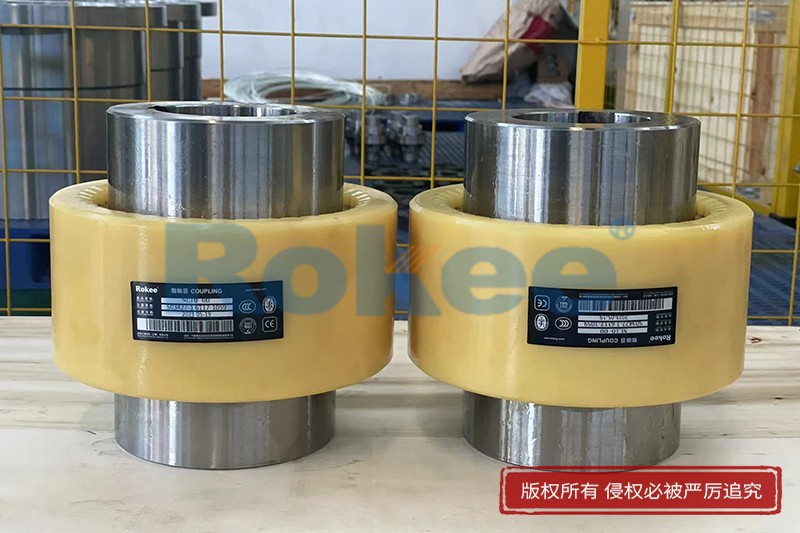
Rokee® is Internal Gear Couplings Supplier from China, Support Customization and Export, due to excellent quality, complete technical services and superior cost performance, Rokee® Internal Gear Couplings have been serving more than 60 countries and regions in the world, effectively operating in many corners of the world.
Internal Gear Coupling half coupling adopts casting or forging technology, with cast iron HT20-40, cast steel ZG35 II, and 45 # steel. The shaft hole and keyway can be drawn into shape, and the Internal Gear Coupling elastic body outer sleeve can be selected from various hardness synthetic nylon, cast nylon elastic body, and other materials according to user requirements.
In the realm of industrial power transmission, couplings serve as critical components that connect rotating shafts, compensating for misalignments and transmitting torque efficiently. Among the diverse range of couplings available, internal gear couplings stand out for their robust construction, high torque-carrying capacity, and ability to accommodate various types of misalignment.
An internal gear coupling is a type of flexible coupling that utilizes the meshing of internal and external gears to transmit torque between two shafts. Unlike external gear couplings, where the gears are exposed and mesh externally, internal gear couplings feature an outer sleeve with internal gear teeth and two inner hubs with external gear teeth. The inner hubs are connected to the respective shafts, while the outer sleeve encloses the meshing gears, providing both protection and alignment compensation. This enclosed design not only safeguards the gear teeth from external contaminants but also enhances the coupling’s structural integrity, making it suitable for heavy-duty applications.
The design of internal gear couplings is tailored to address the core challenges of power transmission, such as misalignment compensation, torque transmission efficiency, and operational durability. One of the key design features is the tooth profile of the gears. Typically, the gear teeth of internal gear couplings are involute-shaped, which is a common choice in gear design due to its ability to ensure smooth meshing, reduce wear, and distribute load evenly across the tooth surface. The involute profile allows for a constant velocity ratio during rotation, minimizing vibration and noise—a crucial advantage in high-speed applications.
Another important design aspect is the backlash between the internal and external gears. Backlash refers to the clearance between the meshing teeth, and it plays a vital role in accommodating thermal expansion and contraction of the shafts during operation. Properly designed backlash prevents binding of the gears when the shafts expand due to heat generated by friction or external sources. However, excessive backlash can lead to increased vibration and noise, as well as reduced torque transmission accuracy. Therefore, manufacturers carefully calculate the optimal backlash based on the coupling’s intended application, operating temperature range, and torque requirements.
Internal gear couplings are also designed to accommodate three main types of misalignment: angular misalignment, parallel misalignment, and axial misalignment. Angular misalignment occurs when the shafts are not collinear but intersect at a certain angle. Parallel misalignment, on the other hand, happens when the shafts are parallel but offset from each other. Axial misalignment refers to the linear displacement of one shaft relative to the other along the axial direction. The gear meshing design, combined with the flexibility of the coupling components, allows internal gear couplings to compensate for these misalignments to varying degrees. The amount of misalignment that a coupling can accommodate depends on factors such as the gear tooth depth, the number of teeth, and the overall dimensions of the coupling.
The working principle of an internal gear coupling revolves around the meshing of the internal gear (in the outer sleeve) and the external gears (on the inner hubs). When torque is applied to one shaft, it is transmitted to the corresponding inner hub, which in turn rotates the outer sleeve through the meshing gear teeth. The outer sleeve then transmits the torque to the other inner hub and ultimately to the second shaft. This torque transmission process is efficient because the gear meshing provides a large contact area, allowing for the transfer of high levels of torque without excessive stress concentration.
A critical component of the working mechanism is the lubrication system. Since the gear teeth are in constant contact and relative motion during operation, proper lubrication is essential to reduce friction, minimize wear, and dissipate heat. The enclosed design of internal gear couplings facilitates the retention of lubricant, ensuring that the gear teeth remain adequately lubricated throughout the operational cycle. Lubricants used in internal gear couplings typically include mineral oils, synthetic oils, or grease, depending on the operating conditions such as temperature, speed, and load. The choice of lubricant is crucial, as inadequate or inappropriate lubrication can lead to premature wear of the gear teeth, increased friction losses, and ultimately, coupling failure.
Material selection is a pivotal factor in determining the performance, durability, and reliability of internal gear couplings. The materials used for the outer sleeve, inner hubs, and gear teeth must possess high strength, good wear resistance, and the ability to withstand the operational loads and environmental conditions. Common materials for internal gear coupling components include carbon steel, alloy steel, and stainless steel. Carbon steel is widely used for general-purpose applications due to its high strength-to-weight ratio and cost-effectiveness. Alloy steel, which contains additional elements such as chromium, nickel, and molybdenum, offers enhanced strength, toughness, and wear resistance, making it suitable for heavy-duty and high-torque applications.
Stainless steel is preferred for applications where the coupling is exposed to corrosive environments, such as in the chemical, food processing, and marine industries. The corrosion resistance of stainless steel ensures that the coupling maintains its structural integrity and performance over time, even in the presence of moisture, chemicals, or saltwater. In addition to the base materials, the gear teeth may undergo surface treatments to further enhance their wear resistance. Common surface treatments include carburizing, nitriding, and hard chrome plating. Carburizing involves diffusing carbon into the surface of the gear teeth, followed by heat treatment to create a hard, wear-resistant surface while maintaining a tough core. Nitriding, which diffuses nitrogen into the surface, results in a hard surface layer with excellent fatigue resistance. Hard chrome plating provides a smooth, hard surface that reduces friction and wear.
Internal gear couplings find applications across a wide range of industries, thanks to their robust construction, high torque capacity, and misalignment compensation capabilities. One of the primary applications is in the power generation industry, where they are used to connect turbines and generators. In this application, the coupling must transmit high levels of torque efficiently while accommodating minor misalignments that may occur due to thermal expansion of the shafts during operation. The reliability of internal gear couplings is critical in power generation, as any failure can lead to significant downtime and financial losses.
Another major application area is the mining and mineral processing industry. Mining equipment such as crushers, conveyors, and grinding mills operate under harsh conditions, including high torque, heavy loads, and significant misalignments. Internal gear couplings are well-suited for these applications due to their durability and ability to withstand the rigors of the mining environment. They help ensure the smooth operation of mining equipment, reducing downtime and improving productivity.
The steel industry also relies heavily on internal gear couplings in various processes, such as rolling mills, blast furnaces, and continuous casting machines. Rolling mills, in particular, require couplings that can transmit high torque and accommodate misalignments caused by the heavy loads exerted on the rolls. Internal gear couplings provide the necessary strength and flexibility to ensure the efficient operation of rolling mills, contributing to the production of high-quality steel products.
Other industries that utilize internal gear couplings include the chemical industry, where they are used in pumps, compressors, and agitators; the marine industry, for propeller shaft connections; and the manufacturing industry, in various types of machinery such as machine tools and industrial robots. In each of these applications, the internal gear coupling’s ability to transmit torque efficiently, compensate for misalignment, and withstand harsh operating conditions makes it an indispensable component.
Proper installation and maintenance are essential to ensure the long-term performance and reliability of internal gear couplings. The installation process begins with the careful alignment of the shafts. While internal gear couplings can accommodate misalignments, excessive misalignment can lead to increased wear, vibration, and premature failure. Therefore, it is crucial to align the shafts as accurately as possible using precision tools such as dial indicators or laser alignment systems. The alignment process should include checking for angular, parallel, and axial misalignments and adjusting the shafts accordingly.
During installation, the inner hubs are typically mounted on the shafts using interference fits, set screws, or keyways. Interference fits provide a secure connection by ensuring that the hub is slightly larger than the shaft, creating a tight fit when the hub is heated and slipped onto the shaft (shrink fit) or the shaft is cooled and inserted into the hub (expansion fit). Set screws are used for lighter-duty applications, where they are tightened against the shaft to secure the hub. Keyways, which are grooves cut into the shaft and hub, provide a positive connection that prevents relative rotation between the hub and the shaft.
Lubrication is a critical aspect of maintenance for internal gear couplings. Regular lubrication checks should be performed to ensure that the gear teeth are adequately lubricated and that the lubricant is free from contaminants. The lubricant level should be maintained at the recommended level, and the lubricant should be replaced at regular intervals based on the manufacturer’s guidelines and the operating conditions. In addition to lubrication, regular inspections should be conducted to check for signs of wear, damage, or corrosion. Signs of wear may include pitting, scoring, or excessive backlash in the gear teeth. If any damage is detected, the coupling should be repaired or replaced promptly to prevent further damage to the shafts or other components.
Another important maintenance practice is the inspection of the coupling’s fasteners, such as bolts and nuts. These fasteners can loosen over time due to vibration, so they should be checked regularly and tightened if necessary. In some cases, lock washers or thread-locking compounds may be used to prevent fastener loosening. Additionally, the outer sleeve of the coupling should be inspected for cracks or damage, as any compromise in the sleeve’s integrity can expose the gear teeth to contaminants and reduce the coupling’s structural strength.
The field of internal gear couplings is continuously evolving, driven by advancements in materials science, manufacturing technologies, and the growing demand for more efficient and reliable power transmission solutions. One of the key emerging trends is the development of lightweight internal gear couplings using advanced composite materials. Composite materials, such as carbon fiber-reinforced polymers, offer high strength-to-weight ratios, corrosion resistance, and excellent fatigue properties. These materials can help reduce the overall weight of the coupling, which is particularly beneficial in applications where weight is a critical factor, such as in aerospace and automotive industries.
Another trend is the integration of smart technologies into internal gear couplings for condition monitoring. Smart couplings are equipped with sensors that can measure parameters such as temperature, vibration, and torque in real time. These sensors transmit data to a central monitoring system, allowing engineers to track the coupling’s performance and detect potential issues before they lead to failure. Condition monitoring technologies can help reduce downtime, improve maintenance efficiency, and extend the service life of the coupling. This is particularly valuable in critical applications such as power generation and mining, where unplanned downtime can have significant financial implications.
Advancements in manufacturing technologies, such as additive manufacturing (3D printing), are also impacting the design and production of internal gear couplings. Additive manufacturing allows for the creation of complex geometries that are difficult or impossible to produce using traditional manufacturing methods. This enables the design of internal gear couplings with optimized tooth profiles, improved load distribution, and reduced weight. Additionally, additive manufacturing can reduce lead times and production costs, as it eliminates the need for expensive tooling and allows for on-demand production of custom couplings.
In conclusion, internal gear couplings are essential components in industrial power transmission systems, offering robust construction, high torque-carrying capacity, and effective misalignment compensation. Their design, which features enclosed meshing gears, ensures durability and protection against external contaminants, making them suitable for a wide range of applications across industries such as power generation, mining, steel, chemical, and marine. Proper material selection, installation, and maintenance are critical to maximizing the performance and service life of internal gear couplings. As technology advances, the development of lightweight composite materials, smart condition monitoring systems, and advanced manufacturing techniques is poised to further enhance the capabilities and efficiency of internal gear couplings, meeting the evolving needs of modern industrial applications. By staying abreast of these developments, industry professionals can leverage the full potential of internal gear couplings to optimize power transmission systems and improve operational reliability.
« Internal Gear Couplings » Post Date: 2023/11/8
URL: https://www.rokeecoupling.com/en/tags/internal-gear-couplings.html
- 2023-11-14Internal Gear Coupling Supply
- 2023-11-14Internal Gear Coupling Specifications
- 2023-11-14Internal Gear Coupling Size Chart
- 2023-11-14Internal Gear Coupling Size Calculation
- 2023-11-14Internal Gear Coupling Purpose
- 2023-11-14Internal Gear Coupling Parts
- 2023-11-14Models of Internal Gear Couplings
- 2023-11-14Internal Gear Coupling Manufacturing Enterprise
- 2023-11-14Internal Gear Coupling Make
- 2023-11-14Internal Gear Coupling For Sale
- 2023-11-14Internal Gear Coupling Design
- 2023-11-14Internal Gear Coupling Applications
- 2023-11-14Disadvantages of Internal Gear Couplings
- 2023-11-10Internal Gear Coupling Working Principle
- 2023-11-10Internal Gear Coupling Function
- 2023-11-10Internal Gear Coupling Structural Diagram
- 2023-11-09Internal Gear Coupling Advantages
- 2023-11-09Internal Gear Coupling Customized
- 2023-11-09Internal Gear Coupling Factory
- 2023-11-08Internal Gear Coupling Drawing
- 2023-11-08Internal Gear Couplings Manufacturer
- 2023-11-08Internal Gear Couplings Supplier
- 2023-11-08Catalogue of Internal Gear Couplings
- 2023-11-08Internal Gear Coupling Company
- 2023-10-16Internal Gear Coupling Price
- 2023-10-16Internal Gear Couplings Wholesale
- 2023-10-08Which Is Better For Internal Gear Coupling
- 2023-09-23Heavy Steel Internal Gear Coupling
- 2023-09-22Types Of Internal Gear Couplings
- 2023-09-22Sales Of Internal Gear Couplings
- 2023-09-18Steel Internal Gear Coupling