Crown Coupling
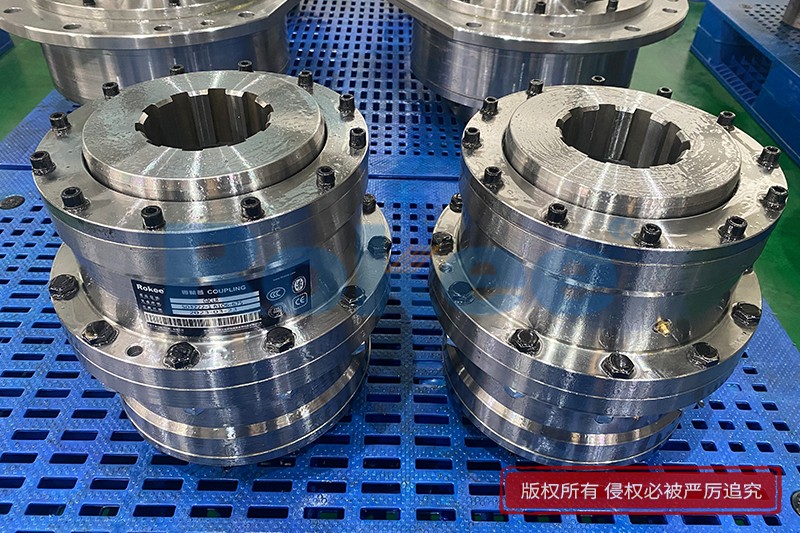
Rokee® is Crown Coupling Supplier from China, Support Customization and Export, due to excellent quality, complete technical services and superior cost performance, Rokee® Crown Coupling have been serving more than 60 countries and regions in the world, effectively operating in many corners of the world.
In the realm of mechanical power transmission, couplings serve as the critical link between rotating shafts, enabling the seamless transfer of torque while accommodating misalignments and mitigating operational stresses. Among the diverse array of coupling designs available, crown couplings stand out for their unique combination of versatility, durability, and adaptability to challenging operating conditions.
-
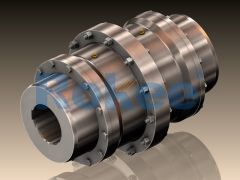
GICL Drum Gear Coupling
GICL drum gear coupling has larger inner teeth width, which can transfer torque while compensating for larger axial displacement. -
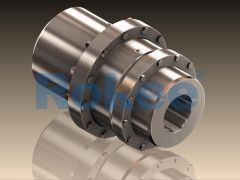
GICLZ Drum Gear Coupling
Half of the GICLZ drum gear coupling adopts a non-toothed semi-coupling sleeve structure, which is usually connected in pairs or used in occasions with small angular displacement. -
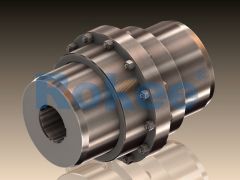
GIICL Drum Gear Coupling
GIICL drum gear coupling has small inner teeth width, which can transfer torque while compensating for small axial displacement. Also, its structure is compact and the moment of inertia is low. -
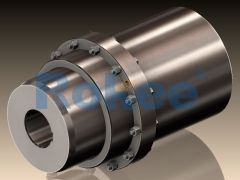
GIICLZ Drum Gear Coupling
Half of the GIICLZ drum gear coupling adopts a non-toothed semi-coupling sleeve structure, which is usually connected in pairs or used in occasions with small angular displacement. Also, its structure is compact and the moment of inertia is low. -
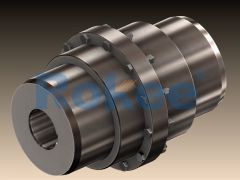
GCLD Drum Gear Coupling
GCLD drum gear coupling is generally used for direct connection with the motor, so it generally has a higher speed and compact structure. -
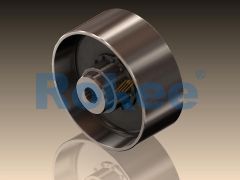
NGCL Drum Gear Coupling
NGCL drum gear coupling is designed with a brake wheel, suitable for situations where braking is required. -
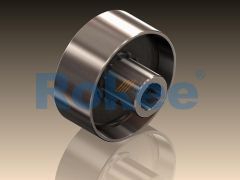
NGCLZ Drum Gear Coupling
NGCLZ drum gear coupling is designed with a brake wheel, suitable for situations where braking is required. Half of its structure adopts a semi-coupling sleeve design, with smaller angular displacement compensation but more stable braking. -
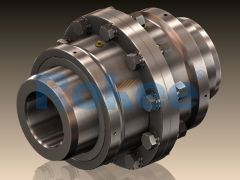
WG Drum Gear Coupling
The overall characteristics of WG drum gear coupling are similar to those of other drum gear couplings, but with a larger modulus design, which can generally transmit greater torque. -
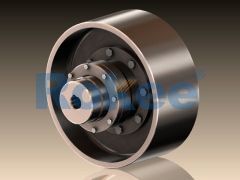
WGZ Drum Gear Coupling
WGZ drum gear coupling is designed with a brake wheel, suitable for shoe type braking. -
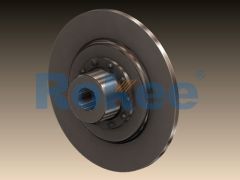
WGP Drum Gear Coupling
WGP drum gear coupling is designed with a brake disc, suitable for disc type braking. -
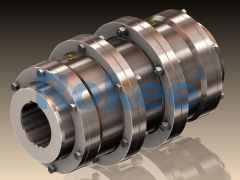
WGT Drum Gear Coupling
WGT drum gear coupling is designed with indirect tube, suitable for long distance torque transfer. -
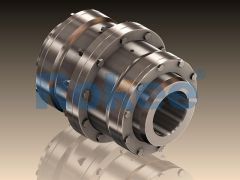
WGC Drum Gear Coupling
WGC drum gear coupling is specially designed for situations where vertical transmission is required, suitable for some vertical transmission systems. -
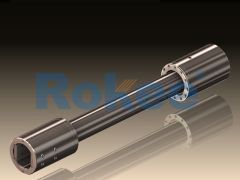
WGJ Drum Gear Coupling
WGJ drum gear coupling is designed with intermediate shaft, suitable for long distance torque transmission, and some are equipped with axial buffers. -
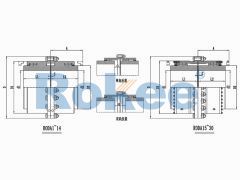
RODA Drum Gear Coupling
The RODA Drum Gear Coupling is the basic type of ROD series coupling, suitable for most situations where the compensation of transmission distance and motion position does not require special increase. -
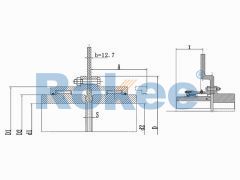
RODP Brake Disc Drum Gear Coupling
The RODP Drum Gear Coupling is a type of ROD series coupling with a brake disc, suitable for transmission situations where braking needs to be used in conjunction with disc brakes. -
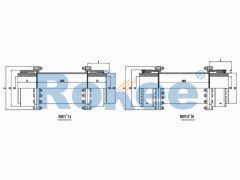
RODT Indirect Tube Drum Gear Coupling
The RODT Drum Gear Coupling is an extended type of ROD series coupling, suitable for increasing transmission distance. -
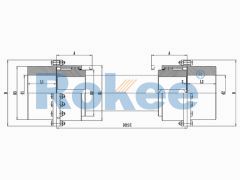
RODX Intermediate Shaft Drum Gear Coupling
RODX Drum Gear Coupling is an extended type of ROD series coupling with a floating shaft design in the middle, suitable for increasing transmission distance. -
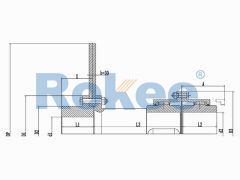
RODF Split Brake Disc Drum Gear Coupling
The RODF Drum Gear Coupling is a type of ROD series coupling with split brake discs, suitable for transmission situations where there is braking demand and the braking position changes when used in conjunction with disc brakes. -
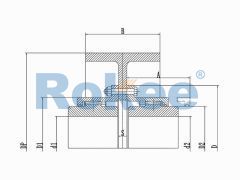
RODW Brake Wheel Drum Gear Coupling
The RODW Drum Gear Coupling is a type of ROD series coupling with brake wheels, suitable for transmission situations where braking needs to be used in conjunction with wheel brakes. -
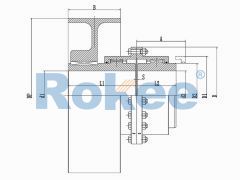
RODU Brake Wheel Drum Gear Coupling
The RODU Drum Gear Coupling is another type of ROD series coupling with brake wheels, suitable for transmission situations where braking needs to be used in conjunction with wheel brakes and applied to one end of the axle, achieving smoother and more reliable braking performance. -
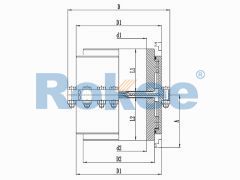
RODV Vertical Installation Drum Gear Coupling
The RODV Drum Gear Coupling is a vertical installation type of the ROD series coupling, suitable for transmission situations that require vertical transmission torque. -
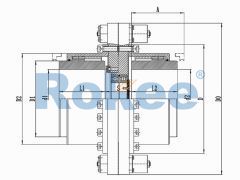
RODM Torsion Protection Drum Gear Coupling
The RODM Drum Gear Coupling is a torque setting form of the ROD series coupling. By adjusting relevant components, the maximum transmission torque can be easily set within a certain range. Suitable for shafting transmission situations that require safe torque operation to protect important machine components from excessive damage.
A crown coupling is a type of flexible coupling specifically engineered to transmit torque between two shafts while compensating for three primary types of misalignment: angular, parallel, and axial. What distinguishes crown couplings from other flexible coupling designs is their distinctive crown-shaped contact surface, which facilitates smooth relative movement between the coupling components. This crown profile is typically machined onto one or both of the coupling’s mating surfaces, creating a convex or concave interface that allows for controlled articulation. Unlike rigid couplings, which require near-perfect shaft alignment and offer no flexibility, crown couplings absorb shocks and vibrations, reducing wear on bearings, seals, and other critical machinery components. This flexibility makes them an ideal choice for applications where shaft misalignment is inevitable due to installation tolerances, thermal expansion, or structural deflection.
The design of crown couplings is rooted in the principle of maximizing torque transmission while minimizing stress concentrations. Most crown couplings consist of two main components: a driving half and a driven half, each attached to the respective shafts via keyways, set screws, or compression fittings. The crown-shaped interface between these two halves is the defining feature, with variations in the crown’s radius, contact area, and material composition tailored to specific application requirements. Some designs incorporate a flexible element, such as a rubber or elastomeric insert, between the crown surfaces to further enhance vibration damping and misalignment capacity. Others rely on metal-to-metal contact, leveraging the strength and wear resistance of hardened alloys to handle high torque and harsh operating environments. Regardless of the specific design, the core objective remains consistent: to create a robust yet flexible connection that ensures reliable power transmission under dynamic conditions.
Crown couplings are available in several distinct types, each optimized for particular operational scenarios. The most common variants include solid crown couplings, split crown couplings, and crowned gear couplings. Solid crown couplings feature a one-piece construction for the crown component, offering high torque capacity and structural rigidity. They are well-suited for applications with moderate misalignment requirements and where ease of installation is not a primary concern. Split crown couplings, on the other hand, are designed with a two-piece crown that can be assembled around the shaft without removing other machinery components. This split design simplifies maintenance and replacement, making them ideal for large-scale equipment or systems where shaft removal is impractical. Crowned gear couplings, a more specialized type, integrate crown-shaped gear teeth that mesh together, providing exceptional torque transmission capabilities and the ability to accommodate significant angular misalignment. These couplings are commonly used in heavy-duty industrial applications, such as steel mills and mining equipment, where high power and reliability are paramount.
Understanding the operational mechanics of crown couplings is essential to appreciating their performance capabilities. When torque is applied to the driving shaft, the crown-shaped interface transfers this torque to the driven shaft through frictional contact or meshing teeth. The convex crown surface allows the two coupling halves to pivot relative to each other, compensating for angular misalignment by adjusting the contact point between the surfaces. For parallel misalignment, the crown profile enables a small amount of lateral movement, ensuring that torque transmission remains consistent even when the shafts are offset. Axial misalignment is accommodated by the sliding action between the crown surfaces, which allows the coupling halves to move toward or away from each other without compromising the torque transfer. In designs with elastomeric inserts, the flexible element compresses and deforms to absorb vibrations and shocks, further protecting the machinery from damage. The efficiency of this torque transmission process is largely dependent on the quality of the crown machining, the material selection, and the proper lubrication of moving parts.
The versatility of crown couplings makes them suitable for a wide range of industrial applications, spanning multiple sectors where rotating machinery is central to operations. In the manufacturing industry, crown couplings are commonly used in conveyor systems, pumps, compressors, and electric motors. Conveyor systems, which require consistent torque transmission to move materials efficiently, benefit from the coupling’s ability to accommodate misalignments caused by conveyor belt tension or structural deflection. Pumps and compressors, which operate at varying speeds and pressures, rely on crown couplings to dampen vibrations and prevent premature wear on bearings and seals. The automotive industry also utilizes crown couplings in certain drivetrain components, where their flexibility helps absorb shocks from uneven road surfaces and reduce noise, vibration, and harshness (NVH) levels.
Heavy-duty industries, such as mining, construction, and steel production, represent another key application area for crown couplings. Mining equipment, including crushers, grinders, and conveyor systems, operates in extremely harsh conditions with high levels of vibration, dust, and temperature fluctuations. Crown couplings designed for these environments are constructed from robust materials, such as alloy steel, and feature enhanced wear resistance to withstand the demanding operating conditions. In construction machinery, such as excavators and bulldozers, crown couplings transmit torque between the engine and hydraulic pumps, accommodating misalignments caused by the machinery’s dynamic movement. Steel mills rely on crown couplings in rolling mills and other high-torque applications, where their ability to handle large angular misalignments and transmit high power ensures continuous and reliable operation.
The selection of the appropriate crown coupling for a specific application requires careful consideration of several key factors. Torque capacity is perhaps the most critical parameter, as the coupling must be able to transmit the maximum torque generated by the driving shaft without failure. Engineers must calculate the peak torque requirements, taking into account factors such as startup loads, shock loads, and operating speed. Misalignment tolerance is another important factor, with different coupling types offering varying capacities to accommodate angular, parallel, and axial misalignment. The operating environment also plays a significant role in material selection; couplings used in high-temperature environments may require heat-resistant materials, while those exposed to corrosive substances need to be constructed from corrosion-resistant alloys or coated with protective finishes.
Operating speed is another key consideration, as high-speed applications can lead to centrifugal forces that affect the coupling’s performance. Crown couplings designed for high-speed operation must be balanced to minimize vibration and ensure smooth rotation. The type of shaft connection, such as keyed, splined, or friction-fit, also influences the coupling selection, as different connections require specific coupling designs to ensure a secure fit. Additionally, maintenance requirements should be taken into account; split crown couplings, for example, are preferable for applications where regular maintenance is necessary but shaft removal is difficult. Finally, cost considerations play a role, with engineers balancing the performance requirements against the available budget to select the most cost-effective coupling solution.
Proper maintenance is essential to ensuring the long-term performance and reliability of crown couplings. Regular inspection is the foundation of effective maintenance, with visual checks for signs of wear, damage, or misalignment. Engineers should inspect the crown surfaces for excessive wear, pitting, or corrosion, as these issues can compromise the coupling’s ability to transmit torque and accommodate misalignment. Lubrication is another critical maintenance task, particularly for metal-to-metal crown couplings. The type and frequency of lubrication depend on the coupling material, operating speed, and environment; high-temperature applications may require synthetic lubricants with high thermal stability, while dusty environments may need more frequent lubrication to prevent contamination. It is important to follow the manufacturer’s recommendations for lubrication intervals and lubricant type to avoid premature wear.
In addition to regular inspection and lubrication, proper alignment of the shafts is essential for the optimal performance of crown couplings. Even though crown couplings can accommodate misalignment, excessive misalignment can lead to increased wear, reduced torque transmission efficiency, and premature failure. Engineers should use precision alignment tools, such as laser alignment systems, to ensure that the shafts are aligned within the coupling’s specified tolerance limits. Regular monitoring of vibration levels can also help detect potential issues early, as increased vibration may indicate misalignment, wear, or lubrication problems. If a coupling is found to be damaged or worn beyond repair, it should be replaced promptly to prevent further damage to the machinery.
The future of crown couplings is likely to be shaped by advancements in materials science and manufacturing technology. The development of new high-strength, lightweight materials, such as carbon fiber composites, may lead to the creation of crown couplings that offer higher torque capacity and improved corrosion resistance while reducing overall weight. Additive manufacturing, or 3D printing, could revolutionize the production of crown couplings, allowing for complex crown profiles that are difficult or impossible to machine using traditional methods. This technology could also enable the production of custom couplings tailored to specific application requirements, reducing lead times and improving performance. Additionally, the integration of sensor technology into crown couplings may become more prevalent, allowing for real-time monitoring of temperature, vibration, and wear. This predictive maintenance capability would enable engineers to address potential issues before they lead to equipment failure, further enhancing the reliability and efficiency of rotating machinery systems.
In conclusion, crown couplings are a vital component in mechanical power transmission systems, offering a unique combination of flexibility, durability, and torque transmission capability. Their distinctive crown-shaped design allows them to accommodate various types of shaft misalignment, making them suitable for a wide range of applications across industries. By understanding the design principles, types, operational mechanics, and selection factors of crown couplings, engineers can select the optimal coupling solution for their specific application. Proper maintenance, including regular inspection, lubrication, and shaft alignment, is essential to ensuring the long-term performance and reliability of crown couplings. As materials science and manufacturing technology continue to advance, crown couplings are likely to become even more efficient and versatile, further enhancing their role in modern machinery systems.
« Crown Coupling » Post Date: 2024/7/11
URL: https://www.rokeecoupling.com/en/tags/crown-coupling.html