Cross Type Universal Joints
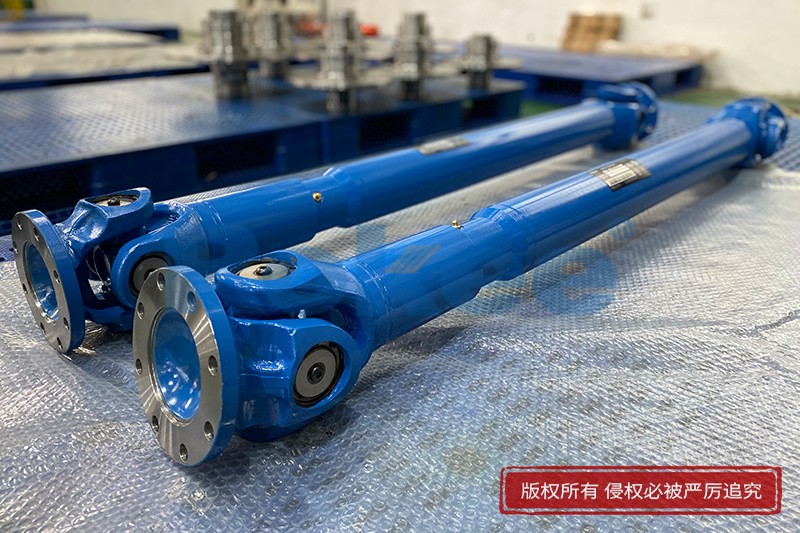
Rokee® is Cross Type Universal Joints Supplier from China, Support Customization and Export, due to excellent quality, complete technical services and superior cost performance, Rokee® Cross Type Universal Joints have been serving more than 60 countries and regions in the world, effectively operating in many corners of the world.
In the realm of mechanical power transmission, the cross type universal joint stands as a fundamental and indispensable component, enabling the transfer of rotational motion between shafts that are not aligned in a straight line. Its simple yet robust design has made it a staple in a wide range of industrial, automotive, and agricultural applications, where flexibility and reliability are paramount.
-
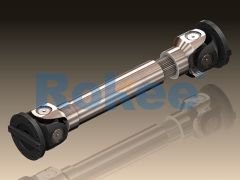
SWC-BH Standard Telescopic Welded Universal Coupling
SWC-BH Universal Coupling adopts integrated fork head layout, with the rotary diameter of 1600mm and torque transmission distance of more than 30m. SWC-BH Cardan Shaft is widely used in steel rolling machinery, crane transport machinery and other heavy equipment fields. -
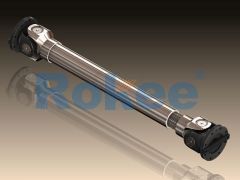
SWC-CH Long Telescopic Welded Universal Coupling
SWC-CH Universal Coupling adopts integrated fork head layout, with the rotary diameter of 1600mm and torque transmission distance of more than 30m. SWC-CH Cardan Shaft is widely used in steel rolling machinery, crane transport machinery and other heavy equipment fields. -
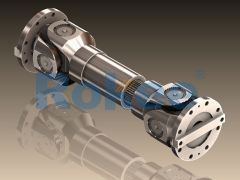
SWC-DH Short Telescopic Welded Universal Coupling
SWC-DH Universal Coupling adopts integrated fork head layout, with the rotary diameter of 1600mm and torque transmission distance of more than 30m. SWC-DH Cardan Shaft is widely used in steel rolling machinery, crane transport machinery and other heavy equipment fields. -
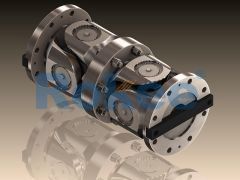
SWC-WD Non-telescopic Short Universal Coupling
SWC-WD Universal Coupling adopts integrated fork head layout, with the rotary diameter of 1600mm and torque transmission distance of more than 30m. SWC-WD Cardan Shaft is widely used in steel rolling machinery, crane transport machinery and other heavy equipment fields. -
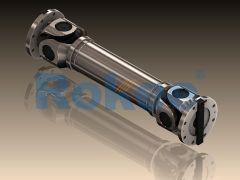
SWC-WH Non-telescopic Welded Universal Coupling
SWC-WH Universal Coupling adopts integrated fork head layout, with the rotary diameter of 1600mm and torque transmission distance of more than 30m. SWC-WH Cardan Shaft is widely used in steel rolling machinery, crane transport machinery and other heavy equipment fields. -
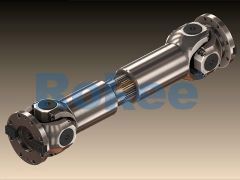
SWP-A Universal Coupling
SWP-A Universal Coupling adopts integrated fork head layout. Similar to the use of the SWC universal coupling, SWP-A Cardan Shaft is mainly used in the field of heavy-duty large equipment, with a rotary diameter of up to 1200mm. -
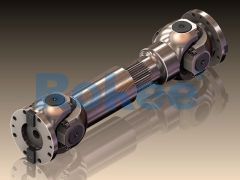
SWP-B Universal Coupling
SWP-B Universal Coupling adopts integrated fork head layout. Similar to the use of the SWC universal coupling, SWP-B Cardan Shaft is mainly used in the field of heavy-duty large equipment, with a rotary diameter of up to 1200mm. -
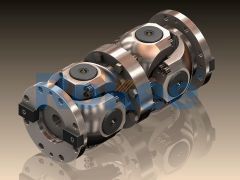
SWP-C Universal Coupling
SWP-C Universal Coupling adopts integrated fork head layout. Similar to the use of the SWC universal coupling, SWP-C Cardan Shaft is mainly used in the field of heavy-duty large equipment, with a rotary diameter of up to 1200mm. -
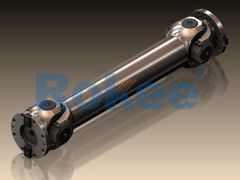
SWP-D Universal Coupling
SWP-D Universal Coupling adopts integrated fork head layout. Similar to the use of the SWC universal coupling, SWP-D Cardan Shaft is mainly used in the field of heavy-duty large equipment, with a rotary diameter of up to 1200mm.
The cross type universal joint, also commonly referred to as a Cardan joint (named after the 16th-century Italian mathematician Gerolamo Cardano who first conceptualized its mechanism), is a type of flexible coupling. At its core, the basic structure of a cross type universal joint consists of four main components: a cross shaft (also known as the spider), four bearing assemblies, and two yokes. The cross shaft is the central element, typically featuring four cylindrical trunnions extending outward at right angles to each other—one along each of the x, y, z, and negative x axes. Each trunnion is fitted with a bearing assembly, which usually comprises an inner race, an outer race, rolling elements (such as balls or needles), and a retainer to keep the rolling elements evenly spaced. The two yokes are designed to connect to the input and output shafts; each yoke has two parallel arms with holes that accommodate the bearing assemblies mounted on the trunnions of the cross shaft. When assembled, the yokes are positioned at 90 degrees relative to each other, allowing the cross shaft to act as an intermediary that transmits rotational motion between the two non-aligned shafts.
The working principle of the cross type universal joint is based on the conversion of rotational motion through the articulation of the cross shaft and yokes. When the input shaft rotates, it drives the connected yoke, which in turn imparts rotational force to the cross shaft via the bearing assemblies on two of its trunnions. The cross shaft then transfers this rotational motion to the output yoke through the remaining two trunnions and their respective bearings, causing the output shaft to rotate. A key characteristic of the basic cross type universal joint is that it can accommodate angular misalignment between the input and output shafts. Angular misalignment refers to the angle between the axes of the two shafts, and the cross type universal joint can typically handle misalignment angles ranging from a few degrees up to 30 degrees, depending on the design and application requirements. However, it is important to note that the basic single cross type universal joint exhibits a phenomenon known as angular velocity fluctuation. This means that when the input shaft rotates at a constant angular velocity, the output shaft’s angular velocity varies periodically, leading to torque fluctuations and potential vibration in the transmission system. The degree of this fluctuation increases with the angle of misalignment; larger misalignment angles result in more significant velocity variations.
To mitigate the issue of angular velocity fluctuation, a common solution is the use of a double cross type universal joint assembly, also called a constant velocity (CV) joint assembly when configured correctly. This assembly consists of two single cross type universal joints connected by an intermediate shaft. For the double assembly to achieve constant velocity transmission, two conditions must be met: first, the angles of misalignment between the input shaft and the intermediate shaft must be equal to the angle between the intermediate shaft and the output shaft; second, the yokes of the two universal joints must be aligned in the same plane. When these conditions are satisfied, the velocity fluctuations from the first universal joint are canceled out by the second, resulting in a constant angular velocity at the output shaft. This configuration is widely used in applications where smooth power transmission is essential, such as in automotive drive shafts, where minimizing vibration and ensuring consistent performance are critical for vehicle comfort and durability.
Several key performance parameters determine the suitability and effectiveness of a cross type universal joint for a specific application. These parameters include load-carrying capacity, angular misalignment capability, operating speed range, durability, and friction characteristics. Load-carrying capacity refers to the maximum torque and axial load that the universal joint can transmit without failure. This parameter is influenced by the material of the cross shaft and yokes, the size and design of the trunnions, and the type and size of the bearing assemblies. Needle bearings are commonly used in cross type universal joints due to their high load-carrying capacity and compact design, which makes them ideal for the limited space available around the trunnions. Angular misalignment capability, as previously mentioned, is the maximum angle between the input and output shafts that the joint can accommodate while maintaining reliable operation. Operating speed range is determined by the balance of the components, the quality of the bearings, and the lubrication system; high-speed applications require precise manufacturing to minimize vibration and wear. Durability is closely related to material selection, heat treatment, and maintenance; components subjected to heavy loads or harsh environments require materials with high strength and resistance to fatigue and corrosion. Friction in the bearing assemblies can affect the efficiency of power transmission and generate heat, so proper lubrication is essential to reduce friction and extend the service life of the universal joint.
The cross type universal joint finds applications in a diverse range of industries, owing to its versatility and ability to transmit motion between non-aligned shafts. One of the most common applications is in the automotive industry, where it is used in the drive shaft assembly of rear-wheel-drive, four-wheel-drive, and all-wheel-drive vehicles. In these vehicles, the engine and transmission are typically mounted at the front, while the rear axle (which drives the rear wheels) is positioned at the rear of the vehicle. The drive shaft, connected to the transmission at one end and the rear axle at the other, uses cross type universal joints to accommodate the relative movement between the engine/transmission and the rear axle, which occurs as the vehicle travels over uneven terrain or when the suspension compresses and extends. Additionally, cross type universal joints are used in steering systems, where they help transmit the rotational motion from the steering wheel to the steering gear, allowing for the articulation of the steering column.
In the industrial sector, cross type universal joints are widely used in machinery such as conveyors, pumps, compressors, and industrial robots. Conveyor systems, which are used to transport materials in factories, warehouses, and mines, often require power transmission between shafts that are not aligned, and cross type universal joints provide the necessary flexibility. Pumps and compressors, which operate at varying speeds and loads, rely on universal joints to transmit rotational motion from motors to the pump or compressor shafts, accommodating any misalignment that may occur due to installation errors or thermal expansion. Industrial robots, which require precise and flexible movement, use cross type universal joints in their arm and wrist assemblies to enable the transmission of motion between different segments of the robot, allowing for a wide range of motion and positioning accuracy.
The agricultural industry also makes extensive use of cross type universal joints, particularly in farm machinery such as tractors, harvesters, and tillers. Tractors, which are the workhorses of agriculture, use universal joints to transmit power from the engine to various implements, such as plows, harrows, and mowers. These implements are often attached to the rear or side of the tractor, and the power take-off (PTO) shaft, which connects the tractor to the implement, uses cross type universal joints to accommodate the misalignment between the tractor’s PTO and the implement’s input shaft. This allows the implement to move freely relative to the tractor while still receiving power, making it easier to operate in uneven agricultural fields. Harvesters and tillers also use cross type universal joints in their drive systems to transmit motion between different components, such as the cutting mechanism, the conveying system, and the engine.
Material selection plays a crucial role in the performance and durability of cross type universal joints. The cross shaft and yokes are typically made from high-strength steel alloys, such as 40Cr, 45# steel, or alloy steels with nickel and molybdenum, which provide excellent tensile strength, fatigue resistance, and toughness. These materials are often subjected to heat treatment processes, such as quenching and tempering, to further enhance their mechanical properties. The bearing assemblies use materials such as high-carbon chromium bearing steel (e.g., GCr15) for the inner and outer races and rolling elements, which have high hardness and wear resistance. The retainers for the rolling elements are usually made from steel, brass, or plastic; plastic retainers are often used in light-duty applications to reduce weight and cost, while steel or brass retainers are preferred for heavy-duty applications due to their higher strength and durability.
Lubrication is another critical factor that affects the performance and service life of cross type universal joints. Proper lubrication reduces friction between the rolling elements and the races in the bearing assemblies, minimizes wear, and dissipates heat generated during operation. The type of lubricant used depends on the application conditions, such as operating speed, load, and temperature. Common lubricants include grease (such as lithium-based grease, molybdenum disulfide grease) and oil (such as mineral oil or synthetic oil). Grease is typically used in most applications because it provides a long-lasting lubricating film and is easy to apply and retain in the bearing assemblies. In high-speed or high-temperature applications, synthetic oils or greases with high-temperature stability are preferred. Many cross type universal joints are equipped with lubrication fittings, which allow for periodic re-lubrication, ensuring that the bearing assemblies remain properly lubricated throughout the service life of the universal joint.
In recent years, advancements in manufacturing technology and material science have led to significant improvements in the performance and reliability of cross type universal joints. One area of advancement is the use of precision machining techniques, such as computer numerical control (CNC) machining, which allows for the production of components with tighter tolerances. This reduces the amount of play in the universal joint, minimizing vibration and improving the accuracy of motion transmission. Additionally, CNC machining enables the production of complex yoke and cross shaft designs that optimize load distribution, further enhancing the load-carrying capacity of the universal joint.
Another area of advancement is the development of new materials and surface treatments. For example, the use of composite materials in the manufacturing of yokes or cross shafts has been explored, as composites offer high strength-to-weight ratios, corrosion resistance, and vibration damping properties. While composite materials are still not widely used in heavy-duty applications due to their relatively low fatigue resistance compared to steel, they show promise in light-duty applications such as small agricultural implements or industrial robots. Surface treatments such as nitriding, carburizing, and chrome plating are also used to improve the surface hardness and wear resistance of the cross shaft trunnions and bearing races, extending the service life of the universal joint in harsh environments.
The optimization of bearing design has also contributed to the improvement of cross type universal joints. The development of sealed bearing assemblies, which incorporate a seal to prevent the ingress of dirt, dust, and moisture and retain lubricant, has eliminated the need for frequent re-lubrication in many applications. Sealed bearings not only reduce maintenance requirements but also improve the reliability of the universal joint in dirty or wet environments, such as construction sites or agricultural fields. Additionally, the use of self-lubricating bearings, which are impregnated with a solid lubricant (such as PTFE), has further enhanced the performance of cross type universal joints in applications where lubrication is difficult or impossible.
Despite its widespread use and continuous improvements, the cross type universal joint still faces certain challenges in modern mechanical systems. One of the main challenges is the need to further reduce weight and size while maintaining or increasing load-carrying capacity, particularly in automotive and aerospace applications where weight reduction is critical for improving fuel efficiency and performance. Another challenge is the development of universal joints that can operate reliably in extreme environments, such as high temperatures, high pressures, or corrosive atmospheres, which are common in certain industrial and aerospace applications. Additionally, the demand for quieter and smoother operation is driving the need for further optimization of the design to minimize vibration and noise generated by the universal joint.
To address these challenges, researchers and engineers are exploring new design concepts and technologies. One promising area of research is the use of finite element analysis (FEA) to optimize the design of the cross shaft and yokes. FEA allows engineers to simulate the stress distribution, deformation, and fatigue life of the components under various load conditions, enabling the design of lighter and stronger components. Another area of research is the development of smart universal joints equipped with sensors that can monitor the condition of the joint, such as temperature, vibration, and wear. These sensors can provide real-time data to a control system, allowing for predictive maintenance and reducing the risk of unexpected failure.
In conclusion, the cross type universal joint is a critical component in mechanical power transmission systems, providing the flexibility to transmit motion between non-aligned shafts. Its simple yet effective design, combined with its versatility and reliability, has made it an essential part of automotive, industrial, and agricultural machinery. Key factors such as structural design, material selection, lubrication, and manufacturing precision play a vital role in determining the performance and service life of cross type universal joints. Recent advancements in manufacturing technology, material science, and bearing design have led to significant improvements in the performance and reliability of these joints, while ongoing research is focused on addressing the challenges of weight reduction, extreme environment operation, and improved efficiency. As mechanical systems continue to evolve, the cross type universal joint will undoubtedly remain a key component, with further innovations ensuring its continued relevance and effectiveness in a wide range of applications.
« Cross Type Universal Joints » Post Date: 2024/7/11
URL: https://www.rokeecoupling.com/en/tags/cross-type-universal-joints.html