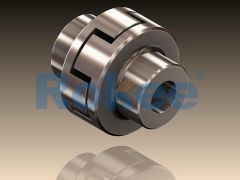
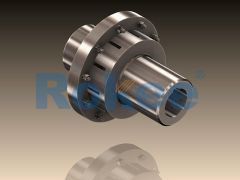
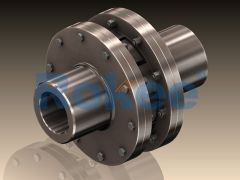
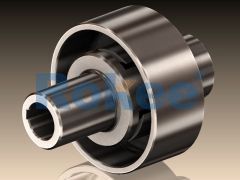
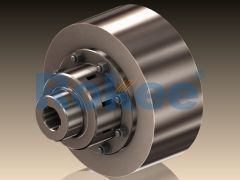
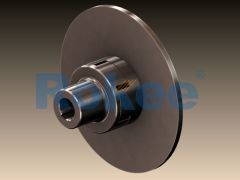
Rokee® is Curved Jaw Shaft Couplings Supplier from China, Support Customization and Export, due to excellent quality, complete technical services and superior cost performance, Rokee® Curved Jaw Shaft Couplings have been serving more than 60 countries and regions in the world, effectively operating in many corners of the world.
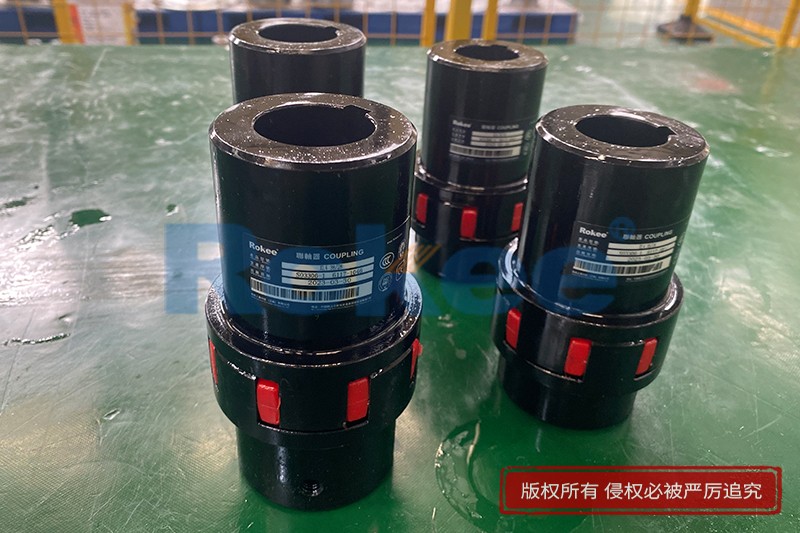
In the realm of power transmission systems, shaft couplings serve as critical components that bridge rotating shafts, enabling the transfer of torque while accommodating misalignments and mitigating operational stresses. Among the diverse array of coupling types available, the curved jaw shaft coupling has emerged as a preferred choice for numerous industrial applications due to its unique combination of flexibility, durability, and ease of installation.


A curved jaw shaft coupling is a type of flexible coupling designed to transmit torque between two coaxial shafts while compensating for three primary types of misalignment: angular misalignment (where shafts intersect at an angle), parallel misalignment (where shafts are offset parallel to each other), and axial misalignment (where shafts experience end-to-end movement). Unlike rigid couplings, which require near-perfect alignment and offer no flexibility, curved jaw couplings incorporate elastic elements that absorb shocks, dampen vibrations, and allow for controlled misalignment, thereby protecting connected equipment such as motors, pumps, and gearboxes from premature wear and failure.
The core components of a curved jaw shaft coupling typically include three main parts: two jaw hubs, an elastomeric insert (often referred to as a spider or element), and in some cases, retaining bolts or clamping mechanisms. The jaw hubs are the metallic components that attach to the respective shafts via keyways, set screws, or compression fittings. Each hub features a series of curved, semicircular projections (jaws) that are evenly spaced around the circumference. The elastomeric insert, which is engineered to fit precisely between the jaws of the two hubs, acts as the flexible intermediary that transmits torque while accommodating misalignments. The curved profile of the jaws is a defining feature of this coupling type, as it enables smoother engagement with the elastomeric insert compared to straight-jaw designs, reducing stress concentrations and enhancing overall performance.
The design of curved jaw shaft couplings is rooted in the principle of balancing torque transmission efficiency with flexibility. The curved jaws, which are typically machined to a specific radius, are designed to distribute contact pressure evenly across the elastomeric insert during operation. This even pressure distribution minimizes localized stress on the insert, extending its service life and ensuring consistent performance. Additionally, the curved profile allows for a greater degree of angular and parallel misalignment compared to straight-jaw couplings, as the insert can deform slightly without experiencing excessive tension or compression.
The working mechanism of a curved jaw shaft coupling begins with the rotation of the driving shaft, which is connected to one jaw hub. As the driving hub rotates, the curved jaws engage with the elastomeric insert, transferring torque through the insert to the driven hub and ultimately to the driven shaft. During this process, any misalignment between the two shafts is absorbed by the elastic deformation of the insert. For angular misalignment, the insert bends slightly to accommodate the angle between the shafts; for parallel misalignment, the insert compresses on one side and stretches on the other, maintaining torque transmission without transferring excessive lateral forces to the shafts or bearings. Axial misalignment is accommodated by the insert’s ability to slide slightly along the axis of the jaws, or by the inherent flexibility of the material.
Another key design consideration is the number of jaws, which can vary depending on the application requirements. Couplings with more jaws (typically 4 to 6) offer higher torque capacity and greater stability, as the torque is distributed across multiple contact points. However, couplings with fewer jaws may provide greater flexibility, making them suitable for applications with higher misalignment requirements. The size and shape of the jaws also play a role in determining the coupling’s performance: larger jaws with a deeper curve can transmit higher torque, while smaller, more shallow jaws are better suited for low-torque, high-speed applications.
The performance and durability of curved jaw shaft couplings are heavily dependent on the materials used for both the jaw hubs and the elastomeric insert. Material selection is guided by factors such as the application’s torque requirements, operating speed, temperature range, environmental conditions (e.g., exposure to chemicals, moisture, or dust), and the level of misalignment expected.
For the jaw hubs, the most commonly used materials are metallic alloys, with steel and aluminum being the preferred choices. Steel hubs, particularly high-carbon steel or alloy steel, offer excellent strength, rigidity, and torque-carrying capacity, making them ideal for heavy-duty applications such as industrial machinery, mining equipment, and large pumps. Steel hubs are also highly resistant to wear and deformation under high loads. Aluminum hubs, on the other hand, are lighter in weight, which reduces inertial forces during operation, making them suitable for high-speed applications such as electric motors, fans, and blowers. Aluminum is also corrosion-resistant, which is an advantage in environments where moisture or mild chemicals are present. In some specialized applications, materials such as stainless steel may be used to enhance corrosion resistance further, or cast iron for cost-effective, medium-duty applications.
The elastomeric insert is a critical component that directly impacts the coupling’s flexibility, vibration damping capabilities, and service life. The most common materials for the insert include natural rubber, nitrile rubber (NBR), ethylene propylene diene monomer (EPDM), silicone rubber, and polyurethane. Natural rubber offers excellent elasticity and vibration damping but has limited resistance to oil, chemicals, and high temperatures, making it suitable for general-purpose, low-temperature applications. Nitrile rubber is highly resistant to oil and fuel, making it ideal for applications in the automotive industry or where exposure to petroleum-based products is common. EPDM rubber offers superior resistance to heat, ozone, and weathering, making it suitable for outdoor applications or high-temperature environments such as power generation facilities. Silicone rubber can withstand extremely high temperatures (up to 200°C or higher) and is resistant to ozone and UV radiation, making it suitable for specialized high-temperature applications. Polyurethane inserts offer higher wear resistance and rigidity compared to rubber, while still providing good flexibility and vibration damping; they are often used in applications where high torque and durability are required, such as in conveyors and material handling equipment.
Curved jaw shaft couplings offer a multitude of advantages that make them a versatile and reliable choice for a wide range of industrial applications. One of the primary advantages is their excellent flexibility, which allows for the accommodation of multiple types of misalignment. This flexibility reduces the need for precise shaft alignment during installation, saving time and labor costs, and also minimizes the transmission of harmful forces to the bearings, shafts, and other connected components, extending the overall service life of the equipment.
Another significant advantage is their effective vibration damping and shock absorption capabilities. The elastomeric insert acts as a buffer, absorbing shocks and vibrations generated during operation (e.g., from motor startup, load fluctuations, or uneven torque transmission). This not only reduces noise levels in the workplace but also protects sensitive components such as sensors, controllers, and gear teeth from damage caused by excessive vibration.
Curved jaw couplings are also known for their high torque transmission efficiency. The curved jaw design ensures maximum contact between the hubs and the insert, allowing for the efficient transfer of torque without significant power loss. This efficiency is particularly important in applications where energy conservation is a priority, such as in electric motor-driven systems.
Ease of installation and maintenance is another key benefit. Unlike some complex coupling types (e.g., gear couplings or disc couplings), curved jaw couplings are relatively simple to install, requiring only basic tools and minimal technical expertise. The elastomeric insert is typically easy to replace, allowing for quick maintenance without the need to disassemble the entire coupling or move the connected shafts. This reduces downtime and maintenance costs, making curved jaw couplings a cost-effective solution for many industries.
Additionally, curved jaw couplings are compact in design, making them suitable for applications where space is limited. Their small footprint allows for easy integration into tight machinery configurations without compromising performance. They are also lightweight (especially when aluminum hubs are used), which reduces the overall weight of the power transmission system and minimizes inertial forces, improving the efficiency of high-speed operations.
Due to their versatile performance characteristics, curved jaw shaft couplings find application in a wide range of industries and power transmission systems. One of the most common applications is in the manufacturing industry, where they are used in machinery such as conveyors, mixers, agitators, and packaging equipment. In these applications, the coupling’s ability to accommodate misalignment and dampen vibrations is critical, as it ensures smooth operation and prevents premature wear of the machinery components.
The automotive and transportation industry also relies heavily on curved jaw shaft couplings. They are used in applications such as vehicle powertrains, transmission systems, and auxiliary components (e.g., water pumps, alternators). In these applications, the coupling’s ability to withstand high loads, absorb shocks, and accommodate misalignment is essential for ensuring reliable performance and long service life.
The water and wastewater treatment industry uses curved jaw shaft couplings in pumps, blowers, and mixers. These applications often involve harsh environmental conditions (e.g., exposure to moisture, chemicals, and abrasive particles) and require couplings that are corrosion-resistant, durable, and capable of accommodating misalignment caused by thermal expansion or contraction of the equipment.
The power generation industry, including both conventional (e.g., coal, gas) and renewable (e.g., wind, solar) power plants, uses curved jaw shaft couplings in turbines, generators, and auxiliary equipment. In these high-demand applications, the coupling’s high torque capacity, vibration damping capabilities, and ability to operate at high speeds are critical for ensuring efficient and reliable power generation.
Other notable applications include the food and beverage industry (where stainless steel hubs and food-grade elastomeric inserts are used to meet hygiene requirements), the pharmaceutical industry (where precision and cleanliness are paramount), and the mining and construction industry (where couplings must withstand heavy loads, harsh environmental conditions, and frequent misalignment).
Proper selection and maintenance of curved jaw shaft couplings are essential for ensuring optimal performance, reliability, and long service life. When selecting a coupling, several key factors must be considered:
First, the torque requirement is the primary consideration. The coupling must be selected to handle the maximum torque generated by the driving shaft, with a suitable safety margin to accommodate transient loads (e.g., startup shocks). Manufacturers typically provide torque rating charts that specify the maximum torque capacity of each coupling size and type.
Second, the operating speed must be taken into account. The coupling’s maximum allowable speed (often specified in revolutions per minute, RPM) must be greater than the operating speed of the shafts to prevent premature failure due to centrifugal forces.
Third, the type and magnitude of misalignment must be considered. The coupling must be capable of accommodating the expected angular, parallel, and axial misalignment in the application. Manufacturers provide misalignment ratings for each coupling model, which specify the maximum allowable misalignment for each type.
Fourth, environmental conditions such as temperature, humidity, exposure to chemicals, and presence of abrasive particles will influence material selection. For example, high-temperature applications require elastomeric inserts that can withstand elevated temperatures, while corrosive environments require hubs made from stainless steel or aluminum.
Fifth, the shaft size and connection type (e.g., keyway, set screw, compression fitting) must be compatible with the coupling hubs. The coupling must be selected to fit the diameter of the driving and driven shafts, and the connection type must be appropriate for the application’s torque requirements and installation constraints.
In terms of maintenance, regular inspection and servicing are essential to ensure the coupling’s continued performance. Key maintenance practices include:
1. Regular visual inspections to check for signs of wear or damage to the jaw hubs and elastomeric insert. Common signs of wear include cracks or tears in the insert, excessive wear on the jaw surfaces, and corrosion or deformation of the hubs.
2. Periodic replacement of the elastomeric insert. The insert is the most wear-prone component of the coupling, and its service life depends on factors such as operating temperature, load, and misalignment. It is recommended to replace the insert at regular intervals (as specified by the manufacturer) or at the first sign of wear.
3. Checking and tightening of retaining bolts or set screws. Loose fasteners can cause excessive vibration, misalignment, and premature wear of the coupling and connected components.
4. Ensuring proper shaft alignment. While curved jaw couplings can accommodate misalignment, excessive or prolonged misalignment can reduce the service life of the insert and increase stress on the shafts and bearings. Regular alignment checks (using tools such as laser alignment systems) are recommended to maintain optimal alignment.
5. Cleaning the coupling regularly to remove dirt, debris, and other contaminants that can cause wear or corrosion. In harsh environments, protective covers may be used to shield the coupling from contaminants.
As industrial applications become more demanding, the design and performance of curved jaw shaft couplings continue to evolve. One of the key trends in recent years is the development of advanced elastomeric materials that offer improved performance characteristics, such as higher temperature resistance, better chemical resistance, and longer service life. For example, the use of nanocomposite elastomers, which incorporate nanoparticles to enhance strength, flexibility, and wear resistance, is becoming increasingly common in high-performance applications.
Another trend is the integration of smart technologies into coupling design. The development of condition monitoring sensors that can be embedded in the coupling to measure temperature, vibration, and wear is enabling predictive maintenance, allowing operators to detect potential issues before they lead to equipment failure. This not only reduces downtime but also improves the overall efficiency and reliability of the power transmission system.
In addition, there is a growing focus on lightweight and compact coupling designs to meet the needs of modern industrial equipment, which is becoming increasingly smaller and more efficient. The use of advanced manufacturing techniques such as additive manufacturing (3D printing) is enabling the production of complex jaw hub designs that are both lightweight and strong, allowing for further improvements in coupling performance and efficiency.
Finally, as sustainability becomes a key priority for many industries, the development of eco-friendly coupling materials and manufacturing processes is gaining traction. For example, the use of recycled metals for jaw hubs and biodegradable elastomeric materials for inserts is reducing the environmental impact of coupling production and disposal.
Curved jaw shaft couplings are essential components in modern power transmission systems, offering a unique combination of flexibility, durability, and efficiency. Their ability to accommodate misalignments, dampen vibrations, and transmit torque effectively makes them suitable for a wide range of industrial applications, from manufacturing and automotive to power generation and water treatment. Proper material selection, based on application requirements and environmental conditions, is critical for ensuring optimal performance, while regular maintenance practices such as inspection, insert replacement, and alignment checks are essential for extending service life and preventing equipment failure.
As industrial technologies continue to advance, curved jaw shaft couplings are evolving to meet the growing demands of modern applications, with innovations in materials, design, and smart technologies driving improvements in performance, reliability, and sustainability. Whether in heavy-duty industrial machinery or high-speed precision equipment, curved jaw shaft couplings will continue to play a vital role in ensuring the efficient and reliable operation of power transmission systems for years to come.
« Curved Jaw Shaft Couplings » Post Date: 2024/7/11
URL: https://www.rokeecoupling.com/en/tags/curved-jaw-shaft-couplings.html