Curved Jaw Coupling
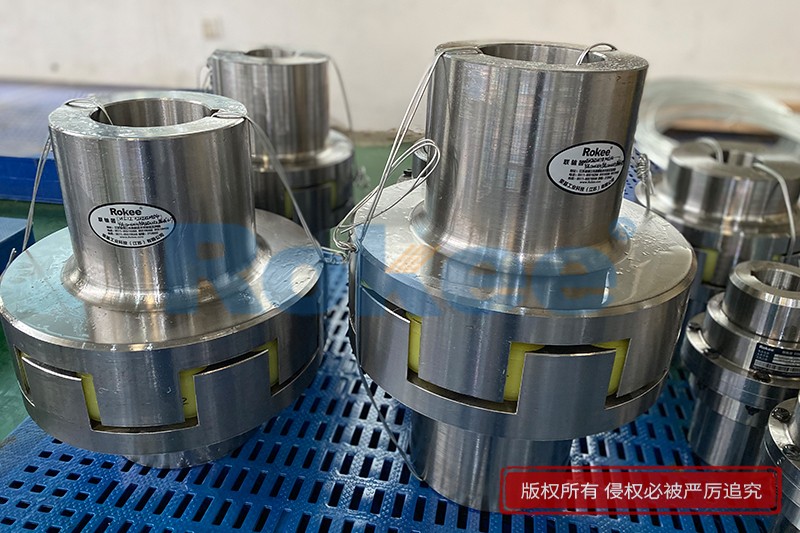
Rokee® is Curved Jaw Coupling Supplier from China, Support Customization and Export, due to excellent quality, complete technical services and superior cost performance, Rokee® Curved Jaw Coupling have been serving more than 60 countries and regions in the world, effectively operating in many corners of the world.
In the realm of power transmission systems, couplings play a pivotal role in connecting rotating shafts, ensuring the seamless transfer of torque while accommodating various forms of misalignment. Among the diverse range of couplings available, curved jaw couplings have emerged as a reliable and versatile solution, widely adopted across industrial, automotive, and aerospace sectors. Their unique design, which combines simplicity with robust performance, makes them suitable for both light-duty and heavy-duty applications.
-
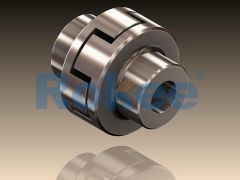
LM Plum-shaped Flexible Coupling
LM Plum-shaped Flexible Coupling is the basic form of this series of couplings. -
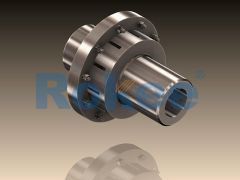
LMD Plum-shaped Flexible Coupling
LMD Plum-shaped Flexible Coupling is added with transition connection, which eliminates the need of axially moving the semi-coupling when replacing the elastomer. -
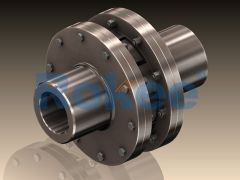
LMS Plum-shaped Flexible Coupling
LMS Plum-shaped Flexible Coupling adopts double transition flange connection, which eliminates the need of axially moving the semi-coupling when replacing the elastomer. -
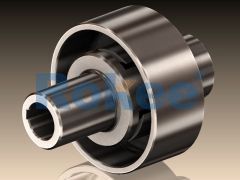
LMZ-I Plum-shaped Flexible Coupling
LMZ-I Plum-shaped Flexible Coupling adopts split brake wheel design, suitable for situations where braking is required. -
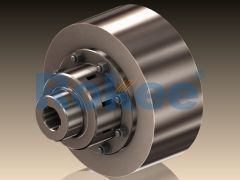
LMZ-II Plum-shaped Flexible Coupling
LMZ-II Plum-shaped Flexible Coupling adopts integral brake wheel design, suitable for situations where braking is required. -
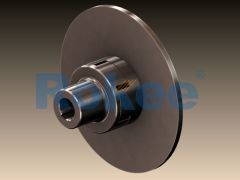
LMPK Plum-shaped Flexible Coupling
LMPK Plum-shaped Flexible Coupling adopts split brake disc design, suitable for situations where braking is required and eliminating the need of axially moving the semi-coupling when replacing the elastomer.
To begin with, it is essential to define what a curved jaw coupling is and how it differs from other types of jaw couplings. A curved jaw coupling is a type of flexible coupling that consists of two hubs with curved jaws and an elastomeric element (often referred to as a spider or insert) positioned between them. The jaws on each hub are designed with a curved profile, as opposed to the straight jaws found in traditional jaw couplings. This curved design is not merely an aesthetic choice but a functional one, as it significantly enhances the coupling’s ability to absorb shock, dampen vibration, and accommodate misalignment. The elastomeric insert, which is typically made from rubber, polyurethane, or other flexible materials, serves as the interface between the two hubs, transmitting torque while providing the necessary flexibility to compensate for axial, radial, and angular misalignment between the connected shafts.
The structural composition of a curved jaw coupling is relatively straightforward, yet each component is engineered to contribute to the overall performance and durability of the assembly. The two hubs are the primary load-bearing components, responsible for attaching the coupling to the input and output shafts. They are typically machined from solid blocks of metal, ensuring high strength and rigidity. The curved jaws on the hubs are precision-machined to ensure a perfect fit with the elastomeric insert. The number of jaws can vary depending on the application requirements, with common configurations ranging from 3 to 6 jaws. More jaws generally result in a higher torque capacity and smoother torque transmission, while fewer jaws may offer greater flexibility in terms of misalignment accommodation. The elastomeric insert, which is the flexible component of the coupling, is designed with a corresponding curved profile to match the jaws of the hubs. It is often molded with grooves or slots to improve its flexibility and heat dissipation capabilities. Some inserts also feature a center hole or keyway to facilitate easy installation and alignment with the hubs.
The working principle of a curved jaw coupling revolves around the interaction between the curved jaws of the hubs and the elastomeric insert. When torque is applied to the input shaft, the jaws of the input hub exert a force on the elastomeric insert. The insert then transfers this force to the jaws of the output hub, which in turn drives the output shaft. The curved profile of the jaws allows for a gradual engagement between the hub and the insert, reducing the impact load and stress concentration that can occur in straight jaw couplings. This gradual engagement also helps to dampen vibration and noise, making curved jaw couplings ideal for applications where smooth operation is critical. Additionally, the elastomeric insert acts as a buffer, absorbing shock loads and preventing them from being transmitted to the connected shafts and other components of the power transmission system. When misalignment occurs between the input and output shafts, the elastomeric insert deforms elastically to accommodate the misalignment, ensuring that torque transmission is not interrupted. The curved design of the jaws allows for greater misalignment angles compared to straight jaw couplings, making them more versatile in applications where shaft alignment is challenging.
Material selection is a critical factor in determining the performance, durability, and application range of curved jaw couplings. The hubs are typically made from metals such as steel, cast iron, aluminum, or bronze. Steel is the most common material for hubs due to its high strength, rigidity, and resistance to wear and fatigue. It is suitable for heavy-duty applications where high torque transmission is required. Cast iron is a more cost-effective option, offering good rigidity and wear resistance, making it ideal for light to medium-duty applications. Aluminum is used in applications where weight reduction is a priority, such as in automotive and aerospace systems, as it is lightweight yet strong enough to handle moderate torque loads. Bronze is often used in applications where corrosion resistance is essential, such as in marine or chemical environments. The elastomeric insert is typically made from polyurethane, rubber, or neoprene. Polyurethane is a popular choice due to its excellent wear resistance, high tensile strength, and good flexibility over a wide range of temperatures. It is suitable for applications where high torque and durability are required. Rubber inserts offer superior vibration damping and shock absorption capabilities, making them ideal for applications with high levels of vibration. Neoprene is used in applications where resistance to oil, chemicals, and extreme temperatures is necessary.
Curved jaw couplings offer a multitude of advantages over other types of couplings, which contribute to their widespread adoption. One of the key advantages is their ability to accommodate multiple types of misalignment, including axial, radial, and angular misalignment. This flexibility eliminates the need for precise shaft alignment, reducing installation time and costs. Another significant advantage is their excellent vibration damping and shock absorption capabilities. The curved jaws and elastomeric insert work together to absorb shock loads and dampen vibration, protecting the connected shafts, bearings, and other components from damage. This results in a smoother operation and extended service life of the power transmission system. Curved jaw couplings are also known for their high torque capacity relative to their size. The curved design of the jaws allows for a larger contact area between the hub and the insert, enabling the coupling to transmit higher torques without compromising on flexibility. Additionally, these couplings are relatively easy to install and maintain. They do not require complex tools or specialized knowledge for installation, and the elastomeric insert can be easily replaced when it becomes worn or damaged, without the need to disassemble the entire coupling or disconnect the shafts. Another advantage is their compact design, which makes them suitable for applications where space is limited. Unlike some other types of flexible couplings, curved jaw couplings have a small footprint, allowing them to be installed in tight spaces without sacrificing performance.
The versatility of curved jaw couplings makes them suitable for a wide range of applications across various industries. In the industrial sector, they are commonly used in pumps, compressors, motors, conveyors, and machine tools. Pumps and compressors often operate with varying levels of vibration and misalignment, making curved jaw couplings an ideal choice due to their vibration damping and misalignment accommodation capabilities. Motors and conveyors require reliable torque transmission with minimal maintenance, which is provided by the robust design and easy maintenance of curved jaw couplings. In the automotive industry, curved jaw couplings are used in drive shafts, transmissions, and auxiliary systems such as power steering pumps and alternators. The lightweight and compact design of these couplings make them suitable for automotive applications where space and weight are critical factors. They also help to reduce vibration and noise in the vehicle, improving the overall driving experience. In the aerospace industry, curved jaw couplings are used in aircraft engines, landing gear systems, and auxiliary power units. The high reliability and durability of these couplings are essential in aerospace applications, where component failure can have catastrophic consequences. They are also designed to withstand extreme temperatures and harsh operating conditions, making them suitable for use in aircraft engines. Other applications of curved jaw couplings include marine propulsion systems, agricultural machinery, and renewable energy systems such as wind turbines and solar trackers. In marine environments, the corrosion-resistant materials used in the hubs and inserts ensure that the couplings can withstand the harsh saltwater environment. In agricultural machinery, the shock absorption capabilities of curved jaw couplings protect the equipment from the rough terrain and heavy loads encountered during farming operations. In renewable energy systems, the reliable torque transmission and low maintenance requirements of these couplings make them ideal for use in wind turbines and solar trackers, which operate in remote locations and require long service intervals.
While curved jaw couplings are relatively low-maintenance, proper maintenance practices are essential to ensure their optimal performance and extended service life. One of the key maintenance tasks is regular inspection of the elastomeric insert. The insert is the most wear-prone component of the coupling, and over time, it can become cracked, worn, or hardened due to exposure to heat, vibration, and chemicals. Regular inspection allows for the early detection of wear and tear, enabling the insert to be replaced before it fails. The frequency of inspection depends on the application and operating conditions, but it is generally recommended to inspect the insert every 6 to 12 months. Another important maintenance task is checking the tightness of the fasteners used to attach the hubs to the shafts. Loose fasteners can cause the coupling to slip, resulting in reduced torque transmission and increased wear. It is recommended to check the fasteners during each inspection and tighten them if necessary. Lubrication is not typically required for curved jaw couplings, as the elastomeric insert acts as a self-lubricating component. However, in some applications where the coupling is exposed to dust, dirt, or other contaminants, it may be necessary to clean the coupling periodically to prevent the buildup of debris, which can cause premature wear of the insert and hubs. Additionally, it is important to ensure that the coupling is not overloaded beyond its torque capacity. Overloading can cause the elastomeric insert to fail prematurely and can also damage the hubs and connected shafts. It is recommended to select a coupling with a torque capacity that exceeds the maximum operating torque of the application to provide a safety margin.
When selecting a curved jaw coupling for a specific application, several factors need to be considered to ensure optimal performance. The first factor is the torque requirement. The coupling must be able to transmit the maximum torque generated by the input shaft without exceeding its torque capacity. It is recommended to select a coupling with a torque rating that is 10 to 20% higher than the maximum operating torque to account for any unexpected load spikes. The second factor is the misalignment tolerance. The coupling must be able to accommodate the maximum amount of axial, radial, and angular misalignment expected in the application. It is important to consult the manufacturer’s specifications to ensure that the coupling’s misalignment tolerance matches the application requirements. The third factor is the operating speed. The coupling must be able to operate at the maximum rotational speed of the shafts without experiencing excessive vibration or fatigue. The manufacturer’s specifications will include the maximum allowable speed for the coupling, which should be higher than the operating speed of the application. The fourth factor is the operating environment. The coupling materials must be compatible with the environment in which it will operate. For example, in corrosive environments, corrosion-resistant materials such as bronze or stainless steel should be used for the hubs, and neoprene or polyurethane inserts should be selected for resistance to chemicals and oils. In high-temperature environments, heat-resistant elastomeric materials should be used. The fifth factor is the shaft size. The coupling hubs must be compatible with the diameter of the input and output shafts. Most manufacturers offer couplings with a range of hub sizes to accommodate different shaft diameters, and custom hubs can be manufactured for non-standard shaft sizes if necessary.
Despite their numerous advantages, curved jaw couplings do have some limitations that should be considered when selecting a coupling for a specific application. One of the main limitations is their limited ability to accommodate very high levels of misalignment compared to some other types of flexible couplings, such as universal joints or Oldham couplings. While they can accommodate moderate levels of misalignment, excessive misalignment can cause premature wear of the elastomeric insert and reduce the coupling’s service life. Another limitation is the temperature range of the elastomeric insert. Most elastomeric materials have a limited temperature range, and exposure to temperatures outside this range can cause the insert to harden, crack, or soften, reducing its performance and durability. In applications with extreme temperatures, specialized high-temperature or low-temperature elastomeric materials may be required, which can increase the cost of the coupling. Additionally, curved jaw couplings are not suitable for applications where there is a risk of the elastomeric insert being exposed to sharp objects or abrasive materials, as this can cause damage to the insert. In such applications, a coupling with a protective cover or a more robust design may be necessary.
In conclusion, curved jaw couplings are a reliable, versatile, and cost-effective solution for power transmission applications requiring torque transmission, misalignment accommodation, vibration damping, and shock absorption. Their simple yet effective design, combined with a wide range of material options, makes them suitable for a diverse range of industries and applications, from industrial machinery to automotive and aerospace systems. Proper material selection, installation, and maintenance are essential to ensure their optimal performance and extended service life. When selecting a curved jaw coupling, it is important to consider factors such as torque requirement, misalignment tolerance, operating speed, operating environment, and shaft size to ensure that the coupling is compatible with the application. While they have some limitations, their numerous advantages make them a popular choice among engineers and designers in the power transmission field. As technology continues to advance, it is likely that curved jaw couplings will continue to evolve, with improvements in material technology and design further enhancing their performance and expanding their application range.
« Curved Jaw Coupling » Post Date: 2024/7/11
URL: https://www.rokeecoupling.com/en/tags/curved-jaw-coupling.html