Diaphragm Flexible Couplings
Rokee® is a Diaphragm Flexible Couplings Supplier from China, customized diaphragm flexible couplings according to the drawings which provided by the customer, selling chinese national standard diaphragm flexible couplings, support export, due to excellent quality, complete technical services and superior cost performance, Rokee® industrial coupling have been serving more than 60 countries and regions in the world, effectively operating in many corners of the world.
Diaphragm Coupling is a kind of high-performance metal Flexible Coupling, which compensates axial and angular displacements by the deformation of elastic diaphragm while transferring torque. It features with compact structure, large transmission torque, long service life, maintenance-free, high temperature resistance, acid and alkali resistance, and corrosion resistance, suitable for shafting transmission in high temperature, high speed and corrosive environment.
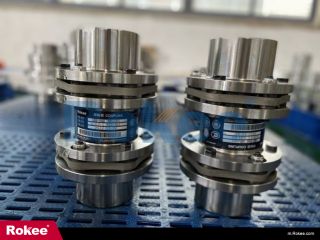


Rokee's RL series Steel Laminae Couplings are independently developed on the basis of high-quality products from Europe and Japan. It has smaller volume, larger torque of the same type, more reasonable proportioning size, large compensation range, light weight and small moment of inertia. Special elastic gasket design is adopted in the hole connection part of bolt and diaphragm group, which greatly reduces the stress concentration in the hole edge part, eliminates the tear loss of diaphragm, and extends the service life. With modular design, the coupling assembly is simple and its maintenance and replacement are quick. The performance far exceeds the national standard JM series products, which are widely used in fan systems, steam turbine units and other important industrial fields.
![Diaphragm Flexible Couplings,RLM Small Single Diaphragm Coupling]()
RLM Small Single Diaphragm Coupling
The RLM standard single section small metal diaphragm coupling is suitable for various industrial process pumps and small torque working situations with a working speed not exceeding 5000rpm, and cannot compensate for radial errors.![Diaphragm Flexible Couplings,RLMD Small Double Diaphragm Coupling]()
RLMD Small Double Diaphragm Coupling
The RLMD standard double section small metal diaphragm coupling is suitable for various industrial process pumps and small torque working occasions with a working speed not exceeding 5000rpm.![Diaphragm Flexible Couplings,RLA Standard Single Diaphragm Coupling]()
RLA Standard Single Diaphragm Coupling
The classic design of metal flexible diaphragm couplings is a reliable choice for medium to low speed applications, but cannot compensate for radial deviation.![Diaphragm Flexible Couplings,RLAD Standard Double Diaphragm Coupling]()
RLAD Standard Double Diaphragm Coupling
The classic design of metal flexible diaphragm couplings is a reliable choice for medium to low speed applications.![Diaphragm Flexible Couplings,RLAR Single Shaft Sleeve Reverse-mounting Diaphragm Coupling]()
RLAR Single Shaft Sleeve Reverse-mounting Diaphragm Coupling
Single side shaft sleeve reverse installation design, suitable for occasions with limited shaft head distance.![Diaphragm Flexible Couplings,RLARD Double Shaft Sleeve Reverse-mounting Diaphragm Coupling]()
RLARD Double Shaft Sleeve Reverse-mounting Diaphragm Coupling
The double-sided shaft sleeve reverse installation design is also applicable in situations where the distance from the shaft head is limited or the additional bending moment is smaller.![Diaphragm Flexible Couplings,RLAF Large & Small Shaft Mounted Diaphragm Coupling]()
RLAF Large & Small Shaft Mounted Diaphragm Coupling
The size difference design of the bilateral shaft sleeve is suitable for situations where the diameter difference between the two ends of the shaft is significant.![Diaphragm Flexible Couplings,RLAT Super Long Wheelbase Diaphragm Coupling]()
RLAT Super Long Wheelbase Diaphragm Coupling
Adopting an intermediate shaft design, suitable for ultra long shaft spacing power transmission applications.![Diaphragm Flexible Couplings,RLQA No Flange Quick Installation Metal Diaphragm Coupling]()
RLQA No Flange Quick Installation Metal Diaphragm Coupling
Suitable for various industrial process pumps, fans, and other medium to low speed applications, with a maximum speed generally not exceeding 25000 rpm. It meets the requirements of API610/ISO14691 and is one of the first products for API applications.![Diaphragm Flexible Couplings,RLQF Flange Type Quick Installation Diaphragm Coupling]()
RLQF Flange Type Quick Installation Diaphragm Coupling
Suitable for drum pressure fans, turbine compressors, and other high speed applications, with a maximum speed of up to 35000rpm.![Diaphragm Flexible Couplings,RLQU Improved Flange Quick Installation Diaphragm Coupling]()
RLQU Improved Flange Quick Installation Diaphragm Coupling
The improved RLQF has smaller additional bending moments and better performance. Suitable for drum pressure fans, turbine compressors, and other high speed applications.![Diaphragm Flexible Couplings,RLHD High Speed Diaphragm Coupling]()
RLHD High Speed Diaphragm Coupling
Suitable for higher speed applications, it also adopts a flexible component integrated assembly design, with a maximum speed of up to 42000rpm.
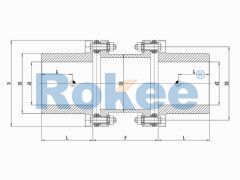
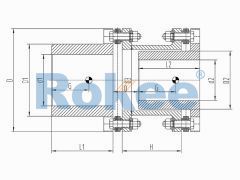
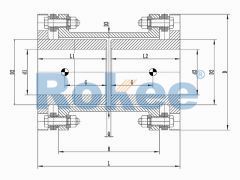
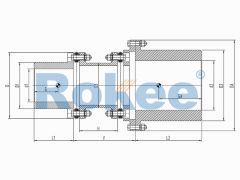
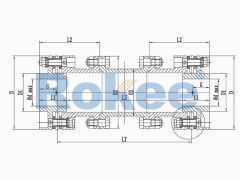
![Diaphragm Flexible Couplings,JMIIJ Diaphragm Coupling]()
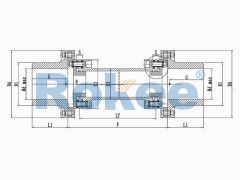
JMIIJ Diaphragm Coupling
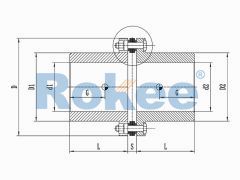
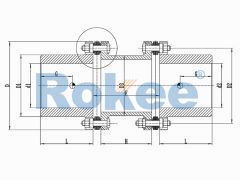
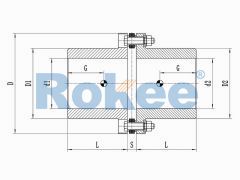
JMIIJ metal diaphragm coupling is designed with intermediate shaft, suitable for long distance transmission. Besides, the semi-coupling sleeve at both ends have no counterbore.![Diaphragm Flexible Couplings,JMII Diaphragm Coupling]()
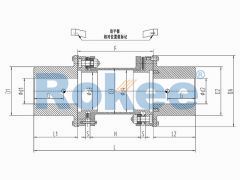
JMII Diaphragm Coupling
JMII metal diaphragm coupling also adopts the single-piece design but has no counterbore, suitable for short distance transmission, with more compact structure.![Diaphragm Flexible Couplings,JMIJ Diaphragm Coupling]()
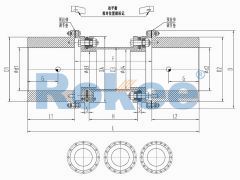
JMIJ Diaphragm Coupling
JMIJ metal diaphragm coupling is designed with intermediate shaft, suitable for long distance transmission. Besides, the semi-coupling sleeve at one end has a counterbore, facilitating the fixing of the shaft end.![Diaphragm Flexible Couplings,JMI Diaphragm Coupling]()
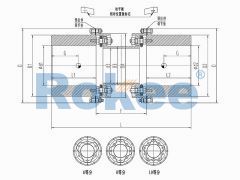
JMI Diaphragm Coupling
JMI metal diaphragm coupling adopts the single-piece design, suitable for short distance transmission. Besides, the semi-coupling sleeve at one end has a counterbore, facilitating the fixing of the shaft end.
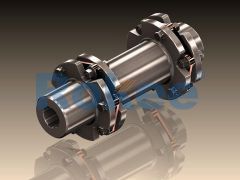
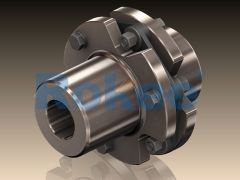
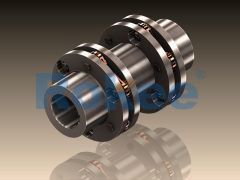
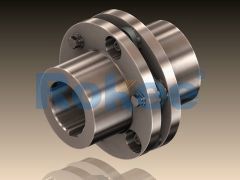
Flexible Couplings are one of the major types of couplings. They find use to connect two shafts, end-to-end in the same line to transmit power that is torque from one shaft to another, thereby causing both to rotate in unison, at the same rpm.
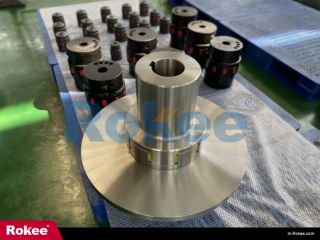


The purpose of a Elastic Coupling is to transmit torque from one piece of rotating equipment to another, while accepting at the same time a small amount of misalignment. Flexible coupling misalignment is expressed, as an order of magnitude, in thousandths of an inch. Actual misalignment, expressed in coupling terms, is angular in nature and expressed in angular units, that is, degrees. How much misalignment is a function of the coupling type and installation. An installation variable is the equipment movement due to the temperature changes taking place in the machines as they go from the non-operating state to operation. Some angular values will be used in the discussion of the various types, but, again, these are for reference only. Each application must be reviewed using the type of coupling selected and the specific design proposed by the vendor.
In the realm of mechanical power transmission, couplings serve as critical components that bridge rotating shafts, enabling the seamless transfer of torque while accommodating various forms of misalignment. Among the diverse range of couplings available, diaphragm flexible couplings have emerged as a preferred choice in numerous industrial sectors due to their unique combination of rigidity, flexibility, and durability. Unlike traditional coupling designs that rely on elastomeric elements or sliding parts, diaphragm couplings utilize thin, precision-engineered metallic diaphragms to absorb misalignment and dampen minor vibrations. This design not only eliminates the need for lubrication but also ensures consistent performance even in harsh operating environments.
1. Design Principles of Diaphragm Flexible Couplings
The core design of a diaphragm flexible coupling revolves around the use of one or more metallic diaphragms, which are typically attached to hub assemblies at either end. The diaphragms themselves are the defining feature of this coupling type, engineered to provide controlled flexibility while maintaining high torque-carrying capacity. To understand their functionality, it is essential to examine the key components and design variations of these couplings.
1.1 Core Components
A standard diaphragm flexible coupling consists of three primary components: two hubs, one or more diaphragms, and fasteners. The hubs are designed to mate with the shafts of the driving and driven machinery, with common attachment methods including keyways, set screws, or interference fits to ensure a secure connection. The diaphragms, usually made from high-strength alloys such as stainless steel or titanium, are thin, disc-shaped elements with a series of precision-cut slots or holes. These slots are strategically positioned to allow the diaphragm to flex in specific directions, accommodating misalignment without compromising structural integrity. Fasteners, such as bolts or rivets, secure the diaphragms to the hubs, creating a rigid connection that transfers torque efficiently.
1.2 Design Variations
Diaphragm flexible couplings are available in two main design configurations: single-diaphragm and double-diaphragm (or two-piece diaphragm) designs. Single-diaphragm couplings feature a single diaphragm disc attached between the two hubs. This design is compact and cost-effective, suitable for applications with moderate misalignment requirements. However, it may introduce a small amount of axial thrust due to the bending of the diaphragm during operation. Double-diaphragm couplings, on the other hand, utilize two diaphragm discs separated by a spacer or intermediate shaft. This configuration eliminates axial thrust by balancing the forces generated by each diaphragm, making it ideal for high-speed and high-torque applications where minimal shaft loading is critical. The spacer element also allows for greater flexibility in shaft separation, enabling easier installation and maintenance in systems where the driving and driven shafts are not closely aligned.
Another important design consideration is the shape of the diaphragm slots. Common slot configurations include radial slots, spiral slots, and hexagonal slots. Radial slots are the most basic design, providing flexibility primarily in the angular direction. Spiral slots, by contrast, offer enhanced flexibility in both angular and axial directions, making them suitable for applications with complex misalignment. Hexagonal slots combine the benefits of radial and spiral designs, providing balanced flexibility and high torque capacity. The choice of slot design depends on the specific misalignment requirements and torque loads of the application.
2. Operational Characteristics and Working Principle
The functionality of a diaphragm flexible coupling is rooted in the elastic deformation of the metallic diaphragms. When torque is transmitted from the driving shaft to the driven shaft, the diaphragms act as a rigid link, ensuring efficient power transfer. However, when misalignment occurs between the shafts, the diaphragms flex elastically to accommodate the deviation, returning to their original shape once the misalignment is corrected. This elastic deformation is key to the coupling’s ability to handle three main types of misalignment: angular misalignment (where the shafts are inclined relative to each other), parallel misalignment (where the shafts are offset radially), and axial misalignment (where the shafts move toward or away from each other).
Angular misalignment is accommodated by the bending of the diaphragm petals between the slots. As the driving shaft rotates, the diaphragm flexes back and forth, allowing the driven shaft to rotate at the same speed while maintaining the angular offset. Parallel misalignment, meanwhile, is handled by a combination of bending and shear in the diaphragm. The slots allow the diaphragm to deform laterally, bridging the radial gap between the shafts without transferring excessive loads to the shaft bearings. Axial misalignment is absorbed by the stretching or compressing of the diaphragm, which is possible due to the flexibility of the slot design. Unlike some other coupling types, diaphragm couplings do not rely on sliding or rolling parts to accommodate misalignment, which eliminates friction and the need for lubrication.
Another notable operational characteristic of diaphragm flexible couplings is their ability to dampen minor vibrations. The metallic diaphragms act as a spring element, absorbing small fluctuations in torque and reducing vibration transmission between the driving and driven machinery. This vibration damping capability helps to protect sensitive components, extend the service life of the equipment, and improve overall system stability. However, it is important to note that diaphragm couplings are not designed to handle large-amplitude vibrations or shock loads, and excessive vibration can lead to premature diaphragm failure.
3. Key Advantages of Diaphragm Flexible Couplings
Diaphragm flexible couplings offer a range of advantages over other coupling types, such as jaw couplings, gear couplings, and universal joints, which make them well-suited for a wide variety of industrial applications. These advantages stem from their unique design and operational characteristics.
3.1 Maintenance-Free Operation
One of the most significant advantages of diaphragm flexible couplings is their maintenance-free nature. Unlike gear couplings, which require regular lubrication to prevent wear and corrosion, or elastomeric couplings, which need periodic replacement of rubber or plastic elements, diaphragm couplings have no moving parts that require lubrication or replacement. The metallic diaphragms are designed to withstand the operating conditions without degradation, and the absence of sliding parts eliminates friction and wear. This maintenance-free operation reduces downtime, lowers maintenance costs, and improves the overall reliability of the power transmission system.
3.2 High Torque Capacity and Rigidity
Despite their flexibility, diaphragm flexible couplings offer high torque-carrying capacity. The metallic diaphragms are made from high-strength materials that can withstand large torque loads without permanent deformation. This combination of flexibility and rigidity makes them suitable for high-power applications, such as industrial motors, pumps, compressors, and turbines. Unlike elastomeric couplings, which can suffer from torque loss due to the compression of the elastic element, diaphragm couplings transmit torque efficiently, ensuring minimal power loss during operation.
3.3 Ability to Accommodate Multiple Misalignment Types
As discussed earlier, diaphragm flexible couplings can accommodate angular, parallel, and axial misalignment, making them versatile for use in a wide range of applications. This ability to handle multiple types of misalignment reduces the need for precise shaft alignment during installation, which simplifies the installation process and reduces the risk of bearing damage due to misalignment. Additionally, the elastic deformation of the diaphragms ensures that the misalignment is absorbed without transferring excessive loads to the shaft bearings, extending the service life of the bearings and other components.
3.4 Resistance to Harsh Environments
Metallic diaphragms, particularly those made from stainless steel or titanium, offer excellent resistance to corrosion, high temperatures, and chemical exposure. This makes diaphragm flexible couplings suitable for use in harsh environments, such as chemical processing plants, offshore facilities, high-temperature industrial furnaces, and marine applications. Unlike elastomeric couplings, which can degrade when exposed to high temperatures, chemicals, or UV radiation, diaphragm couplings maintain their performance and structural integrity in these challenging conditions.
3.5 Compact Design and High-Speed Capability
Diaphragm flexible couplings have a compact design, which makes them ideal for applications where space is limited. The absence of bulky components, such as lubrication systems or large elastomeric elements, allows for easy integration into tight machinery configurations. Additionally, their balanced design and lack of sliding parts make them suitable for high-speed applications. The diaphragms are precision-engineered to ensure dynamic balance, which reduces vibration at high speeds and prevents premature failure. This high-speed capability makes them suitable for use in turbines, centrifuges, and other high-rotational-speed equipment.
4. Industrial Applications of Diaphragm Flexible Couplings
Due to their numerous advantages, diaphragm flexible couplings are used in a wide range of industrial sectors. Their ability to handle high torque, accommodate misalignment, and operate in harsh environments makes them a versatile choice for various power transmission applications.
4.1 Power Generation
In the power generation industry, diaphragm flexible couplings are widely used in gas turbines, steam turbines, and generators. These applications require high torque transmission, precise alignment control, and resistance to high temperatures. The double-diaphragm design is particularly common in power generation systems, as it eliminates axial thrust and ensures minimal shaft loading. The maintenance-free operation of diaphragm couplings is also a key advantage in power plants, where downtime can result in significant financial losses.
4.2 Oil and Gas Industry
The oil and gas industry relies on diaphragm flexible couplings for a variety of applications, including pumps, compressors, and drilling equipment. These applications often involve harsh environments, such as offshore platforms, where exposure to saltwater, corrosion, and high pressures is common. The corrosion-resistant properties of metallic diaphragms make them ideal for these conditions. Additionally, the ability to accommodate misalignment is critical in drilling equipment, where the shafts may experience dynamic misalignment during operation.
4.3 Chemical Processing
Chemical processing plants use diaphragm flexible couplings in pumps, mixers, and reactors. The resistance of metallic diaphragms to chemical exposure makes them suitable for use with corrosive fluids and gases. The maintenance-free operation is also beneficial in chemical plants, where regular maintenance can be difficult due to the hazardous nature of the materials being processed. Diaphragm couplings ensure reliable power transmission without the risk of lubricant contamination, which is critical in applications where product purity is essential.
4.4 Automotive and Aerospace
In the automotive and aerospace industries, diaphragm flexible couplings are used in high-performance engines, transmissions, and auxiliary systems. The compact design and high-speed capability of these couplings make them suitable for use in tight engine compartments and aerospace components. In aerospace applications, the lightweight nature of titanium diaphragms is an additional advantage, as it helps to reduce the overall weight of the aircraft. The reliability and durability of diaphragm couplings are also critical in these industries, where component failure can have severe consequences.
4.5 General Manufacturing
In general manufacturing, diaphragm flexible couplings are used in a wide range of equipment, including conveyors, fans, blowers, and machine tools. These applications benefit from the coupling’s ability to accommodate misalignment, reduce vibration, and operate maintenance-free. For example, in machine tools, the precise torque transmission and minimal vibration of diaphragm couplings help to ensure the accuracy of machining operations. In conveyor systems, the ability to handle misalignment reduces the risk of bearing failure and extends the service life of the equipment.
5. Selection and Maintenance Considerations
While diaphragm flexible couplings offer numerous advantages, selecting the right coupling for a specific application requires careful consideration of several factors. Additionally, although these couplings are maintenance-free, proper installation and periodic inspection are essential to ensure optimal performance and prevent premature failure.
5.1 Selection Factors
The primary factors to consider when selecting a diaphragm flexible coupling include torque capacity, misalignment requirements, operating speed, environmental conditions, and shaft dimensions. Torque capacity is the most critical factor, as the coupling must be able to handle the maximum torque generated by the driving machinery without exceeding the diaphragm’s fatigue limit. It is important to select a coupling with a torque rating that exceeds the maximum operating torque to provide a safety margin. Misalignment requirements should also be carefully evaluated, as different diaphragm designs offer varying levels of flexibility. For applications with significant angular or parallel misalignment, a double-diaphragm design with spiral or hexagonal slots may be more suitable. Operating speed is another key consideration, as high-speed applications require a dynamically balanced coupling to prevent vibration. Environmental conditions, such as temperature, humidity, and chemical exposure, will influence the choice of diaphragm material. For example, stainless steel diaphragms are suitable for corrosive environments, while titanium diaphragms are preferred for high-temperature and lightweight applications. Finally, the coupling must be compatible with the shaft dimensions of the driving and driven machinery, including shaft diameter and keyway size.
5.2 Installation and Inspection
Proper installation is critical to the performance and longevity of diaphragm flexible couplings. During installation, the shafts should be aligned as closely as possible to minimize the amount of misalignment that the diaphragm must accommodate. While diaphragm couplings can handle moderate misalignment, excessive misalignment can lead to premature fatigue and failure of the diaphragm. The hubs should be securely attached to the shafts using the appropriate fasteners, and the torque should be applied evenly to ensure a tight fit. It is also important to ensure that the diaphragms are not damaged during installation, as even small scratches or dents can reduce their fatigue life.
Although diaphragm flexible couplings are maintenance-free, periodic inspection is recommended to detect any signs of wear or damage. During inspection, the diaphragms should be checked for cracks, fatigue, or deformation. The fasteners should also be inspected to ensure that they are tight and not damaged. If any signs of damage are detected, the diaphragm should be replaced immediately to prevent coupling failure. Additionally, the shaft alignment should be checked periodically, as changes in alignment can occur over time due to thermal expansion, vibration, or equipment wear.
6. Conclusion
Diaphragm flexible couplings have established themselves as a reliable and versatile solution for power transmission applications across a wide range of industries. Their unique design, which utilizes metallic diaphragms to accommodate misalignment and transmit torque, offers numerous advantages over traditional coupling types, including maintenance-free operation, high torque capacity, resistance to harsh environments, and compact design. These advantages make them particularly well-suited for applications such as power generation, oil and gas, chemical processing, automotive, aerospace, and general manufacturing.
When selecting a diaphragm flexible coupling, it is important to consider factors such as torque capacity, misalignment requirements, operating speed, environmental conditions, and shaft dimensions to ensure that the coupling is properly matched to the application. Proper installation and periodic inspection are also essential to maximize the performance and longevity of the coupling.
As industrial machinery continues to evolve toward higher speeds, greater efficiency, and more demanding operating conditions, the role of diaphragm flexible couplings is likely to become even more important. Their ability to provide reliable, efficient power transmission in challenging environments makes them a critical component in modern industrial systems, helping to improve productivity, reduce downtime, and extend the service life of equipment.
« Diaphragm Flexible Couplings » Post Date: 2023/10/10
URL: https://www.rokeecoupling.com/en/blog/diaphragm-flexible-couplings.html
Tags: Pin Bush Type Flexible Couplings, Pin Bush Flexible Coupling, Flange Flexible Coupling, Pump Flexible Couplings, Flexible Couplings, Jaw Flexible Coupling, Bushed Pin Type Flexible Coupling, Bushed Pin Flexible Coupling, Bush Type Flexible Coupling, Bush Pin Type Flexible Coupling, Bush Pin Flexible Couplings, pu sandwich panel line
- Gap Chart of Bush Type Flexible Couplings
- Jaw Flexible Couplings Drawing
- Structural Diagram of Flexible Couplings
- Pin Bush Flexible Coupling Application
- Installation of Bushed Pin Type Flexible Coupling
- Flexible Couplings Manufacturing Enterprise
- Size Calculation of Bushed Pin Type Flexible Coupling
- Custom Bush Pin Flexible Couplings
- Flexible Coupling Components
- Working Principle of Bushed Pin Type Flexible Couplings