Zero Backlash Coupling
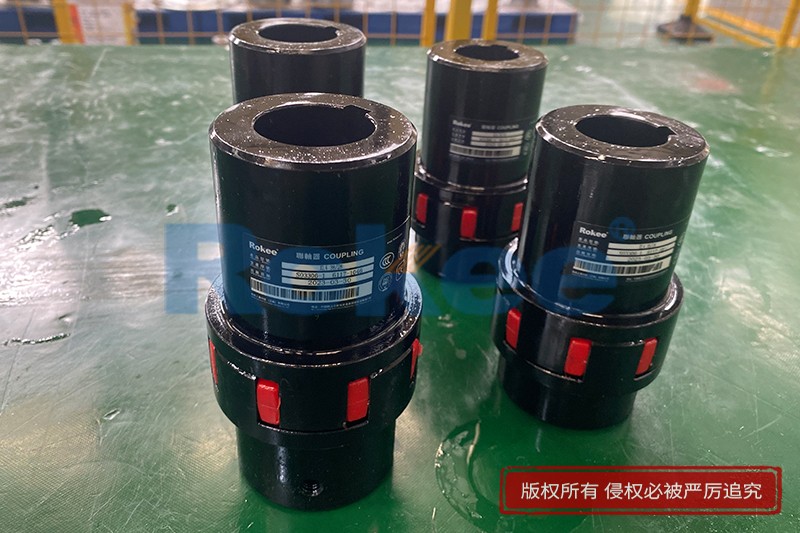
Rokee® is Zero Backlash Coupling Supplier from China, Support Customization and Export, due to excellent quality, complete technical services and superior cost performance, Rokee® Zero Backlash Coupling have been serving more than 60 countries and regions in the world, effectively operating in many corners of the world.
In the realm of precision motion control systems, the efficiency and accuracy of power transmission are paramount. Even the smallest deviation or lag in motion can lead to compromised performance, wasted energy, and increased wear on mechanical components. Among the critical elements that dictate the performance of these systems is the coupling—a device designed to connect two shafts for the purpose of transmitting torque while accommodating misalignments. While conventional couplings serve basic power transmission needs, they often suffer from a common limitation: backlash. Backlash, defined as the play or clearance between mating components, can result in lost motion, vibration, and reduced positional accuracy. To address these challenges, zero backlash couplings have emerged as essential components in high-precision applications.
Before delving into the specifics of zero backlash couplings, it is essential to understand the nature and implications of backlash in conventional couplings. Backlash typically arises from the intentional or unintentional gaps between the teeth of gear couplings, the threads of screw couplings, or the mating surfaces of rigid couplings. In dynamic systems, this gap allows for a small amount of relative motion between the connected shafts before torque is transmitted. For example, when a motor reverses direction, the drive shaft may rotate slightly before engaging the driven shaft, resulting in a delay in motion response. In precision applications such as robotics, CNC machining, or semiconductor manufacturing, this delay can lead to dimensional inaccuracies in workpieces, misalignment of robotic arms, or errors in sensor data collection. Additionally, backlash can cause vibration and noise as the mating components impact each other when the direction of rotation changes, accelerating component wear and reducing the overall lifespan of the system.
Zero backlash couplings are engineered to eliminate this clearance, ensuring that torque is transmitted instantaneously and without any lost motion. The core principle behind these couplings lies in their design, which uses preloaded components, flexible elements, or interference fits to maintain constant contact between the mating parts. Unlike conventional couplings, where backlash is often a byproduct of manufacturing tolerances or wear, zero backlash couplings are designed from the outset to minimize or eliminate gaps, even under varying operating conditions such as temperature fluctuations, torque spikes, and shaft misalignments. This design philosophy ensures that the input motion from the drive shaft is accurately and efficiently transferred to the driven shaft, making zero backlash couplings indispensable in applications where precision is non-negotiable.
There are several distinct types of zero backlash couplings, each tailored to specific application requirements based on factors such as torque capacity, misalignment compensation, operating speed, and environmental conditions. The most common types include beam couplings, bellows couplings, jaw couplings with zero backlash inserts, and Oldham couplings with preloaded elements. Each type employs a unique design approach to achieve zero backlash, offering distinct advantages and limitations.
Beam couplings are among the simplest and most widely used zero backlash couplings. They consist of a single piece of material—typically aluminum, stainless steel, or titanium—with one or more helical or spiral cuts machined along their length. The cuts create flexible beams that allow for angular, parallel, and axial misalignment while maintaining zero backlash. The monolithic design of beam couplings eliminates the need for multiple mating components, thus avoiding the gaps that cause backlash. Additionally, the one-piece construction ensures high torsional stiffness, which is critical for maintaining positional accuracy. Beam couplings are ideal for low to medium torque applications, such as small motors, encoders, and precision linear actuators. However, their torque capacity is limited compared to other types, and they are not well-suited for high-torque industrial applications.
Bellows couplings are another popular type of zero backlash coupling, characterized by a thin-walled, cylindrical bellows element that connects the two shaft hubs. The bellows is typically made from stainless steel or Inconel, materials chosen for their high flexibility, corrosion resistance, and ability to withstand high temperatures. The bellows design allows for significant angular and axial misalignment while maintaining zero backlash, as the bellows itself acts as a flexible, preloaded element that eliminates gaps. Bellows couplings offer excellent torsional stiffness and are capable of transmitting higher torques than beam couplings, making them suitable for a wider range of applications, including CNC machine tools, robotics, and aerospace systems. One of the key advantages of bellows couplings is their ability to operate at high speeds without generating excessive vibration, thanks to their balanced design. However, they are more expensive than beam couplings and are less tolerant of parallel misalignment compared to other types.
Jaw couplings with zero backlash inserts are a modified version of the traditional jaw coupling, which uses a rubber or elastomeric insert between two jaw-shaped hubs. Conventional jaw couplings often exhibit backlash due to the gap between the insert and the jaws. Zero backlash jaw couplings address this by using a preloaded insert—typically made from polyurethane or a high-performance elastomer—that fits tightly into the jaws, eliminating any clearance. The insert not only provides zero backlash but also absorbs vibration and dampens shock, making these couplings suitable for applications where both precision and vibration reduction are important. Jaw couplings with zero backlash are available in a wide range of torque capacities, from low to high, and are easy to install and maintain. However, they have limited misalignment compensation compared to beam or bellows couplings, and the insert can degrade over time under high temperatures or chemical exposure.
Oldham couplings with preloaded elements are designed to accommodate large parallel misalignments while maintaining zero backlash. The traditional Oldham coupling consists of two hubs and a central disk with slots that engage with protrusions on the hubs. Conventional designs may have slight backlash between the disk and the hubs, but zero backlash versions use preloaded disks—often made from spring steel or a composite material—that exert a constant force on the hub protrusions, eliminating any gaps. The preloaded disk also ensures that the coupling maintains zero backlash even as components wear over time. Oldham couplings are ideal for applications where parallel misalignment is significant, such as in conveyors, pumps, and material handling systems. They offer moderate torsional stiffness and torque capacity, but their angular misalignment compensation is limited. Additionally, the sliding contact between the disk and hubs can generate friction, which may lead to wear in high-speed applications.
Regardless of the type, zero backlash couplings share several key characteristics that make them essential in precision motion control systems. First and foremost is their zero lost motion, which ensures that every increment of rotation from the drive shaft is accurately transferred to the driven shaft. This characteristic is critical in applications such as CNC machining, where even a fraction of a millimeter of lost motion can result in scrapped workpieces. Second, zero backlash couplings offer high torsional stiffness, which minimizes torsional deflection under load. Torsional deflection is the twisting of the coupling under torque, which can cause positional errors. High torsional stiffness ensures that the coupling maintains its shape and transmits torque efficiently, even under varying load conditions. Third, many zero backlash couplings are designed to compensate for misalignments, including angular (shafts intersecting at an angle), parallel (shafts offset but parallel), and axial (shafts moving along the same axis) misalignments. Misalignment is inevitable in most mechanical systems due to manufacturing tolerances, thermal expansion, and mounting errors, so the ability to accommodate these misalignments without introducing backlash or reducing performance is crucial. Fourth, some types of zero backlash couplings, such as jaw couplings with elastomeric inserts, offervibration damping and shock absorption properties. These properties help to reduce noise, protect sensitive components from damage, and improve the overall stability of the system.
The applications of zero backlash couplings span a wide range of industries, from automotive and aerospace to medical and semiconductor manufacturing. In each of these industries, the demand for precision and reliability drives the adoption of these couplings.
In the CNC machining industry, zero backlash couplings are used to connect the servo motors to the ball screws or lead screws of machine tools. Servo motors are designed to provide precise positional control, but any backlash in the coupling can negate this precision. By using zero backlash couplings, CNC machines can achieve the tight dimensional tolerances required for complex components, such as those used in aerospace or medical devices. Additionally, the high torsional stiffness of these couplings ensures that the machine responds quickly to changes in direction, reducing cycle times and improving productivity.
The robotics industry is another major user of zero backlash couplings. Robotic arms require precise and repeatable motion to perform tasks such as assembly, welding, and material handling. Backlash in the couplings that connect the motors to the joints of the robotic arm can lead to positional errors, making it difficult to perform delicate tasks accurately. Zero backlash couplings ensure that the motion of the motor is directly translated to the joint, allowing the robot to achieve the high levels of repeatability required in industrial and medical applications. For example, in surgical robotics, where precision is a matter of patient safety, zero backlash couplings are essential to ensure that the surgeon’s movements are accurately replicated by the robotic instrument.
In the semiconductor manufacturing industry, zero backlash couplings are used in equipment such as wafer handlers, lithography machines, and ion implanters. These machines require extremely precise motion control to handle and process wafers, which are often only a few millimeters thick. Even the smallest amount of lost motion can damage the wafers or reduce the quality of the semiconductor devices. Zero backlash couplings help to ensure that the motion of the drive systems is accurately transferred to the wafer handling mechanisms, improving yield and reducing production costs.
The automotive industry uses zero backlash couplings in a variety of applications, including electric vehicle (EV) drivetrains, steering systems, and transmission components. In EV drivetrains, the motor must deliver torque to the wheels with high efficiency and precision. Zero backlash couplings help to minimize energy loss and improve the responsiveness of the drivetrain, enhancing the overall performance of the vehicle. In steering systems, zero backlash ensures that the driver’s input is directly translated to the wheels, improving handling and safety.
The aerospace industry relies on zero backlash couplings for critical applications such as flight control systems, engine components, and satellite positioning systems. In flight control systems, the ability to accurately transmit motion from the pilot’s controls to the aircraft’s surfaces is essential for safety. Zero backlash couplings ensure that there is no delay or lost motion in these systems, even under the extreme conditions of high altitude and temperature fluctuations. In satellite positioning systems, precision motion control is required to align the satellite’s antennas and sensors with the Earth’s surface. Zero backlash couplings help to maintain the accuracy of these systems, ensuring reliable communication and data collection.
When selecting a zero backlash coupling for a specific application, several key factors must be considered to ensure optimal performance and reliability. These factors include torque capacity, misalignment requirements, operating speed, environmental conditions, torsional stiffness, and installation and maintenance needs.
First and foremost, the torque capacity of the coupling must match or exceed the maximum torque generated by the drive system. If the coupling is undersized, it may fail under load, leading to system downtime and potential damage to other components. It is important to consider not only the nominal torque but also any torque spikes that may occur during operation, such as those caused by sudden starts or stops. Most coupling manufacturers provide torque ratings for their products, which should be used as a guide when selecting a coupling.
Next, the misalignment requirements of the application must be evaluated. Different types of zero backlash couplings have different capabilities for accommodating angular, parallel, and axial misalignments. For example, beam couplings are well-suited for applications with small to moderate angular and axial misalignments, while Oldham couplings are better for applications with large parallel misalignments. It is important to measure the expected misalignment in the system and select a coupling that can accommodate these values without introducing backlash or reducing performance.
The operating speed of the system is another critical factor. High-speed applications, such as those found in aerospace or semiconductor manufacturing, require couplings that are balanced to minimize vibration. Bellows couplings and beam couplings are typically well-balanced and can operate at high speeds, while jaw couplings and Oldham couplings may generate more vibration at high speeds due to their sliding components. Additionally, the material of the coupling must be able to withstand the centrifugal forces generated at high speeds.
Environmental conditions such as temperature, humidity, chemical exposure, and dust can also affect the performance and lifespan of zero backlash couplings. For example, in high-temperature applications, such as those in engine compartments, couplings made from heat-resistant materials like stainless steel or Inconel are preferred. In corrosive environments, such as those in chemical processing plants, corrosion-resistant materials are essential to prevent degradation of the coupling. Additionally, in dusty or dirty environments, couplings with sealed designs may be necessary to prevent debris from entering and causing wear.
Torsional stiffness is another important consideration, especially in applications where positional accuracy is critical. Couplings with high torsional stiffness minimize torsional deflection, ensuring that the driven shaft follows the drive shaft exactly. Beam couplings and bellows couplings typically offer higher torsional stiffness than jaw couplings or Oldham couplings, making them ideal for precision applications such as CNC machining and robotics.
Finally, installation and maintenance requirements should be taken into account. Some couplings, such as beam couplings and bellows couplings, are easy to install and require little maintenance, as they have no moving parts other than the flexible element. Others, such as jaw couplings with inserts, may require periodic replacement of the insert to maintain zero backlash. Additionally, the coupling should be compatible with the shaft sizes and mounting configurations of the drive and driven components.
In conclusion, zero backlash couplings play a critical role in precision motion control systems, eliminating lost motion, improving positional accuracy, and enhancing overall system performance. Their diverse types—including beam, bellows, jaw, and Oldham couplings—offer solutions for a wide range of applications, from CNC machining and robotics to aerospace and semiconductor manufacturing. When selecting a zero backlash coupling, it is essential to consider factors such as torque capacity, misalignment requirements, operating speed, environmental conditions, torsional stiffness, and installation and maintenance needs to ensure that the coupling is well-suited for the specific application. As technology continues to advance, the demand for higher precision and reliability will drive further innovations in zero backlash coupling design, making them even more essential in the mechanical systems of the future.
« Zero Backlash Coupling » Post Date: 2023/10/20
URL: https://www.rokeecoupling.com/en/tags/zero-backlash-coupling.html