Telescoping Drive Shaft
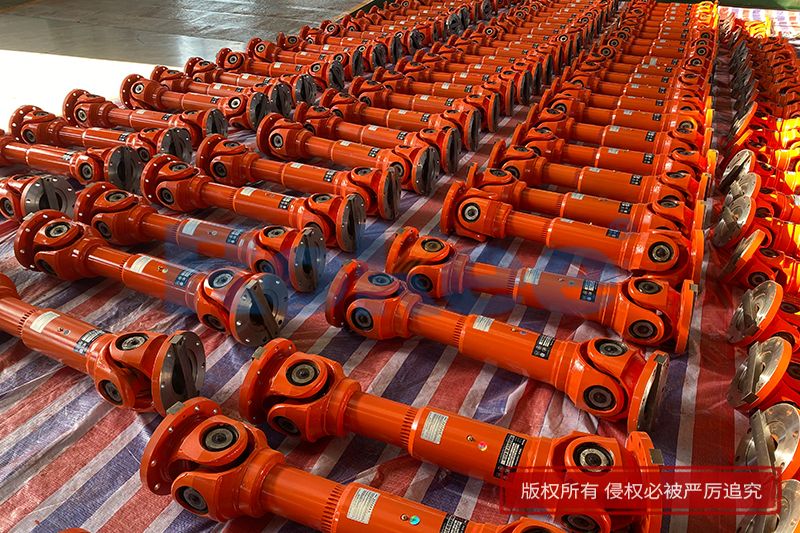
Rokee® is Telescoping Drive Shaft Supplier from China, Support Customization and Export, due to excellent quality, complete technical services and superior cost performance, Rokee® Telescoping Drive Shaft have been serving more than 60 countries and regions in the world, effectively operating in many corners of the world.
In the realm of mechanical power transmission, the drive shaft stands as a critical component, tasked with transferring rotational energy from a power source—such as an engine or motor—to a driven mechanism, whether it be wheels, propellers, or industrial machinery. Among the various types of drive shafts, the telescoping drive shaft (also known as a telescopic drive shaft) distinguishes itself through its unique ability to adjust in length while maintaining efficient power transfer. This adaptability makes it an indispensable solution in applications where relative movement exists between the power source and the driven component. From automotive vehicles navigating uneven terrain to industrial equipment requiring precise motion control, the telescoping drive shaft plays a vital role in ensuring operational stability, efficiency, and durability.
To understand the functionality of a telescoping drive shaft, it is first essential to grasp the core challenge it addresses: relative linear displacement between the power input and output ends. In many mechanical systems, the distance between these two ends is not fixed. For instance, in a rear-wheel-drive vehicle, the suspension system compresses and extends as the vehicle travels over bumps, causing the distance between the transmission (power source) and the rear differential (driven component) to change. A conventional fixed-length drive shaft would be unable to accommodate this movement without either breaking, binding, or losing power transmission efficiency. The telescoping drive shaft resolves this issue by incorporating a sliding mechanism that allows the shaft to expand or contract along its axial direction, thereby adapting to varying distances while maintaining a continuous rotational connection.
The basic working principle of a telescoping drive shaft revolves around the interaction between two primary components: an outer tube and an inner shaft. These two parts are designed to fit together in a sliding engagement, with the inner shaft moving longitudinally within the outer tube. To ensure that rotational power is effectively transmitted between the two sliding components, a key connection mechanism is employed. Common key designs include splines, hexagon shafts, or square shafts—features that prevent relative rotation between the inner and outer parts while permitting axial movement. When the power source rotates the outer tube (or inner shaft, depending on the configuration), the key mechanism transfers this rotational force to the other component, which then transmits it to the driven mechanism. Simultaneously, as the distance between the power source and driven component changes, the inner shaft slides in or out of the outer tube, adjusting the overall length of the drive shaft without interrupting the power flow. This combination of rotational power transfer and axial adjustability is the defining characteristic of the telescoping drive shaft.
A closer examination of the structural components of a telescoping drive shaft reveals a system engineered for both strength and flexibility. Beyond the core outer tube and inner shaft, several additional elements contribute to its performance and reliability. One such component is the sliding joint, which encompasses the interface between the inner and outer parts. The sliding joint must be precisely machined to minimize friction during axial movement while maintaining a tight fit to prevent power loss. To reduce wear and tear at this interface, manufacturers often use high-strength, wear-resistant materials such as alloy steels or aluminum alloys, and may also apply lubricants to ensure smooth sliding. Another critical component is the universal joint (U-joint) or constant velocity (CV) joint, which is typically installed at one or both ends of the telescoping drive shaft. These joints accommodate angular misalignment between the power source and the driven component, allowing the drive shaft to operate efficiently even when the two ends are not perfectly aligned. In applications requiring high precision, such as automotive steering systems or industrial robotics, CV joints are preferred over U-joints because they maintain a constant rotational speed, eliminating vibrations that could affect performance.
Sealing components are also an integral part of the telescoping drive shaft design, particularly in applications exposed to harsh environments. Dust, dirt, moisture, and other contaminants can infiltrate the sliding joint, causing corrosion, increased friction, and premature failure. To prevent this, seals—such as rubber boots or O-rings—are installed at the ends of the outer tube, creating a barrier between the sliding components and the external environment. These seals also help retain lubricants within the sliding joint, ensuring long-term smooth operation. Additionally, some telescoping drive shafts incorporate balancing weights to minimize vibrations during high-speed rotation. Imbalances in the drive shaft can lead to increased wear on bearings, joints, and other components, as well as noise and reduced efficiency. By carefully balancing the shaft during manufacturing, these issues are mitigated, enhancing the overall performance and lifespan of the system.
The telescoping drive shaft offers a range of key advantages that make it superior to fixed-length drive shafts in specific applications. First and foremost is its adaptability to axial movement. As previously noted, this feature is essential in systems where the distance between the power source and driven component varies, such as vehicles with suspension systems, agricultural machinery with adjustable implements, or industrial robots with moving arms. Without this adaptability, mechanical systems would require complex and costly alternative solutions to accommodate relative movement, such as flexible couplings or hydraulic transmission systems, which may not be as efficient or durable. Another significant advantage is its compact design when retracted. In applications where space is limited, such as compact vehicles or small industrial machinery, the ability of the telescoping drive shaft to retract to a shorter length allows for more efficient use of available space. This compactness also makes it easier to install and maintain, as it requires less clearance during assembly and disassembly.
Efficiency in power transmission is another key benefit of the telescoping drive shaft. When properly designed and lubricated, the sliding joint minimizes power loss, ensuring that a high percentage of the rotational energy from the power source is transferred to the driven component. This efficiency is particularly important in applications where energy conservation is a priority, such as electric vehicles or industrial equipment operating continuously. Additionally, the telescoping drive shaft exhibits high durability and reliability when constructed from high-quality materials and precision-machined components. The use of wear-resistant materials and effective sealing systems reduces the risk of failure due to corrosion, friction, or contamination, making it suitable for use in harsh environments such as construction sites, agricultural fields, or marine applications. Finally, the telescoping drive shaft isversatile, with designs that can be customized to meet the specific requirements of different applications, including varying load capacities, speed ranges, and environmental conditions.
The versatility of the telescoping drive shaft is reflected in its wide range of applications across multiple industries. One of the most common applications is in the automotive industry, where it is used in rear-wheel-drive, four-wheel-drive, and all-wheel-drive vehicles. In these vehicles, the telescoping drive shaft connects the transmission to the differential, accommodating the axial movement caused by suspension compression and extension. For example, in off-road vehicles, which frequently encounter uneven terrain, the telescoping drive shaft ensures that power is consistently transmitted to the wheels even as the suspension articulates. In addition to passenger vehicles, commercial vehicles such as trucks and buses also utilize telescoping drive shafts, as their heavy-duty suspension systems require a drive shaft that can adapt to significant axial movement. Another automotive application is in steering systems, where telescoping drive shafts are used to connect the steering wheel to the steering gear, accommodating the movement of the steering column as the driver adjusts the seat position.
The agricultural industry is another major user of telescoping drive shafts. Agricultural machinery such as tractors, harvesters, and sprayers often feature implements that can be adjusted in height or position relative to the main body of the machine. For example, a tractor pulling a plow may need to raise or lower the plow depending on the depth of tillage required, which changes the distance between the tractor’s power take-off (PTO) and the plow’s drive mechanism. A telescoping drive shaft connects the PTO to the implement, allowing for this adjustment while maintaining power transmission. The durability of telescoping drive shafts is particularly important in agricultural applications, as they are often exposed to dirt, dust, moisture, and heavy loads.
In the industrial sector, telescoping drive shafts find use in a variety of machinery, including conveyor systems, robotic arms, and machine tools. Conveyor systems, which are used to transport materials in factories, warehouses, and mines, often require drive shafts that can adapt to the movement of conveyor belts or the expansion and contraction of the conveyor frame due to temperature changes. Telescoping drive shafts ensure that power is transmitted efficiently to the conveyor rollers even as these adjustments occur. Robotic arms, which are used in manufacturing and assembly processes, require precise movement and power transmission between the robot’s base and its end effector. Telescoping drive shafts provide the necessary axial adjustability while maintaining the high precision required for these applications. Machine tools such as lathes, milling machines, and grinders also use telescoping drive shafts in some configurations, where they accommodate the movement of the tool head or workpiece.
The marine industry is yet another sector where telescoping drive shafts are employed. Boats and ships often have engines mounted in a fixed position, while the propellers are attached to a hull that may flex or move slightly during operation. A telescoping drive shaft connects the engine to the propeller, accommodating this axial movement and ensuring consistent power transmission. Additionally, in some marine applications, the telescoping drive shaft allows for easy removal of the propeller for maintenance, as the shaft can be retracted to create clearance.
Over the years, technological advancements have continued to improve the performance, efficiency, and durability of telescoping drive shafts. One of the most significant developments is the use of advanced materials. Traditional telescoping drive shafts were primarily made from steel, which is strong but heavy. Today, manufacturers are increasingly using lightweight materials such as aluminum alloys, carbon fiber composites, and titanium alloys. These materials offer several benefits, including reduced weight, which improves fuel efficiency in automotive and marine applications, and increased strength-to-weight ratios, which allow for higher load capacities without increasing the overall size of the shaft. Carbon fiber composites, in particular, are gaining popularity due to their exceptional strength, light weight, and resistance to corrosion, making them ideal for high-performance applications such as racing vehicles and advanced industrial machinery.
Another key technological advancement is the improvement of sliding joint designs. Early telescoping drive shafts used simple spline connections, which could suffer from friction and wear over time. Modern designs incorporate precision-machined splines with optimized tooth profiles, reducing friction and increasing the load-carrying capacity of the joint. Additionally, some manufacturers have developed self-lubricating sliding joints, which eliminate the need for periodic lubrication and reduce maintenance requirements. These self-lubricating joints use materials such as polytetrafluoroethylene (PTFE) or other solid lubricants embedded in the spline teeth, ensuring smooth sliding and long-term reliability.
Advancements in manufacturing processes have also contributed to the improvement of telescoping drive shafts. Computer numerical control (CNC) machining allows for precise fabrication of components, ensuring tight tolerances and consistent quality. This precision is critical for the sliding joint, where even small deviations in dimensions can lead to increased friction, power loss, or premature failure. Additive manufacturing (3D printing) is another emerging technology that is being explored for the production of telescoping drive shaft components. 3D printing allows for the creation of complex geometries that are difficult or impossible to achieve with traditional machining processes, enabling the design of more efficient and lightweight drive shafts. For example, 3D-printed spline joints can be optimized for strength and weight, with internal structures that reduce material usage while maintaining performance.
The integration of sensors and smart technologies is yet another area of advancement in telescoping drive shaft design. In modern vehicles and industrial machinery, there is a growing demand for real-time monitoring of component performance to predict maintenance needs and prevent failures. Some manufacturers are incorporating sensors into telescoping drive shafts to measure parameters such as temperature, vibration, and axial displacement. These sensors transmit data to a central control system, which analyzes the information and alerts operators to potential issues, such as excessive wear or lubrication loss. This predictive maintenance capability improves the reliability of the system and reduces downtime, particularly in critical applications such as industrial production lines or emergency vehicles.
Despite these advancements, there are still challenges that researchers and manufacturers are working to address. One of the main challenges is reducing friction in the sliding joint, particularly at high speeds and heavy loads. While advanced materials and lubrication systems have improved this, further reductions in friction would enhance power transmission efficiency and reduce wear. Another challenge is improving the corrosion resistance of telescoping drive shafts, especially in harsh environments such as marine or offshore applications. Although composite materials offer excellent corrosion resistance, they can be more expensive than traditional steel, limiting their widespread adoption. Additionally, the cost of advanced manufacturing processes such as 3D printing remains a barrier for some applications, though this is expected to decrease as the technology matures.
Looking to the future, the telescoping drive shaft is poised to play an even more important role in emerging technologies. The growing popularity of electric vehicles (EVs), for example, presents new opportunities for telescoping drive shaft design. EVs have different power transmission requirements than traditional internal combustion engine vehicles, including higher torque levels and lower noise levels. Lightweight telescoping drive shafts made from carbon fiber composites are well-suited for EVs, as they reduce weight and improve energy efficiency. Additionally, the integration of smart sensors into telescoping drive shafts will be critical for EVs, as they enable real-time monitoring of power transmission systems and contribute to the overall safety and reliability of the vehicle.
Another emerging application area is in autonomous vehicles and robotics. Autonomous vehicles require highly reliable and efficient power transmission systems to ensure safe operation, and telescoping drive shafts with advanced sensors and predictive maintenance capabilities are well-suited for this. In robotics, the demand for more flexible and precise movement is driving the development of telescoping drive shafts with smaller form factors and higher precision. Additionally, the use of 3D printing in the production of these shafts will allow for customization to meet the specific needs of individual robotic applications.
In conclusion, the telescoping drive shaft is a critical component in modern mechanical systems, offering unique adaptability to axial movement that makes it indispensable in a wide range of applications. Its basic design, consisting of an outer tube, inner shaft, and key connection mechanism, has been refined over the years through the use of advanced materials, improved manufacturing processes, and smart technologies. The key advantages of adaptability, compactness, efficiency, durability, and versatility have made it a preferred choice in the automotive, agricultural, industrial, and marine industries. As technology continues to advance, the telescoping drive shaft is expected to evolve further, with improvements in materials, design, and smart integration enabling it to meet the changing needs of emerging technologies such as electric vehicles, autonomous systems, and robotics. Whether in a passenger car navigating a bumpy road, a tractor plowing a field, or a robotic arm assembling a product, the telescoping drive shaft remains a vital link in the chain of power transmission, ensuring that mechanical systems operate efficiently, reliably, and effectively.
« Telescoping Drive Shaft » Post Date: 2023/10/20
URL: https://www.rokeecoupling.com/en/tags/telescoping-drive-shaft.html