Spline Shaft Coupling
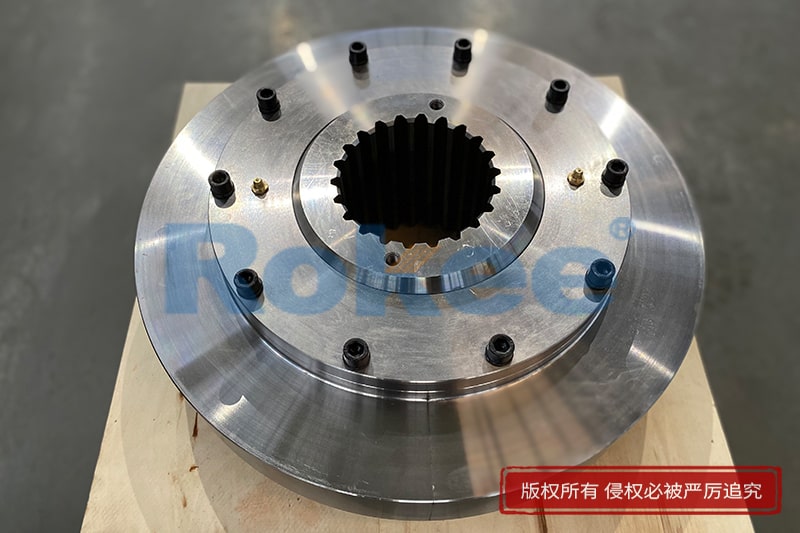
Rokee® is Spline Shaft Coupling Supplier from China, Support Customization and Export, due to excellent quality, complete technical services and superior cost performance, Rokee® Spline Shaft Coupling have been serving more than 60 countries and regions in the world, effectively operating in many corners of the world.
In the realm of mechanical power transmission, the ability to efficiently transfer torque between rotating shafts while accommodating misalignments and ensuring operational stability is paramount. Among the diverse range of coupling devices available, spline shaft couplings stand out as a reliable and versatile solution, widely employed across various industrial sectors. Unlike some coupling types that rely on friction or bolted connections, spline shaft couplings utilize interlocking grooves (splines) on the shaft and coupling hub to create a secure, torque-transmitting interface. This design not only enables high torque transfer capacity but also facilitates axial movement of the shafts, making them suitable for applications where thermal expansion, vibration, or dynamic misalignment is common.
To understand the functionality of spline shaft couplings, it is first essential to grasp the basic concept of spline connections. A spline is a series of longitudinal grooves machined into the surface of a shaft, which mates with corresponding grooves in a hub or coupling. This interlocking structure differs from a keyed connection, where a single key is used to prevent relative rotation between the shaft and hub. Spline connections distribute the torque load across multiple contact points, reducing stress concentration and allowing for higher torque transmission compared to keyed joints. When integrated into a coupling assembly, this spline connection forms the core of the spline shaft coupling, enabling the transfer of power between two shafts while accommodating specific types of misalignment and movement.
The fundamental design of a spline shaft coupling consists of three main components: two coupling hubs, a splined sleeve or shaft, and in some cases, a protective cover. Each coupling hub is attached to the end of a respective shaft that needs to be connected. One of the hubs is typically equipped with internal splines, while the other features external splines, or alternatively, a separate splined sleeve is used to connect the two hubs, each of which has internal splines. The splined interface allows for a sliding fit between the components, enabling axial movement (end float) of the shafts without disrupting torque transmission. The design may also incorporate features such as lubrication channels to reduce friction between the splined surfaces, as well as seals to prevent the ingress of contaminants and the leakage of lubricant. The dimensions of the splines, including the number of grooves, their depth, width, and profile, are carefully engineered based on the application requirements, such as the maximum torque to be transmitted, the shaft diameter, and the expected level of axial movement.
Spline shaft couplings can be classified into several types based on their design characteristics, the nature of the spline connection, and their intended application. The most common types include sliding spline couplings, fixed spline couplings, and crowned spline couplings. Sliding spline couplings, also known as slip spline couplings, are designed to allow significant axial movement between the shafts. This type is particularly useful in applications where thermal expansion and contraction of the shafts occur, such as in automotive driveshafts or industrial conveyor systems. The splined interface in sliding couplings is typically a clearance fit, enabling smooth sliding motion while maintaining torque transfer. Fixed spline couplings, on the other hand, are designed to prevent axial movement, providing a rigid connection between the shafts. These couplings are used in applications where precise shaft alignment is critical and axial movement is not required, such as in some machine tool spindles and gearbox outputs.
Crowned spline couplings, also referred to as misalignment-compensating spline couplings, feature splines with a crowned profile on one of the mating components. This design allows the coupling to accommodate angular misalignment between the shafts, in addition to axial movement. The crowned splines distribute the load evenly across the contact surfaces, even when the shafts are not perfectly aligned, reducing wear and extending the service life of the coupling. Another type of spline shaft coupling is the splined flexible coupling, which incorporates elastic elements such as rubber or polyurethane inserts between the splined components. These elastic elements help to dampen vibration, absorb shock loads, and accommodate greater levels of misalignment, making them suitable for applications with high dynamic loads, such as in pumps, compressors, and electric motors.
The working principle of spline shaft couplings revolves around the transfer of torque through the interlocking splined surfaces. When torque is applied to one shaft, it is transmitted to the attached coupling hub. The splines on the hub engage with the splines on the mating component (either the other hub or a splined sleeve), transferring the torque to the second shaft. The key advantage of this mechanism is that the torque is distributed across multiple spline teeth, rather than a single point (as in keyed connections). This distributed load reduces the stress on each individual spline, allowing the coupling to handle higher torque loads without failure. Additionally, the splined interface enables axial movement between the shafts in sliding couplings. As the shafts expand or contract due to temperature changes, or move axially during operation, the splines slide against each other, maintaining the torque connection while accommodating the movement. In crowned spline couplings, the crowned profile allows the splines to pivot slightly, accommodating angular misalignment between the shafts by ensuring that the contact area between the splines remains consistent, even when the shafts are at an angle to each other.
Spline shaft couplings offer a range of key advantages that make them a preferred choice in many industrial applications. One of the most significant advantages is their high torque transmission capacity. Due to the distributed load across multiple spline teeth, spline couplings can transmit much higher torques than keyed connections or some other types of couplings of the same size. This makes them suitable for heavy-duty applications, such as in mining equipment, steel mills, and large industrial machinery. Another major advantage is their ability to accommodate axial movement. In applications where thermal expansion and contraction of shafts are common, sliding spline couplings allow the shafts to move axially without causing damage to the coupling or the shafts themselves. This flexibility helps to prevent premature failure and ensures stable operation over a wide range of operating temperatures.
Additionally, spline shaft couplings provide good alignment compensation capabilities, particularly crowned and flexible spline types. Angular and parallel misalignments between shafts can occur due to installation errors, shaft deflection under load, or vibration. Spline couplings can accommodate these misalignments to a certain degree, reducing stress on the shafts, bearings, and other components of the mechanical system. This not only improves the reliability of the system but also extends the service life of the components. Spline couplings also offer high rigidity in the torsional direction, which is crucial for applications requiring precise torque control, such as in machine tools and robotics. The rigid torsional response ensures that the rotational motion is transmitted accurately, without excessive backlash or torsional deflection.
Furthermore, spline shaft couplings are known for their durability and long service life. The splined surfaces, when properly lubricated, experience minimal wear, even under heavy loads and continuous operation. The use of high-strength materials, such as alloy steels, further enhances their durability, making them suitable for harsh industrial environments. Compared to some other coupling types, spline couplings are also relatively easy to install and maintain, particularly when designed with split hubs or removable sleeves, which allow for easy assembly and disassembly without removing the shafts from their bearings.
The versatility of spline shaft couplings makes them suitable for a wide range of industrial applications across various sectors. One of the most common applications is in the automotive industry, where sliding spline couplings are used in driveshafts. In rear-wheel-drive and four-wheel-drive vehicles, the driveshaft connects the transmission to the differential, and thermal expansion and contraction of the driveshaft during operation require a coupling that can accommodate axial movement. Spline couplings in automotive driveshafts ensure smooth torque transmission while allowing the driveshaft to expand and contract, preventing binding and ensuring reliable performance.
In the industrial machinery sector, spline shaft couplings are widely used in gearboxes, pumps, compressors, and conveyors. Gearboxes often require couplings that can transmit high torques while accommodating slight misalignments between the gearbox output shaft and the driven equipment. Spline couplings are ideal for this application due to their high torque capacity and alignment compensation capabilities. Pumps and compressors, which operate at high speeds and may experience dynamic loads, benefit from the vibration-damping properties of flexible spline couplings, which help to reduce noise and extend the life of the pumps and compressors. Conveyor systems, which often have long shafts that are prone to thermal expansion, use sliding spline couplings to accommodate axial movement and ensure continuous operation.
The aerospace industry also utilizes spline shaft couplings in various applications, such as in aircraft engines and landing gear systems. In aircraft engines, spline couplings are used to connect the turbine shafts to the gearbox, requiring high reliability and torque transmission capacity in a compact design. The ability to accommodate slight misalignments and axial movement is crucial in aerospace applications, where weight and space are at a premium, and failure can have catastrophic consequences. Spline couplings in landing gear systems help to transmit torque to the wheels, ensuring smooth and reliable operation during takeoff and landing.
Other applications of spline shaft couplings include robotics, where precise torque transmission and rigidity are essential for accurate movement; mining equipment, such as crushers and conveyors, which require heavy-duty couplings to handle high torques and harsh operating conditions; and renewable energy systems, such as wind turbines, where spline couplings are used in the drivetrain to connect the rotor to the generator, accommodating misalignments and transmitting high torques generated by the wind.
Proper maintenance is essential to ensure the optimal performance and long service life of spline shaft couplings. The key maintenance considerations include lubrication, inspection of splined surfaces, checking for misalignment, and replacing worn components. Lubrication is critical for reducing friction between the splined surfaces, preventing wear, and protecting against corrosion. The type of lubricant used should be compatible with the materials of the coupling and the operating conditions, such as temperature, load, and speed. Greases or oils with high pressure and anti-wear additives are typically recommended for spline couplings. Regular lubrication intervals should be followed, and the lubricant should be replaced periodically to remove contaminants and ensure its effectiveness.
Regular inspection of the splined surfaces is also important to detect signs of wear, damage, or corrosion. Wear on the spline teeth can reduce the torque transmission capacity of the coupling and lead to premature failure. Inspection can be done visually, using magnifying tools if necessary, or by measuring the dimensions of the splines to check for excessive wear. If wear is detected beyond a certain limit, the affected components should be replaced immediately. Additionally, checking for misalignment between the shafts is crucial, as excessive misalignment can cause uneven wear on the splines and increase stress on the coupling and other components. Misalignment can be corrected by adjusting the position of the shafts or using shims to realign the equipment.
Seals and protective covers should also be inspected regularly to ensure they are intact and functioning properly. Seals prevent the ingress of dirt, dust, moisture, and other contaminants into the splined interface, which can cause wear and corrosion. Damaged seals should be replaced promptly to maintain the integrity of the lubrication system. In addition, checking for loose fasteners, such as bolts or set screws, is important, as loose fasteners can cause misalignment or reduce the clamping force of the coupling hubs, leading to slippage and damage.
In conclusion, spline shaft couplings are a critical component in mechanical power transmission systems, offering high torque capacity, flexibility in accommodating axial movement and misalignment, and durability in harsh operating conditions. Their diverse design types, including sliding, fixed, crowned, and flexible spline couplings, make them suitable for a wide range of applications across automotive, industrial, aerospace, robotics, mining, and renewable energy sectors. Proper design, selection, and maintenance of spline shaft couplings are essential to ensure their optimal performance and reliability. As industrial machinery continues to evolve towards higher power, higher speed, and more compact designs, spline shaft couplings are likely to remain a key solution for efficient and reliable torque transmission, adapting to the changing needs of modern industrial applications. Their unique combination of strength, flexibility, and precision makes them an indispensable component in the complex mechanical systems that power our world.
« Spline Shaft Coupling » Post Date: 2023/10/20
URL: https://www.rokeecoupling.com/en/tags/spline-shaft-coupling.html