Large Diameter Coupling
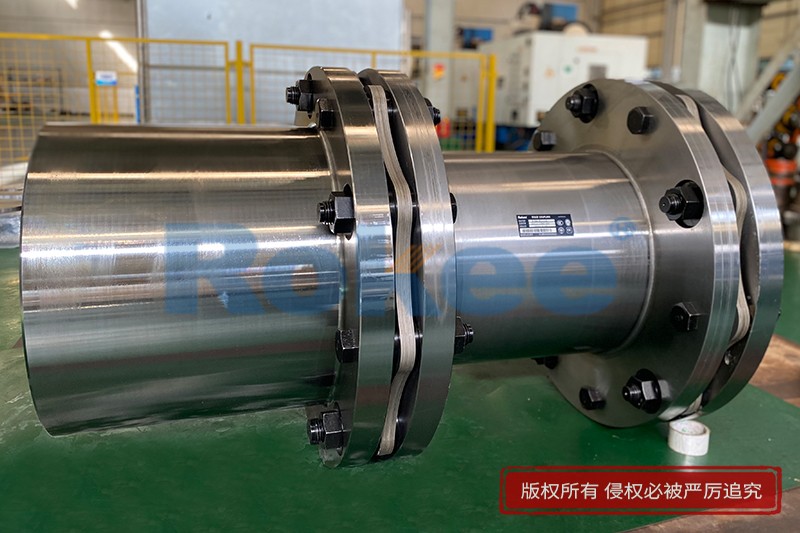
Rokee® is Large Diameter Coupling Supplier from China, Support Customization and Export, due to excellent quality, complete technical services and superior cost performance, Rokee® Large Diameter Coupling have been serving more than 60 countries and regions in the world, effectively operating in many corners of the world.
In the realm of industrial power transmission, couplings serve as critical components that connect two shafts to transmit torque while accommodating misalignments, absorbing shocks, and compensating for axial and radial movements. Among the diverse range of couplings available, large diameter couplings stand out due to their ability to handle high torque loads,large shaft sizes, and operate reliably in demanding industrial environments. From heavy machinery in mining and construction to power generation units and marine propulsion systems, large diameter couplings play an indispensable role in ensuring the smooth and efficient operation of complex mechanical systems.
1. Understanding Large Diameter Couplings: Definition and Core Functions
A coupling is essentially a mechanical device that joins two rotating shafts, allowing for the transmission of power from a driving source (such as an electric motor, diesel engine, or turbine) to a driven machine (like a pump, compressor, or gearbox). Large diameter couplings are specifically designed to accommodate shaft diameters typically exceeding 200 millimeters, though the exact threshold may vary depending on industry standards and application requirements. Unlike smaller couplings, which prioritize compactness and light weight, large diameter couplings are engineered to withstand substantial torque, handle large axial and radial displacements, and maintain structural integrity under extreme operating conditions.
The core functions of large diameter couplings extend beyond simple torque transmission. One of their primary roles is to accommodate misalignments between the connected shafts. Misalignments can occur due to installation errors, thermal expansion and contraction of components, structural vibrations, or wear over time. Large diameter couplings address three main types of misalignment: angular misalignment (where the shafts are not collinear but intersect at an angle), parallel misalignment (where the shafts are parallel but offset), and axial misalignment (where the shafts move along their axial direction). By accommodating these misalignments, couplings reduce stress on the shafts, bearings, and other mechanical components, thereby extending their service life and minimizing downtime.
Another crucial function of large diameter couplings is shock absorption. In industrial operations, sudden load changes, start-up shocks, or operational disturbances can generate impact forces that propagate through the power transmission system. Large diameter couplings, particularly those with flexible elements, absorb these shocks and dampen vibrations, preventing damage to sensitive components and ensuring stable operation. Additionally, some large diameter couplings are designed to provide a degree of torsional flexibility, which helps to reduce torsional vibrations and protect the driving and driven machinery from torsional fatigue.
2. Classification of Large Diameter Couplings
Large diameter couplings can be classified into several categories based on their design, flexibility, and operating principles. The primary classification divides them into rigid couplings and flexible couplings, each with distinct characteristics and applications.
2.1 Rigid Couplings
Rigid couplings are designed to create a solid, inflexible connection between two shafts. They do not possess any flexibility to accommodate misalignments, so they require precise alignment during installation. The main advantage of rigid couplings is their high torque transmission capacity and structural simplicity, making them suitable for applications where shafts are perfectly aligned and operate under steady load conditions.
Common types of rigid large diameter couplings include flange couplings and sleeve couplings. Flange couplings consist of two flanges, each attached to the end of a shaft, which are then bolted together. The flanges are typically machined to ensure a precise fit, and the bolts are evenly spaced to distribute the torque uniformly. Large diameter flange couplings are widely used in heavy-duty applications such as steel mills, where high torque transmission and rigidity are paramount. Sleeve couplings, on the other hand, consist of a cylindrical sleeve that fits over the ends of the two shafts and is secured in place using keys or set screws. While sleeve couplings are simpler in design than flange couplings, they are also less suitable for extremely high torque applications and require careful alignment to prevent excessive wear.
2.2 Flexible Couplings
Flexible couplings are the most common type of large diameter couplings used in industrial applications, primarily due to their ability to accommodate misalignments and absorb shocks. They incorporate flexible elements (such as rubber, elastomers, springs, or diaphragms) that allow for relative movement between the connected shafts while transmitting torque. The flexibility of these elements reduces the stress on the shafts and bearings, making flexible couplings ideal for applications where perfect alignment is difficult to achieve or maintain.
There are several subcategories of flexible large diameter couplings, each with unique design features and performance characteristics:
1. Elastomeric Couplings: These couplings use elastomeric elements (such as rubber or polyurethane) to transmit torque and accommodate misalignments. The elastomeric elements are typically placed between two hubs, and their flexibility allows for angular, parallel, and axial misalignment. Elastomeric large diameter couplings are widely used in applications such as pumps, compressors, and conveyor systems due to their excellent shock absorption and vibration damping properties. They are also relatively low-cost and easy to maintain.
2. Diaphragm Couplings: Diaphragm couplings use thin, flexible metal diaphragms (usually made of stainless steel or titanium) to transmit torque. The diaphragms are attached to the hubs and flex to accommodate misalignments, eliminating the need for lubrication. Diaphragm large diameter couplings are known for their high torque capacity, precision, and resistance to high temperatures and harsh environments. They are commonly used in gas turbines, steam turbines, and other high-speed rotating machinery where reliability and minimal maintenance are critical.
3. Gear Couplings: Gear couplings consist of two gear hubs with external teeth that mesh with internal teeth on a sleeve or housing. The meshing gears allow for a small degree of misalignment, and the coupling is typically filled with lubricant to reduce friction and wear. Gear large diameter couplings are capable of transmitting very high torque and are often used in heavy-duty applications such as mining equipment, rolling mills, and marine propulsion systems. However, they require regular lubrication and maintenance to ensure optimal performance.
4. Grid Couplings: Grid couplings use a flexible grid (usually made of steel) that fits between two gear-like hubs. The grid transmits torque while flexing to accommodate misalignments, and it also provides good shock absorption. Grid large diameter couplings are durable and can handle high torque loads, making them suitable for applications such as crushers, mixers, and industrial fans. Like gear couplings, they require lubrication to prevent wear of the grid and hubs.
3. Design Considerations for Large Diameter Couplings
The design of large diameter couplings is a complex process that requires careful consideration of various factors to ensure optimal performance, reliability, and safety. The following are the key design considerations that engineers must take into account when developing large diameter couplings:
3.1 Torque Capacity
Torque capacity is the maximum amount of torque that a coupling can transmit without failure. For large diameter couplings, this is one of the most critical design parameters, as they are typically used in high-torque applications. The torque capacity of a coupling depends on several factors, including the material strength, the size and geometry of the coupling components, and the type of connection (e.g., bolts, keys, or welds). Engineers must calculate the maximum torque that the coupling will be required to transmit during normal operation, as well as any peak torque loads (such as those caused by start-up or sudden load changes), and design the coupling to handle these loads with an appropriate safety margin.
3.2 Shaft Size and Alignment Requirements
Large diameter couplings must be designed to fit the specific shaft sizes of the driving and driven machinery. The inner diameter of the coupling hubs must match the outer diameter of the shafts, and the coupling must be secured to the shafts using a reliable method (such as keyways, set screws, or hydraulic fittings). Additionally, the design must take into account the expected misalignment between the shafts. Rigid couplings require precise alignment, so their design must ensure that the flanges or sleeves are machined to tight tolerances. Flexible couplings, on the other hand, must be designed with flexible elements that can accommodate the maximum expected misalignment without exceeding their elastic limits.
3.3 Operating Speed
The operating speed of the coupling (measured in revolutions per minute, RPM) is another important design consideration. At high speeds, centrifugal forces can act on the coupling components, causing stress and potential failure. Large diameter couplings operating at high speeds must be designed to minimize centrifugal forces, typically by using lightweight materials and optimizing the geometry of the components. Additionally, the coupling must be balanced to reduce vibrations at high speeds. Dynamic balancing is often required for large diameter couplings used in high-speed applications such as turbines and compressors.
3.4 Environmental Conditions
Large diameter couplings are used in a wide range of environmental conditions, from harsh industrial environments with high temperatures, humidity, and corrosive substances to outdoor applications exposed to weather elements. The design must take these conditions into account to ensure the coupling's durability and performance. For example, couplings used in high-temperature applications (such as near furnaces or turbines) must be made of materials that can withstand elevated temperatures without losing their strength or flexibility. Couplings used in corrosive environments (such as chemical plants or marine applications) must be made of corrosion-resistant materials (such as stainless steel or coated alloys) or protected with corrosion-resistant coatings.
3.5 Maintenance Requirements
The design of large diameter couplings should also consider maintenance requirements to minimize downtime and reduce maintenance costs. Couplings that require frequent lubrication (such as gear and grid couplings) should be designed with easy access to lubrication points. Additionally, the design should allow for easy disassembly and assembly during maintenance or replacement. Some modern large diameter couplings are designed with split sleeves or modular components, which simplify maintenance and reduce the time required to service the coupling.
4. Material Selection for Large Diameter Couplings
The selection of materials for large diameter couplings is crucial to their performance, durability, and cost-effectiveness. The choice of material depends on several factors, including the application requirements (torque capacity, operating speed, environmental conditions), the type of coupling (rigid or flexible), and the cost constraints. The following are the most commonly used materials for large diameter couplings:
4.1 Carbon Steel and Alloy Steel
Carbon steel and alloy steel are the most widely used materials for rigid large diameter couplings and the metal components of flexible couplings (such as hubs, flanges, and sleeves). Carbon steel offers good strength and durability at a relatively low cost, making it suitable for many industrial applications. Alloy steel (such as chrome-molybdenum steel or nickel-chromium steel) has higher strength, toughness, and resistance to wear and fatigue than carbon steel, making it ideal for large diameter couplings that need to handle high torque loads or operate in harsh conditions. Steel components are often heat-treated (such as quenching and tempering) to enhance their strength and hardness.
4.2 Stainless Steel
Stainless steel is used for large diameter couplings that operate in corrosive environments, such as chemical plants, marine applications, or food processing facilities. Stainless steel offers excellent corrosion resistance, as well as good strength and durability. The most commonly used types of stainless steel for couplings are austenitic stainless steels (such as 304 and 316), which are non-magnetic and have good resistance to a wide range of corrosive substances. However, stainless steel is more expensive than carbon steel, so it is typically used only when corrosion resistance is a critical requirement.
4.3 Elastomers and Polymers
Elastomers (such as rubber, polyurethane, and neoprene) and polymers are used as the flexible elements in elastomeric couplings. These materials offer excellent flexibility, shock absorption, and vibration damping properties. The choice of elastomer or polymer depends on the operating temperature, the type of environment (e.g., exposure to oil, chemicals, or UV radiation), and the required flexibility. For example, polyurethane has higher strength and wear resistance than rubber, making it suitable for applications with higher torque loads. Neoprene is resistant to oil and chemicals, making it ideal for use in industrial environments where the coupling may be exposed to these substances.
4.4 Titanium and Other High-Performance Alloys
Titanium and other high-performance alloys (such as Inconel) are used for large diameter couplings in specialized applications that require extreme strength, high-temperature resistance, or corrosion resistance. For example, titanium is often used in diaphragm couplings for gas turbines, where high temperatures and high speeds demand a material with excellent strength-to-weight ratio and resistance to fatigue. However, these materials are very expensive, so they are only used in applications where their unique properties are essential.
5. Installation and Maintenance of Large Diameter Couplings
Proper installation and maintenance are critical to ensuring the long-term performance and reliability of large diameter couplings. Improper installation can lead to misalignment, excessive wear, and premature failure, while inadequate maintenance can result in unexpected downtime and increased repair costs. The following are key guidelines for the installation and maintenance of large diameter couplings:
5.1 Installation Guidelines
1. Shaft Preparation: Before installing the coupling, the shafts must be cleaned to remove any dirt, rust, or debris. The shaft surfaces should be smooth and free of burrs to ensure a proper fit with the coupling hubs. Additionally, the keyways (if used) should be inspected to ensure they are properly machined and free of defects.
2. Alignment: For rigid couplings, precise alignment of the shafts is essential. Misalignment can cause excessive stress on the shafts, bearings, and coupling components, leading to premature failure. Alignment should be checked using precision tools such as dial indicators or laser alignment systems. The alignment should be checked both radially (parallel misalignment) and axially (angular misalignment), and adjustments should be made to ensure the shafts are within the recommended alignment tolerances. For flexible couplings, some misalignment is allowed, but the alignment should still be as precise as possible to minimize stress on the flexible elements.
3. Coupling Assembly: The coupling hubs should be heated (using induction heating or a heating oven) to expand them, making it easier to slide them onto the shafts. This process (known as shrink fitting) ensures a tight, secure fit between the hub and the shaft. Once the hubs are in place and cooled, the coupling components (such as flanges, sleeves, or flexible elements) can be assembled. Bolts should be tightened to the recommended torque using a torque wrench to ensure uniform distribution of the load.
4. Final Inspection: After installation, a final inspection should be performed to check the alignment, the tightness of the bolts, and the overall condition of the coupling. The coupling should be rotated manually to ensure it moves freely without any binding or excessive resistance.
5.2 Maintenance Guidelines
1. Regular Inspection: Large diameter couplings should be inspected regularly to detect any signs of wear, damage, or misalignment. Inspections should include checking for cracks in the coupling components, wear of the flexible elements (if applicable), loose bolts, and signs of lubricant leakage (for lubricated couplings). Visual inspections can be performed during routine downtime, while more detailed inspections (using non-destructive testing methods such as ultrasonic testing or magnetic particle testing) can be performed periodically to detect internal defects.
2. Lubrication: Lubricated couplings (such as gear and grid couplings) require regular lubrication to reduce friction and wear between the moving components. The type of lubricant used should be compatible with the coupling materials and the operating conditions (temperature, speed, environmental conditions). The lubricant level should be checked regularly, and the lubricant should be replaced at the recommended intervals. Additionally, the lubrication points should be cleaned before adding new lubricant to prevent contamination.
3. Replacement of Wear Components: Flexible elements (such as elastomers, diaphragms, and grids) are subject to wear over time and should be replaced when they show signs of deterioration (such as cracks, tears, or hardening). Bolts and other fasteners should also be replaced if they become worn or damaged. It is important to use replacement components that are compatible with the original coupling design to ensure optimal performance.
4. Realignment: Over time, the alignment of the shafts may change due to thermal expansion and contraction, structural movement, or wear of the machinery. Regular realignment checks should be performed, and adjustments should be made as needed to maintain the recommended alignment tolerances. This is particularly important for rigid couplings, which are sensitive to misalignment.
6. Applications of Large Diameter Couplings
Large diameter couplings are used in a wide range of industrial, commercial, and marine applications where high torque transmission, large shaft sizes, and reliable performance are required. The following are some of the most prominent applications of large diameter couplings:
6.1 Power Generation
In power generation plants (thermal, nuclear, hydroelectric, and wind), large diameter couplings are used to connect turbines to generators. These couplings must transmit very high torque loads while accommodating the misalignments that occur due to thermal expansion of the turbine and generator shafts. Diaphragm couplings are commonly used in gas and steam turbines due to their high precision, high torque capacity, and minimal maintenance requirements. In hydroelectric power plants, large diameter gear couplings or elastomeric couplings are used to connect the water turbine to the generator, as they can handle the high torque and accommodate the misalignments caused by the movement of the turbine shaft.
6.2 Mining and Construction
The mining and construction industries rely heavily on large diameter couplings for heavy machinery such as excavators, bulldozers, crushers, and conveyor systems. These applications require couplings that can handle high torque loads, absorb shocks and vibrations, and operate reliably in harsh environments (with dust, dirt, and moisture). Gear couplings and grid couplings are commonly used in crushers and conveyor systems, as they can transmit high torque and withstand the abrasive conditions. Elastomeric couplings are used in excavators and bulldozers to absorb the shocks generated during digging and lifting operations.
6.3 Steel and Metallurgy
In steel mills and metallurgical plants, large diameter couplings are used in rolling mills, blast furnaces, and other heavy equipment. Rolling mills, in particular, require couplings that can transmit extremely high torque to drive the rolls, which shape the steel. Rigid flange couplings and gear couplings are commonly used in rolling mills due to their high rigidity and torque capacity. These couplings must also withstand high temperatures and the presence of dust and metal particles, so they are often made of heat-resistant and wear-resistant alloys.
6.4 Marine Propulsion
Marine propulsion systems (such as those in ships and offshore platforms) use large diameter couplings to connect the main engine (diesel or gas turbine) to the propeller shaft. These couplings must transmit high torque while accommodating the misalignments caused by the movement of the ship's hull and the thermal expansion of the engine and shaft. Gear couplings and elastomeric couplings are commonly used in marine applications, as they can handle the high torque and are resistant to corrosion from saltwater. Additionally, marine couplings must be designed to be compact and lightweight to save space and reduce the overall weight of the ship.
6.5 Oil and Gas Industry
In the oil and gas industry, large diameter couplings are used in drilling rigs, pumps, compressors, and pipelines. Drilling rigs require couplings that can transmit high torque to drive the drill bit, while pumps and compressors use couplings to connect the motor to the pump or compressor shaft. These applications often involve harsh environments (high temperatures, high pressure, and corrosive substances), so the couplings must be made of corrosion-resistant materials and designed to withstand extreme conditions. Diaphragm couplings and gear couplings are commonly used in oil and gas applications due to their high reliability and resistance to harsh environments.
7. Future Trends in Large Diameter Coupling Technology
As industrial machinery becomes more advanced, efficient, and environmentally friendly, the technology of large diameter couplings is also evolving to meet these changing demands. The following are some of the key future trends in large diameter coupling technology:
1. Lightweight Design: With the increasing focus on energy efficiency, there is a growing demand for lightweight large diameter couplings. Manufacturers are using advanced materials (such as composite materials and high-strength alloys) and optimizing the design of coupling components to reduce weight without compromising strength or torque capacity. Lightweight couplings reduce the overall weight of the machinery, which in turn reduces energy consumption and improves fuel efficiency (in mobile applications such as ships and construction equipment).
2. Smart Monitoring and Predictive Maintenance: The integration of sensors and monitoring systems into large diameter couplings is becoming more common. These sensors can measure parameters such as temperature, vibration, torque, and misalignment, providing real-time data on the coupling's performance. This data can be used to detect potential issues (such as wear, misalignment, or overheating) before they lead to failure, enabling predictive maintenance. Predictive maintenance reduces downtime, lowers maintenance costs, and improves the overall reliability of the machinery.
3. Improved Environmental Performance: There is a growing emphasis on developing large diameter couplings that are more environmentally friendly. This includes using materials that are recyclable or have a lower carbon footprint, as well as designing couplings that require less lubrication (or use biodegradable lubricants). Additionally, manufacturers are working to reduce the noise and vibration generated by couplings, which improves the working environment and reduces noise pollution.
4. Customization and Modular Design: As industrial applications become more diverse, there is a growing demand for customized large diameter couplings that are tailored to specific application requirements. Manufacturers are offering modular coupling designs that allow for easy customization, enabling customers to select the components (hubs, flexible elements, sleeves) that best meet their needs. Modular designs also simplify maintenance and replacement, as individual components can be replaced without replacing the entire coupling.
8. Conclusion
Large diameter couplings are critical components in modern industrial power transmission systems, enabling the reliable and efficient operation of heavy machinery in a wide range of applications. From power generation and mining to marine propulsion and oil and gas, these couplings play a vital role in transmitting high torque loads, accommodating misalignments, and absorbing shocks and vibrations. The design, material selection, installation, and maintenance of large diameter couplings are all crucial factors that influence their performance, durability, and cost-effectiveness.
As industry continues to evolve, large diameter coupling technology is also advancing, with trends such as lightweight design, smart monitoring, improved environmental performance, and customization driving innovation. By staying abreast of these trends and adhering to best practices in design, installation, and maintenance, engineers and industry professionals can ensure that large diameter couplings continue to meet the growing demands of modern industrial applications. Whether it is a rigid flange coupling in a steel mill or a flexible diaphragm coupling in a gas turbine, large diameter couplings will remain an indispensable part of the industrial landscape for years to come.
« Large Diameter Coupling » Post Date: 2023/10/20
URL: https://www.rokeecoupling.com/en/tags/large-diameter-coupling.html