Hydrostatic Spherical Coupling
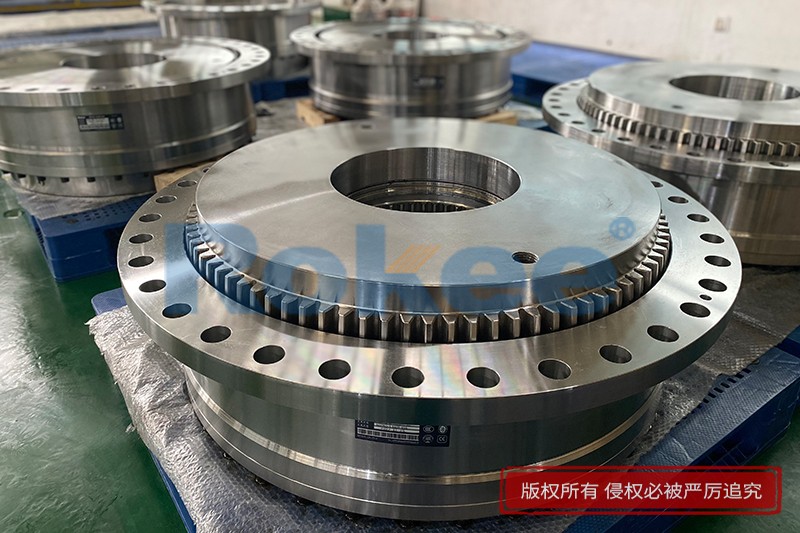
Rokee® is Hydrostatic Spherical Coupling Supplier from China, Support Customization and Export, due to excellent quality, complete technical services and superior cost performance, Rokee® Hydrostatic Spherical Coupling have been serving more than 60 countries and regions in the world, effectively operating in many corners of the world.
In the realm of mechanical transmission systems, the demand for high-precision, high-reliability, and low-wear components has been on a steady rise. As industrial machinery becomes increasingly complex and operates under more stringent conditions, the role of couplings—devices that connect two rotating shafts to transmit power while accommodating misalignments—has become pivotal. Among the various types of couplings available, hydrostatic spherical couplings stand out due to their unique design and superior performance characteristics.
To understand hydrostatic spherical couplings, it is first essential to grasp the basic concepts of hydrostatic technology and spherical coupling design. Hydrostatic systems rely on the pressure of a continuously supplied fluid (usually oil) to create a lubricating film between two moving surfaces, eliminating direct metal-to-metal contact. Spherical couplings, on the other hand, are designed to accommodate angular misalignments between shafts, thanks to their spherical contact surfaces. Combining these two features, hydrostatic spherical couplings utilize a hydrostatic lubrication mechanism within a spherical structure, enabling them to transmit torque efficiently while compensating for significant angular, radial, and axial misalignments, all while minimizing friction and wear.
The working principle of a hydrostatic spherical coupling revolves around the formation and maintenance of a stable hydrostatic oil film between the spherical socket and the spherical plug—the two core components of the coupling. The spherical socket is typically attached to one shaft, while the spherical plug is connected to the other. A series of oil pockets are machined on the contact surface of either the socket or the plug. A hydraulic pump continuously supplies pressurized oil to these oil pockets. When the coupling is in operation, the pressurized oil forms a thin, stable film between the spherical surfaces. This oil film not only separates the two metal surfaces, eliminating dry friction, but also transmits the hydraulic pressure evenly across the contact area, enabling torque transmission. The excess oil that leaks out from the gap between the spherical surfaces is collected and returned to the oil tank through a drainage system, forming a closed-loop circulation. The pressure of the supplied oil is carefully regulated to ensure that the oil film remains stable even under varying load conditions, thus guaranteeing consistent performance.
One of the most prominent advantages of hydrostatic spherical couplings is their exceptional load-carrying capacity. The hydrostatic oil film distributes the applied load uniformly over the entire spherical contact surface, reducing the contact pressure significantly compared to dry or mechanically lubricated spherical couplings. This uniform load distribution allows hydrostatic spherical couplings to handle heavy axial, radial, and moment loads without compromising their performance or service life. In contrast, traditional couplings often suffer from localized high pressure, which leads to premature wear and failure under heavy load conditions.
Another key advantage is their superior misalignment compensation capability. The spherical structure inherently allows for angular misalignment, and the hydrostatic oil film further enhances this capability by providing a flexible, low-friction interface. Hydrostatic spherical couplings can accommodate angular misalignments of up to several degrees, as well as significant radial and axial displacements. This makes them ideal for applications where shaft misalignments are inevitable, such as in large rotating machinery, precision machine tools, and aerospace equipment. The ability to compensate for misalignments not only improves the efficiency of power transmission but also reduces the stress on other components in the transmission system, extending the overall service life of the machinery.
Low friction and wear are also hallmark characteristics of hydrostatic spherical couplings. Since the hydrostatic oil film completely separates the metal surfaces, there is no direct contact, eliminating dry friction and abrasive wear. The only friction present is the viscous friction of the hydraulic fluid, which is significantly lower than the friction between metal surfaces. This results in extremely low wear rates, ensuring that the coupling maintains its precision and performance over a long service life. Additionally, the absence of metal-to-metal contact reduces the generation of heat, which helps to keep the operating temperature of the coupling low, further enhancing its reliability and stability.
Precision power transmission is another major benefit of hydrostatic spherical couplings. The stable hydrostatic oil film ensures that the torque is transmitted smoothly and accurately, with minimal backlash and torsional deflection. This is particularly important in precision applications such as machine tools, where even small deviations in torque transmission can lead to errors in machining accuracy. Hydrostatic spherical couplings help to maintain the positional accuracy of the rotating shafts, ensuring that the machinery operates with high precision and repeatability.
The design of hydrostatic spherical couplings involves several critical considerations that directly impact their performance. One of the most important design parameters is the size and distribution of the oil pockets. The oil pockets must be designed to ensure that the hydrostatic oil film is stable and uniform across the entire spherical contact surface. The number, shape, and depth of the oil pockets are determined based on the expected load, speed, and misalignment conditions of the coupling. In general, a larger number of smaller oil pockets results in a more uniform pressure distribution, but may also increase the complexity of the machining process.
The selection of hydraulic fluid is another key design consideration. The hydraulic fluid must have appropriate viscosity, lubricity, and thermal stability to ensure the formation and maintenance of the hydrostatic oil film. The viscosity of the fluid is particularly important, as it affects the load-carrying capacity and friction characteristics of the coupling. A fluid with too low viscosity may not form a stable film, while a fluid with too high viscosity may increase viscous friction and energy loss. Additionally, the hydraulic fluid must be compatible with the materials used in the coupling to prevent corrosion and degradation.
The material selection for the spherical socket and plug is also critical. These components must be made of materials with high strength, hardness, and wear resistance to withstand the high pressures and stresses encountered during operation. Common materials used include high-carbon steel, alloy steel, and stainless steel, which are often heat-treated to enhance their mechanical properties. The surface finish of the spherical contact surfaces is also important, as a smooth surface reduces the risk of oil film breakdown and improves the lubrication efficiency. Precision machining processes such as grinding and lapping are typically used to achieve the required surface finish.
The hydraulic system design is another essential aspect of hydrostatic spherical coupling design. The hydraulic system includes the pump, pressure relief valve, flow control valve, oil tank, and pipelines. The pump must be capable of supplying the required flow rate and pressure to maintain the hydrostatic oil film. The pressure relief valve is used to regulate the system pressure, preventing overpressure that could damage the coupling or other components. The flow control valve ensures that the correct amount of oil is supplied to the oil pockets, while the oil tank and pipelines are designed to facilitate the circulation and cooling of the hydraulic fluid.
Hydrostatic spherical couplings find applications in a wide range of industries, thanks to their superior performance characteristics. One of the most important application areas is precision machine tools, such as machining centers, lathes, and grinders. In these applications, the high precision and low backlash of hydrostatic spherical couplings ensure accurate torque transmission, which is essential for achieving high machining accuracy. The ability to compensate for misalignments also helps to reduce the wear on the machine tool spindles and other components, extending their service life.
Another major application area is large rotating machinery, such as steam turbines, gas turbines, and generators. These machines operate under high loads and high speeds, and shaft misalignments are often inevitable due to thermal expansion and contraction, vibration, and other factors. Hydrostatic spherical couplings can accommodate these misalignments while transmitting large torques efficiently, ensuring the stable operation of the machinery. The low wear and long service life of these couplings also reduce the maintenance costs and downtime of the equipment.
Aerospace and defense is another critical application field for hydrostatic spherical couplings. In aerospace equipment such as aircraft engines, helicopters, and spacecraft, the requirements for reliability, precision, and weight reduction are extremely high. Hydrostatic spherical couplings are used in the transmission systems of these equipment to transmit power accurately while accommodating misalignments caused by vibration and thermal changes. Their low weight-to-load ratio and high reliability make them ideal for aerospace applications.
Other application areas include industrial robots, marine propulsion systems, and medical equipment. In industrial robots, the high precision and flexibility of hydrostatic spherical couplings enable the robots to perform complex movements with high accuracy. In marine propulsion systems, these couplings can accommodate the misalignments between the engine and the propeller shaft, ensuring efficient power transmission even in harsh marine environments. In medical equipment such as magnetic resonance imaging (MRI) machines, the low friction and high precision of hydrostatic spherical couplings help to maintain the stability and accuracy of the rotating components.
Looking to the future, the development of hydrostatic spherical couplings is expected to focus on several key areas. One of the main trends is the integration of smart technology. The incorporation of sensors and monitoring systems into hydrostatic spherical couplings will enable real-time monitoring of parameters such as oil film thickness, pressure, temperature, and wear. This data can be used to optimize the performance of the coupling, predict potential failures, and schedule maintenance proactively, reducing downtime and improving the overall reliability of the machinery. Additionally, the use of advanced control algorithms will allow for adaptive regulation of the hydraulic system, ensuring optimal performance under varying operating conditions.
Another important development trend is the pursuit of lightweight and compact design. With the increasing demand for miniaturization of industrial machinery and aerospace equipment, there is a growing need for hydrostatic spherical couplings that are smaller in size and lighter in weight. The use of advanced materials such as composite materials and lightweight alloys will help to achieve this goal, while maintaining the high strength and wear resistance required for the coupling. Additionally, the optimization of the structural design through finite element analysis and other advanced simulation tools will enable the reduction of material usage without compromising performance.
The development of environmentally friendly hydrostatic spherical couplings is also gaining momentum. With the growing emphasis on sustainability and environmental protection, there is a need for hydraulic fluids that are biodegradable and non-toxic. The development and application of such fluids will reduce the environmental impact of hydrostatic spherical couplings. Additionally, the optimization of the hydraulic system to reduce energy consumption will further enhance the environmental performance of these couplings.
In conclusion, hydrostatic spherical couplings are advanced mechanical components that offer numerous advantages, including high load-carrying capacity, superior misalignment compensation, low friction and wear, and precision power transmission. Their unique design, which combines hydrostatic lubrication technology with a spherical structure, makes them ideal for a wide range of applications in precision machine tools, large rotating machinery, aerospace equipment, and other industries. The design of these couplings involves critical considerations such as oil pocket design, hydraulic fluid selection, material selection, and hydraulic system design. Looking to the future, the integration of smart technology, the pursuit of lightweight and compact design, and the development of environmentally friendly solutions will drive the continued advancement of hydrostatic spherical couplings, making them even more versatile and efficient in meeting the evolving needs of modern industry.
« Hydrostatic Spherical Coupling » Post Date: 2023/10/20
URL: https://www.rokeecoupling.com/en/tags/hydrostatic-spherical-coupling.html