High Speed Couplings
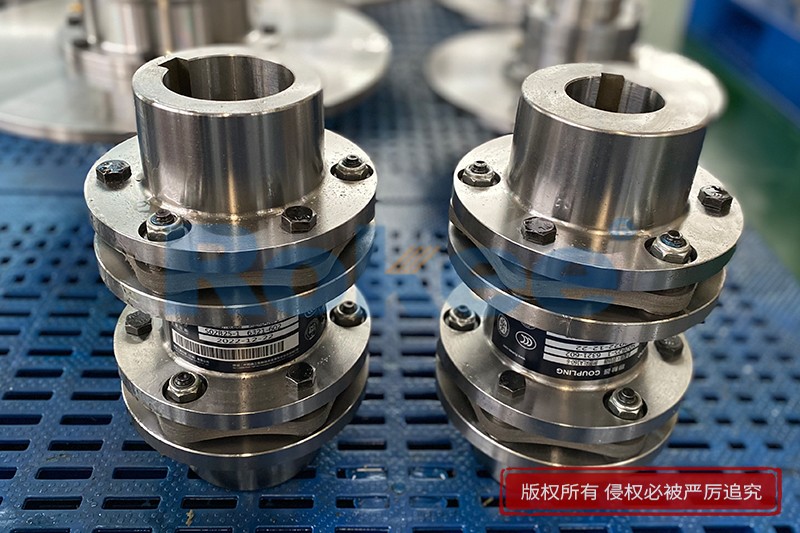
Rokee® is High Speed Couplings Supplier from China, Support Customization and Export, due to excellent quality, complete technical services and superior cost performance, Rokee® High Speed Couplings have been serving more than 60 countries and regions in the world, effectively operating in many corners of the world.
In the realm of modern mechanical transmission systems, high speed couplings stand as critical components that bridge rotating shafts, enabling the efficient transfer of power while accommodating various misalignments and dynamic loads. As industrial machinery continues to evolve toward higher operational speeds, greater precision, and enhanced reliability, the demand for advanced high speed couplings has intensified across diverse sectors. From aerospace propulsion systems to industrial turbomachinery, from high-speed trains to precision manufacturing equipment, these couplings play an indispensable role in ensuring the smooth and safe operation of rotating machinery.
To understand high speed couplings, it is first necessary to clarify their core definition and functional objectives. A coupling is a mechanical device used to connect two shafts together at their ends for the purpose of transmitting power. High speed couplings, as the name suggests, are specifically designed to operate under conditions where the rotating shafts achieve relatively high rotational speeds, typically exceeding several thousand revolutions per minute (rpm). Unlike standard couplings, which may prioritize torque capacity or cost-effectiveness, high speed couplings must address unique challenges associated with high rotational velocities, such as centrifugal forces, dynamic imbalance, thermal expansion, and vibration damping. Their primary functions include transmitting torque efficiently between shafts, compensating for axial, radial, and angular misalignments between connected components, absorbing shock loads and vibrations, and protecting the drivetrain from potential damage caused by overloads or misoperations.
The working principle of high speed couplings is rooted in the balance between power transmission efficiency and the ability to accommodate dynamic variations. When two shafts are connected by a high speed coupling, the torque generated by the driving shaft is transferred through the coupling’s structural elements to the driven shaft. During this process, the coupling must maintain a stable connection even as the shafts rotate at high speeds, while also mitigating the effects of misalignment. Misalignments can occur due to installation errors, thermal expansion of components during operation, or structural deformations caused by dynamic loads. High speed couplings address these issues through specialized designs, such as flexible elements that can bend or deform slightly to absorb misalignments without compromising torque transmission. Additionally, many high speed couplings incorporate damping mechanisms to reduce vibration, which is particularly crucial at high speeds where even minor imbalances can lead to significant vibrations that affect machinery performance and lifespan.
Key characteristics that distinguish high speed couplings from conventional ones include high rotational speed capacity, excellent dynamic balance, superior flexibility, high torque density, and resistance to thermal and mechanical fatigue. High rotational speed capacity is the most defining feature, requiring the coupling to withstand the centrifugal forces generated at high rpm. These centrifugal forces can cause structural deformation or even failure if the coupling is not properly designed, so dynamic balance is paramount. A well-balanced high speed coupling minimizes vibration, reduces wear on bearings and other components, and ensures smooth operation. Flexibility is another critical attribute, as it allows the coupling to compensate for misalignments without introducing excessive stress on the shafts or connected machinery. High torque density ensures that the coupling can transmit large amounts of power without being overly large or heavy, which is important in applications where space and weight are constrained, such as aerospace systems. Finally, resistance to thermal and mechanical fatigue is essential for long-term reliability, as high speed operation generates heat and subjects the coupling to repeated cyclic loads that can lead to material degradation over time.
Material selection is a pivotal aspect of high speed coupling design, as the materials must possess a unique combination of mechanical properties to withstand the harsh conditions of high speed operation. Common materials used in high speed couplings include high-strength alloy steels, titanium alloys, aluminum alloys, and advanced composites. High-strength alloy steels are widely used due to their excellent tensile strength, fatigue resistance, and toughness, which make them suitable for handling high torque and centrifugal forces. Titanium alloys are preferred in applications where weight reduction is critical, such as aerospace, because they offer a high strength-to-weight ratio and good corrosion resistance. Aluminum alloys are also used for lightweight designs, although their lower strength compared to steel and titanium limits their application in high-torque, high-speed scenarios. Advanced composites, such as carbon fiber-reinforced polymers (CFRPs), are emerging as promising materials for high speed couplings due to their exceptional strength-to-weight ratio, low thermal expansion coefficient, and excellent vibration damping properties. However, the high cost of composites and challenges in manufacturing and joining currently restrict their widespread adoption.
In addition to material selection, the design of high speed couplings involves numerous considerations to optimize performance and reliability. One of the key design aspects is dynamic balancing. High speed couplings must undergo rigorous dynamic balancing processes to ensure that their mass is evenly distributed around the rotational axis. This is typically achieved through precision machining and post-manufacturing balancing procedures, such as adding or removing material from specific locations. Another important design consideration is the type of flexible element used. Common types of flexible elements in high speed couplings include diaphragms, bellows, and elastomeric components. Diaphragm couplings, for example, use thin metal diaphragms that flex to accommodate misalignments while transmitting torque efficiently. They are known for their high speed capacity, low maintenance requirements, and ability to operate in high-temperature environments. Bellows couplings, on the other hand, use a cylindrical bellows made of thin metal to provide flexibility, offering excellent axial compensation and vibration damping. Elastomeric couplings use rubber or polymer elements to absorb misalignments and vibrations, but their performance at very high speeds is limited due to the potential for thermal degradation and dynamic instability.
Lubrication is another critical design factor for high speed couplings, particularly for those with rotating or sliding components. Proper lubrication reduces friction between moving parts, minimizes wear, and dissipates heat generated during operation. However, at high speeds, traditional lubricants may fail due to centrifugal forces, which can cause the lubricant to be thrown off the contact surfaces. As a result, high speed couplings often require specialized lubricants, such as high-temperature greases or synthetic oils, that can maintain their viscosity and lubricating properties under extreme conditions. In some cases, dry-running couplings are used to eliminate the need for lubrication, reducing maintenance requirements and the risk of lubricant contamination. These dry-running couplings typically use self-lubricating materials or hard coatings to minimize friction.
The application of high speed couplings spans a wide range of industries, each with unique requirements and challenges. One of the most demanding applications is in the aerospace industry, where high speed couplings are used in jet engines and auxiliary power units (APUs). In jet engines, couplings connect the high-pressure turbine to the high-pressure compressor, transmitting power at rotational speeds exceeding 10,000 rpm. These couplings must be lightweight, compact, and extremely reliable, as any failure can have catastrophic consequences. The aerospace industry also requires couplings to withstand extreme temperatures and harsh environmental conditions, such as high levels of vibration and exposure to corrosive gases.
Another major application area is industrial turbomachinery, including gas turbines, steam turbines, and compressors. These machines operate at high speeds to generate power or compress gases, and high speed couplings are essential for connecting the turbine to the generator or compressor. In gas turbines, for example, couplings must transmit large amounts of torque while accommodating misalignments caused by thermal expansion of the turbine shaft. They also play a role in damping vibrations that can occur during transient operating conditions, such as startup and shutdown. Industrial turbomachinery applications typically require couplings with high torque capacity, excellent dynamic balance, and long service life to minimize downtime and maintenance costs.
High speed trains are another important application of high speed couplings. In high-speed rail systems, couplings connect the traction motor to the gearbox and the gearbox to the wheelset, enabling the transmission of power to propel the train at speeds exceeding 300 km/h. These couplings must be able to handle high torque and high rotational speeds while compensating for misalignments caused by the movement of the train on the tracks. They also need to be durable and reliable, as high-speed trains operate under continuous load for extended periods. Additionally, the couplings in high-speed trains must be designed to minimize noise and vibration, ensuring passenger comfort.
Precision manufacturing equipment, such as high-speed machining centers and robotic arms, also relies on high speed couplings. In high-speed machining centers, couplings connect the spindle motor to the spindle, enabling the spindle to rotate at speeds up to 60,000 rpm or higher for precision cutting and milling operations. These couplings must provide high rigidity to ensure machining accuracy, while also accommodating minor misalignments and damping vibrations that can affect the quality of the machined parts. Robotic arms use high speed couplings in their joints to transmit power and motion with high precision, enabling fast and accurate movement of the robotic end effector.
Over the years, high speed coupling technology has undergone significant advancements driven by the increasing demands of modern industry. One of the key trends in the development of high speed couplings is the integration of advanced simulation and modeling tools into the design process. Finite element analysis (FEA) and computational fluid dynamics (CFD) are now widely used to simulate the performance of high speed couplings under various operating conditions, allowing designers to optimize the structure, reduce weight, and improve reliability. These simulation tools enable designers to predict the effects of centrifugal forces, thermal expansion, and vibration on the coupling, ensuring that it meets the required performance criteria before physical prototypes are built.
Another important trend is the development of smart high speed couplings equipped with sensors and monitoring systems. These smart couplings can real-time monitor key parameters such as temperature, vibration, torque, and misalignment, providing valuable data to operators about the condition of the coupling and the entire drivetrain. By detecting potential issues early, such as excessive vibration or abnormal temperature rise, smart couplings can help prevent unexpected failures, reduce downtime, and improve maintenance efficiency. Some advanced smart couplings even incorporate wireless communication capabilities, allowing remote monitoring and control, which is particularly beneficial for machinery located in remote or hard-to-reach areas.
The pursuit of higher efficiency and lower energy consumption is also driving innovations in high speed coupling design. Manufacturers are developing couplings with lower friction losses and higher torque transmission efficiency, helping to reduce energy consumption in mechanical systems. This is particularly important in applications such as power generation and industrial pumps, where even small improvements in efficiency can result in significant energy savings over the lifetime of the equipment. Additionally, the development of lightweight materials and optimized designs is helping to reduce the overall weight of high speed couplings, which not only improves energy efficiency but also reduces the load on other components such as bearings and shafts.
Looking to the future, the development of high speed couplings will continue to be shaped by the evolving needs of industries such as aerospace, automotive, energy, and manufacturing. As electric vehicles (EVs) become more prevalent, there will be an increasing demand for high speed couplings that can handle the high rotational speeds of electric motors while being lightweight and compact. In the energy sector, the growth of renewable energy sources such as wind and tidal power will require high speed couplings that can operate reliably in harsh environmental conditions, such as offshore wind farms. Furthermore, the advancement of additive manufacturing (3D printing) technology is expected to revolutionize the production of high speed couplings, enabling the creation of complex geometries that are difficult or impossible to manufacture using traditional methods. 3D printing also allows for the production of customized couplings tailored to specific applications, reducing lead times and production costs.
However, despite the significant advancements in high speed coupling technology, there are still several challenges that need to be addressed. One of the main challenges is the need for further improvements in material performance, particularly in terms of high-temperature resistance and fatigue life. As machinery operates at higher speeds and under more extreme conditions, the materials used in high speed couplings must be able to withstand even greater stresses and temperatures. Another challenge is the development of more effective lubrication systems for very high speed applications, where traditional lubricants are no longer sufficient. Additionally, the cost of advanced materials and manufacturing processes, such as composites and 3D printing, remains a barrier to widespread adoption, particularly for small and medium-sized enterprises.
In conclusion, high speed couplings are essential components in modern mechanical transmission systems, enabling the efficient and reliable operation of high-speed rotating machinery across a wide range of industries. Their design and performance are influenced by a variety of factors, including material selection, dynamic balancing, lubrication, and the ability to accommodate misalignments and vibrations. Over the years, technological advancements have led to the development of more efficient, reliable, and smart high speed couplings, and future innovations are expected to further enhance their performance and expand their applications. As industries continue to push the boundaries of speed, precision, and efficiency, high speed couplings will remain a key area of focus for engineering research and development, playing a vital role in driving the progress of modern technology.
« High Speed Couplings » Post Date: 2023/10/20
URL: https://www.rokeecoupling.com/en/tags/high-speed-couplings.html