High Quality Flange Connecting Shaft
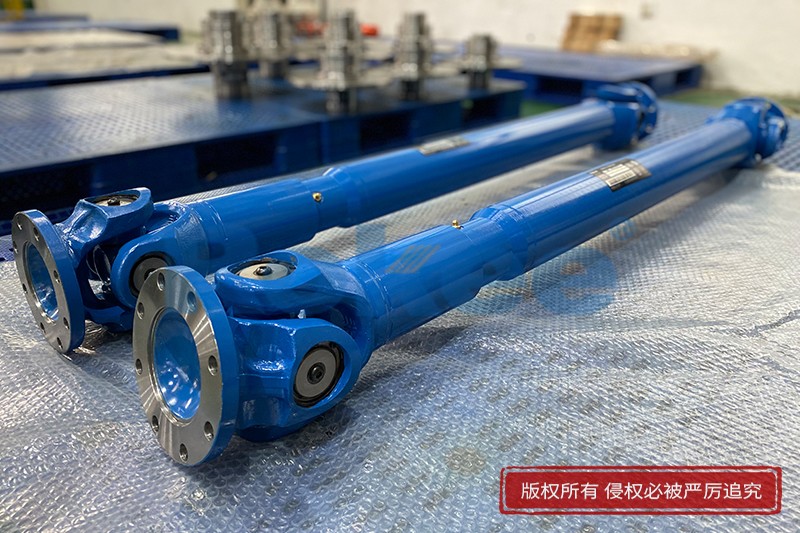
Rokee® is High Quality Flange Connecting Shaft Supplier from China, Support Customization and Export, due to excellent quality, complete technical services and superior cost performance, Rokee® High Quality Flange Connecting Shaft have been serving more than 60 countries and regions in the world, effectively operating in many corners of the world.
In the realm of mechanical transmission systems, the flange connecting shaft stands as a critical component that facilitates the seamless transfer of torque and rotational motion between two separate mechanical parts. As industrial machinery becomes increasingly sophisticated, the demand for high-quality flange connecting shafts has surged, driven by the need for reliability, durability, and efficiency in diverse operating environments. Unlike standard components, high-quality flange connecting shafts are engineered to withstand extreme conditions, minimize energy loss, and reduce maintenance frequency, making them indispensable in a wide range of industries, from manufacturing and automotive to aerospace and marine engineering.
A high-quality flange connecting shaft is defined by a set of inherent characteristics that distinguish it from inferior alternatives. One of the most prominent features is its exceptional torque-bearing capacity. Torque transfer is the primary function of a connecting shaft, and high-quality models are designed to handle maximum torque loads without experiencing deformation or failure. This is achieved through precise structural design, including optimized flange dimensions, robust shaft diameters, and uniform material distribution. Another key characteristic is dimensional accuracy. Flange connecting shafts rely on tight fits between the flange and the connected components, such as motors, gearboxes, or pumps. Even minor deviations in dimensions can lead to misalignment, which not only reduces transmission efficiency but also causes excessive wear and noise. High-quality shafts undergo rigorous machining processes to ensure that all critical dimensions, including flange thickness, bolt hole positions, and shaft concentricity, meet strict tolerances.
Vibration damping is another essential trait of high-quality flange connecting shafts. In rotating machinery, vibrations are inevitable, but excessive vibration can damage bearings, gears, and other adjacent components over time. High-quality shafts are engineered to absorb and dissipate vibrations, often through the use of specialized designs or materials that possess excellent damping properties. This not only extends the lifespan of the shaft itself but also enhances the overall stability and longevity of the entire mechanical system. Additionally, corrosion resistance is a vital characteristic, especially for shafts used in harsh environments such as marine, chemical, or outdoor applications. High-quality flange connecting shafts are treated with protective coatings or made from corrosion-resistant materials to prevent rust and degradation caused by exposure to moisture, chemicals, or extreme temperatures.
The applications of high-quality flange connecting shafts are diverse and span across numerous industries, each leveraging the component’s unique capabilities to meet specific operational requirements. In the manufacturing industry, for instance, flange connecting shafts are widely used in conveyor systems, assembly lines, and machine tools. Conveyor systems, which are essential for transporting materials in factories, rely on these shafts to connect motors to conveyor rollers, ensuring consistent and efficient movement of goods. Machine tools, such as lathes, milling machines, and grinders, use high-quality flange connecting shafts to transmit torque from the motor to the spindle, enabling precise cutting, shaping, and finishing of workpieces. The dimensional accuracy and torque-bearing capacity of these shafts are critical in maintaining the precision of machining operations, which directly affects the quality of the final product.
The automotive industry is another major consumer of high-quality flange connecting shafts. These components are used in various parts of vehicles, including the transmission system, drivetrain, and engine accessories. In the transmission system, flange connecting shafts connect the gearbox to the driveshaft, facilitating the transfer of power from the engine to the wheels. High-quality shafts in this application must withstand high torque loads and rapid speed changes, while also minimizing energy loss to improve fuel efficiency. Additionally, they are used in engine accessories such as water pumps and alternators, where reliable torque transfer is essential for the proper functioning of these systems. The automotive industry’s emphasis on lightweight and high-performance components has further driven the development of advanced flange connecting shafts that combine strength with reduced weight.
Aerospace and marine engineering represent two sectors where the quality of flange connecting shafts is of utmost importance, as failure can have catastrophic consequences. In aerospace applications, such as aircraft engines and auxiliary power units (APUs), flange connecting shafts are used to transmit torque between various engine components. These shafts must meet extremely strict standards for reliability and performance, as they operate in high-temperature, high-pressure, and high-vibration environments. The lightweight nature of high-quality shafts is also critical in aerospace, as reducing weight directly contributes to improved fuel efficiency and increased payload capacity. In marine engineering, flange connecting shafts are used in ship propulsion systems, connecting the engine to the propeller. They must withstand the corrosive effects of saltwater, as well as the high torque loads required to propel large vessels. High-quality marine-grade shafts are designed to resist corrosion and fatigue, ensuring long-term reliability in harsh marine environments.
Material selection is a fundamental step in the production of high-quality flange connecting shafts, as the choice of material directly impacts the component’s performance, durability, and cost. The most commonly used materials for flange connecting shafts include carbon steel, alloy steel, stainless steel, and aluminum alloys, each offering distinct advantages and disadvantages. Carbon steel is a popular choice for general-purpose applications due to its high strength, durability, and affordability. However, it has poor corrosion resistance, making it unsuitable for harsh environments. Alloy steel, which is made by adding elements such as chromium, nickel, and molybdenum to carbon steel, offers enhanced strength, toughness, and wear resistance compared to carbon steel. It is widely used in high-performance applications where high torque loads and extreme conditions are common, such as in automotive and aerospace industries.
Stainless steel is the material of choice for applications requiring excellent corrosion resistance, such as marine, chemical, and food processing industries. It contains a high percentage of chromium, which forms a protective oxide layer on the surface, preventing rust and corrosion. However, stainless steel is more expensive than carbon steel and alloy steel, and it has lower strength-to-weight ratio. Aluminum alloys are used in applications where lightweight is a priority, such as aerospace and automotive components. They offer good strength-to-weight ratio and corrosion resistance, but they have lower torque-bearing capacity compared to steel. In addition to these traditional materials, advanced materials such as titanium alloys and composite materials are increasingly being used in high-end applications. Titanium alloys offer exceptional strength, corrosion resistance, and lightweight properties, making them ideal for aerospace applications, but they are very expensive. Composite materials, such as carbon fiber-reinforced polymers, offer high strength and low weight, but their use is currently limited by high production costs and challenges in machining.
The manufacturing process of high-quality flange connecting shafts involves a series of precise steps, each designed to ensure the final product meets the required specifications. The process typically begins with material selection and cutting. The raw material, usually in the form of a steel bar or tube, is cut to the required length using sawing or laser cutting techniques. Laser cutting is preferred for high-precision applications, as it offers greater accuracy and reduces material waste. Next, the cut material undergoes forging, a process that involves heating the material to a high temperature and shaping it using pressure. Forging enhances the material’s strength and toughness by aligning the grain structure, making it more resistant to fatigue and deformation. The forged blank is then machined to achieve the desired shape and dimensions. Machining processes include turning, milling, drilling, and grinding. Turning is used to shape the shaft’s outer diameter, while milling is used to machine the flange and other flat surfaces. Drilling is used to create bolt holes in the flange, and grinding is used to achieve the final surface finish and dimensional accuracy.
Heat treatment is a critical step in the manufacturing process, as it improves the material’s mechanical properties, such as hardness, strength, and toughness. The type of heat treatment depends on the material used and the desired properties. Common heat treatment processes include annealing, quenching, and tempering. Annealing involves heating the material to a specific temperature and cooling it slowly, which reduces internal stress and improves ductility. Quenching involves heating the material to a high temperature and cooling it rapidly, which increases hardness and strength. Tempering is performed after quenching to reduce brittleness and improve toughness. After heat treatment, the shaft undergoes surface treatment to enhance corrosion resistance and wear resistance. Surface treatment processes include galvanizing, electroplating, painting, and nitriding. Galvanizing involves coating the shaft with a layer of zinc, which provides excellent corrosion resistance. Electroplating uses an electric current to deposit a thin layer of metal, such as chromium or nickel, onto the surface, improving wear resistance and appearance. Nitriding involves diffusing nitrogen into the surface of the material, creating a hard, wear-resistant layer.
Quality control is an integral part of the manufacturing process of high-quality flange connecting shafts. Each step of the process is subject to rigorous inspection to ensure that the product meets the required standards. Inspection techniques include visual inspection, dimensional measurement, material testing, and non-destructive testing. Visual inspection is used to detect surface defects such as cracks, scratches, and irregularities. Dimensional measurement is performed using tools such as calipers, micrometers, and coordinate measuring machines (CMMs) to ensure that all critical dimensions meet the specified tolerances. Material testing involves analyzing the chemical composition and mechanical properties of the material, such as tensile strength, yield strength, and hardness. Non-destructive testing techniques, such as ultrasonic testing, magnetic particle testing, and X-ray testing, are used to detect internal defects that may not be visible during visual inspection. These tests ensure that the flange connecting shaft is free from defects and is capable of performing reliably under the specified operating conditions.
Proper maintenance is essential to ensure the long-term performance and reliability of high-quality flange connecting shafts. Regular maintenance not only extends the lifespan of the shaft but also prevents unexpected failures that can lead to costly downtime. One of the most important maintenance tasks is regular inspection. Inspections should be performed at regular intervals to check for signs of wear, corrosion, misalignment, and damage. During inspection, the shaft should be checked for surface defects, such as cracks and scratches, and the bolt holes should be inspected for wear or deformation. The alignment of the shaft should also be checked, as misalignment can cause excessive vibration and wear. If misalignment is detected, it should be corrected immediately using appropriate alignment tools.
Lubrication is another critical maintenance task. Proper lubrication reduces friction between the shaft and the connected components, minimizing wear and heat generation. The type of lubricant used depends on the operating conditions, such as temperature, speed, and load. It is important to use the correct lubricant and to apply it at the recommended intervals. Over-lubrication or under-lubrication can both cause problems, so it is essential to follow the manufacturer’s guidelines. In addition to lubrication, the bolts and fasteners used to secure the flange should be checked regularly for tightness. Vibrations during operation can cause bolts to loosen over time, which can lead to misalignment and potential failure. The bolts should be tightened to the recommended torque using a torque wrench.
Cleaning is also an important part of maintenance, especially for shafts used in dusty or dirty environments. Accumulated dirt and debris can cause abrasion and corrosion, so the shaft should be cleaned regularly using a suitable cleaning agent. Care should be taken not to damage the surface coating or the material during cleaning. If the shaft is used in a corrosive environment, additional protective measures, such as applying a fresh coat of paint or lubricant, may be necessary to prevent corrosion. Finally, if any defects or damage are detected during inspection, the shaft should be repaired or replaced immediately. Delaying repairs can lead to more serious damage to the shaft and other components, resulting in higher maintenance costs and longer downtime.
The future of high-quality flange connecting shafts is shaped by ongoing advancements in materials science, manufacturing technology, and industrial automation. As industries continue to demand higher performance and efficiency, manufacturers are investing in research and development to create innovative flange connecting shafts that offer improved properties. One of the key trends is the development of lightweight and high-strength materials, such as advanced alloys and composites, which can reduce the weight of the shaft while maintaining or improving its torque-bearing capacity. This is particularly important in the aerospace and automotive industries, where lightweight components are essential for improving fuel efficiency and reducing emissions.
Another trend is the adoption of advanced manufacturing technologies, such as additive manufacturing (3D printing), which allows for the production of complex geometries that are difficult or impossible to achieve with traditional machining processes. Additive manufacturing also enables the production of customized flange connecting shafts that are tailored to specific applications, improving performance and reducing waste. Additionally, the integration of sensors and smart technologies into flange connecting shafts is becoming increasingly common. Smart shafts equipped with sensors can monitor various parameters, such as temperature, vibration, and torque, in real-time, providing valuable data that can be used to predict maintenance needs and prevent failures. This predictive maintenance approach can significantly reduce downtime and improve the overall efficiency of mechanical systems.
In conclusion, high-quality flange connecting shafts are essential components in modern mechanical transmission systems, offering exceptional torque-bearing capacity, dimensional accuracy, vibration damping, and corrosion resistance. Their diverse applications span across manufacturing, automotive, aerospace, and marine industries, where reliability and efficiency are paramount. The production of these shafts involves careful material selection, precise manufacturing processes, and rigorous quality control to ensure they meet the highest standards. Proper maintenance, including regular inspection, lubrication, and cleaning, is crucial to extending their lifespan and preventing unexpected failures. As technology continues to advance, the future of high-quality flange connecting shafts looks promising, with innovations in materials and manufacturing techniques leading to even more efficient, reliable, and intelligent components. Whether in a factory, a car, an airplane, or a ship, high-quality flange connecting shafts play a vital role in keeping mechanical systems running smoothly, making them an indispensable part of the modern industrial landscape.
« High Quality Flange Connecting Shaft » Post Date: 2023/10/20
URL: https://www.rokeecoupling.com/en/tags/high-quality-flange-connecting-shaft.html