Flexible Laminated Membrane Couplings
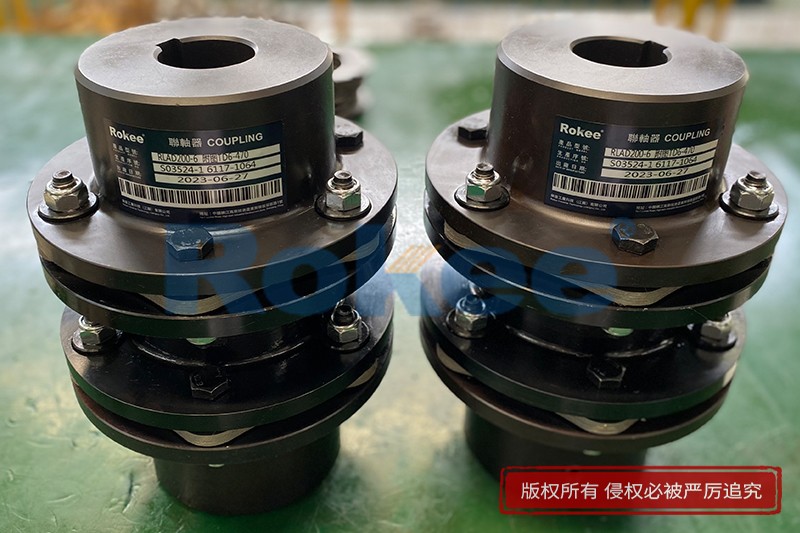
Rokee® is Flexible Laminated Membrane Couplings Supplier from China, Support Customization and Export, due to excellent quality, complete technical services and superior cost performance, Rokee® Flexible Laminated Membrane Couplings have been serving more than 60 countries and regions in the world, effectively operating in many corners of the world.
Flexible Laminated Membrane Coupling is a high-quality product developed independently on basis of combination of advanced products from Europe and Japan, etc. Flexible Laminated Membrane Coupling has smaller size, larger torque of the same model, more reasonable proportioning size, large compensation scope, light weight and small rotational inertia. With modularized design, Flexible Laminated Membrane Coupling is easy for assembly, maintenance and replacement. Flexible Laminated Membrane Coupling is performance far exceeds the one of JM series product. Flexible Laminated Membrane Coupling is widely applied in the fields of fan systems, turboset and other pumps, etc.
-
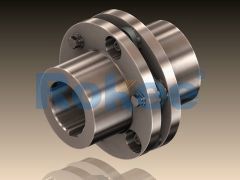
JMI Diaphragm Coupling
JMI metal diaphragm coupling adopts the single-piece design, suitable for short distance transmission. Besides, the semi-coupling sleeve at one end has a counterbore, facilitating the fixing of the shaft end. -
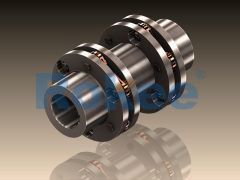
JMIJ Diaphragm Coupling
JMIJ metal diaphragm coupling is designed with intermediate shaft, suitable for long distance transmission. Besides, the semi-coupling sleeve at one end has a counterbore, facilitating the fixing of the shaft end. -
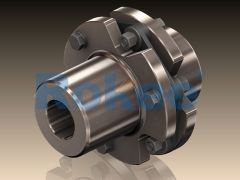
JMII Diaphragm Coupling
JMII metal diaphragm coupling also adopts the single-piece design but has no counterbore, suitable for short distance transmission, with more compact structure. -
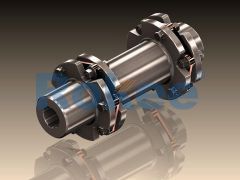
JMIIJ Diaphragm Coupling
JMIIJ metal diaphragm coupling is designed with intermediate shaft, suitable for long distance transmission. Besides, the semi-coupling sleeve at both ends have no counterbore. -
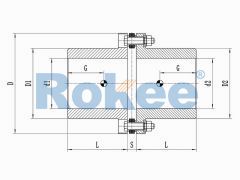
RLA Standard Single Diaphragm Coupling
The classic design of metal flexible diaphragm couplings is a reliable choice for medium to low speed applications, but cannot compensate for radial deviation. -
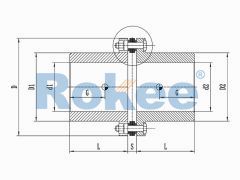
RLM Small Single Diaphragm Coupling
The RLM standard single section small metal diaphragm coupling is suitable for various industrial process pumps and small torque working situations with a working speed not exceeding 5000rpm, and cannot compensate for radial errors. -
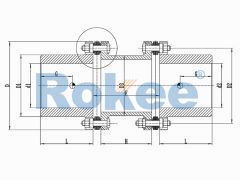
RLMD Small Double Diaphragm Coupling
The RLMD standard double section small metal diaphragm coupling is suitable for various industrial process pumps and small torque working occasions with a working speed not exceeding 5000rpm. -
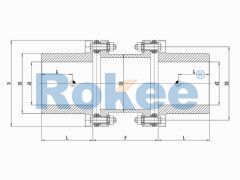
RLAD Standard Double Diaphragm Coupling
The classic design of metal flexible diaphragm couplings is a reliable choice for medium to low speed applications. -
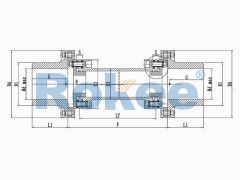
RLAT Super Long Wheelbase Diaphragm Coupling
Adopting an intermediate shaft design, suitable for ultra long shaft spacing power transmission applications. -
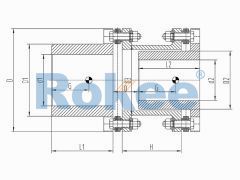
RLAR Single Shaft Sleeve Reverse-mounting Diaphragm Coupling
Single side shaft sleeve reverse installation design, suitable for occasions with limited shaft head distance. -
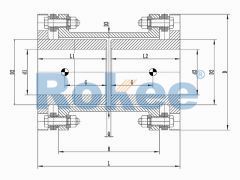
RLARD Double Shaft Sleeve Reverse-mounting Diaphragm Coupling
The double-sided shaft sleeve reverse installation design is also applicable in situations where the distance from the shaft head is limited or the additional bending moment is smaller. -
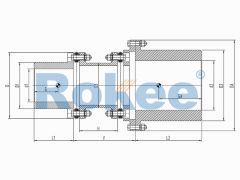
RLAF Large & Small Shaft Mounted Diaphragm Coupling
The size difference design of the bilateral shaft sleeve is suitable for situations where the diameter difference between the two ends of the shaft is significant. -
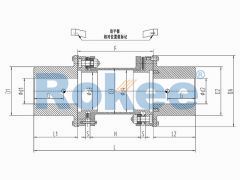
RLQA No Flange Quick Installation Metal Diaphragm Coupling
Suitable for various industrial process pumps, fans, and other medium to low speed applications, with a maximum speed generally not exceeding 25000 rpm. It meets the requirements of API610/ISO14691 and is one of the first products for API applications. -
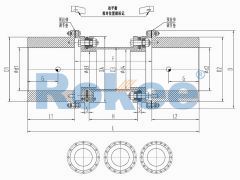
RLQF Flange Type Quick Installation Diaphragm Coupling
Suitable for drum pressure fans, turbine compressors, and other high speed applications, with a maximum speed of up to 35000rpm. -
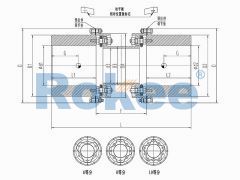
RLQU Improved Flange Quick Installation Diaphragm Coupling
The improved RLQF has smaller additional bending moments and better performance. Suitable for drum pressure fans, turbine compressors, and other high speed applications. -
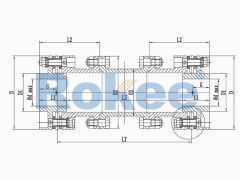
RLHD High Speed Diaphragm Coupling
Suitable for higher speed applications, it also adopts a flexible component integrated assembly design, with a maximum speed of up to 42000rpm.
In the realm of power transmission systems, couplings serve as critical components that connect two rotating shafts to transmit torque while accommodating various types of misalignment. Among the diverse range of couplings available, the flexible laminated membrane coupling has emerged as a preferred choice in numerous industrial sectors due to its unique combination of flexibility, high torque capacity, and compact design. Unlike rigid couplings that require precise alignment and are prone to damage under misalignment conditions, flexible laminated membrane couplings utilize stacked membrane discs to absorb axial, radial, and angular misalignments, thereby reducing stress on shafts, bearings, and other transmission components.
The fundamental design of a flexible laminated membrane coupling revolves around three core components: the driving flange, the driven flange, and the laminated membrane pack. The driving and driven flanges are typically designed to connect to the input and output shafts of the machinery, respectively, and are often equipped with keyways, set screws, or hydraulic expansion sleeves to ensure a secure and concentric connection. The laminated membrane pack, which is the defining feature of this type of coupling, consists of multiple thin membrane discs stacked together and fastened between the two flanges. The membrane discs are usually circular or annular in shape, with a series of evenly distributed holes around the circumference for bolted connection to the flanges. The number of membrane discs in the pack can vary depending on the required torque capacity and flexibility, with more discs generally providing higher torque transmission capability.
A critical aspect of the design is the geometry of the membrane discs. The discs are often designed with a thin, flexible structure that allows for deformation under misalignment, while maintaining sufficient rigidity to transmit torque efficiently. Some membrane discs feature a corrugated or slotted design to enhance their flexibility and reduce the stress concentration during deformation. Additionally, the arrangement of the membrane pack can vary, with single-disc, double-disc, or multi-disc configurations available to suit different application requirements. For example, double-disc configurations are commonly used in applications that require higher axial displacement compensation, as the two sets of discs can move relative to each other to absorb axial forces.
Material selection plays a pivotal role in determining the performance, durability, and operating range of flexible laminated membrane couplings. The membrane discs, being the most critical component, are typically manufactured from high-strength, fatigue-resistant materials that can withstand repeated deformation without permanent damage. Common materials for membrane discs include stainless steel, titanium alloy, and high-performance composites. Stainless steel, such as 304 or 316 grade, is widely used due to its excellent corrosion resistance, high tensile strength, and good fatigue performance, making it suitable for most industrial environments. Titanium alloy is preferred for high-temperature or high-speed applications, as it offers superior strength-to-weight ratio and thermal stability compared to stainless steel. High-performance composites, such as carbon fiber-reinforced polymers (CFRPs), are emerging as a promising material option, offering even higher specific strength, lower weight, and better corrosion resistance, although their higher cost limits their widespread adoption currently.
The flanges of the coupling are usually made from carbon steel, alloy steel, or aluminum alloy. Carbon steel is used for general-purpose applications due to its low cost and sufficient strength, while alloy steel is employed for high-torque or heavy-duty applications that require enhanced mechanical properties. Aluminum alloy is preferred for lightweight applications, such as in aerospace or automotive systems, where reducing overall weight is a key consideration. The fasteners used to connect the membrane pack to the flanges, such as bolts and nuts, are typically made from high-strength steel to ensure a secure connection that can withstand the torque and axial forces generated during operation.
The working mechanism of a flexible laminated membrane coupling is based on the elastic deformation of the laminated membrane pack. When torque is transmitted from the driving shaft to the driving flange, the torque is transferred through the fasteners to the membrane pack, which then transmits the torque to the driven flange and ultimately to the driven shaft. During this process, if there is any misalignment between the two shafts (axial, radial, or angular), the membrane discs deform elastically to accommodate the misalignment. Axial misalignment occurs when the two shafts are displaced along their axial direction, and the membrane discs stretch or compress to absorb this displacement. Radial misalignment is caused by the offset of the two shafts' centerlines, and the membrane discs bend to compensate for this offset. Angular misalignment, which is the tilt between the two shafts' centerlines, is accommodated by the twisting and bending of the membrane discs.
One of the key advantages of this working mechanism is that it does not require lubrication. Unlike gear couplings or universal joints that rely on lubricants to reduce friction and wear, the flexible laminated membrane coupling operates with dry friction between the membrane discs, eliminating the need for regular lubrication and maintenance. This not only reduces maintenance costs but also prevents lubricant contamination, making the coupling suitable for applications in clean environments, such as food processing, pharmaceutical manufacturing, and semiconductor production.
Flexible laminated membrane couplings offer a multitude of performance advantages that make them superior to many other types of couplings in various applications. Firstly, they exhibit excellent misalignment compensation capability. Compared to rigid couplings that can only accommodate minimal misalignment, flexible laminated membrane couplings can handle significant axial, radial, and angular misalignments, thereby reducing the stress on shafts, bearings, and seals, and extending the service life of the entire transmission system. This is particularly beneficial in applications where precise alignment is difficult to achieve or maintain, such as in large rotating machinery, vibrating equipment, or machinery installed in harsh environments.
Secondly, they have high torque transmission efficiency. The rigid connection between the membrane pack and the flanges ensures that almost all of the torque generated by the driving shaft is transmitted to the driven shaft, with minimal energy loss. This high efficiency is crucial in energy-intensive applications, such as power generation, industrial pumps, and fans, where reducing energy consumption is a key objective. Additionally, the compact design of flexible laminated membrane couplings allows them to be installed in confined spaces, making them suitable for applications where space is limited, such as in automotive transmissions, aerospace engines, and small industrial machinery.
Thirdly, they offer good vibration damping performance. The elastic deformation of the membrane discs helps to absorb and dampen vibrations generated during operation, reducing noise and improving the stability of the transmission system. This is particularly important in high-speed rotating machinery, such as gas turbines, centrifugal compressors, and electric motors, where excessive vibration can lead to component failure and reduced operational safety. Furthermore, the absence of lubrication means that the coupling is maintenance-free, reducing downtime and operational costs. This is a significant advantage over lubricated couplings, which require regular oil changes, seal replacements, and alignment checks.
Another notable advantage is their high temperature resistance. Depending on the material used for the membrane discs, flexible laminated membrane couplings can operate in a wide temperature range, from cryogenic temperatures to high temperatures above 500°C. This makes them suitable for applications in extreme temperature environments, such as in chemical processing plants, steel mills, and aerospace propulsion systems. Additionally, the corrosion resistance of materials like stainless steel and titanium alloy ensures that the coupling can operate reliably in corrosive environments, such as marine applications, coastal industrial facilities, and chemical processing plants where exposure to moisture, salt, or chemicals is common.
Due to their excellent performance characteristics, flexible laminated membrane couplings find applications in a wide range of industrial sectors. One of the primary applications is in the power generation industry. In thermal power plants, hydropower plants, and nuclear power plants, flexible laminated membrane couplings are used to connect turbines to generators, transmitting high torque while accommodating misalignments caused by thermal expansion and contraction of the shafts. The high efficiency and reliability of these couplings ensure that the power generation process is stable and efficient, minimizing downtime and maximizing power output.
The aerospace industry is another major user of flexible laminated membrane couplings. In aircraft engines, the coupling is used to connect the turbine to the compressor or the gearbox, transmitting high torque in a compact space while accommodating misalignments caused by engine vibration and thermal expansion. The lightweight and high-temperature resistance of titanium alloy and composite membrane discs make them ideal for aerospace applications, where weight reduction and reliability are critical factors. Additionally, flexible laminated membrane couplings are used in satellite attitude control systems, where precise torque transmission and vibration damping are essential for maintaining the satellite's orientation.
In the industrial machinery sector, flexible laminated membrane couplings are widely used in pumps, fans, compressors, and conveyors. For example, in centrifugal pumps, the coupling connects the electric motor to the pump shaft, accommodating misalignments caused by the installation of the pump and motor, and reducing stress on the pump bearings. In conveyors used in mining and material handling, the coupling transmits torque from the motor to the conveyor belt, withstanding the vibrations and shocks generated during the transportation of heavy materials. The maintenance-free nature of these couplings is particularly beneficial in these applications, as they reduce the need for regular maintenance in harsh and difficult-to-access environments.
The automotive industry also utilizes flexible laminated membrane couplings in various applications, such as in electric vehicle (EV) drivetrains. In EVs, the coupling connects the electric motor to the transmission or the wheels, transmitting high torque efficiently while accommodating misalignments caused by the vehicle's suspension movement and thermal expansion. The compact design and lightweight materials of the coupling help to reduce the overall weight of the drivetrain, improving the vehicle's energy efficiency and range. Additionally, flexible laminated membrane couplings are used in automotive air conditioning compressors and power steering systems, where reliable torque transmission and vibration damping are essential.
Other applications include the food processing and pharmaceutical industries, where the maintenance-free and lubrication-free design of the coupling prevents contamination of food products or pharmaceutical ingredients. In semiconductor manufacturing, the coupling is used in precision equipment, such as wafer handling robots and lithography machines, where precise torque transmission and vibration damping are critical for maintaining the accuracy of the manufacturing process.
Looking ahead, the development of flexible laminated membrane couplings is likely to be driven by several key trends. One of the main trends is the adoption of advanced materials to further improve performance. High-performance composites, such as carbon fiber-reinforced polymers and ceramic matrix composites, are expected to be more widely used in membrane discs, offering higher strength-to-weight ratios, better corrosion resistance, and higher temperature resistance compared to traditional metals. This will enable the coupling to be used in even more extreme environments, such as in next-generation aerospace engines and high-temperature industrial processes.
Another trend is the integration of smart technologies for condition monitoring. With the advancement of the Industrial Internet of Things (IIoT), sensors are being integrated into couplings to monitor parameters such as torque, temperature, vibration, and misalignment in real-time. This allows for predictive maintenance, where potential issues are detected before they lead to component failure, reducing downtime and improving operational efficiency. For example, strain sensors embedded in the membrane discs can monitor the stress levels during operation, providing early warning of potential fatigue failure.
The optimization of design through simulation and modeling is also expected to play a key role in the future development of flexible laminated membrane couplings. Advanced finite element analysis (FEA) tools are being used to simulate the performance of the coupling under various operating conditions, allowing engineers to optimize the geometry of the membrane discs and the overall design of the coupling to improve torque capacity, flexibility, and durability. This will lead to more efficient and reliable couplings that are tailored to specific application requirements.
Additionally, there is a growing demand for customized couplings to meet the specific needs of different industries. Manufacturers are increasingly offering customized solutions, where the coupling's size, material, and design are tailored to the unique requirements of the application. This includes couplings designed for ultra-high torque, ultra-high speed, or extreme temperature environments, as well as compact couplings for miniaturized machinery.
In conclusion, flexible laminated membrane couplings are essential components in power transmission systems, offering a unique combination of flexibility, high torque capacity, efficiency, and reliability. Their design, which utilizes stacked membrane discs to accommodate misalignments, eliminates the need for lubrication and reduces maintenance requirements, making them suitable for a wide range of industrial applications. With the adoption of advanced materials, smart technologies, and optimized design methods, the performance and application range of flexible laminated membrane couplings are expected to continue to expand in the future. As industries continue to demand more efficient, reliable, and high-performance power transmission components, flexible laminated membrane couplings will remain a key solution for meeting these needs.
« Flexible Laminated Membrane Couplings » Post Date: 2023/9/2
URL: https://www.rokeecoupling.com/en/tags/flexible-laminated-membrane-couplings.html
- 2023-11-28Flexible Laminated Membrane Coupling Working Principle
- 2023-11-28Flexible Laminated Membrane Coupling Tagging
- 2023-11-28Flexible Laminated Membrane Couplings Supply
- 2023-11-28Flexible Laminated Membrane Coupling Specifications
- 2023-11-28Flexible Laminated Membrane Coupling Procurement
- 2023-11-28Price of Flexible Laminated Membrane Couplings
- 2023-11-28Parts of Flexible Laminated Membrane Couplings
- 2023-11-28Flexible Laminated Membrane Couplings Manufacturing Enterprise
- 2023-11-22Flexible Laminated Membrane Couplings Manufacturer
- 2023-11-22Flexible Laminated Membrane Coupling Function
- 2023-11-16Flexible Laminated Membrane Coupling Design
- 2023-11-16Flexible Laminated Membrane Couplings Company
- 2023-11-16Flexible Laminated Membrane Couplings Factory
- 2023-11-16Flexible Laminated Membrane Couplings Supplier
- 2023-11-11Flexible Laminated Membrane Coupling Applications
- 2023-11-11Disadvantages of Flexible Laminated Membrane Couplings
- 2023-11-11Flexible Laminated Membrane Coupling Size Calculation
- 2023-11-10Flexible Laminated Membrane Coupling Size Chart
- 2023-11-10Flexible Laminated Membrane Coupling Catalogue
- 2023-11-10Flexible Laminated Membrane Coupling Drawing
- 2023-11-10Flexible Laminated Membrane Coupling Purpose
- 2023-11-09Models of Flexible Laminated Membrane Couplings
- 2023-11-09Flexible Laminated Membrane Couplings Wholesale
- 2023-11-09Types of Flexible Laminated Membrane Couplings
- 2023-11-09Flexible Laminated Membrane Coupling Diagram
- 2023-11-09Flexible Laminated Membrane Couplings Seller
- 2023-11-09Customized Flexible Laminated Membrane Coupling
- 2023-11-09Flexible Laminated Membrane Coupling Advantages