Elastic Diaphragm Couplings
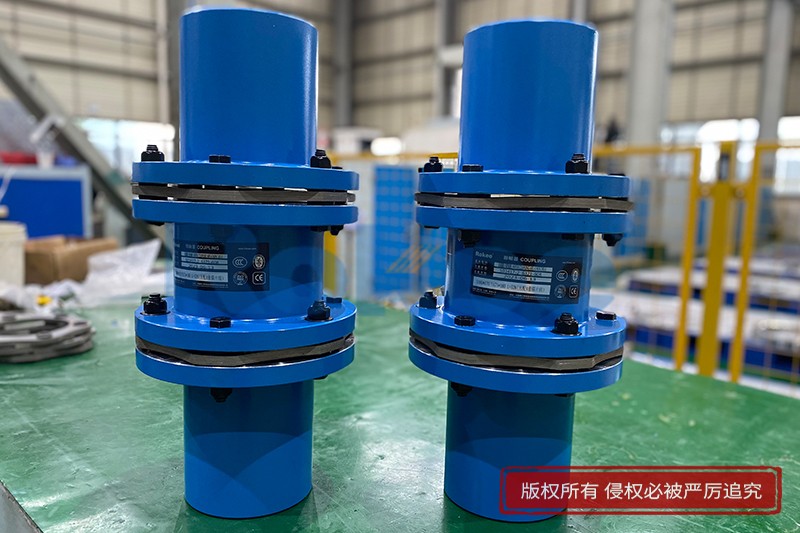
Rokee® is Elastic Diaphragm Couplings Supplier from China, Support Customization and Export, due to excellent quality, complete technical services and superior cost performance, Rokee® Elastic Diaphragm Couplings have been serving more than 60 countries and regions in the world, effectively operating in many corners of the world.
Elastic Diaphragm Coupling is an efficient flexible coupling with no back clearance and free from maintenance. Due to its unique structural design, Elastic Diaphragm Coupling can achieve the perfect delivery of torque. Meanwhile, Elastic Diaphragm Coupling has excellent performances, including large axial and radial compensation ability, low reply feedback force and wide thermal adaptability, etc. With different change design, Elastic Diaphragm Coupling can be applied at most power transmission sites.
-
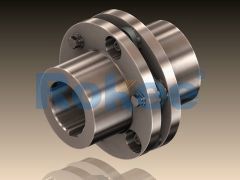
JMI Diaphragm Coupling
JMI metal diaphragm coupling adopts the single-piece design, suitable for short distance transmission. Besides, the semi-coupling sleeve at one end has a counterbore, facilitating the fixing of the shaft end. -
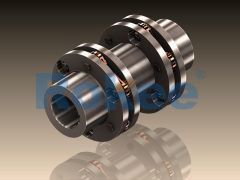
JMIJ Diaphragm Coupling
JMIJ metal diaphragm coupling is designed with intermediate shaft, suitable for long distance transmission. Besides, the semi-coupling sleeve at one end has a counterbore, facilitating the fixing of the shaft end. -
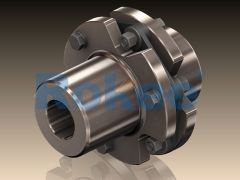
JMII Diaphragm Coupling
JMII metal diaphragm coupling also adopts the single-piece design but has no counterbore, suitable for short distance transmission, with more compact structure. -
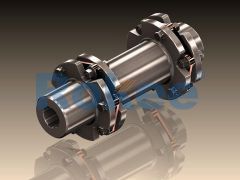
JMIIJ Diaphragm Coupling
JMIIJ metal diaphragm coupling is designed with intermediate shaft, suitable for long distance transmission. Besides, the semi-coupling sleeve at both ends have no counterbore. -
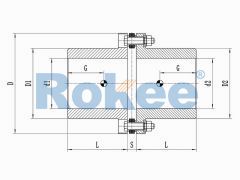
RLA Standard Single Diaphragm Coupling
The classic design of metal flexible diaphragm couplings is a reliable choice for medium to low speed applications, but cannot compensate for radial deviation. -
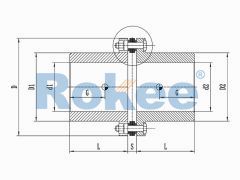
RLM Small Single Diaphragm Coupling
The RLM standard single section small metal diaphragm coupling is suitable for various industrial process pumps and small torque working situations with a working speed not exceeding 5000rpm, and cannot compensate for radial errors. -
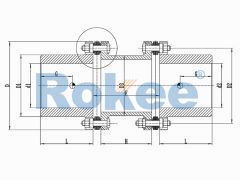
RLMD Small Double Diaphragm Coupling
The RLMD standard double section small metal diaphragm coupling is suitable for various industrial process pumps and small torque working occasions with a working speed not exceeding 5000rpm. -
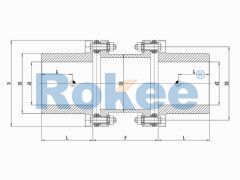
RLAD Standard Double Diaphragm Coupling
The classic design of metal flexible diaphragm couplings is a reliable choice for medium to low speed applications. -
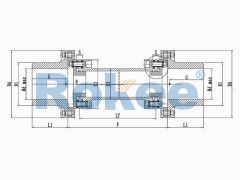
RLAT Super Long Wheelbase Diaphragm Coupling
Adopting an intermediate shaft design, suitable for ultra long shaft spacing power transmission applications. -
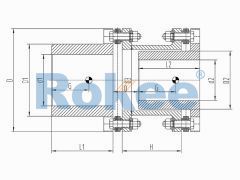
RLAR Single Shaft Sleeve Reverse-mounting Diaphragm Coupling
Single side shaft sleeve reverse installation design, suitable for occasions with limited shaft head distance. -
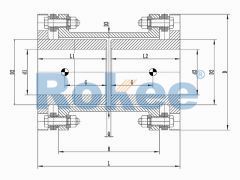
RLARD Double Shaft Sleeve Reverse-mounting Diaphragm Coupling
The double-sided shaft sleeve reverse installation design is also applicable in situations where the distance from the shaft head is limited or the additional bending moment is smaller. -
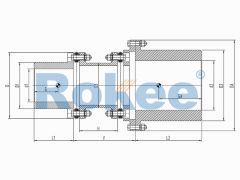
RLAF Large & Small Shaft Mounted Diaphragm Coupling
The size difference design of the bilateral shaft sleeve is suitable for situations where the diameter difference between the two ends of the shaft is significant. -
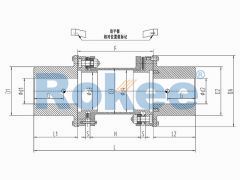
RLQA No Flange Quick Installation Metal Diaphragm Coupling
Suitable for various industrial process pumps, fans, and other medium to low speed applications, with a maximum speed generally not exceeding 25000 rpm. It meets the requirements of API610/ISO14691 and is one of the first products for API applications. -
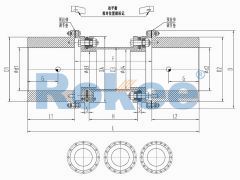
RLQF Flange Type Quick Installation Diaphragm Coupling
Suitable for drum pressure fans, turbine compressors, and other high speed applications, with a maximum speed of up to 35000rpm. -
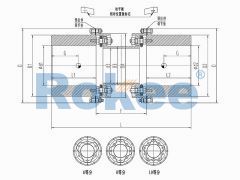
RLQU Improved Flange Quick Installation Diaphragm Coupling
The improved RLQF has smaller additional bending moments and better performance. Suitable for drum pressure fans, turbine compressors, and other high speed applications. -
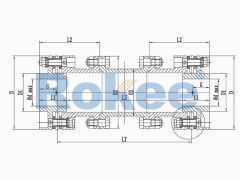
RLHD High Speed Diaphragm Coupling
Suitable for higher speed applications, it also adopts a flexible component integrated assembly design, with a maximum speed of up to 42000rpm.
In the realm of mechanical power transmission, couplings serve as critical components that bridge rotating shafts, enabling the seamless transfer of torque while accommodating various forms of misalignment. Among the diverse range of couplings available, the elastic diaphragm coupling has emerged as a preferred choice in numerous industrial applications due to its unique combination of flexibility, durability, and high torque-carrying capacity. Unlike rigid couplings that demand precise alignment or elastic couplings reliant on rubber or foam elements, the elastic diaphragm coupling utilizes thin, flexible metal diaphragms to absorb misalignment and dampen vibrations. This design not only ensures reliable power transmission but also minimizes wear and tear on connected equipment, extending the overall service life of mechanical systems.
The fundamental working principle of an elastic diaphragm coupling revolves around the deformation of its diaphragm elements to compensate for shaft misalignment and transmit torque. A typical elastic diaphragm coupling consists of two shaft hubs, a set of diaphragms, and connecting bolts. The hubs are securely attached to the input and output shafts of the machinery, while the diaphragms are clamped between the hubs, forming a rigid connection for torque transfer. When torque is applied, the diaphragms undergo elastic deformation, allowing for slight angular, parallel, and axial misalignments between the two shafts. Angular misalignment occurs when the shafts are not collinear, resulting in a slight angle between their rotational axes. Parallel misalignment, on the other hand, happens when the shafts are offset radially without any angular deviation. Axial misalignment refers to the linear displacement of one shaft relative to the other along the rotational axis. The elastic properties of the diaphragms enable them to absorb these misalignments without imposing excessive stress on the shafts or connected components, such as motors, pumps, or gearboxes.
Another key aspect of the elastic diaphragm coupling’s working principle is its ability to dampen vibrations and reduce noise. During operation, rotating machinery generates vibrations due to imbalances, load fluctuations, or inherent mechanical imperfections. These vibrations can propagate through the power transmission system, causing noise, accelerating component wear, and even leading to structural damage. The thin metal diaphragms in the coupling act as vibration dampeners by absorbing and dissipating vibrational energy through their elastic deformation. Unlike rubber-based elastic couplings, which may degrade over time due to heat, oil, or chemical exposure, the metal diaphragms maintain their damping properties under harsh operating conditions, ensuring consistent performance over an extended period.
The structural design of elastic diaphragm couplings is tailored to optimize their performance in terms of torque transmission, misalignment compensation, and durability. There are two primary structural configurations: single-diaphragm and double-diaphragm couplings. Single-diaphragm couplings feature a single set of diaphragms between the two hubs. This design is compact and cost-effective, making it suitable for applications with moderate misalignment requirements and lower torque loads. Double-diaphragm couplings, by contrast, incorporate two sets of diaphragms separated by an intermediate spacer. The intermediate spacer provides additional flexibility, allowing for greater misalignment compensation, particularly in applications where the shafts are spaced apart. Moreover, the double-diaphragm design helps to balance the axial forces generated during operation, reducing the axial load on the bearings of connected equipment.
The diaphragms themselves are the most critical structural components, and their design significantly impacts the coupling’s performance. Diaphragms are typically thin, circular plates with a series of holes around the circumference for bolt attachment. The shape and thickness of the diaphragms are carefully engineered to balance flexibility and strength. Thinner diaphragms offer greater flexibility, enabling better misalignment compensation, while thicker diaphragms provide higher torque-carrying capacity. Some diaphragms feature a波纹状 (corrugated) design, which enhances their elastic deformation capabilities and reduces stress concentration. The number of diaphragms used in a coupling can also vary, with multiple diaphragms stacked together to increase torque capacity and improve stability.
Material selection is a crucial factor in determining the performance and service life of elastic diaphragm couplings. The diaphragms are typically made from high-strength, corrosion-resistant metallic materials that exhibit excellent elastic properties. Stainless steel is one of the most commonly used materials for diaphragms due to its high tensile strength, good fatigue resistance, and resistance to corrosion and oxidation. Austenitic stainless steels, such as 304 and 316, are particularly preferred for their superior ductility and ability to withstand repeated elastic deformation without permanent damage. In applications requiring higher torque capacity or operating at elevated temperatures, high-performance alloys, such as titanium or Inconel, may be used. These alloys offer enhanced strength and thermal stability, making them suitable for extreme operating conditions.
The hubs and connecting bolts of elastic diaphragm couplings are also constructed from high-strength materials to ensure reliable torque transmission. Hubs are often made from carbon steel or alloy steel, which are machined to precise dimensions to fit tightly on the shafts. Some hubs feature keyways or clamping mechanisms to secure them to the shafts, preventing slippage during operation. Connecting bolts are typically made from high-tensile steel, ensuring that they can withstand the clamping forces required to hold the diaphragms securely between the hubs. The choice of materials for the hubs and bolts is based on the application’s torque requirements, operating environment, and temperature range.
Elastic diaphragm couplings offer a wide range of advantages over other types of couplings, making them suitable for diverse industrial applications. One of the primary advantages is their high torque-carrying capacity relative to their size. Due to the use of high-strength metal diaphragms, these couplings can transmit large amounts of torque without compromising on flexibility. This compact design makes them ideal for applications where space is limited, such as in automotive transmissions, aerospace systems, and small industrial machinery.
Another significant advantage is their ability to accommodate multiple types of misalignment simultaneously. Unlike rigid couplings, which can only handle minimal misalignment, or some elastic couplings that are limited to specific types of misalignment, elastic diaphragm couplings can compensate for angular, parallel, and axial misalignment, reducing the need for precise shaft alignment during installation and maintenance. This not only simplifies the installation process but also minimizes the stress on connected components, extending their service life.
Elastic diaphragm couplings are also known for their high reliability and low maintenance requirements. Unlike rubber-based elastic couplings, which require regular replacement of the elastic elements due to wear, aging, or chemical degradation, the metal diaphragms in elastic diaphragm couplings have a long service life and do not require frequent replacement. Additionally, these couplings do not require lubrication, eliminating the need for regular lubrication maintenance and reducing the risk of oil contamination in the operating environment. This low-maintenance characteristic makes them suitable for applications where access to the coupling is difficult or where downtime must be minimized, such as in offshore wind turbines, submersible pumps, and continuous process industries.
Furthermore, elastic diaphragm couplings exhibit excellent resistance to harsh operating conditions. The metal diaphragms and other components are resistant to high temperatures, corrosion, and chemical exposure, making them suitable for use in extreme environments such as chemical processing plants, high-temperature furnaces, and marine applications. Unlike rubber elements that can degrade under high temperatures or chemical attack, metal diaphragms maintain their structural integrity and performance, ensuring reliable operation even in the most demanding conditions.
The diverse advantages of elastic diaphragm couplings have led to their widespread adoption in various industrial sectors. One of the key application areas is the automotive industry, where they are used in transmissions, powertrains, and auxiliary systems. In automotive transmissions, elastic diaphragm couplings help to transmit torque from the engine to the transmission while accommodating slight misalignments and dampening vibrations, improving the overall smoothness and efficiency of the powertrain. They are also used in electric vehicles, where their compact design and high efficiency make them ideal for integrating with electric motors and reduction gears.
The aerospace industry is another major user of elastic diaphragm couplings. In aircraft engines, auxiliary power units (APUs), and flight control systems, these couplings play a critical role in transmitting torque while accommodating the misalignments that occur due to thermal expansion and contraction during flight. The high reliability and low maintenance requirements of elastic diaphragm couplings are particularly important in aerospace applications, where component failure can have catastrophic consequences. The use of lightweight, high-strength materials such as titanium also makes these couplings suitable for aerospace applications, where weight reduction is a key design consideration.
In the industrial machinery sector, elastic diaphragm couplings are widely used in pumps, compressors, fans, and gearboxes. Pumps, in particular, benefit from the misalignment compensation capabilities of these couplings, as shaft misalignment is a common issue in pump installations due to foundation settlement or thermal expansion. By absorbing misalignment, elastic diaphragm couplings reduce the wear on pump shafts and bearings, extending the service life of the pump and minimizing downtime. In compressors and fans, the vibration damping properties of these couplings help to reduce noise and improve the stability of the rotating system.
Renewable energy systems, such as wind turbines and solar power plants, also rely on elastic diaphragm couplings for efficient power transmission. In wind turbines, the coupling connects the rotor shaft to the gearbox or directly to the generator, transmitting the torque generated by the rotor while accommodating the misalignments caused by wind loads and structural deflection. The low maintenance requirements of elastic diaphragm couplings are particularly advantageous in wind turbines, which are often located in remote areas and require minimal downtime. In solar power plants, these couplings are used in solar trackers and other rotating components, ensuring reliable operation under varying environmental conditions.
Marine applications also benefit from the use of elastic diaphragm couplings. In ship propulsion systems, these couplings connect the engine to the propeller shaft, transmitting large amounts of torque while accommodating the misalignments that occur due to hull flexing and thermal expansion. The corrosion resistance of the materials used in elastic diaphragm couplings makes them suitable for use in saltwater environments, where other types of couplings may degrade quickly. Additionally, the vibration damping properties of these couplings help to reduce noise and vibration in the ship’s hull, improving the comfort of the crew and passengers.
Proper maintenance is essential to ensure the long-term performance and reliability of elastic diaphragm couplings. Although these couplings require minimal maintenance compared to other types, regular inspection and monitoring are still necessary. One of the key maintenance tasks is inspecting the diaphragms for signs of wear, fatigue, or damage. Over time, the diaphragms may develop cracks or deformations due to repeated elastic deformation, which can compromise the coupling’s performance. Regular visual inspections, preferably during scheduled downtime, can help to identify these issues early, preventing catastrophic failure.
Another important maintenance task is checking the tightness of the connecting bolts. Loose bolts can cause the diaphragms to shift or vibrate excessively, leading to increased stress and premature failure. Bolts should be checked regularly using a torque wrench to ensure that they are tightened to the specified torque values. In addition, the hubs should be inspected to ensure that they are securely attached to the shafts and that there is no slippage. If slippage is detected, the hub may need to be reattached or replaced.
Cleaning the coupling components is also part of regular maintenance. Dust, dirt, and other contaminants can accumulate on the diaphragms and hubs, potentially causing corrosion or interfering with the coupling’s operation. The coupling should be cleaned regularly using a suitable cleaning agent, taking care not to damage the diaphragms or other components. In corrosive environments, additional protective measures, such as applying a corrosion-resistant coating, may be necessary to extend the service life of the coupling.
Monitoring the operating conditions of the coupling is also important for proactive maintenance. Vibration analysis can be used to detect abnormal vibrations, which may indicate misalignment, worn diaphragms, or loose bolts. Temperature monitoring can help to identify overheating, which may be caused by excessive friction or misalignment. By monitoring these parameters, maintenance personnel can address potential issues before they escalate into major problems, minimizing downtime and repair costs.
In conclusion, elastic diaphragm couplings are versatile and reliable components that play a critical role in modern mechanical power transmission systems. Their unique design, which utilizes elastic metal diaphragms to transmit torque and accommodate misalignment, offers numerous advantages, including high torque-carrying capacity, excellent misalignment compensation, low maintenance requirements, and resistance to harsh operating conditions. These advantages have made them indispensable in a wide range of applications, from automotive and aerospace to industrial machinery, renewable energy, and marine systems. Proper material selection, based on the application’s requirements, and regular maintenance are key to ensuring the long-term performance and reliability of elastic diaphragm couplings. As mechanical engineering continues to evolve, the demand for high-performance, efficient, and reliable couplings is expected to grow, and elastic diaphragm couplings are well-positioned to meet these evolving needs. Their ability to enhance the efficiency, reliability, and service life of mechanical systems makes them a valuable component in the pursuit of sustainable and cost-effective industrial operations.
« Elastic Diaphragm Couplings » Post Date: 2023/9/6
URL: https://www.rokeecoupling.com/en/tags/elastic-diaphragm-couplings.html
- 2023-10-28Elastic Diaphragm Couplings Principle
- 2023-10-18Steel Plate Elastic Diaphragm Couplings
- 2023-10-17High Quality Elastic Diaphragm Coupling
- 2023-10-12Torsional Elastic Diaphragm Couplings
- 2023-10-09High Precision Elastic Diaphragm Coupling
- 2023-10-07Key Connected Elastic Diaphragm Coupling
- 2023-10-07Extended Elastic Diaphragm Coupling
- 2023-10-07Connecting Rod Type Elastic Diaphragm Coupling
- 2023-09-26Double Elastic Diaphragm Coupling
- 2023-09-26Metal Elastic Diaphragm Coupling
- 2023-09-14Working Principle Of Elastic Diaphragm Coupling
- 2023-09-14Which Is The Best Manufacturer For Elastic Diaphragm Couplings
- 2023-09-14Which Company Is Cheaper For Elastic Diaphragm Couplings
- 2023-09-14What Is The Spacing Between Elastic Diaphragm Couplings
- 2023-09-14What Are The Types Of Elastic Diaphragm Couplings
- 2023-09-14Types Of Elastic Diaphragm Couplings
- 2023-09-14Stress Situation Of Elastic Diaphragm Coupling
- 2023-09-14Specification Of Elastic Diaphragm Coupling
- 2023-09-14Selection Of Elastic Diaphragm Couplings
- 2023-09-14Sectional View Of Elastic Diaphragm Coupling
- 2023-09-14Scope Of Use Of Elastic Diaphragm Couplings
- 2023-09-14Schematic Diagram Of Elastic Diaphragm Coupling Operation
- 2023-09-14Quotation For Elastic Diaphragm Couplings
- 2023-09-14Processing Standard For Elastic Diaphragm Couplings
- 2023-09-14Principles Of Elastic Diaphragm Couplings
- 2023-09-14Model Of Elastic Diaphragm Coupling
- 2023-09-14Material Of Elastic Diaphragm Coupling
- 2023-09-14Installation Steps Of Elastic Diaphragm Coupling
- 2023-09-14Installation Standard For Elastic Diaphragm Couplings
- 2023-09-14Installation Method Of Elastic Diaphragm Coupling
- 2023-09-14Installation Requirements For Elastic Diaphragm Couplings
- 2023-09-14Installation Drawing Of Elastic Diaphragm Coupling
- 2023-09-14How To Remove The Elastic Diaphragm Coupling
- 2023-09-13Single Type Elastic Diaphragm Coupling With Cone Sleeve
- 2023-09-06How Much Is The Elastic Diaphragm Coupling
- 2023-09-06How Long Is The Elastic Diaphragm Coupling
- 2023-09-06Fault Analysis Of Elastic Diaphragm Coupling
- 2023-09-06Engineering Drawing Of Elastic Diaphragm Coupling
- 2023-09-06End Face Clearance Of Elastic Diaphragm Coupling
- 2023-09-06Elastic Diaphragm Coupling With or Without Top Screw
- 2023-09-06Elastic Diaphragm Coupling With Key
- 2023-09-06Elastic Diaphragm Coupling With Hinge
- 2023-09-06Elastic Diaphragm Coupling Shaft Entry Length
- 2023-09-06Elastic Diaphragm Coupling Price
- 2023-09-06Elastic Diaphragm Coupling Parameters
- 2023-09-06Elastic Diaphragm Coupling Material
- 2023-09-06Elastic Diaphragm Coupling Jamming
- 2023-09-06Elastic Diaphragm Coupling Hinge
- 2023-09-06Elastic Diaphragm Coupling Function
- 2023-09-06Elastic Diaphragm Coupling Flange
- 2023-09-06Elastic Diaphragm Coupling Extension
- 2023-09-06Elastic Diaphragm Coupling Diaphragm Material
- 2023-09-06Elastic Diaphragm Coupling Cone Ring
- 2023-09-06Elastic Diaphragm Coupling Column Penetration Method
- 2023-09-06Elastic Diaphragm Coupling And Shaft Installation
- 2023-09-06Elastic Diaphragm Coupling And Shaft Fit
- 2023-09-06Efficiency Of Elastic Diaphragm Coupling
- 2023-09-06Eccentricity Compensation For Elastic Diaphragm Couplings
- 2023-09-06Drawing Method For Elastic Diaphragm Couplings
- 2023-09-06Do Elastic Diaphragm Couplings Need To Be Locked
- 2023-09-06Disassembly Method Of Elastic Diaphragm Coupling
- 2023-09-06Disadvantages Of Elastic Diaphragm Couplings
- 2023-09-02Dimensions Of Elastic Diaphragm Couplings
- 2023-09-02Correction Of Elastic Diaphragm Coupling
- 2023-09-02Connection Diagram Of Elastic Diaphragm Coupling
- 2023-09-02Concentricity Adjustment Of Elastic Diaphragm Coupling
- 2023-09-02Clearance Standard For Elastic Diaphragm Couplings
- 2023-09-02Characteristics Of Elastic Diaphragm Couplings
- 2023-08-31Centering Of Elastic Diaphragm Couplings
- 2023-08-31Centering And Alignment Of Elastic Diaphragm Couplings
- 2023-08-31Calculation Of Elastic Diaphragm Coupling Bolts
- 2023-08-31Boundary Dimensions Of Elastic Diaphragm Couplings
- 2023-08-31Axial Clearance Of Elastic Diaphragm Coupling
- 2023-08-31Assembly Drawing Of Elastic Diaphragm Coupling
- 2023-08-31Alignment Standards For Elastic Diaphragm Couplings
- 2023-08-31Advantages Of Elastic Diaphragm Couplings
- 2023-08-31Abnormal Noise Of Elastic Diaphragm Coupling
- 2023-08-28Applicable Fields Of Elastic Diaphragm Couplings
- 2023-08-28Allowable Error Of Elastic Diaphragm Coupling
- 2023-08-28Alignment Error Of Elastic Diaphragm Coupling
- 2023-08-28Adjustment Of Elastic Diaphragm Coupling
- 2023-08-28Compensation Amount Of Elastic Diaphragm Coupling
- 2023-08-28Elastic Diaphragm Coupling Pin Shaft
- 2023-08-28Failure Analysis Of Elastic Diaphragm Couplings
- 2023-08-28How To Install An Elastic Diaphragm Coupling
- 2023-08-24Unidirectional Elastic Diaphragm Coupling
- 2023-08-24Technical Standard For Elastic Diaphragm Couplings
- 2023-08-24Structural Drawing Of Elastic Diaphragm Coupling
- 2023-08-24Schematic Diagram Of Elastic Diaphragm Coupling Structure
- 2023-08-24Radial Compensation Of Elastic Diaphragm Coupling
- 2023-08-24Specification And Model Of Elastic Diaphragm Coupling
- 2023-08-24Usage Of Elastic Diaphragm Couplings
- 2023-08-24Standard Model Of Elastic Diaphragm Coupling
- 2023-08-24Service Life Of Elastic Diaphragm Coupling
- 2023-08-24Production Of Elastic Diaphragm Couplings
- 2023-08-24Installation Spacing Of Elastic Diaphragm Coupling
- 2023-08-24How To Apply Force To Elastic Diaphragm Couplings
- 2023-08-24Elastic Diaphragm Coupling Supply
- 2023-08-24Elastic Diaphragm Coupling Manufacturer
- 2023-08-24Elastic Diaphragm Coupling Adjustment Angle
- 2023-08-24Drawing Of Elastic Diaphragm Coupling
- 2023-08-24Design Of Elastic Diaphragm Couplings
- 2023-08-24Centering Requirements For Elastic Diaphragm Couplings
- 2023-08-24Applicable Occasions For Elastic Diaphragm Couplings
- 2023-08-24Advantages And Disadvantages Of Elastic Diaphragm Couplings
- 2023-08-19Wholesale Of Elastic Diaphragm Couplings
- 2023-08-19Manufacturer Of Elastic Diaphragm Coupling
- 2023-08-19Elastic Diaphragm Coupling Supplier
- 2023-08-19Elastic Diaphragm Coupling Company
- 2023-08-19Brand Of Elastic Diaphragm Coupling
- 2023-08-18Elastic Diaphragm Coupling Factory