Buffer Coupling
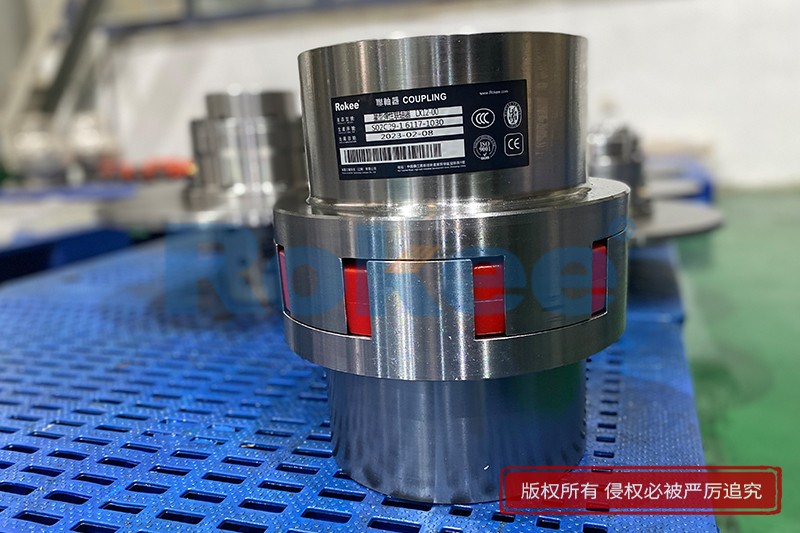
Rokee® is Buffer Coupling Supplier from China, Support Customization and Export, due to excellent quality, complete technical services and superior cost performance, Rokee® Buffer Coupling have been serving more than 60 countries and regions in the world, effectively operating in many corners of the world.
Buffer Coupling including: claw coupling, diaphragm coupling, pin coupling, tire coupling, and other flexible couplings.
In the realm of mechanical transmission systems, the efficient and reliable transfer of power between rotating components is a fundamental requirement. Couplings, as critical intermediaries in this process, are designed to connect two shafts while accommodating misalignments, reducing vibrations, and protecting equipment from excessive loads. Among the diverse range of couplings available, buffer coupling stands out for its unique ability to absorb shocks and dampen vibrations, making it indispensable in numerous industrial and engineering applications.
To understand buffer coupling, it is first necessary to clarify its basic definition and core functions. A buffer coupling is a type of flexible coupling that integrates elastic elements to absorb impact energy and reduce vibration during power transmission. Unlike rigid couplings, which offer no flexibility and require precise alignment between shafts, buffer couplings can tolerate moderate amounts of angular, parallel, and axial misalignments. This flexibility not only simplifies installation and maintenance but also minimizes wear and tear on connected components such as motors, pumps, and gearboxes. The primary functions of buffer coupling include three aspects: first, transmitting torque from the driving shaft to the driven shaft efficiently; second, absorbing shock loads generated by sudden starts, stops, or load fluctuations; third, dampening torsional and radial vibrations to ensure stable operation of the entire transmission system. These functions are closely intertwined, and the performance of the buffer coupling directly affects the reliability, efficiency, and service life of the entire mechanical system.
The working principle of buffer coupling revolves around the deformation and recovery of elastic elements. When the transmission system is subjected to impact loads or vibrations, the elastic elements in the buffer coupling undergo elastic deformation, converting the kinetic energy of the impact or vibration into potential energy. As the load stabilizes, the elastic elements recover their original shape, releasing the stored potential energy gradually. This process effectively reduces the amplitude of vibrations and the magnitude of impact forces transmitted to the connected equipment. Additionally, the elastic elements play a key role in accommodating misalignments. When the two shafts are not perfectly aligned, the elastic elements can deform to compensate for the offset, ensuring that the torque is still transmitted smoothly without generating excessive stress. The material properties of the elastic elements are crucial to the performance of the buffer coupling. Common materials include rubber, polyurethane, nylon, and metal springs, each with distinct characteristics in terms of elasticity, wear resistance, temperature resistance, and load-bearing capacity. The selection of elastic material depends on the specific operating conditions, such as the magnitude of the transmitted torque, the operating temperature range, and the type of load (steady or intermittent).
Buffer couplings can be classified into several main types based on the type of elastic element used and their structural design. The first major type is the rubber buffer coupling. This type of coupling uses rubber as the core elastic element, which is typically placed between two flanges or hubs. Rubber buffer couplings are further divided into subtypes such as tire-type, sleeve-type, and block-type. Tire-type rubber couplings, for example, use a rubber tire as the elastic element, which offers excellent shock absorption and vibration damping performance, as well as a large capacity for accommodating misalignments. They are widely used in low to medium torque applications, such as in ventilation equipment, water pumps, and conveyors. Sleeve-type rubber couplings, on the other hand, feature a rubber sleeve that is pressed between the driving and driven hubs, providing a simple structure and easy installation, making them suitable for small-scale mechanical systems.
The second major type is the polyurethane buffer coupling. Polyurethane, as an elastic material, has advantages over rubber in terms of wear resistance, oil resistance, and aging resistance. Polyurethane buffer couplings often use polyurethane blocks or pins as elastic elements, which are inserted into the holes of the coupling hubs. This design allows for higher torque transmission capacity compared to rubber couplings, making them suitable for medium to high torque applications, such as in industrial mixers, crushers, and gear motors. Polyurethane buffer couplings also have a longer service life in harsh environments where oil contamination or high wear is present.
The third major type is the metal spring buffer coupling. This type uses metal springs (such as coil springs, leaf springs, or disc springs) as elastic elements. Metal springs have high load-bearing capacity, excellent temperature resistance, and stable elastic performance over a wide range of operating conditions. Metal spring buffer couplings are capable of transmitting large torques and absorbing heavy shock loads, making them ideal for high-power and high-temperature applications, such as in diesel engines, steam turbines, and heavy-duty conveyors. However, compared to rubber and polyurethane couplings, metal spring couplings are more complex in structure and higher in cost, limiting their use to specific high-demand scenarios.
The fourth type is the composite buffer coupling, which combines two or more types of elastic elements to leverage their respective advantages. For example, a composite coupling may use rubber and metal springs together, achieving both excellent vibration damping performance and high load-bearing capacity. Composite buffer couplings are designed for complex operating conditions where multiple performance requirements need to be met simultaneously, such as in aerospace, marine propulsion, and high-precision manufacturing equipment. Although composite couplings offer superior performance, their design and manufacturing processes are more complex, leading to higher costs and more stringent maintenance requirements.
Buffer couplings find applications in a wide array of industries, spanning from general manufacturing to specialized high-tech fields. In the automotive industry, buffer couplings are used in the transmission systems of vehicles, where they absorb shocks generated during gear shifting and reduce vibrations from the engine, improving ride comfort and protecting the transmission components. In the automotive powertrain, for instance, the torsional damper (a type of buffer coupling) is installed between the engine and the transmission to dampen torsional vibrations, preventing resonance and extending the service life of the powertrain.
In the industrial machinery sector, buffer couplings are essential components in equipment such as pumps, compressors, fans, and conveyors. Pumps, which are widely used in water supply, sewage treatment, and chemical processing, often operate under variable load conditions. Buffer couplings in pump systems absorb the impact of sudden pressure changes and reduce vibrations, ensuring stable flow rates and preventing damage to the pump impeller and motor. Similarly, in conveyor systems used in mining, logistics, and agriculture, buffer couplings protect the motor and gearbox from the shock loads caused by the start-up of heavy loads and the uneven distribution of materials.
The renewable energy industry, particularly wind energy and solar energy, also relies heavily on buffer couplings. In wind turbines, the main shaft is connected to the generator through a buffer coupling. Wind loads are inherently variable and intermittent, leading to significant shock and vibration. The buffer coupling absorbs these shocks, dampens vibrations, and accommodates misalignments between the main shaft and the generator, ensuring efficient power generation and protecting the expensive generator and gearbox components. In solar tracking systems, buffer couplings are used to connect the drive motor to the tracking mechanism, reducing vibrations caused by wind and ensuring precise positioning of the solar panels.
In the aerospace and marine industries, where reliability and performance are critical, buffer couplings are used in propulsion systems and auxiliary equipment. In marine propulsion systems, buffer couplings connect the diesel engine to the propeller shaft, absorbing the shock of engine start-up and reducing vibrations transmitted to the hull, improving the comfort of the crew and protecting the hull structure. In aerospace applications, such as in aircraft auxiliary power units (APUs), buffer couplings ensure stable power transmission while minimizing vibrations, which is essential for the safe operation of the aircraft.
The medical equipment industry also utilizes buffer couplings in precision devices such as medical centrifuges, MRI machines, and surgical robots. Medical centrifuges require high-speed rotation with minimal vibration to ensure accurate separation of biological samples. Buffer couplings in centrifuges reduce vibrations caused by unbalanced loads, ensuring the precision of the test results. In surgical robots, buffer couplings are used in the joint drive systems to provide smooth and precise motion while absorbing any shocks, ensuring the safety and accuracy of surgical procedures.
Despite their widespread use and mature technology, buffer couplings are continuously evolving to meet the changing demands of modern industrial systems. One of the key emerging trends is the development of high-performance elastic materials. With the advancement of material science, new elastic materials with improved properties, such as higher temperature resistance, better wear resistance, and longer fatigue life, are being developed. For example, nanocomposite rubbers and modified polyurethanes are being used to enhance the performance of buffer couplings in harsh environments, such as high-temperature industrial processes and oil-rich applications. These new materials not only improve the reliability and service life of buffer couplings but also expand their application range to more extreme operating conditions.
Another important trend is the integration of intelligent technologies into buffer couplings. The rise of Industry 4.0 has led to an increased demand for condition monitoring and predictive maintenance of mechanical components. Intelligent buffer couplings equipped with sensors (such as strain sensors, vibration sensors, and temperature sensors) can real-time monitor parameters such as torque, vibration amplitude, temperature, and misalignment. This data is transmitted to a central control system, allowing for the early detection of potential faults, such as excessive wear of elastic elements or misalignment of shafts. Predictive maintenance based on this data can significantly reduce downtime, lower maintenance costs, and improve the overall efficiency of the transmission system. In addition, some intelligent buffer couplings are equipped with self-adjusting mechanisms that can automatically compensate for misalignments or adjust the damping coefficient based on the operating conditions, further enhancing the performance and reliability of the system.
Lightweight and compact design is also a growing trend in the development of buffer couplings. With the increasing demand for energy efficiency and the miniaturization of mechanical equipment, there is a need for buffer couplings that are smaller in size and lighter in weight while maintaining or improving their load-bearing capacity and vibration damping performance. Manufacturers are adopting advanced design methods, such as finite element analysis (FEA), to optimize the structure of buffer couplings, reducing material usage and improving the strength-to-weight ratio. For example, the use of lightweight alloys and composite materials in the hubs and flanges of buffer couplings can significantly reduce their weight without compromising their structural integrity. Compact buffer couplings are particularly important in applications where space is limited, such as in small electric vehicles, portable machinery, and aerospace components.
Environmental sustainability is another factor driving the development of buffer couplings. There is a growing emphasis on the use of eco-friendly materials and manufacturing processes that reduce the environmental impact of mechanical components. Manufacturers are developing buffer couplings using recyclable materials, such as biodegradable rubbers and recyclable metals, to minimize waste. In addition, energy-efficient manufacturing processes, such as additive manufacturing (3D printing), are being used to produce buffer couplings, reducing energy consumption and material waste. 3D printing also allows for the production of complex geometries that are difficult to achieve with traditional manufacturing methods, enabling the design of more efficient and lightweight buffer couplings.
In conclusion, buffer coupling is a vital component in mechanical transmission systems, offering efficient power transmission, shock absorption, vibration damping, and misalignment accommodation. Its diverse classifications, including rubber, polyurethane, metal spring, and composite types, make it suitable for a wide range of applications across industries such as automotive, industrial machinery, renewable energy, aerospace, and medical equipment. As industrial systems become more complex, efficient, and intelligent, buffer couplings are evolving to meet these demands through the development of high-performance materials, integration of intelligent technologies, lightweight and compact design, and adoption of sustainable manufacturing practices. The future of buffer coupling lies in the continuous innovation of materials and designs, as well as the integration of intelligent monitoring and control systems, which will further enhance their performance, reliability, and adaptability to diverse operating conditions. With these advancements, buffer coupling will continue to play a crucial role in ensuring the efficient and reliable operation of mechanical systems in the years to come.
« Buffer Coupling » Post Date: 2023/10/19
URL: https://www.rokeecoupling.com/en/tags/buffer-coupling.html