Unidirectional Diaphragm Coupling
Rokee® provide Unidirectional Diaphragm Coupling, non-standard coupling customization, drawing design, batch processing, and export the product to your location.
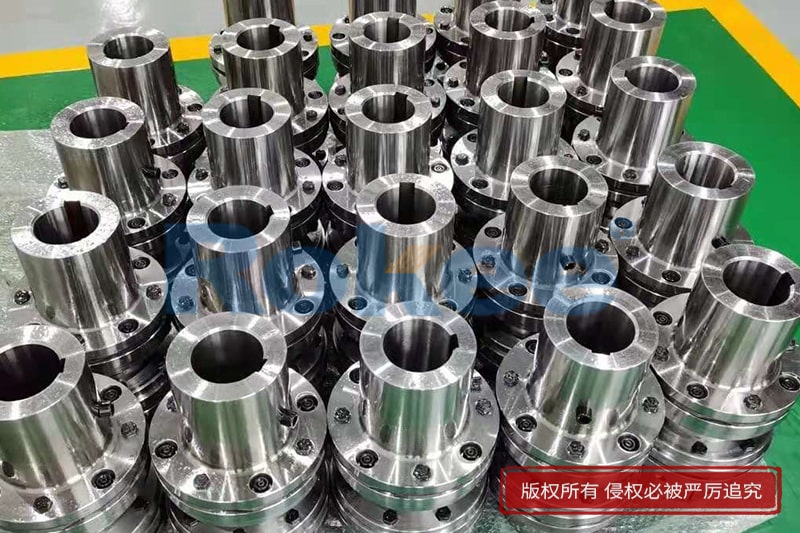
In the realm of mechanical power transmission, couplings serve as critical components that bridge rotating shafts, enabling the transfer of torque while accommodating various forms of misalignment. Among the diverse range of couplings available, unidirectional diaphragm couplings stand out for their unique design tailored to applications requiring efficient torque transmission in a single rotational direction. This type of coupling integrates the flexibility of diaphragm elements with the specificity of unidirectional operation, making it a preferred choice in numerous industrial scenarios.
To begin with, it is essential to clarify the core definition of a unidirectional diaphragm coupling. A coupling is generally defined as a device that connects two shafts or a shaft and a rotating component to transmit power and motion. The "unidirectional" attribute of this coupling indicates that its optimal performance and structural integrity are maintained when torque is transmitted in one predetermined rotational direction. Unlike bidirectional couplings that can withstand torque in both clockwise and counterclockwise directions, unidirectional diaphragm couplings are engineered to leverage material properties and structural design to enhance efficiency and durability in single-direction operation. The "diaphragm" component refers to the flexible, disk-like elements that form the core of the coupling’s ability to accommodate misalignment. These diaphragms are typically made of thin, high-strength materials and are designed with specific configurations to allow for angular, parallel, and axial misalignment between the connected shafts without compromising torque transmission.
The structural composition of a unidirectional diaphragm coupling is relatively concise yet precise, consisting of several key components that work in tandem to achieve efficient power transmission. The main elements include two hubs, a diaphragm pack, and connecting bolts. The hubs are the components that attach to the driving and driven shafts, respectively. They are usually machined to fit the shaft diameters precisely, with common attachment methods including keyway connections, set screws, or shrink fits to ensure a secure and slip-free connection. The design of the hubs for unidirectional couplings often incorporates features that optimize torque transfer in the intended direction, such as asymmetric tooth profiles or enhanced clamping forces in the direction of rotation.
The diaphragm pack is the heart of the coupling, responsible for providing flexibility and compensating for misalignment. Unlike rigid couplings that offer no flexibility, the diaphragm pack allows for small amounts of angular misalignment (the angle between the two shafts), parallel misalignment (the offset between the shaft axes), and axial displacement (the linear movement of one shaft relative to the other). The diaphragms themselves are typically arranged in a stack or as a single integrated disk, with precision-cut slots or holes that enhance their flexibility while maintaining structural strength. For unidirectional operation, the diaphragm pack is designed such that the material stress is minimized during the intended rotational direction, while the opposite direction may result in increased stress or reduced performance. This design optimization allows for a lighter weight and more compact coupling compared to bidirectional alternatives, as it does not need to accommodate the same level of torque in both directions.
Connecting bolts serve to fasten the diaphragm pack to the hubs, creating a rigid connection between the driving and driven sides while allowing the diaphragm’s flexibility to act. These bolts are usually high-strength fasteners that are torqued to specific values to ensure a secure assembly without overconstraining the diaphragm. The arrangement of the bolts is carefully designed to distribute the torque evenly across the diaphragm pack, preventing localized stress concentrations that could lead to premature failure.
The working principle of a unidirectional diaphragm coupling revolves around the transfer of torque through the diaphragm pack, which simultaneously accommodates misalignment through elastic deformation. When the driving shaft rotates in the intended direction, torque is transmitted from the driving hub to the diaphragm pack via the connecting bolts. The diaphragm pack then transfers this torque to the driven hub, which in turn drives the driven shaft. During this process, any misalignment between the two shafts causes the diaphragm elements to undergo elastic deformation. Angular misalignment, for example, causes the diaphragm to bend slightly, while parallel misalignment results in a combination of bending and shear deformation. Axial displacement is accommodated by the stretching or compressing of the diaphragm material. Importantly, the elastic deformation of the diaphragm is fully reversible, meaning that the diaphragm returns to its original shape when the misalignment is reduced or eliminated, ensuring consistent performance over time.
A key aspect of the unidirectional design is the way in which it handles stress during operation. In the intended rotational direction, the torque acts on the diaphragm in a manner that aligns with the material’s tensile and compressive strengths, minimizing fatigue and wear. In the opposite direction, however, the stress distribution changes, potentially placing the diaphragm under higher levels of stress that exceed its design limits. This is why unidirectional diaphragm couplings are strictly intended for applications where rotation is consistently in one direction, such as in certain types of pumps, fans, and conveyors where the direction of operation is fixed.
One of the most significant advantages of unidirectional diaphragm couplings is their high torque transmission efficiency. Due to their compact design and the rigid connection between the hubs and diaphragm pack (when operating in the intended direction), these couplings experience minimal power loss during torque transfer. Unlike flexible couplings that use elastomeric elements, which can suffer from hysteresis and energy loss due to material deformation, diaphragm couplings transmit torque through rigid metal components, resulting in efficiency levels that are typically above 99%. This high efficiency makes them particularly suitable for applications where energy conservation is a priority, such as in industrial machinery that operates continuously.
Another major advantage is their excellent misalignment compensation capability. While they are not designed to accommodate extreme misalignment, unidirectional diaphragm couplings can effectively handle the small to moderate levels of misalignment that are common in most mechanical systems. This ability reduces the stress on bearings, shafts, and other components, extending the overall service life of the machinery. Additionally, the diaphragm design eliminates the need for lubrication, which is a significant benefit compared to couplings such as gear couplings that require regular lubrication to prevent wear and corrosion. The absence of lubrication not only reduces maintenance requirements but also eliminates the risk of lubricant leakage, making these couplings suitable for applications where cleanliness is critical, such as in food processing, pharmaceutical manufacturing, and semiconductor production.
Unidirectional diaphragm couplings also offer high reliability and long service life when used in the correct applications. The diaphragm elements are made from high-strength materials such as stainless steel, titanium, or alloy steel, which are selected for their excellent fatigue resistance and durability. These materials can withstand the repeated elastic deformation associated with misalignment without developing permanent damage, ensuring that the coupling maintains its performance over extended periods of operation. Furthermore, the simple design of the coupling, with fewer moving parts compared to other types of flexible couplings, reduces the likelihood of component failure, minimizing downtime and maintenance costs.
Light weight and compact size are additional advantages of unidirectional diaphragm couplings. The optimized design for unidirectional operation allows for a more streamlined structure, resulting in a coupling that is lighter and takes up less space than bidirectional alternatives. This is particularly beneficial in applications where space is limited, such as in small-scale machinery, automotive components, or aerospace systems. The reduced weight also helps to minimize inertial forces during operation, improving the overall dynamic performance of the machinery and reducing stress on the driving motor.
The applications of unidirectional diaphragm couplings span a wide range of industries, each leveraging their unique combination of advantages. One of the most common applications is in the field of pumping systems, particularly in centrifugal pumps and positive displacement pumps where rotation is fixed in one direction. In these applications, the high efficiency of the coupling ensures that the maximum amount of power is transferred from the motor to the pump impeller, while the misalignment compensation capability reduces stress on the pump shaft and bearings. The absence of lubrication is also beneficial in pump applications where leakage could contaminate the fluid being pumped, such as in chemical processing or water treatment plants.
Another important application area is in fans and blowers. Industrial fans and blowers are often required to operate continuously in a single direction, making them ideal for unidirectional diaphragm couplings. The high efficiency of the coupling helps to reduce energy consumption, which is a key consideration for these energy-intensive devices. Additionally, the compact size and light weight of the coupling make it suitable for integration into the tight spaces often found in fan and blower assemblies.
Conveyor systems are also a major user of unidirectional diaphragm couplings. Conveyors, whether used in manufacturing, mining, or logistics, typically operate in a single direction to move materials along a fixed path. The torque transmission efficiency of the coupling ensures that the conveyor belt moves smoothly and consistently, while the misalignment compensation capability accommodates any small deviations in the alignment of the drive shaft and conveyor roller shafts. The low maintenance requirements of the coupling are particularly advantageous in conveyor systems, which are often located in harsh environments where regular maintenance can be difficult and costly.
In the automotive industry, unidirectional diaphragm couplings find applications in certain components of the drivetrain, such as in electric vehicle (EV) powertrains. EVs often have fixed-direction rotation of the electric motor, making unidirectional couplings a suitable choice for transmitting torque from the motor to the gearbox or differential. The high efficiency and compact size of the coupling are particularly beneficial in EVs, where maximizing energy efficiency and minimizing space requirements are critical for extending range and optimizing vehicle design.
Aerospace applications also utilize unidirectional diaphragm couplings in certain systems, such as in auxiliary power units (APUs) and air conditioning compressors. In these applications, the high reliability and light weight of the coupling are essential, as aerospace components must withstand extreme conditions while minimizing weight to improve fuel efficiency. The absence of lubrication is also a key advantage in aerospace applications, where lubricant leakage could cause damage to sensitive components.
When selecting a unidirectional diaphragm coupling for a specific application, several key factors must be considered to ensure optimal performance and reliability. The first and most important factor is the torque capacity of the coupling. The coupling must be selected to handle the maximum torque that will be transmitted during operation, including any peak torques that may occur during startup or load fluctuations. It is essential to choose a coupling with a torque rating that exceeds the maximum operating torque to provide a safety margin and prevent premature failure.
Another critical factor is the misalignment requirements of the application. The coupling must be capable of accommodating the maximum levels of angular, parallel, and axial misalignment that are expected in the system. It is important to consult the manufacturer’s specifications to ensure that the coupling’s misalignment capacity matches the application’s requirements, as exceeding these limits can lead to increased stress on the diaphragm and premature failure.
Shaft size and connection type are also important considerations. The coupling’s hubs must be compatible with the diameters of the driving and driven shafts, and the connection method (keyway, set screw, shrink fit, etc.) must be suitable for the application’s torque requirements and installation constraints. It is essential to ensure that the hub design provides a secure connection to prevent slippage during operation, which can cause damage to the shafts and coupling.
Operating speed is another factor that must be taken into account. The coupling must be designed to operate safely at the maximum rotational speed of the shafts, as excessive speed can cause centrifugal forces that exceed the coupling’s design limits. The manufacturer’s specifications will typically include a maximum speed rating, which must be checked against the application’s operating speed.
Environmental conditions, such as temperature, humidity, and exposure to corrosive substances, also play a role in coupling selection. The materials used in the coupling, particularly the diaphragm pack and hubs, must be resistant to the environmental conditions of the application. For example, in high-temperature applications, materials with high heat resistance, such as Inconel or titanium, may be required, while in corrosive environments, stainless steel or coated materials may be necessary to prevent rust and degradation.
Maintenance considerations are also important when selecting a unidirectional diaphragm coupling. While these couplings require less maintenance than lubricated couplings, regular inspection is still necessary to ensure optimal performance. Key maintenance tasks include checking the tightness of the connecting bolts, inspecting the diaphragm pack for signs of fatigue or damage (such as cracks or deformation), and verifying the alignment of the shafts. It is important to establish a regular maintenance schedule based on the application’s operating conditions and the manufacturer’s recommendations.
When inspecting the diaphragm pack, particular attention should be paid to any signs of wear or damage. Cracks in the diaphragm are a common indicator of fatigue, and if left unaddressed, can lead to catastrophic failure of the coupling. The connecting bolts should be checked regularly for tightness, as loose bolts can cause uneven torque distribution and increased stress on the diaphragm. Shaft alignment should also be checked periodically, as misalignment can increase stress on the coupling and other components, reducing their service life.
In conclusion, unidirectional diaphragm couplings are versatile and efficient components that play a critical role in mechanical power transmission systems requiring single-direction rotation. Their unique design, which combines the flexibility of diaphragm elements with optimized unidirectional torque transmission, offers numerous advantages, including high efficiency, excellent misalignment compensation, low maintenance requirements, reliability, and compact size. These advantages make them suitable for a wide range of applications across industries such as pumping, fan and blower systems, conveyors, automotive, and aerospace.
When selecting and maintaining unidirectional diaphragm couplings, it is essential to consider factors such as torque capacity, misalignment requirements, shaft size, operating speed, and environmental conditions. By carefully evaluating these factors and following proper maintenance practices, users can ensure that the coupling provides reliable and efficient performance, extending the service life of the entire mechanical system. As industrial machinery continues to evolve toward higher efficiency, reliability, and compact design, unidirectional diaphragm couplings are likely to remain a key component in meeting these demands.
« Unidirectional Diaphragm Coupling » Post Date: 2023/9/23
URL: https://www.rokeecoupling.com/en/customer-cases/unidirectional-diaphragm-coupling.html
- High Performance Brake Drum Couplings
- Disc Coupling Price
- Rolling Steel Diaphragm Coupling
- Laminated Coupling With Intermediate Shaft
- Membrane Couplings Factory
- Double Roller Slag Crusher Tyre Couplings
- Size Chart of Bushed Pin Coupling
- Short Wheelbase Diaphragm Coupling
- Dimensions Of Gear Coupling Hub
- Custom Bush Type Couplings