Laminated Coupling With Intermediate Shaft
Rokee® provide Laminated Coupling With Intermediate Shaft, non-standard coupling customization, drawing design, batch processing, and export the product to your location.
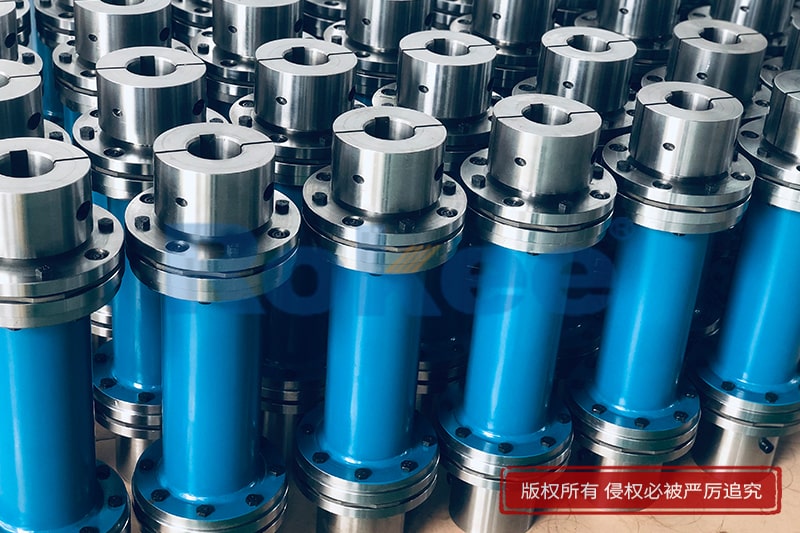
In the realm of power transmission systems, the efficient and reliable transfer of torque between rotating components is paramount to the performance of industrial machinery. Among the diverse range of coupling solutions available, laminated couplings with intermediate shafts have emerged as a versatile and robust option, particularly suited for applications requiring precise alignment compensation, vibration dampening, and the ability to bridge substantial distances between driving and driven shafts.
Fundamental Design of Laminated Couplings With Intermediate Shaft
A laminated coupling with an intermediate shaft is a specialized power transmission device that combines the flexibility of laminated elements with the extended reach of an intermediate shaft. Unlike standard couplings that connect two shafts directly, this configuration introduces a third component—the intermediate shaft—that spans the gap between the driver (e.g., motor) and the driven (e.g., pump, gearbox) equipment. The core assembly consists of three main parts: two end couplings (each attached to the driver and driven shafts), a set of laminated flexible elements, and the intermediate shaft that links the two end couplings.
The laminated flexible elements are the defining feature of this coupling type, typically constructed from multiple thin layers of high-strength materials such as stainless steel, spring steel, or composite materials. These layers are bonded or riveted together to form a rigid yet flexible disk or pack, which is mounted between the end coupling flanges and the intermediate shaft flanges. The number of layers and their thickness are carefully engineered to balance flexibility and torque-carrying capacity, ensuring that the coupling can accommodate misalignments while transmitting the required level of torque without failure.
The intermediate shaft itself is a cylindrical component made from high-tensile steel or alloy materials, selected for their ability to withstand bending moments and torsional stress. Its length is customized to match the specific distance between the driver and driven shafts, eliminating the need for the equipment to be positioned in close proximity. The end couplings are designed to securely fasten to the respective shafts, often using keyways, set screws, or hydraulic clamping systems to ensure a tight and slip-free connection. In some designs, the end couplings may also incorporate radial or axial adjustment mechanisms to facilitate initial alignment during installation.
Another critical design consideration is the balance of the assembly. Given that the intermediate shaft rotates at the same speed as the driver and driven shafts, any imbalance can lead to excessive vibration, noise, and premature wear. To mitigate this, the entire coupling assembly—including the intermediate shaft and laminated elements—is precision-machined and dynamically balanced to meet industry standards for rotational smoothness. This balance is particularly important for high-speed applications, where even minor imbalances can cause significant damage to bearings and other machinery components.
Operational Principles of Laminated Couplings With Intermediate Shaft
The primary function of a laminated coupling with an intermediate shaft is to transmit torque from the driver shaft to the driven shaft while accommodating various types of misalignment and reducing vibration. The operational principle revolves around the flexibility of the laminated elements, which act as the "flexible joint" between the rigid components of the assembly.
When torque is applied by the driver shaft, it is transferred through the first end coupling to the laminated elements. The laminated pack distributes the torque evenly across its layers, leveraging the high tensile strength of the material to prevent deformation under load. The torque then passes through the intermediate shaft to the second set of laminated elements and end coupling, ultimately reaching the driven shaft. Throughout this process, the laminated elements allow for three main types of misalignment: angular misalignment (where the shafts are not colinear but intersect at a point), parallel misalignment (where the shafts are parallel but offset from each other), and axial misalignment (where the shafts move towards or away from each other along their axial direction).
Angular misalignment is accommodated by the slight bending of the laminated layers, which flexes to adapt to the angle between the shafts without imposing excessive forces on the bearings. Parallel misalignment is compensated for by the lateral flexibility of the laminated elements, which can shift slightly to bridge the offset between the shafts. Axial misalignment is absorbed by the axial compliance of the laminated pack, allowing for small movements along the shaft axis without causing binding or stress. This ability to accommodate multiple types of misalignment is a key advantage over rigid couplings, which require precise alignment and can transmit harmful forces to machinery components if misaligned.
In addition to misalignment compensation, the laminated elements also provide vibration dampening capabilities. The layered structure of the elements acts as a shock absorber, reducing the transmission of torsional vibrations from the driver to the driven equipment. This is particularly beneficial in applications where the driver (such as an electric motor or internal combustion engine) generates significant vibration, as it helps to protect sensitive components (such as gears, bearings, and sensors) from premature wear and damage. The vibration dampening effect also contributes to quieter operation, improving the working environment and reducing noise pollution in industrial settings.
Key Advantages of Laminated Couplings With Intermediate Shaft
Laminated couplings with intermediate shafts offer a range of advantages that make them well-suited for a wide variety of industrial applications. These advantages stem from their unique design and operational characteristics, setting them apart from other coupling types such as rigid couplings, jaw couplings, or gear couplings.
One of the most significant advantages is their exceptional misalignment compensation capability. As discussed earlier, the laminated elements can accommodate angular, parallel, and axial misalignment, eliminating the need for precise and time-consuming alignment during installation and reducing the risk of bearing failure caused by misalignment-induced forces. This flexibility is particularly valuable in applications where the equipment is subject to thermal expansion or contraction, as the coupling can adapt to the resulting changes in shaft position without compromising performance.
Another key advantage is their high torque-carrying capacity relative to their size and weight. The laminated elements, constructed from high-strength materials, are able to transmit substantial levels of torque while maintaining their flexibility. This makes the coupling suitable for use in heavy-duty applications such as industrial pumps, compressors, and conveyors, where high torque loads are common. Additionally, the intermediate shaft allows for the transmission of torque over long distances, eliminating the need to position driver and driven equipment close together and providing greater flexibility in machinery layout and design.
Vibration dampening and noise reduction are also major benefits of this coupling type. The layered structure of the laminated elements absorbs torsional vibrations, reducing the transmission of vibration from the driver to the driven equipment. This not only extends the lifespan of bearings, gears, and other components but also improves the overall reliability and efficiency of the machinery. The reduced vibration also results in quieter operation, which is increasingly important in modern industrial facilities where noise levels are tightly regulated.
Laminated couplings with intermediate shafts are also characterized by their low maintenance requirements. Unlike gear couplings, which require regular lubrication to prevent wear and corrosion, the laminated elements are typically maintenance-free, as they do not have moving parts that require lubrication. This reduces downtime and maintenance costs, making the coupling a cost-effective solution in the long term. Additionally, the laminated elements are resistant to corrosion and wear, ensuring a long service life even in harsh industrial environments.
Finally, these couplings offer a high degree of precision in torque transmission. The rigid construction of the intermediate shaft and end couplings, combined with the controlled flexibility of the laminated elements, ensures that torque is transmitted smoothly and accurately, without slip or backlash. This precision is critical in applications such as machine tools, robotics, and precision conveyors, where accurate speed and position control are essential.
Industrial Applications of Laminated Couplings With Intermediate Shaft
The unique combination of flexibility, high torque capacity, vibration dampening, and long-distance transmission capabilities makes laminated couplings with intermediate shafts suitable for a diverse range of industrial applications. These couplings are employed in various sectors, including manufacturing, energy, water treatment, and transportation, where reliable and efficient power transmission is essential.
In the manufacturing industry, laminated couplings with intermediate shafts are widely used in machine tools, such as lathes, milling machines, and grinders. These applications require precise torque transmission and misalignment compensation, as the machine components are subject to thermal expansion and contraction during operation. The vibration dampening capabilities of the coupling also help to improve the surface finish of machined parts by reducing vibration-induced errors. Additionally, these couplings are used in conveyor systems, where they bridge the gap between the drive motor and the conveyor roller, accommodating the misalignment that may occur due to the long length of the conveyor.
The energy sector, including power generation and renewable energy, is another major application area. In thermal power plants, laminated couplings with intermediate shafts are used to connect turbines to generators, accommodating the misalignment that may occur due to the high temperatures and large size of the equipment. In wind energy systems, these couplings are employed to connect the wind turbine rotor to the gearbox or generator, transmitting torque over long distances while compensating for the misalignment caused by wind-induced vibrations and structural movement. The vibration dampening capabilities of the coupling are particularly valuable in wind energy applications, as they help to protect the gearbox and generator from excessive wear.
Water and wastewater treatment facilities also rely on laminated couplings with intermediate shafts for various equipment, such as pumps, blowers, and mixers. These applications often require the transmission of torque over long distances, as the equipment is typically spread out across the facility. The misalignment compensation capability of the coupling is essential in these settings, as the pumps and blowers may be subject to movement due to the weight of the fluid and the vibration of the equipment. Additionally, the corrosion resistance of the laminated elements and intermediate shaft makes them suitable for use in the harsh, humid environment of water treatment facilities.
The transportation sector, including automotive and marine applications, also uses laminated couplings with intermediate shafts. In automotive manufacturing, these couplings are used in the production line equipment, such as robotic arms and assembly conveyors, where precise torque transmission and flexibility are required. In marine applications, the couplings are employed to connect the ship's engine to the propeller shaft, accommodating the misalignment that may occur due to the movement of the ship's hull and the vibration of the engine. The high torque capacity and corrosion resistance of the coupling make it suitable for use in the harsh marine environment.
Other applications include material handling equipment (such as cranes and hoists), industrial fans, and printing machinery. In each of these applications, the laminated coupling with intermediate shaft provides a reliable and efficient solution for power transmission, addressing the specific challenges of misalignment, vibration, and long-distance torque transfer.
Selection and Maintenance Considerations
Selecting the right laminated coupling with intermediate shaft for a specific application requires careful consideration of several key factors, including torque requirements, shaft speed, misalignment levels, operating environment, and shaft distance. Failure to select the appropriate coupling can result in premature failure, reduced machinery performance, and increased maintenance costs.
The first and most critical factor is the torque capacity of the coupling. The coupling must be selected to handle the maximum torque generated by the driver, including any peak loads or shock loads that may occur during operation. It is important to choose a coupling with a torque rating that exceeds the maximum operating torque to ensure a safety margin. The manufacturer's specifications should be consulted to determine the torque capacity of the coupling, taking into account the material of the laminated elements and the intermediate shaft.
Shaft speed is another important consideration. The coupling must be dynamically balanced to operate at the maximum shaft speed without generating excessive vibration. High-speed applications require couplings with a higher balance grade, as even minor imbalances can cause significant damage at high rotational speeds. The manufacturer's specifications will typically include the maximum allowable speed for the coupling, which should be checked against the operating speed of the machinery.
Misalignment levels must also be taken into account. The coupling should be selected to accommodate the maximum expected angular, parallel, and axial misalignment in the application. It is important to measure the actual misalignment between the driver and driven shafts during installation, as excessive misalignment can exceed the coupling's capabilities and lead to premature wear of the laminated elements. The manufacturer's data sheet will specify the maximum allowable misalignment for the coupling, which should be matched to the application's requirements.
The operating environment is another key factor. Couplings used in harsh environments, such as high temperatures, humidity, corrosive substances, or dusty conditions, require special materials and designs to ensure durability. For example, in high-temperature applications, the laminated elements and intermediate shaft should be made from heat-resistant materials to prevent deformation and loss of strength. In corrosive environments, stainless steel or coated components should be used to resist rust and corrosion. Additionally, in dusty or dirty environments, the coupling may require protective covers to prevent the ingress of debris, which can cause wear and damage to the laminated elements.
The distance between the driver and driven shafts (shaft distance) will determine the length of the intermediate shaft. The intermediate shaft must be long enough to bridge the gap between the shafts while maintaining sufficient rigidity to prevent bending and vibration. It is important to consult the manufacturer's guidelines for the maximum allowable length of the intermediate shaft, as excessive length can lead to increased bending stress and reduced torque capacity.
In terms of maintenance, laminated couplings with intermediate shafts are relatively low-maintenance compared to other coupling types, but regular inspection is still essential to ensure optimal performance and prevent failure. The key maintenance tasks include inspecting the laminated elements for signs of wear, damage, or delamination; checking the tightness of the fasteners (such as bolts and set screws) to ensure a secure connection; and verifying the alignment of the shafts to prevent excessive stress on the coupling.
Inspection of the laminated elements should be carried out periodically, with more frequent inspections in harsh or high-load applications. Signs of wear or damage include cracks, tears, or separation of the layers, which can reduce the flexibility and torque-carrying capacity of the coupling. If any damage is detected, the laminated elements should be replaced immediately to prevent failure. The fasteners should also be checked regularly, as vibration can cause them to loosen over time. Loose fasteners can lead to slip, misalignment, and increased wear, so they should be tightened to the manufacturer's recommended torque specifications.
Shaft alignment should be checked periodically, particularly after any maintenance or equipment movement. Misalignment can occur over time due to thermal expansion, vibration, or wear of the machinery components, so regular alignment checks are essential to prevent excessive stress on the coupling and bearings. If misalignment is detected, it should be corrected immediately using the appropriate adjustment mechanisms.
Conclusion
Laminated couplings with intermediate shafts are a versatile and reliable power transmission solution, offering a unique combination of misalignment compensation, vibration dampening, high torque capacity, and long-distance transmission capabilities. Their design, which combines flexible laminated elements with a rigid intermediate shaft, makes them suitable for a wide range of industrial applications, from manufacturing and energy generation to water treatment and transportation.
The key advantages of these couplings—including their ability to accommodate multiple types of misalignment, reduce vibration and noise, low maintenance requirements, and precise torque transmission—make them an attractive option for engineers and equipment designers seeking to improve the performance and reliability of their machinery. However, selecting the right coupling requires careful consideration of torque requirements, shaft speed, misalignment levels, operating environment, and shaft distance, while regular inspection and maintenance are essential to ensure optimal performance and prevent premature failure.
As industrial machinery becomes increasingly complex and demanding, the role of laminated couplings with intermediate shafts is likely to grow, with ongoing advancements in material technology and design further enhancing their capabilities. By understanding the fundamental design, operational principles, and key considerations of these couplings, engineers can make informed decisions about their use, ensuring that their power transmission systems are efficient, reliable, and cost-effective.
« Laminated Coupling With Intermediate Shaft » Post Date: 2023/9/23
URL: https://www.rokeecoupling.com/en/customer-cases/laminated-coupling-with-intermediate-shaft.html
- Supply of Brake Drum Couplings
- Grease of Bushed Pin Type Flexible Coupling
- Flexible Diaphragm Coupling Manufacturer
- Motor Plum Couplings
- Outer Hexagonal Pin Coupling
- Plum Coupling For Guide Rail
- Curved-tooth Gear Coupling Tooth Height
- Large Plum Blossom Coupling
- Toothed Disc Coupling
- Angle of Bushed Pin Type Flexible Coupling