SWC Universal Shaft Coupling
Rokee® provide SWC Universal Shaft Coupling, non-standard coupling customization, drawing design, batch processing, and export the product to your location.
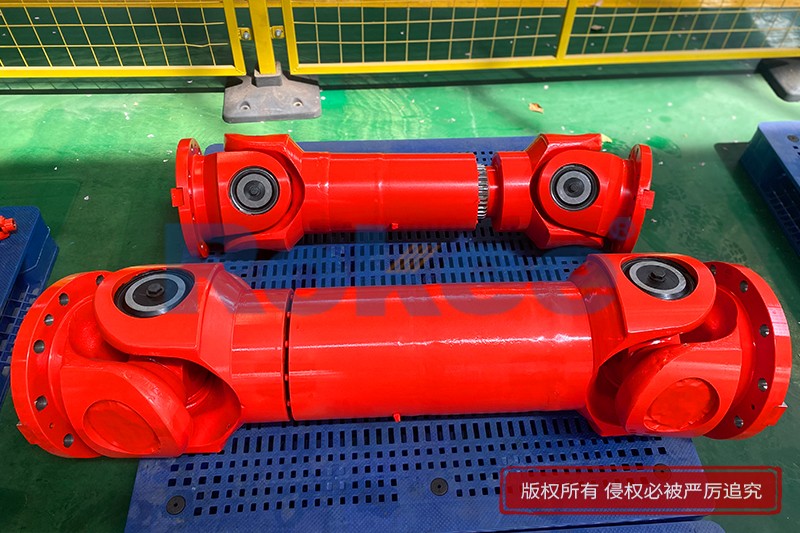
In the realm of mechanical power transmission, couplings serve as critical components that bridge rotating shafts, enabling the seamless transfer of torque while accommodating various forms of misalignment. Among the diverse range of couplings available, the SWC universal shaft coupling stands out for its robust construction, high torque-bearing capacity, and adaptability to harsh operating conditions.
The SWC universal shaft coupling, a type of rigid-flexible coupling, is engineered to address the challenges of power transmission between shafts that are not perfectly aligned. Unlike flexible couplings that rely on elastic elements to absorb misalignment, SWC couplings utilize a combination of rigid components and articulated joints to accommodate angular, parallel, and axial misalignments. This unique design allows them to maintain efficient torque transmission even in scenarios where shaft alignment is difficult to achieve or maintain, making them indispensable in many heavy-duty industrial applications.
Design Characteristics of SWC Universal Shaft Coupling
The design of SWC universal shaft couplings is characterized by several key components that work in tandem to ensure reliable performance. At the core of the coupling are two yokes, which are connected to the driving and driven shafts respectively. The yokes are typically forged from high-strength steel to withstand the high torque and stress encountered during operation. Each yoke features a pair of ears with holes that accommodate the cross shaft, also known as the spider.
The cross shaft is a central component that connects the two yokes, allowing for angular movement between them. It is usually made of alloy steel, which offers excellent wear resistance and toughness. The interface between the cross shaft and the yokes is equipped with bearings, which reduce friction and enable smooth rotation. These bearings are crucial for minimizing wear and extending the service life of the coupling, as they bear the radial and axial loads generated during operation.
Another notable design feature of SWC universal shaft couplings is the presence of a sleeve or tube that connects the two yokes in some configurations. This sleeve, often referred to as the intermediate shaft, provides additional support and helps to maintain the distance between the driving and driven shafts. The length of the intermediate shaft can be customized according to the specific requirements of the application, allowing for flexibility in installation.
SWC couplings are also designed with a focus on balance. High-speed rotating components are prone to vibration if they are not properly balanced, which can lead to premature wear of bearings, shafts, and other components. To address this, SWC couplings undergo rigorous balancing tests during manufacturing to ensure that they operate smoothly even at high rotational speeds. This balance is achieved by removing material from specific areas of the yokes or cross shaft, ensuring that the center of mass coincides with the axis of rotation.
Working Principles of SWC Universal Shaft Coupling
The primary function of an SWC universal shaft coupling is to transmit torque from the driving shaft to the driven shaft while accommodating misalignment. The working principle of the coupling revolves around the articulated connection between the yokes and the cross shaft. When the driving shaft rotates, it imparts rotational motion to the driving yoke. The cross shaft, which is inserted into the holes of the driving yoke, then transfers this rotational motion to the driven yoke, which in turn rotates the driven shaft.
The key to the coupling's ability to accommodate misalignment lies in the freedom of movement provided by the cross shaft and bearings. Angular misalignment, which occurs when the axes of the driving and driven shafts intersect at an angle, is accommodated by the rotation of the cross shaft within the bearings of the yokes. As the driving yoke rotates, the cross shaft pivots within the bearings, allowing the driven yoke to rotate at the same speed as the driving yoke while maintaining the angular offset.
Parallel misalignment, where the axes of the two shafts are parallel but offset from each other, is accommodated by the combination of angular movement and the length of the intermediate shaft (if present). The intermediate shaft acts as a lever, allowing the two yokes to move relative to each other while maintaining torque transmission. Axial misalignment, which is the linear displacement of one shaft relative to the other along the axis of rotation, is accommodated by the sliding of the bearings within the yoke ears or by the telescopic design of some intermediate shafts.
It is important to note that while SWC universal shaft couplings can accommodate significant misalignments, excessive misalignment can lead to increased stress on the bearings and cross shaft, resulting in premature failure. Therefore, it is essential to ensure that the misalignment within the coupling remains within the manufacturer's recommended limits to maintain optimal performance and service life.
Key Advantages of SWC Universal Shaft Coupling
SWC universal shaft couplings offer a range of advantages that make them suitable for a wide variety of industrial applications. One of the most significant advantages is their high torque-bearing capacity. Due to their robust construction using high-strength materials, SWC couplings can transmit large amounts of torque, making them ideal for heavy-duty applications such as steel mills, mining equipment, and large-scale industrial machinery.
Another major advantage is their ability to accommodate multiple types of misalignment. Unlike some other types of couplings that are limited to specific forms of misalignment, SWC couplings can handle angular, parallel, and axial misalignments simultaneously, providing greater flexibility in installation and operation. This adaptability is particularly valuable in applications where shaft alignment is difficult to maintain due to thermal expansion, vibration, or structural movement.
SWC couplings also exhibit excellent durability and long service life. The use of high-quality materials and precision manufacturing processes ensures that the coupling can withstand harsh operating conditions, including high temperatures, heavy loads, and exposure to dust, dirt, and moisture. The bearings used in the coupling are designed to resist wear and corrosion, further extending the service life of the component.
In addition to their durability, SWC universal shaft couplings are relatively easy to install and maintain. The simple design of the coupling allows for straightforward installation, with minimal need for specialized tools or equipment. Maintenance requirements are also relatively low, typically involving regular lubrication of the bearings and periodic inspection for wear or damage. This ease of maintenance helps to reduce downtime and operational costs, making SWC couplings a cost-effective solution for many industrial applications.
Finally, SWC couplings operate with high efficiency, minimizing power loss during torque transmission. The low friction between the cross shaft and bearings ensures that most of the power from the driving shaft is transferred to the driven shaft, resulting in efficient operation of the mechanical system. This high efficiency is particularly important in energy-intensive applications, where reducing power loss can lead to significant cost savings.
Industrial Applications of SWC Universal Shaft Coupling
The unique combination of high torque capacity, misalignment accommodation, and durability makes SWC universal shaft couplings suitable for a wide range of industrial applications. One of the most common applications is in the steel industry, where SWC couplings are used in rolling mills, continuous casting machines, and other equipment that requires the transmission of large torques. In rolling mills, for example, SWC couplings connect the motor to the rolling stands, enabling the transfer of the high torque required to deform metal sheets or bars.
The mining industry is another major user of SWC universal shaft couplings. Mining equipment such as crushers, conveyors, and excavators operate in harsh conditions, with significant misalignment and heavy loads. SWC couplings are used to connect the motors and gearboxes of these machines, ensuring reliable power transmission even in dusty, wet, and vibration-prone environments. The high durability of SWC couplings makes them well-suited for these applications, where equipment downtime can be extremely costly.
SWC couplings are also widely used in the power generation industry. In thermal power plants, they are used to connect the turbines to the generators, transmitting the high torque generated by the turbine to the generator to produce electricity. The ability of SWC couplings to accommodate misalignment is particularly important in this application, as thermal expansion of the turbine and generator shafts can lead to significant changes in alignment during operation.
Other industrial applications of SWC universal shaft couplings include marine propulsion systems, where they connect the engine to the propeller shaft; heavy-duty vehicles such as trucks and buses, where they are used in the transmission system; and industrial pumps and compressors, where they ensure reliable power transmission between the motor and the pump or compressor. Additionally, SWC couplings are used in agricultural machinery, such as tractors and harvesters, where they must withstand the harsh conditions of farm operations.
Maintenance Considerations for SWC Universal Shaft Coupling
Proper maintenance is essential to ensure the optimal performance and long service life of SWC universal shaft couplings. One of the most important maintenance tasks is regular lubrication of the bearings. The bearings in the coupling are subjected to high loads and friction during operation, and adequate lubrication is necessary to reduce wear and prevent overheating. The type of lubricant used should be selected based on the operating conditions, such as temperature, load, and speed. It is also important to follow the manufacturer's recommendations regarding the frequency of lubrication, as insufficient or excessive lubrication can lead to bearing failure.
Periodic inspection of the coupling is another key maintenance requirement. Inspections should be conducted to check for signs of wear, damage, or misalignment. Common signs of wear include excessive play in the yokes or cross shaft, unusual noise during operation, and leakage of lubricant. If any of these signs are detected, the coupling should be repaired or replaced immediately to prevent further damage to the shaft, motor, or other components of the mechanical system.
During inspection, it is also important to check the alignment of the driving and driven shafts. Misalignment can increase the stress on the coupling and lead to premature failure. If misalignment is detected, it should be corrected by adjusting the position of the motor or other components. The use of precision alignment tools, such as laser alignment systems, can help to ensure accurate alignment and minimize the risk of coupling failure.
Another maintenance consideration is the replacement of worn or damaged components. The cross shaft, bearings, and yokes are the most commonly worn components of SWC couplings. When these components show signs of excessive wear or damage, they should be replaced with genuine parts to ensure the proper functioning of the coupling. It is also important to ensure that the replacement parts are installed correctly, following the manufacturer's instructions.
Finally, it is important to store SWC universal shaft couplings properly when they are not in use. Couplings should be stored in a clean, dry environment to prevent corrosion and damage. They should also be stored in a way that avoids deformation of the yokes or cross shaft, such as placing them on a flat surface or hanging them by the yoke ears.
Future Trends in SWC Universal Shaft Coupling Design and Technology
As industrial machinery becomes more advanced, the demand for high-performance couplings that can meet the requirements of modern applications continues to grow. In response to this demand, manufacturers of SWC universal shaft couplings are focusing on several areas of innovation to improve the performance and functionality of their products.
One of the key trends in SWC coupling design is the use of advanced materials. The development of new high-strength, lightweight materials, such as composite materials and advanced alloys, is enabling the production of couplings that are lighter, stronger, and more corrosion-resistant than traditional steel couplings. These materials can help to reduce the overall weight of the mechanical system, improve energy efficiency, and extend the service life of the coupling.
Another trend is the integration of smart technology into SWC couplings. Smart couplings are equipped with sensors that can monitor various parameters, such as temperature, vibration, and torque. This data can be transmitted to a central monitoring system, allowing for real-time monitoring of the coupling's performance. By detecting potential issues early, smart couplings can help to reduce downtime and prevent catastrophic failure of the mechanical system.
In addition, manufacturers are focusing on improving the design of SWC couplings to enhance their ability to accommodate misalignment and reduce stress on the components. This includes the development of new bearing designs that offer higher load-bearing capacity and better wear resistance, as well as the optimization of the yoke and cross shaft geometry to distribute stress more evenly.
Finally, there is a growing focus on sustainability in the design and manufacturing of SWC universal shaft couplings. Manufacturers are working to reduce the environmental impact of their products by using recycled materials, improving energy efficiency during manufacturing, and designing couplings that are easier to recycle at the end of their service life.
Conclusion
SWC universal shaft couplings are essential components in modern mechanical power transmission systems, offering high torque-bearing capacity, excellent misalignment accommodation, and long service life. Their robust design and adaptability make them suitable for a wide range of industrial applications, from steel mills and mining equipment to power generation and marine propulsion systems. Proper maintenance, including regular lubrication, inspection, and alignment, is essential to ensure the optimal performance of SWC couplings and prevent premature failure.
As industrial technology continues to advance, the design and functionality of SWC universal shaft couplings are evolving to meet the changing needs of modern applications. The use of advanced materials, integration of smart technology, and focus on sustainability are expected to drive the future development of these critical components. By understanding the design, working principles, advantages, and maintenance requirements of SWC universal shaft couplings, engineers and maintenance professionals can make informed decisions about their selection and use, ensuring the reliable and efficient operation of mechanical systems.
« SWC Universal Shaft Coupling » Post Date: 2023/10/8
URL: https://www.rokeecoupling.com/en/customer-cases/swc-universal-shaft-coupling.html
- Flexible Diaphragm Coupling Lubrication
- Brake Wheel Claw Couplings
- Flexible Plum Blossom Couplings Wholesale
- Specifications of Flexible Jaw Coupling
- Brand Of Elastic Diaphragm Coupling
- Sales Of Gear Couplings
- How Long Is The Elastic Diaphragm Coupling
- Universal Joint Shaft Nominal Torque
- Compression Block Pin Couplings
- Compensation Limit For Universal Coupling Of Roller Press