Toothed Intermediate Shaft Coupling
Rokee® provide Toothed Intermediate Shaft Coupling, non-standard coupling customization, drawing design, batch processing, and export the product to your location.
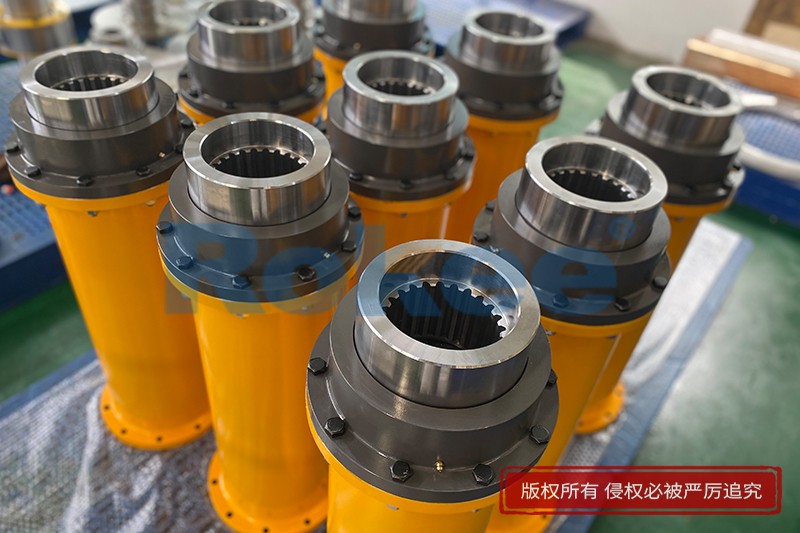
In the realm of mechanical power transmission, couplings serve as critical components that bridge rotating shafts, enabling the seamless transfer of torque while accommodating misalignments and mitigating operational stresses. Among the diverse array of coupling types, the toothed intermediate shaft coupling stands out for its exceptional torque-bearing capacity, precision, and adaptability across various industrial settings.
To understand the toothed intermediate shaft coupling, it is first essential to define its core composition and structural design. Unlike simple rigid couplings that offer minimal flexibility, the toothed intermediate shaft coupling is a flexible yet robust assembly consisting of three primary components: two toothed hubs, an intermediate sleeve (or spacer) with internal teeth, and often a set of lubrication and sealing elements. The hubs are typically attached to the driving and driven shafts via keyways, shrink fits, or clamping mechanisms, ensuring a secure connection that minimizes slippage during torque transmission. The intermediate sleeve, which acts as the central connecting element, features internal gear teeth that mesh perfectly with the external teeth of the two hubs. This toothed meshing design is the defining feature of the coupling, as it enables both torque transfer and the accommodation of various types of shaft misalignment.
The geometric precision of the toothed components is paramount to the coupling’s performance. The teeth are usually cut using hobbing or shaping processes, which ensure consistent tooth profile, spacing, and surface finish. Common tooth profiles include involute and cycloidal designs, each optimized for specific load conditions and operational requirements. Involute teeth are widely preferred due to their ability to distribute load evenly across the tooth surface, reducing wear and enhancing durability. The number of teeth, module (tooth size), and pressure angle are key design parameters that determine the coupling’s torque capacity and compatibility with different shaft sizes. Additionally, the intermediate sleeve may be designed as a single piece or split into two halves, with the split design facilitating easier installation and removal without the need to disassemble the entire shaft system—a feature that significantly improves maintenance efficiency.
The working principle of the toothed intermediate shaft coupling revolves around the meshing of the toothed hubs with the intermediate sleeve, which enables two critical functions: torque transmission and misalignment compensation. When the driving shaft rotates, it imparts torque to the attached toothed hub. This torque is then transferred through the meshing teeth to the intermediate sleeve, which in turn transmits the torque to the second toothed hub and ultimately to the driven shaft. The toothed meshing ensures a positive drive, meaning there is no slippage between the components, resulting in precise speed synchronization between the driving and driven shafts—an essential feature in applications requiring high positional accuracy, such as machine tools and precision conveyors.
In addition to torque transmission, the coupling’s design allows it to accommodate three main types of shaft misalignment: angular misalignment, parallel misalignment, and axial displacement. Angular misalignment occurs when the axes of the driving and driven shafts are not collinear but intersect at a small angle. This is compensated for by the slight tilting of the toothed hubs within the intermediate sleeve, as the meshing teeth can slide relative to each other within a limited range. Parallel misalignment, where the shafts are parallel but offset from each other, is accommodated by the radial clearance between the teeth and the ability of the intermediate sleeve to shift slightly to bridge the offset. Axial displacement, which is the linear movement of one shaft relative to the other, is handled by the axial sliding of the toothed hubs within the intermediate sleeve. The combination of these misalignment-compensating capabilities makes the toothed intermediate shaft coupling ideal for use in systems where perfect shaft alignment is difficult to achieve or maintain, such as in large industrial machinery with multiple components.
One of the most notable advantages of the toothed intermediate shaft coupling is its high torque-bearing capacity. The meshing teeth provide a large contact area, allowing the coupling to transmit significantly higher torques compared to other flexible coupling types, such as jaw couplings or elastomeric couplings. This makes it suitable for heavy-duty applications, including industrial pumps, compressors, fans, and marine propulsion systems, where large amounts of power need to be transferred efficiently. Additionally, the positive drive nature of the toothed design ensures that there is no loss of power due to slippage, resulting in high transmission efficiency—often exceeding 99% in well-maintained systems.
Another key advantage is the coupling’s durability and long service life. When properly lubricated and maintained, the toothed components experience minimal wear, thanks to the even load distribution across the teeth and the use of high-strength materials. Common materials used for the hubs and intermediate sleeve include alloy steels, carbon steels, and in some cases, stainless steel for corrosion-resistant applications. These materials are heat-treated to enhance hardness and tensile strength, further improving the coupling’s resistance to fatigue and wear. Additionally, the inclusion of sealing elements, such as oil seals or O-rings, prevents the ingress of dust, dirt, and moisture, which can accelerate wear and damage the toothed components.
Versatility is another strength of the toothed intermediate shaft coupling. It can be adapted to a wide range of shaft sizes and speed requirements, making it suitable for both low-speed, high-torque applications and high-speed, medium-torque applications. The split intermediate sleeve design, as mentioned earlier, adds to this versatility by simplifying installation and maintenance, particularly in tight spaces where accessing the coupling is challenging. Furthermore, the coupling can be customized with different tooth profiles, materials, and lubrication systems to meet the specific needs of various industrial environments, from high-temperature foundries to low-temperature refrigeration units.
The industrial applications of toothed intermediate shaft couplings are diverse, spanning multiple sectors where reliable power transmission is critical. In the manufacturing industry, they are widely used in machine tools, such as lathes, milling machines, and grinders, where precise torque transmission and speed synchronization are essential for achieving high-quality machining results. The coupling’s ability to accommodate misalignments is particularly beneficial in these applications, as the repeated movement of machine tool components can lead to slight shifts in shaft alignment over time.
In the energy sector, toothed intermediate shaft couplings play a vital role in power generation systems, including thermal power plants, hydroelectric plants, and wind turbines. In thermal power plants, they are used to connect the turbine to the generator, transmitting the high torque produced by the turbine to the generator to produce electricity. In wind turbines, they connect the rotor to the gearbox and the gearbox to the generator, accommodating the misalignments that occur due to wind-induced vibrations and the dynamic movement of the turbine structure. The high torque capacity and durability of these couplings make them well-suited for the harsh operating conditions of energy generation facilities.
The marine industry also relies heavily on toothed intermediate shaft couplings for propulsion systems. Ships and other marine vessels require couplings that can transmit large torques from the engine to the propeller while accommodating the misalignments caused by the vessel’s movement in the water. The corrosion-resistant materials and robust sealing systems used in marine-grade toothed intermediate shaft couplings ensure reliable performance in saltwater environments, where exposure to moisture and salt can cause rapid degradation of less durable components.
Other notable applications include industrial pumps and compressors, where the coupling connects the motor to the pump or compressor shaft. These applications often involve high pressures and speeds, requiring a coupling that can handle the resulting stresses while maintaining efficient power transmission. Additionally, toothed intermediate shaft couplings are used in conveyor systems, material handling equipment, and mining machinery, where they enable the transfer of power to moving components while withstanding the heavy loads and harsh environmental conditions typical of these industries.
Proper installation is crucial to ensuring the optimal performance and longevity of toothed intermediate shaft couplings. The first step in the installation process is to ensure that the driving and driven shafts are aligned as accurately as possible. While the coupling can accommodate minor misalignments, excessive misalignment will lead to increased wear on the toothed components, reduced efficiency, and premature failure. Shaft alignment can be performed using tools such as dial indicators or laser alignment systems, which provide precise measurements of angular and parallel misalignment.
Next, the toothed hubs are mounted onto the shafts. This typically involves cleaning the shaft surfaces to remove any dirt, rust, or debris, which can prevent a secure fit. The hubs are then slid onto the shafts and secured using keys, set screws, or clamping bolts. It is important to ensure that the hubs are positioned correctly to allow sufficient axial movement for the coupling to accommodate axial displacement. Once the hubs are installed, the intermediate sleeve is fitted over the hubs, ensuring that the teeth mesh properly. For split sleeve designs, the two halves of the sleeve are bolted together, with care taken to ensure that the bolts are tightened evenly to avoid distorting the sleeve.
Lubrication is another critical aspect of installation and ongoing maintenance. The meshing teeth of the coupling require regular lubrication to reduce friction, minimize wear, and prevent corrosion. The type of lubricant used depends on the operating conditions, such as temperature, speed, and load. Common lubricants include mineral oils, synthetic oils, and greases, with additives added to enhance wear resistance and thermal stability. The lubricant should be applied in the correct quantity—too little lubrication will result in metal-to-metal contact between the teeth, while too much lubrication can lead to overheating and the formation of sludge. Sealing elements should also be checked during installation to ensure they are intact and properly seated, preventing lubricant leakage and the ingress of contaminants.
Regular maintenance is essential to prolong the service life of toothed intermediate shaft couplings and prevent unexpected failures. Maintenance activities typically include periodic inspections, lubrication checks, and wear assessment. Inspections should be carried out at regular intervals to check for signs of wear, such as tooth damage, corrosion, or excessive play between the components. Visual inspections can be supplemented with measurements using dial indicators to check for increased misalignment, which may indicate wear or damage to the coupling or other components in the shaft system.
Lubrication should be replenished or replaced according to the manufacturer’s recommendations, or more frequently if the coupling is operating in harsh conditions, such as high temperatures, dusty environments, or wet conditions. The condition of the lubricant should also be checked regularly—any discoloration, contamination, or may indicate the presence of wear particles or water ingress, requiring immediate replacement of the lubricant and inspection of the coupling components. Sealing elements should be inspected for leaks and replaced if they are damaged or worn, as faulty seals can lead to lubricant loss and contamination.
In cases where wear or damage is detected, prompt repair or replacement of the affected components is necessary. Damaged teeth, for example, can lead to uneven load distribution, increased vibration, and ultimately, coupling failure. Depending on the extent of the damage, individual components such as the hubs or intermediate sleeve can be replaced, rather than the entire coupling, which can reduce maintenance costs. However, it is important to ensure that replacement components are compatible with the existing coupling, with the same tooth profile, module, and material specifications.
Despite their numerous advantages, toothed intermediate shaft couplings are not without limitations. One of the main limitations is their relatively high cost compared to simpler coupling types, such as jaw couplings. This is due to the precision manufacturing processes required to produce the toothed components and the use of high-strength materials. Additionally, they require regular lubrication and maintenance, which adds to the ongoing operational costs. Another limitation is their sensitivity to misalignment beyond the recommended limits—excessive misalignment can lead to rapid wear, increased vibration, and reduced service life. Finally, toothed intermediate shaft couplings are not suitable for applications where shock absorption is a primary requirement, as the rigid meshing of the teeth provides minimal damping of shock loads. In such cases, elastomeric couplings or other flexible coupling types may be more appropriate.
Looking to the future, advancements in materials and manufacturing technologies are likely to further improve the performance and versatility of toothed intermediate shaft couplings. The development of new high-strength, lightweight materials, such as composite materials or advanced alloys, may reduce the weight of the coupling while maintaining or increasing its torque capacity. Improvements in manufacturing processes, such as additive manufacturing (3D printing), may enable the production of complex tooth profiles and customized designs at a lower cost, making the coupling more accessible for a wider range of applications. Additionally, the integration of condition monitoring technologies, such as sensors embedded in the coupling components, may enable real-time monitoring of wear, temperature, and misalignment, allowing for predictive maintenance and reducing the risk of unexpected failures.
In conclusion, the toothed intermediate shaft coupling is a vital component in modern mechanical power transmission systems, offering high torque capacity, precise speed synchronization, and the ability to accommodate shaft misalignments. Its robust design, durability, and versatility make it suitable for a wide range of industrial applications, from manufacturing and energy generation to marine propulsion and mining. Proper installation, lubrication, and maintenance are essential to ensuring optimal performance and prolonging service life, while ongoing technological advancements are likely to enhance its capabilities and expand its range of applications. As industries continue to demand more efficient and reliable power transmission solutions, the toothed intermediate shaft coupling will remain a key component in meeting these needs.
« Toothed Intermediate Shaft Coupling » Post Date: 2023/10/8
URL: https://www.rokeecoupling.com/en/customer-cases/toothed-intermediate-shaft-coupling.html
- Flexible Plum Couplings Key Size
- Flexible Pump Couplings Manufacturer
- Keyless Diaphragm Coupling
- Structural Diagram of Bush Pin Couplings
- Conical Sleeve Type Double Diaphragm Coupling
- Alignment Standards For Gear Pin Couplings
- Angle of Shim Pack Coupling
- Cross Axle Universal Coupling Application
- Chinese Gear Coupling
- Jaw Coupling Supply