RLAT Laminated Membrane Coupling
Rokee® provide RLAT Laminated Membrane Coupling, non-standard coupling customization, drawing design, batch processing, and export the product to your location.
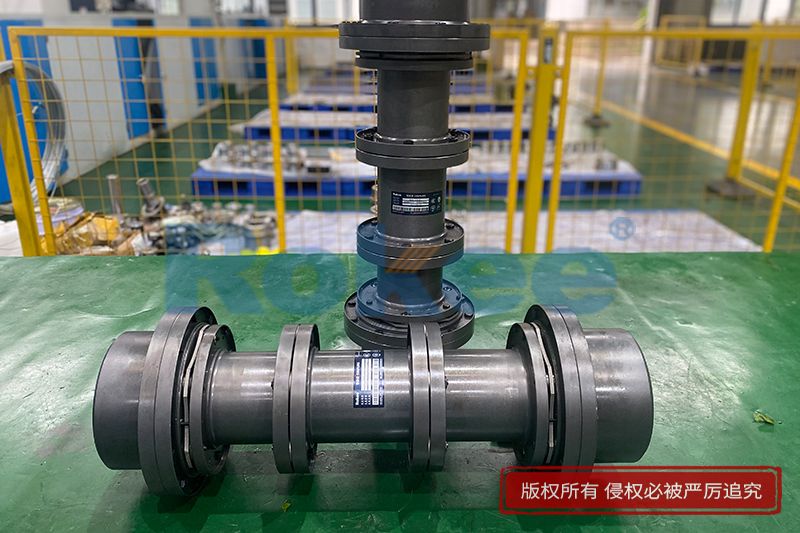
In the realm of mechanical power transmission, couplings play a pivotal role in connecting two rotating shafts to transmit torque while accommodating various types of misalignments. Among the diverse range of couplings available, laminated membrane couplings have emerged as a preferred choice in numerous industrial applications due to their unique combination of flexibility, high torque capacity, and durability. Unlike rigid couplings that demand precise alignment, or elastomeric couplings that may degrade over time under harsh conditions, laminated membrane couplings leverage the inherent flexibility of thin, layered membrane discs to achieve torque transmission and misalignment compensation.
1. Fundamental Design and Key Components of Laminated Membrane Couplings
Laminated membrane couplings are characterized by their modular design, which primarily consists of three core components: two hub assemblies, a set of laminated membrane discs (also known as diaphragm packs), and connecting bolts or fasteners. Each component is engineered to work in synergy, ensuring efficient torque transmission while mitigating the adverse effects of shaft misalignments, axial movements, and angular deflections.
The hub assemblies serve as the interface between the coupling and the driven/driving shafts. Typically, these hubs are designed to fit snugly onto the shaft ends, with common attachment methods including keyway connections, interference fits, or clamp-style designs. The choice of hub design depends on the specific application requirements, such as shaft diameter, torque level, and ease of installation. Hubs are often machined from high-strength metallic materials to withstand the torsional forces and ensure a secure connection with the shafts.
The laminated membrane discs are the defining feature of this type of coupling and are responsible for its flexibility and torque-transmitting capability. These discs are composed of multiple thin, flat sheets (laminations) of flexible material that are stacked and bonded or riveted together to form a single membrane pack. The number of laminations and their thickness can be adjusted to tailor the coupling’s stiffness, torque capacity, and misalignment compensation range. The membrane discs are typically arranged in a circular or annular shape, with bolt holes around the perimeter to facilitate connection to the hubs. The geometric design of the discs, including the shape of the cutouts (if any) and the distribution of bolt holes, is optimized to minimize stress concentrations and maximize flexibility in the desired directions.
Connecting bolts or fasteners are used to secure the membrane packs to the hub assemblies. These fasteners are subjected to both tensile and shear forces during operation, so they must be manufactured from high-strength materials and properly torqued to ensure a reliable connection. In some designs, spacers or sleeves may be incorporated between the membrane packs and the hubs to maintain the correct axial distance and prevent contact between moving parts.
An important design consideration for laminated membrane couplings is the type of membrane configuration. The two most common configurations are single membrane pack and double membrane pack designs. Single membrane pack couplings have a single set of laminated discs between the two hubs, offering simplicity and cost-effectiveness for applications with moderate misalignment requirements. Double membrane pack couplings, on the other hand, feature two membrane packs separated by a central spacer. This configuration provides enhanced misalignment compensation, particularly for angular and parallel misalignments, and helps to isolate the shafts from axial forces, making it suitable for more demanding applications.
2. Working Mechanism of Laminated Membrane Couplings
The working principle of laminated membrane couplings revolves around the elastic deformation of the laminated membrane discs. When torque is applied to the driving shaft, it is transmitted through the driving hub to the membrane pack. The membrane discs, being flexible yet strong, transfer the torque to the driven hub and ultimately to the driven shaft. During this process, the membrane discs undergo elastic deformation to accommodate any misalignments between the two shafts, including angular misalignment (where the shafts are not colinear), parallel misalignment (where the shafts are offset parallel to each other), and axial misalignment (where the shafts move towards or away from each other).
For angular misalignment, the laminated discs bend slightly along the axis of rotation, allowing the two hubs to be at an angle relative to each other without causing excessive stress. The flexibility of the individual laminations ensures that the deformation is distributed evenly across the membrane pack, minimizing stress concentrations. In the case of parallel misalignment, the membrane discs undergo a combination of bending and shear deformation to bridge the offset between the shafts. Axial misalignment is accommodated by the stretching or compressing of the membrane discs along the axial direction, which is possible due to the inherent flexibility of the thin laminations.
A key advantage of the laminated membrane design is that it transmits torque without any slip, unlike some friction-based couplings. This ensures precise torque transmission and speed synchronization between the driving and driven shafts, which is critical in applications such as precision machinery and automated production lines. Additionally, since the membrane discs are rigid in the torsional direction (when compared to their flexibility in other directions), the coupling maintains a high degree of torsional stiffness, minimizing torsional vibrations and ensuring stable operation.
3. Material Selection for Laminated Membrane Couplings
The performance and durability of laminated membrane couplings are heavily dependent on the materials used for their components, particularly the laminated membrane discs. The selection of materials is guided by factors such as torque capacity, operating temperature, environmental conditions (e.g., corrosion, humidity), misalignment requirements, and fatigue resistance.
For the laminated membrane discs, the most commonly used materials are high-strength alloys, such as stainless steel (e.g., 304, 316), inconel, and titanium. Stainless steel is a popular choice due to its excellent corrosion resistance, high fatigue strength, and good formability. It is suitable for a wide range of operating temperatures and environmental conditions, making it ideal for general industrial applications. Inconel, a nickel-chromium alloy, offers superior high-temperature resistance and corrosion resistance, making it suitable for applications in extreme temperature environments, such as gas turbines and aerospace systems. Titanium is used in high-performance applications where weight reduction is critical, such as in the aerospace and automotive racing industries, due to its high strength-to-weight ratio and excellent corrosion resistance.
The hub assemblies are typically manufactured from high-strength carbon steel, alloy steel, or stainless steel. Carbon steel is cost-effective and offers good strength for moderate torque applications, while alloy steel (e.g., 4140, 4340) provides higher tensile strength and fatigue resistance for heavy-duty applications. Stainless steel hubs are used in corrosive environments to prevent rust and degradation.
The connecting bolts and fasteners are usually made from high-strength alloy steel or stainless steel, with heat treatment to enhance their tensile and shear strength. In some cases, coated fasteners (e.g., zinc-plated, cadmium-plated) may be used to improve corrosion resistance.
In addition to metallic materials, some specialized laminated membrane couplings may use non-metallic materials for the membrane discs, such as fiber-reinforced polymers (FRPs). FRPs offer advantages such as light weight, high corrosion resistance, and good electrical insulation, making them suitable for applications in the chemical industry or electrical equipment. However, their use is limited by lower torque capacity and temperature resistance compared to metallic materials.
4. Advantages of Laminated Membrane Couplings
Laminated membrane couplings offer a multitude of advantages over other types of couplings, making them a versatile choice for a wide range of industrial applications. These advantages include:
1. Excellent Misalignment Compensation: One of the primary benefits of laminated membrane couplings is their ability to accommodate angular, parallel, and axial misalignments without causing excessive stress or wear. This reduces the need for precise shaft alignment during installation and minimizes the risk of damage to connected equipment, such as bearings and seals.
2. High Torque Capacity: Despite their flexibility, laminated membrane couplings are capable of transmitting high levels of torque due to the high-strength materials used in the membrane discs and hubs. This makes them suitable for both light-duty and heavy-duty applications, from small precision machinery to large industrial turbines.
3. No Lubrication Required: Unlike gear couplings or universal joints, which require regular lubrication to prevent wear and corrosion, laminated membrane couplings are dry-running. This eliminates the need for lubrication maintenance, reduces operational costs, and avoids the risk of lubricant contamination in sensitive applications, such as food processing or pharmaceutical manufacturing.
4. Compact and Lightweight Design: The modular design of laminated membrane couplings allows for a compact and lightweight configuration, making them suitable for applications where space is limited. Additionally, the lightweight design reduces inertial forces, which can improve the efficiency of the overall system.
5. High Torsional Stiffness: The membrane discs are rigid in the torsional direction, ensuring precise torque transmission and speed synchronization. This minimizes torsional vibrations and ensures stable operation, which is critical in applications such as CNC machines, robotics, and automated production lines.
6. Corrosion Resistance: When constructed from stainless steel or other corrosion-resistant materials, laminated membrane couplings can withstand harsh environmental conditions, such as high humidity, saltwater, or chemical exposure. This makes them suitable for outdoor applications, marine environments, and the chemical processing industry.
7. Long Service Life: The use of high-strength materials and the absence of sliding or rotating parts (which are prone to wear) result in a long service life for laminated membrane couplings. With proper maintenance, they can operate reliably for extended periods, reducing downtime and replacement costs.
5. Typical Applications of Laminated Membrane Couplings
Due to their unique combination of advantages, laminated membrane couplings find applications in a wide range of industries and mechanical systems. Some of the most typical applications include:
1. Industrial Machinery: Laminated membrane couplings are widely used in industrial machinery, such as pumps, compressors, fans, and conveyors. In these applications, they accommodate the misalignments that may occur due to installation errors or thermal expansion of the shafts, ensuring reliable torque transmission and minimizing wear on bearings and seals.
2. Precision Machinery: In precision machinery, such as CNC machines, milling machines, lathes, and robotics, the precise torque transmission and high torsional stiffness of laminated membrane couplings are critical. They ensure that the rotational motion is transmitted accurately, resulting in high precision in machining and assembly operations.
3. Power Generation: In power generation systems, such as gas turbines, steam turbines, and generators, laminated membrane couplings are used to connect the turbine to the generator. These applications require high torque capacity, high-temperature resistance, and the ability to accommodate misalignments caused by thermal expansion and contraction. The corrosion resistance of stainless steel or inconel membrane discs makes them suitable for the harsh environments in power plants.
4. Aerospace and Defense: The aerospace and defense industries demand lightweight, high-strength, and reliable couplings for applications such as aircraft engines, helicopter transmissions, and missile systems. Laminated membrane couplings made from titanium or inconel are ideal for these applications due to their high strength-to-weight ratio, high-temperature resistance, and corrosion resistance.
5. Marine Industry: In marine applications, such as ship propulsion systems, pumps, and winches, laminated membrane couplings are used to withstand the corrosive effects of saltwater and accommodate misalignments caused by the movement of the ship. Stainless steel components ensure long-term reliability in this harsh environment.
6. Chemical Processing: The chemical processing industry involves harsh environments with exposure to chemicals, high temperatures, and high humidity. Laminated membrane couplings constructed from corrosion-resistant materials are used in pumps, mixers, and agitators, ensuring reliable operation and minimizing the risk of contamination from lubricants (since they are dry-running).
7. Automotive Industry: In the automotive industry, laminated membrane couplings are used in high-performance vehicles, such as racing cars and electric vehicles, where lightweight design and precise torque transmission are critical. They are also used in automotive testing equipment and production line machinery.
6. Maintenance Practices for Laminated Membrane Couplings
While laminated membrane couplings require less maintenance than lubricated couplings, proper maintenance is still essential to ensure their long-term reliability and performance. The following maintenance practices are recommended:
1. Regular Inspection: Conduct regular visual inspections of the coupling components, including the membrane packs, hubs, and fasteners. Look for signs of wear, fatigue, or damage, such as cracks in the membrane discs, loose fasteners, or corrosion. Inspections should be performed at regular intervals, depending on the operating conditions and the manufacturer’s recommendations.
2. Torque Check of Fasteners: Over time, the connecting bolts may loosen due to vibration and thermal cycling. It is important to check the torque of the fasteners regularly and re-torque them to the manufacturer’s specified values if necessary. Loose fasteners can cause excessive vibration, stress concentrations, and premature failure of the coupling.
3. Shaft Alignment Check: While laminated membrane couplings can accommodate misalignments, excessive misalignment can lead to increased stress on the membrane discs and reduced service life. Regularly check the shaft alignment using laser alignment tools or dial indicators and adjust if necessary. This is particularly important after maintenance or when the equipment is subjected to thermal expansion or contraction.
4. Cleaning: Keep the coupling clean to prevent the buildup of dirt, dust, or corrosive substances. Use a mild detergent and water to clean the components, and dry them thoroughly to prevent corrosion. Avoid using harsh chemicals or abrasive materials that may damage the surface of the coupling.
5. Replacement of Worn Components: If any components are found to be worn, cracked, or damaged during inspection, they should be replaced immediately. This includes the membrane packs, hubs, and fasteners. It is recommended to use genuine replacement parts from the manufacturer to ensure compatibility and performance.
6. Storage and Handling: If the coupling is removed from service for an extended period, it should be stored in a clean, dry environment to prevent corrosion. Avoid stacking heavy objects on the coupling, and handle it with care to prevent damage to the membrane discs and other components.
7. Conclusion
Laminated membrane couplings have established themselves as a reliable and versatile solution for power transmission in a wide range of industrial applications. Their unique design, which leverages the flexibility of laminated membrane discs, allows for efficient torque transmission while accommodating various types of misalignments. The use of high-strength materials ensures high torque capacity, corrosion resistance, and long service life, making them suitable for both general industrial applications and harsh environments such as power generation, aerospace, and marine industries.
The advantages of laminated membrane couplings, including no lubrication requirements, compact design, high torsional stiffness, and precise torque transmission, make them a superior alternative to many other types of couplings. Proper maintenance, including regular inspection, torque checks, and shaft alignment, is essential to maximize their service life and ensure reliable operation.
As industrial technology continues to advance, the demand for high-performance power transmission components is expected to grow. Laminated membrane couplings, with their ability to meet the evolving needs of modern machinery and equipment, are likely to remain a key component in mechanical systems for years to come. Further advancements in material technology and design optimization may lead to even higher torque capacities, improved misalignment compensation, and lighter weight configurations, expanding their applications to new industries and environments.
« RLAT Laminated Membrane Coupling » Post Date: 2023/12/6
URL: https://www.rokeecoupling.com/en/customer-cases/rlat-laminated-membrane-coupling.html
- How To Install The Curved-tooth Gear Coupling
- Barrel Coupling Price
- How To Adjust The Laminated Coupling
- Single Diaphragm Coupling Processing
- Diaphragm Coupling With Reverse Installation Of Shaft Sleeve
- Nuclear power coupling
- Misalignment Tolerance of Bush Pin Flexible Coupling
- Straight Gear Long Tube Coupling
- Jaw Flexible Couplings Factory
- Drum Coupling Price