Small Cardan Shaft
Rokee® provide Small Cardan Shaft, non-standard coupling customization, drawing design, batch processing, and export the product to your location.
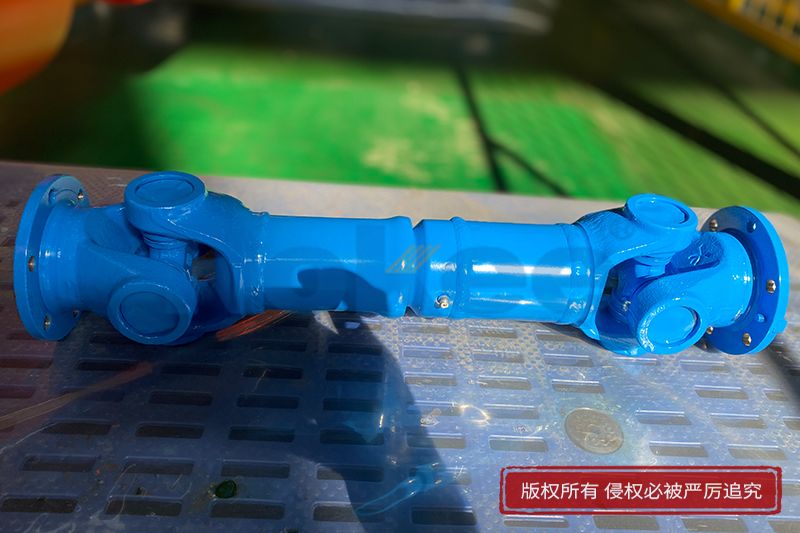
In the intricate world of mechanical power transmission, small components often play pivotal roles that keep industrial machinery, automotive systems, and various mechanical devices running smoothly. Among these unsung heroes is the small Cardan shaft, a compact yet robust component designed to transmit rotational motion and torque between two shafts that are not aligned perfectly. Unlike their larger counterparts used in heavy-duty industrial applications or automotive drivetrains, small Cardan shafts are tailored for scenarios where space is constrained, and precision is paramount.
To understand the significance of small Cardan shafts, it is first essential to grasp the fundamental concept of a Cardan shaft itself. Also known as a universal joint shaft or U-joint shaft, a Cardan shaft consists of two universal joints connected by a central shaft (the spindle). The universal joints, each comprising two yokes and a cross-shaped component (the spider), allow for angular misalignment between the input and output shafts. This unique design enables the transmission of torque even when the two shafts are not in a straight line, a common challenge in many mechanical assemblies. When scaled down to the "small" category, these shafts retain the core functionality but are optimized for reduced size and weight, making them suitable for applications where large components would be impractical or inefficient.
The structural design of small Cardan shafts is a testament to the balance between compactness and performance. Every component is meticulously engineered to ensure that the shaft can withstand the required torque while maintaining flexibility for angular misalignment. The yokes, which connect the shaft to the input and output devices, are typically forged or machined to achieve high strength-to-weight ratios. For small Cardan shafts, the yokes are often made from lightweight yet durable materials, ensuring that they do not add unnecessary bulk to the assembly. The cross (spider) is another critical component, with four trunnions that fit into bearings within the yokes. These bearings are usually small ball bearings or needle bearings, selected for their low friction and ability to handle the rotational forces generated during operation. The central spindle, which links the two universal joints, is designed to be rigid enough to transmit torque without excessive bending or torsion, yet slender enough to fit into tight spaces. In some small Cardan shaft designs, the spindle may be hollow to further reduce weight, provided that it does not compromise structural integrity.
The working principle of a small Cardan shaft revolves around the ability of the universal joints to accommodate angular misalignment. When the input shaft rotates, it drives the first yoke, which in turn rotates the cross. The cross then transfers this rotational motion to the second yoke, which drives the output shaft. The bearings in the yokes allow the cross to pivot as the angle between the input and output shafts changes, ensuring that torque transmission remains continuous and efficient. It is important to note that a single universal joint can cause fluctuations in the output speed, especially at large angles of misalignment. To mitigate this issue, small Cardan shafts typically use two universal joints arranged in a way that the angles of misalignment at each joint are equal. This configuration, known as a double Cardan joint, cancels out the speed fluctuations, resulting in a smooth and constant output rotation. This is particularly crucial in precision applications where consistent rotational speed is essential, such as in small electric motors or precision machining tools.
Material selection is a key factor in determining the performance and longevity of small Cardan shafts. Given their compact size, the materials must possess high strength, good wear resistance, and in some cases, corrosion resistance. The most common materials used for the yokes and spindle include alloy steels, carbon steels, and aluminum alloys. Alloy steels, such as 4140 or 4340, are preferred for applications that require high torque capacity and durability, as they offer excellent tensile strength and toughness. Carbon steels, on the other hand, are more cost-effective and are suitable for less demanding applications where torque requirements are lower. Aluminum alloys are used in scenarios where weight reduction is a top priority, such as in aerospace or portable electronic devices, as they are lightweight yet offer sufficient strength for small-scale operations. The cross and bearings are often made from hardened steel to resist wear, with the bearings sometimes coated with lubricants or materials like PTFE to reduce friction and extend service life. In applications exposed to harsh environments, such as outdoor machinery or marine equipment, small Cardan shafts may be made from stainless steel or treated with anti-corrosion coatings to prevent rust and degradation.
The applications of small Cardan shafts are diverse and span across multiple industries, thanks to their compact size and versatile torque transmission capabilities. One of the most common applications is in automotive systems, particularly in small vehicles, motorcycles, and ATVs. In these vehicles, small Cardan shafts are used to transmit power from the engine to the wheels, especially in configurations where the engine and transmission are not aligned perfectly. They are also used in steering systems, where they help transmit rotational motion from the steering wheel to the steering rack, allowing for smooth and responsive steering. Another major application area is industrial machinery, including small conveyors, packaging machines, and precision machining tools. In these machines, small Cardan shafts are used to connect motors to various components, such as rollers, belts, and cutting tools, ensuring that power is transmitted efficiently even in tight spaces. For example, in a small packaging machine, a Cardan shaft may be used to connect a servo motor to a sealing roller, allowing for precise control of the sealing process.
Small Cardan shafts also play a crucial role in aerospace and defense applications, where weight and space are critical constraints. In small aircraft, such as drones or light helicopters, they are used in propulsion systems, flight control systems, and avionics. For instance, in a drone's propulsion system, a small Cardan shaft may transmit power from the electric motor to the propeller, accommodating the slight misalignment between the motor and the propeller mount. In the field of robotics, small Cardan shafts are essential components in robotic arms and joints, allowing for flexible movement and torque transmission between the motor and the robotic limb. They enable robotic arms to move in multiple directions while maintaining precise control, which is vital in applications such as manufacturing assembly lines, medical robotics, and search-and-rescue operations. Additionally, small Cardan shafts are used in various household appliances, such as washing machines, dryers, and small power tools. In a washing machine, for example, a small Cardan shaft may be used to connect the motor to the drum, allowing for efficient power transmission even when the drum is unbalanced.
Proper maintenance is essential to ensure the reliable performance and long service life of small Cardan shafts. Given their compact size, small Cardan shafts are often subjected to high stress relative to their dimensions, making them susceptible to wear and tear if not properly maintained. One of the most important maintenance tasks is lubrication. The bearings in the universal joints require regular lubrication to reduce friction and prevent premature wear. The type of lubricant used depends on the application and operating conditions; for example, high-temperature applications may require synthetic lubricants, while applications exposed to moisture may require water-resistant lubricants. It is also important to inspect the Cardan shaft regularly for signs of damage, such as worn bearings, bent yokes, or cracks in the spindle. Worn bearings can cause noise during operation, while a bent spindle can lead to vibration and inefficient torque transmission. In addition, checking the alignment of the input and output shafts is crucial, as excessive misalignment can put additional stress on the Cardan shaft and reduce its service life. If misalignment is detected, it should be corrected promptly to prevent further damage.
Another aspect of maintenance is proper installation. Small Cardan shafts must be installed correctly to ensure that they operate efficiently and do not suffer from premature failure. This includes ensuring that the yokes are properly aligned, the fasteners are tightened to the correct torque specifications, and the shaft is not subjected to excessive axial or radial loads. In some cases, small Cardan shafts may require balancing to reduce vibration during operation. Unbalanced shafts can cause noise, increase wear on other components, and reduce the overall efficiency of the mechanical system. Balancing is typically done during the manufacturing process, but it may be necessary to rebalance the shaft if it becomes damaged or worn. Finally, in applications where the Cardan shaft is exposed to harsh environments, such as dust, dirt, or chemicals, it is important to protect it with covers or shields to prevent contamination. Contamination can damage the bearings and other components, leading to premature failure.
Looking to the future, the development of small Cardan shafts is likely to be driven by advancements in materials science, manufacturing technologies, and the growing demand for more efficient and compact mechanical systems. One of the key trends is the use of advanced composite materials, such as carbon fiber-reinforced polymers (CFRPs), in the manufacturing of small Cardan shafts. These materials offer excellent strength-to-weight ratios, making them ideal for applications where weight reduction is critical, such as aerospace and robotics. CFRPs are also resistant to corrosion and fatigue, which can extend the service life of the Cardan shaft. Another trend is the integration of smart technologies, such as sensors, into small Cardan shafts. Sensors can be used to monitor the temperature, vibration, and wear of the shaft, providing real-time data to operators. This allows for predictive maintenance, where potential issues are detected before they lead to failure, reducing downtime and maintenance costs.
Advancements in manufacturing technologies, such as additive manufacturing (3D printing), are also expected to impact the production of small Cardan shafts. 3D printing allows for the creation of complex geometries that are difficult or impossible to achieve with traditional machining methods. This can lead to more efficient designs, such as hollow spindles with optimized internal structures, which further reduce weight while maintaining strength. 3D printing also enables the production of small batch sizes at a lower cost, making it suitable for custom or specialized applications. Additionally, the growing trend towards electrification, particularly in the automotive and aerospace industries, is likely to increase the demand for small Cardan shafts. Electric vehicles and aircraft require compact and efficient power transmission systems, and small Cardan shafts are well-suited to meet these requirements.
Despite their small size, small Cardan shafts face several challenges that need to be addressed in future developments. One of the main challenges is improving the torque capacity of small shafts without increasing their size. This requires advancements in materials and design optimization, such as the use of high-strength alloys or composite materials and the implementation of finite element analysis (FEA) to optimize the structural design. Another challenge is reducing the friction and wear of the universal joints, particularly in high-speed applications. This can be achieved through the development of advanced bearings and lubricants, as well as the use of self-lubricating materials. Additionally, ensuring the reliability of small Cardan shafts in harsh environments, such as extreme temperatures, high humidity, or corrosive conditions, remains a key area of focus for researchers and engineers.
In conclusion, small Cardan shafts are essential components in modern mechanical systems, offering a compact and efficient solution for torque transmission between misaligned shafts. Their unique structural design, diverse material options, and wide range of applications make them indispensable in industries such as automotive, aerospace, robotics, and industrial manufacturing. Proper maintenance is crucial to ensure their reliable performance, while future developments in materials, manufacturing technologies, and smart monitoring are expected to further enhance their capabilities. As mechanical systems continue to become more compact and efficient, the role of small Cardan shafts is likely to grow in importance, solidifying their position as a key component in the world of power transmission. Whether in a small drone, a precision packaging machine, or a compact electric vehicle, small Cardan shafts quietly play a vital role in keeping our modern world moving.
« Small Cardan Shaft » Post Date: 2023/12/6
URL: https://www.rokeecoupling.com/en/customer-cases/small-cardan-shaft.html
- Cross Axle Universal Coupling Application
- Flexible Diaphragm Coupling Supply
- Jaw Coupling Supply
- Pin Bush Type Flexible Coupling 3D Model
- Membrane Disc Couplings Catalogue
- Schematic Diagram of Bushed Pin Flexible Couplings
- Working Principle of Curved Jaw Coupling
- Flexible Pump Coupling Company
- Circular Diaphragm Coupling
- Wholesale Of High Torque Diaphragm Couplings