RLAD Dual-diaphragm Coupling
Rokee® provide RLAD Dual-diaphragm Coupling, non-standard coupling customization, drawing design, batch processing, and export the product to your location.
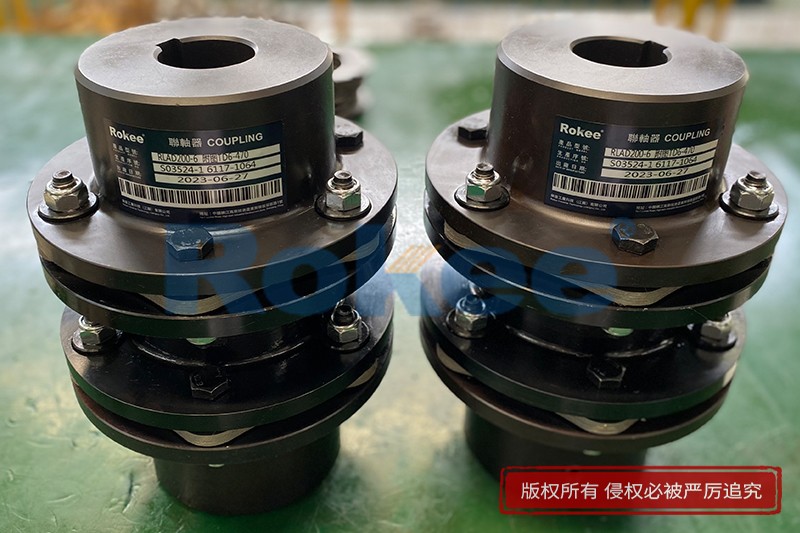
In the field of mechanical transmission, couplings serve as critical components that connect two shafts (driving shaft and driven shaft) from different mechanisms, enabling torque transmission while compensating for misalignments caused by manufacturing errors, installation deviations, or operational vibrations. Among the diverse types of couplings available, the dual-diaphragm coupling has emerged as a preferred choice in numerous high-precision, high-reliability industrial applications. Unlike traditional rigid couplings that lack flexibility or elastomeric couplings that may degrade over time, the dual-diaphragm coupling leverages the elastic deformation of thin diaphragms to achieve torque transfer and misalignment compensation, offering a unique combination of rigidity, flexibility, and durability.
1. Structural Characteristics of Dual-diaphragm Coupling
The dual-diaphragm coupling is a type of flexible coupling characterized by its compact and symmetric design, primarily consisting of four core components: two shaft hubs, two diaphragms, and a middle sleeve (or spacer). Each component is engineered to work in harmony, ensuring efficient torque transmission and reliable misalignment compensation.
The shaft hubs are the connecting elements that attach the coupling to the driving and driven shafts. Typically machined from high-strength alloy steels or stainless steels, the hubs are designed with precise fitting surfaces to ensure a tight connection with the shafts. Common fitting methods include interference fit, keyway connection, or clamping connection, depending on the torque requirements and installation conditions. The design of the hubs must balance strength and weight, as excessive weight can increase inertial forces during high-speed operation, affecting the overall stability of the transmission system.
The diaphragms are the most critical components of the dual-diaphragm coupling, responsible for transferring torque and accommodating misalignments. As the name suggests, the coupling is equipped with two diaphragms, which are usually mounted on either end of the middle sleeve. The diaphragms are thin, disk-shaped components with a series of evenly distributed holes around the circumference, which are used to fasten the diaphragms to the hubs and the middle sleeve using bolts or rivets. The material selection for diaphragms is crucial—common materials include spring steel, titanium alloy, and nickel-based superalloys. These materials offer excellent elastic properties, high fatigue strength, and resistance to corrosion and high temperatures, ensuring that the diaphragms can withstand repeated elastic deformation without permanent damage during long-term operation.
The middle sleeve, also known as the spacer, serves as the bridge between the two diaphragms, transmitting torque from one diaphragm to the other. It is typically cylindrical in shape and made of the same high-strength materials as the hubs to ensure structural integrity. The length of the middle sleeve can be customized according to the distance between the driving and driven shafts (center distance) in different applications, providing flexibility in system design. In some specialized designs, the middle sleeve may be hollow to reduce weight and inertial forces, which is particularly beneficial for high-speed applications.
One of the notable structural features of the dual-diaphragm coupling is its symmetry. The symmetric design ensures that the torque is evenly distributed across both diaphragms, reducing stress concentration and extending the service life of the coupling. Additionally, the absence of sliding or rotating parts (such as bearings or gears) in the coupling minimizes friction and wear, contributing to its high reliability and low maintenance requirements.
2. Working Principles of Dual-diaphragm Coupling
The dual-diaphragm coupling operates based on the principle of elastic deformation of the diaphragms, which enables two key functions: torque transmission and misalignment compensation. Understanding these working mechanisms is essential to appreciating the coupling's performance advantages.
2.1 Torque Transmission Mechanism
When the driving shaft rotates, it transmits torque to the corresponding shaft hub. The hub is firmly connected to one of the diaphragms, so the torque is transferred from the hub to the diaphragm through the bolts or rivets that fasten them together. The diaphragm, being a rigid yet flexible component, transmits the torque to the middle sleeve without significant deformation in the circumferential direction. The middle sleeve then transfers the torque to the second diaphragm, which in turn transmits it to the driven shaft hub and ultimately to the driven shaft. This sequential torque transmission process is efficient, with minimal torque loss, as the rigid components (hubs and middle sleeve) and elastic diaphragms work together to ensure that most of the input torque is transferred to the output.
The design of the diaphragms plays a key role in torque transmission. The evenly distributed holes around the diaphragm circumference ensure that the torque is evenly distributed across the entire diaphragm surface, reducing stress concentration and preventing premature failure. Additionally, the thickness and material of the diaphragms are carefully selected based on the maximum torque requirements of the application—thicker diaphragms or higher-strength materials are used for high-torque applications, while thinner diaphragms are suitable for low-torque, high-precision applications.
2.2 Misalignment Compensation Mechanism
In real-world mechanical systems, perfect alignment between the driving and driven shafts is difficult to achieve. Misalignments can be categorized into three types: axial misalignment (axial displacement between the two shafts), radial misalignment (radial offset between the two shafts), and angular misalignment (the two shafts form an angle with each other). The dual-diaphragm coupling compensates for these misalignments through the elastic deformation of the diaphragms.
For axial misalignment, the diaphragms can stretch or compress slightly along the axial direction, accommodating the relative displacement between the two shafts. This axial flexibility is particularly important in applications where thermal expansion or contraction of the shafts occurs during operation, as it prevents the buildup of axial forces that could damage the shafts or other components.
For radial and angular misalignments, the diaphragms undergo bending deformation. When the shafts are radially misaligned or angularly inclined, the diaphragms on one side of the coupling bend slightly to adapt to the misalignment, while the diaphragms on the other side adjust accordingly. The dual-diaphragm design is superior to single-diaphragm couplings in misalignment compensation, as the two diaphragms share the bending stress, reducing the stress on each individual diaphragm and improving the coupling's ability to handle larger misalignments.
It is important to note that the dual-diaphragm coupling is a flexible coupling but not a universal joint. It has a limited range of misalignment compensation, and exceeding this range can lead to excessive stress on the diaphragms, reducing their service life or causing sudden failure. Therefore, proper installation and alignment are critical to ensuring the optimal performance of the coupling.
3. Key Advantages of Dual-diaphragm Coupling
Compared to other types of couplings, the dual-diaphragm coupling offers a range of distinct advantages that make it suitable for high-precision, high-reliability applications. These advantages stem from its unique structural design and working principles.
3.1 High Torque Transmission Efficiency
The dual-diaphragm coupling has a high torque transmission efficiency, typically exceeding 99%. This is because the coupling has no sliding or rotating parts that generate friction, and the rigid components (hubs and middle sleeve) minimize torque loss. Unlike elastomeric couplings, which may experience torque loss due to the deformation of rubber or plastic elements, the dual-diaphragm coupling's metal diaphragms transmit torque directly, ensuring that most of the input torque is transferred to the driven shaft. This high efficiency is particularly beneficial in energy-intensive applications, as it helps reduce energy consumption and improve overall system performance.
3.2 Excellent Misalignment Compensation Capability
As discussed earlier, the dual-diaphragm coupling can effectively compensate for axial, radial, and angular misalignments. Its ability to handle misalignments is superior to rigid couplings, which cannot compensate for any misalignment and can cause excessive stress on shafts and bearings. Compared to single-diaphragm couplings, the dual-diaphragm design distributes the bending stress across two diaphragms, allowing for larger misalignment compensation without compromising the coupling's structural integrity. This makes the dual-diaphragm coupling ideal for applications where shaft misalignment is inevitable, such as in rotating machinery with large center distances or thermal expansion effects.
3.3 High Reliability and Long Service Life
The dual-diaphragm coupling is constructed from high-strength metal materials, which are resistant to wear, corrosion, and high temperatures. Unlike elastomeric couplings, which can degrade over time due to aging, ozone exposure, or temperature fluctuations, the metal diaphragms have a long service life and do not require frequent replacement. Additionally, the absence of lubrication requirements (since there are no sliding parts) eliminates the risk of lubricant leakage, contamination, or degradation, further enhancing the coupling's reliability. With proper installation and maintenance, the dual-diaphragm coupling can operate continuously for thousands of hours, reducing downtime and maintenance costs for industrial systems.
3.4 Compact Design and Light Weight
The dual-diaphragm coupling has a compact and lightweight design, making it suitable for applications with limited installation space. The absence of bulky components such as bearings, gears, or large elastomeric elements allows the coupling to be installed in tight spaces, while its light weight reduces inertial forces during high-speed operation. This is particularly important in applications such as aerospace, robotics, and high-speed rotating machinery, where weight and space constraints are critical factors.
3.5 Low Vibration and Noise
The elastic deformation of the diaphragms in the dual-diaphragm coupling helps absorb vibrations generated during operation, reducing the transmission of vibration from the driving shaft to the driven shaft. This vibration damping effect minimizes noise and improves the stability of the entire mechanical system. Unlike rigid couplings, which can amplify vibrations and cause noise due to misalignment, the dual-diaphragm coupling operates smoothly, making it suitable for applications that require low noise and vibration levels, such as precision machining equipment, medical devices, and laboratory instruments.
4. Typical Applications of Dual-diaphragm Coupling
Due to its unique combination of advantages, the dual-diaphragm coupling is widely used in various industrial sectors that demand high precision, high reliability, and efficient torque transmission. Below are some of its typical applications:
4.1 Aerospace and Aviation Industry
In the aerospace and aviation industry, the dual-diaphragm coupling is used in aircraft engines, auxiliary power units (APUs), and flight control systems. These applications require components that are lightweight, compact, reliable, and capable of withstanding high temperatures and vibrations. The dual-diaphragm coupling's high torque transmission efficiency, low weight, and resistance to high temperatures make it an ideal choice for connecting the engine's turbine shaft to the gearbox or other auxiliary components. Additionally, its ability to compensate for small misalignments caused by thermal expansion or structural deformation ensures the reliable operation of critical flight systems.
4.2 Precision Machining and Manufacturing
Precision machining equipment, such as CNC lathes, milling machines, grinding machines, and machining centers, requires high-precision torque transmission to ensure the accuracy of the machined parts. The dual-diaphragm coupling's low vibration, high torque transmission efficiency, and excellent misalignment compensation capability make it suitable for connecting the motor to the lead screw or spindle of these machines. By minimizing vibration and ensuring precise torque transmission, the coupling helps improve the surface finish and dimensional accuracy of the machined parts, reducing scrap rates and improving production efficiency.
4.3 Robotics and Automation Systems
Robotics and automation systems rely on precise and reliable motion control to perform complex tasks. The dual-diaphragm coupling is used in robotic joints, servo motors, and linear actuators, where it connects the motor to the gearbox or other motion components. Its compact design, light weight, and low vibration ensure that the robotic system operates smoothly and accurately, while its high reliability reduces downtime in automated production lines. Additionally, the coupling's ability to compensate for small misalignments caused by the assembly of robotic components ensures consistent performance.
4.4 Power Generation Industry
In the power generation industry, the dual-diaphragm coupling is used in gas turbines, steam turbines, and wind turbines. These applications require components that can transmit large torques efficiently and reliably under harsh operating conditions (high temperatures, high pressures, and strong vibrations). The dual-diaphragm coupling's high torque capacity, resistance to high temperatures, and low maintenance requirements make it suitable for connecting the turbine shaft to the generator shaft. Its ability to compensate for misalignments caused by thermal expansion or structural deformation ensures the stable operation of the power generation system, reducing the risk of downtime and improving energy production efficiency.
4.5 Medical and Laboratory Equipment
Medical and laboratory equipment, such as centrifuges, dialysis machines, and precision pumps, requires low noise, low vibration, and high reliability. The dual-diaphragm coupling's low vibration and noise levels, combined with its high reliability, make it suitable for these applications. For example, in centrifuges, the coupling connects the motor to the rotating bowl, ensuring smooth and stable rotation at high speeds, which is critical for the accuracy of the separation process. In dialysis machines, the coupling ensures reliable torque transmission to the pump, which is essential for the safe and effective delivery of dialysate.
4.6 Automotive Industry
In the automotive industry, the dual-diaphragm coupling is used in high-performance vehicles, electric vehicles (EVs), and hybrid electric vehicles (HEVs). These applications require components that are lightweight, compact, and capable of transmitting high torques efficiently. The coupling is used in the powertrain system, connecting the engine or electric motor to the transmission. Its light weight helps reduce the overall weight of the vehicle, improving fuel efficiency (for traditional vehicles) or range (for EVs). Additionally, its ability to compensate for misalignments caused by the vehicle's suspension movement ensures reliable operation under various driving conditions.
5. Maintenance Considerations for Dual-diaphragm Coupling
Although the dual-diaphragm coupling is a low-maintenance component, proper maintenance is essential to ensure its optimal performance and long service life. Below are some key maintenance considerations:
5.1 Regular Inspection
Regular visual inspection of the coupling is necessary to detect any signs of wear, damage, or misalignment. During inspection, check the diaphragms for cracks, deformation, or fatigue damage—these are the most common failure points of the coupling. Also, inspect the bolts or rivets that fasten the diaphragms to the hubs and middle sleeve, ensuring that they are tight and not loose. Loose fasteners can cause excessive vibration, stress concentration, and premature failure of the diaphragms. Additionally, check the shaft hubs for signs of wear or corrosion, and ensure that the connection between the hubs and the shafts is tight.
5.2 Proper Alignment
As mentioned earlier, the dual-diaphragm coupling has a limited range of misalignment compensation. Excessive misalignment can lead to excessive stress on the diaphragms, reducing their service life. Therefore, proper alignment of the driving and driven shafts during installation and regular re-alignment during maintenance are critical. Use precision alignment tools (such as laser alignment tools) to ensure that the shafts are aligned within the coupling's specified misalignment range. This will not only extend the service life of the coupling but also reduce stress on the shafts, bearings, and other components of the transmission system.
5.3 Avoid Overloading
Operating the dual-diaphragm coupling beyond its maximum torque capacity can cause permanent damage to the diaphragms or other components. Therefore, it is important to ensure that the coupling is selected based on the actual torque requirements of the application, and that the system is not overloaded during operation. Monitor the torque and load conditions of the system regularly, and take appropriate measures to prevent overloading, such as installing torque limiters or overload protection devices.
5.4 Environmental Protection
The dual-diaphragm coupling's performance can be affected by the operating environment. In harsh environments (such as high temperatures, high humidity, corrosive gases, or dusty conditions), take appropriate protective measures to prevent damage to the coupling. For example, in corrosive environments, use corrosion-resistant materials (such as stainless steel or titanium alloy) for the coupling components, or install protective covers to prevent corrosive substances from coming into contact with the diaphragms and hubs. In high-temperature environments, ensure that the coupling's materials can withstand the operating temperature, and avoid prolonged exposure to temperatures exceeding the material's limit.
5.5 Timely Replacement of Damaged Components
If any components of the coupling (such as diaphragms, bolts, or hubs) are found to be damaged during inspection, replace them in a timely manner. Do not continue to operate the coupling with damaged components, as this can lead to sudden failure, which may cause damage to other parts of the mechanical system or even safety accidents. When replacing components, use genuine or equivalent parts that meet the manufacturer's specifications to ensure the performance and reliability of the coupling.
6. Conclusion
The dual-diaphragm coupling is a high-performance flexible coupling that combines the advantages of high torque transmission efficiency, excellent misalignment compensation capability, high reliability, compact design, and low vibration. Its unique structural design, which leverages the elastic deformation of metal diaphragms, makes it suitable for a wide range of industrial applications, from aerospace and precision machining to robotics and power generation. By understanding its structural characteristics, working principles, advantages, and maintenance requirements, engineers and technicians can select and use the dual-diaphragm coupling effectively, ensuring the optimal performance and reliability of mechanical transmission systems.
As industrial technology continues to advance, the demand for high-precision, high-reliability mechanical components is increasing. The dual-diaphragm coupling is expected to play an even more important role in future mechanical systems, with ongoing improvements in material technology and design optimization further enhancing its performance. For example, the use of advanced composite materials may reduce the weight of the coupling while increasing its strength and corrosion resistance, making it suitable for more extreme operating environments. Additionally, the integration of smart sensors into the coupling may enable real-time monitoring of its operating status, allowing for predictive maintenance and further reducing downtime.
In summary, the dual-diaphragm coupling is a versatile and reliable component that has revolutionized mechanical transmission in many industries. Its ability to balance rigidity and flexibility, combined with its low maintenance requirements and long service life, makes it an indispensable part of modern mechanical systems. By adhering to proper installation, alignment, and maintenance practices, users can maximize the performance and service life of the dual-diaphragm coupling, ensuring the efficient and reliable operation of their industrial equipment.
« RLAD Dual-diaphragm Coupling » Post Date: 2023/11/22
URL: https://www.rokeecoupling.com/en/customer-cases/rlad-dual-diaphragm-coupling.html
- Ball Mill Claw Coupling
- Claw Shaped Elastic Coupling For Sale
- What Material Is Used For Drum Gear Couplings
- Tyre Elastic Coupling Design
- Drive Shaft Joints
- Cardan Shaft Supply
- Nylon Rod Flexible Pin Coupling
- Lubrication of Bushed Pin Type Flexible Coupling
- Drum Coupling Installation Accuracy
- Material of Bush Type Flexible Coupling