Industrial Gear Couplings
Rokee® provide Industrial Gear Couplings, non-standard coupling customization, drawing design, batch processing, and export the product to your location.
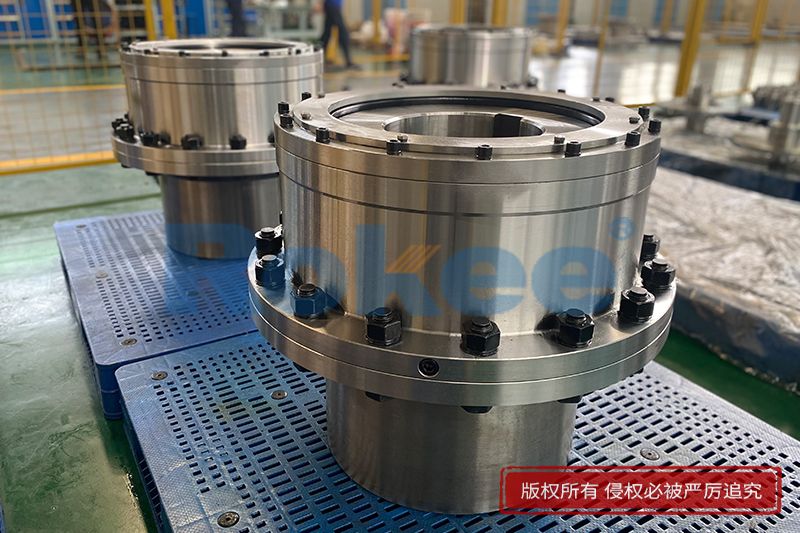
In the complex ecosystem of industrial machinery, the seamless transmission of power between rotating components is a fundamental requirement for operational efficiency and reliability. Among the various mechanical components designed to facilitate this power transfer, industrial gear couplings stand out as robust and versatile solutions, capable of accommodating misalignments, absorbing shocks, and transmitting high torque across a wide range of industrial applications. From heavy-duty manufacturing plants to renewable energy facilities, these couplings play an indispensable role in ensuring the smooth operation of critical machinery.
1. Understanding Industrial Gear Couplings: Definition and Core Function
An industrial gear coupling is a mechanical device engineered to connect two rotating shafts, typically in a horizontal orientation, for the purpose of transmitting torque while compensating for various forms of misalignment. Unlike flexible couplings that rely on elastomeric elements or sliding surfaces, gear couplings utilize meshing gear teeth to transfer power, combining high torque capacity with the ability to accommodate angular, parallel, and axial misalignments. The core function of a gear coupling extends beyond mere power transmission; it also serves to protect connected equipment from excessive loads, reduce vibration, and extend the service life of rotating machinery.
At its most basic level, a gear coupling consists of two gear hubs, each attached to a shaft, and a sleeve or housing that encloses and meshes with the gear teeth of the hubs. The gear teeth are precision-machined to ensure smooth engagement, minimizing friction and wear during operation. The enclosure also serves as a reservoir for lubricant, which is essential for reducing friction between the meshing gears, dissipating heat, and preventing corrosion. This combination of gear meshing and lubrication enables gear couplings to operate efficiently even under harsh industrial conditions, including high temperatures, heavy loads, and dusty or humid environments.
2. Design Principles of Industrial Gear Couplings
The design of industrial gear couplings is guided by several key principles, including torque capacity, misalignment compensation, durability, and ease of maintenance. Engineers must carefully consider these factors during the design process to ensure that the coupling meets the specific requirements of the application.
One of the primary design considerations is torque transmission capacity. The coupling must be able to handle the maximum torque generated by the driving shaft without suffering from fatigue, deformation, or failure. This requires the use of high-strength materials, such as alloy steels, which offer excellent tensile strength and resistance to wear. The size and number of gear teeth also play a critical role in determining torque capacity; larger teeth and a higher number of teeth distribute the torque more evenly, reducing stress on individual teeth.
Misalignment compensation is another crucial design principle. Industrial machinery often experiences shaft misalignment due to installation errors, thermal expansion, or structural deflection. Gear couplings are designed to accommodate three main types of misalignment: angular misalignment (where the shafts are inclined at an angle to each other), parallel misalignment (where the shafts are offset parallel to each other), and axial misalignment (where the shafts move along their axial direction). The gear teeth are typically cut at an angle (helical or spiral) to allow for smooth meshing even when the shafts are misaligned. The amount of misalignment a coupling can accommodate depends on its design, with some heavy-duty models capable of handling angular misalignments of up to 5 degrees or more.
Lubrication is an integral part of the design of gear couplings. Since the meshing gear teeth are in constant contact during operation, proper lubrication is essential to reduce friction and wear, prevent overheating, and protect against corrosion. Most gear couplings are equipped with a sealed enclosure that holds lubricant, such as grease or oil. The enclosure may also include fittings for lubricant replenishment and drainage, making maintenance easier. Some advanced designs feature self-lubricating systems, which reduce the need for frequent maintenance and ensure consistent lubrication even in hard-to-reach locations.
Material selection is also a key design principle. The materials used in the construction of gear couplings must be able to withstand the harsh conditions of industrial environments, including high temperatures, heavy loads, and chemical exposure. Common materials include alloy steels, carbon steels, and stainless steels. Alloy steels are preferred for high-torque applications due to their superior strength and durability, while stainless steels are used in corrosive environments, such as food processing plants or marine applications. The gear teeth are often heat-treated to enhance their hardness and wear resistance, further extending the service life of the coupling.
3. Types of Industrial Gear Couplings
Industrial gear couplings are available in several different types, each designed to meet specific application requirements. The most common types include rigid gear couplings, flexible gear couplings, floating shaft gear couplings, and disc gear couplings. Each type has its own unique design features, advantages, and limitations.
3.1 Rigid Gear Couplings
Rigid gear couplings are the simplest type of gear coupling, designed for applications where shaft alignment is precise and no misalignment is expected. These couplings consist of two gear hubs that are rigidly connected to each other, either by a flanged joint or a sleeve. Since they cannot accommodate misalignment, rigid gear couplings are typically used in applications where the shafts are mounted on the same frame and are accurately aligned during installation. Common applications include small pumps, fans, and electric motors where misalignment is minimal.
The main advantage of rigid gear couplings is their high torque capacity and simplicity. They are easy to install and maintain, and their rigid construction ensures efficient power transmission with minimal energy loss. However, their inability to accommodate misalignment makes them unsuitable for applications where thermal expansion or structural deflection may cause shaft misalignment.
3.2 Flexible Gear Couplings
Flexible gear couplings are the most widely used type of gear coupling, designed to accommodate angular, parallel, and axial misalignments. These couplings feature a flexible element, such as a rubber or elastomeric bushing, or a set of meshing gears with a floating sleeve, which allows for relative movement between the shafts. The flexible element absorbs shocks and vibrations, reducing the stress on connected equipment.
There are two main subtypes of flexible gear couplings: flange-mounted flexible gear couplings and sleeve-mounted flexible gear couplings. Flange-mounted couplings consist of two flanged gear hubs that are connected by bolts, with a flexible element between the flanges. Sleeve-mounted couplings consist of a sleeve that meshes with the gear teeth of the two hubs, allowing for misalignment as the sleeve rotates. Flexible gear couplings are used in a wide range of applications, including pumps, compressors, conveyors, and industrial motors.
The key advantages of flexible gear couplings include their ability to accommodate misalignment, absorb shocks and vibrations, and reduce noise. They are also relatively easy to install and maintain, making them a popular choice for many industrial applications. However, they have a lower torque capacity compared to rigid gear couplings and may require more frequent lubrication and replacement of the flexible element.
3.3 Floating Shaft Gear Couplings
Floating shaft gear couplings, also known as intermediate shaft couplings, are designed for applications where the distance between the two shafts is too large for a standard coupling. These couplings consist of two gear hubs, a floating shaft, and two sleeve couplings that connect the floating shaft to the gear hubs. The floating shaft allows for a longer distance between the shafts while still accommodating misalignment.
Floating shaft gear couplings are commonly used in large industrial machinery, such as turbines, generators, and rolling mills, where the shafts are separated by a significant distance. They offer high torque capacity and the ability to accommodate large misalignments, making them suitable for heavy-duty applications. However, they are more complex and expensive than other types of gear couplings, and their installation and maintenance require more specialized knowledge.
3.4 Disc Gear Couplings
Disc gear couplings are a type of flexible coupling that uses a series of thin metal discs to transmit torque and accommodate misalignment. The discs are bolted to the flanges of the gear hubs, and their flexibility allows for angular and parallel misalignment. Unlike other types of gear couplings, disc gear couplings do not require lubrication, as there are no meshing gear teeth in contact. Instead, the discs transmit torque through shear forces.
Disc gear couplings are used in applications where cleanliness is important, such as food processing, pharmaceutical manufacturing, and semiconductor production, as they do not leak lubricant. They also offer high torque capacity and the ability to operate at high speeds, making them suitable for high-performance machinery. However, they have a lower misalignment capacity compared to other flexible gear couplings and are more susceptible to damage from shock loads.
4. Key Characteristics of Industrial Gear Couplings
Industrial gear couplings are defined by several key characteristics that make them suitable for a wide range of industrial applications. These characteristics include high torque capacity, misalignment compensation, shock absorption, high-speed operation, and durability.
High torque capacity is one of the most important characteristics of gear couplings. Unlike other types of couplings, such as belt or chain drives, gear couplings are capable of transmitting large amounts of torque without slipping or losing efficiency. This makes them ideal for heavy-duty applications, such as mining, construction, and steel production, where high torque is required.
Misalignment compensation is another critical characteristic. As mentioned earlier, industrial machinery often experiences shaft misalignment due to various factors, and gear couplings are designed to accommodate these misalignments without affecting performance. This not only protects connected equipment from damage but also ensures smooth operation and reduces downtime.
Shock absorption is also an important feature of gear couplings. Industrial machinery often generates shock loads during operation, which can cause damage to shafts, bearings, and other components. Gear couplings absorb these shock loads through their flexible elements or meshing gear teeth, reducing the stress on the machinery and extending its service life.
High-speed operation is another key characteristic of gear couplings. Many industrial applications require rotating shafts to operate at high speeds, and gear couplings are designed to handle these speeds without generating excessive vibration or noise. The precision-machined gear teeth ensure smooth meshing at high speeds, minimizing friction and wear.
Durability is also a major advantage of gear couplings. Constructed from high-strength materials and designed to withstand harsh industrial conditions, gear couplings have a long service life and require minimal maintenance. This makes them a cost-effective solution for industrial applications, as they reduce the need for frequent replacements and repairs.
5. Applications of Industrial Gear Couplings
Industrial gear couplings are used in a wide range of industries and applications, thanks to their robust design, high torque capacity, and ability to accommodate misalignment. Some of the most common applications include manufacturing, mining, construction, renewable energy, marine, and aerospace.
5.1 Manufacturing Industry
In the manufacturing industry, gear couplings are used in a variety of machinery, including conveyors, pumps, compressors, and machine tools. Conveyors, which are used to transport materials across the factory floor, rely on gear couplings to transmit power from the motor to the conveyor belt. Pumps and compressors, which are used to move fluids and gases, also use gear couplings to ensure efficient power transmission and accommodate misalignment between the motor and the pump/compressor shafts. Machine tools, such as lathes, milling machines, and grinders, use gear couplings to transmit power to the cutting tools, ensuring precise and smooth operation.
5.2 Mining Industry
The mining industry is one of the most demanding industrial environments, requiring machinery that can withstand heavy loads, high torque, and harsh conditions. Gear couplings are used in mining equipment such as crushers, grinders, and conveyors. Crushers, which are used to break down large rocks into smaller pieces, rely on gear couplings to transmit the high torque required for crushing. Grinders, which are used to grind ore into fine particles, also use gear couplings to ensure efficient power transmission. Conveyors in mining operations are often long and require high torque to transport heavy loads, making gear couplings an ideal choice.
5.3 Construction Industry
In the construction industry, gear couplings are used in heavy machinery such as excavators, bulldozers, and cranes. Excavators, which are used to dig and move earth, rely on gear couplings to transmit power from the engine to the hydraulic system and the tracks. Bulldozers, which are used to push and level earth, use gear couplings to transmit power to the tracks and the blade. Cranes, which are used to lift and move heavy loads, use gear couplings to transmit power to the hoist and the boom, ensuring smooth and precise operation.
5.4 Renewable Energy Industry
The renewable energy industry, particularly wind and solar power, is growing rapidly, and gear couplings play an important role in ensuring the efficient operation of renewable energy systems. Wind turbines, for example, use gear couplings to transmit power from the rotor to the generator. The rotor of a wind turbine rotates at a low speed, and the gear coupling increases the speed to match the generator's requirements. Gear couplings in wind turbines must be able to accommodate misalignment caused by wind loads and thermal expansion, as well as transmit high torque efficiently. Solar power systems, such as solar trackers, also use gear couplings to transmit power to the tracking mechanism, ensuring that the solar panels are always aligned with the sun.
5.5 Marine and Aerospace Industries
In the marine industry, gear couplings are used in ships and boats to transmit power from the engine to the propeller. The marine environment is harsh, with high humidity, saltwater corrosion, and constant vibration, making gear couplings an ideal choice due to their durability and corrosion resistance. Gear couplings in marine applications must also be able to accommodate misalignment caused by the movement of the ship. In the aerospace industry, gear couplings are used in aircraft engines and auxiliary systems, where high reliability and precision are essential. They are used to transmit power between various components of the engine, ensuring smooth and efficient operation at high speeds and in extreme conditions.
6. Maintenance Practices for Industrial Gear Couplings
Proper maintenance is essential to ensure the long service life and efficient operation of industrial gear couplings. Neglecting maintenance can lead to premature failure, increased downtime, and higher repair costs. The key maintenance practices for gear couplings include regular lubrication, inspection, alignment checks, and replacement of worn components.
Regular lubrication is the most important maintenance practice for gear couplings. The meshing gear teeth require a constant supply of lubricant to reduce friction, wear, and heat generation. The type of lubricant used depends on the application, operating conditions, and the manufacturer's recommendations. Grease is commonly used for low-speed applications, while oil is used for high-speed applications. It is important to replenish the lubricant at regular intervals and to check for leaks in the enclosure. Over-lubrication can also be harmful, as it can cause overheating and increase friction.
Regular inspection is another important maintenance practice. Inspections should be conducted at regular intervals to check for signs of wear, damage, or misalignment. During inspection, the coupling should be checked for loose bolts, worn gear teeth, cracks in the enclosure, and leaks. The gear teeth should be inspected for signs of pitting, scoring, or wear, which can indicate improper lubrication or misalignment. If any damage is found, the coupling should be repaired or replaced immediately to prevent further damage to connected equipment.
Alignment checks are also essential for the proper operation of gear couplings. Shaft misalignment can cause excessive wear on the gear teeth, bearings, and other components. Alignment checks should be conducted during installation and at regular intervals thereafter, particularly after any maintenance or repair work. There are several methods for checking shaft alignment, including visual inspection, feeler gauges, and laser alignment tools. Laser alignment tools are the most accurate and are recommended for high-precision applications.
Replacement of worn components is another important maintenance practice. Over time, the gear teeth, flexible elements, and seals may become worn and require replacement. It is important to use replacement components that are compatible with the coupling and meet the manufacturer's specifications. Using inferior or incompatible components can lead to premature failure and reduce the performance of the coupling.
7. Conclusion
Industrial gear couplings are essential components in modern industrial machinery, providing a reliable and efficient means of transmitting power between rotating shafts. Their robust design, high torque capacity, and ability to accommodate misalignment make them suitable for a wide range of applications, from heavy-duty manufacturing and mining to renewable energy and aerospace. By understanding the design principles, types, key characteristics, and maintenance practices of gear couplings, industrial operators can ensure the smooth operation of their machinery, reduce downtime, and extend the service life of their equipment.
As industrial technology continues to advance, gear couplings are likely to become even more efficient and versatile, with new materials and designs improving their performance and reducing their maintenance requirements. Whether in a small factory or a large wind farm, industrial gear couplings will continue to play a critical role in powering the machinery that drives modern industry.
« Industrial Gear Couplings » Post Date: 2023/11/28
URL: https://www.rokeecoupling.com/en/customer-cases/industrial-gear-couplings.html
- Elastic Washer Pin Couplings
- Gear Action Of Curved-tooth Gear Coupling
- Coaxiality Standard For Drum Gear Couplings
- Octopus Claw Plum Couplings
- ZL Pin Gear Flexible Couplings
- 3D Model of Bushed Pin Type Flexible Coupling
- Metallic Disc Coupling Make
- Internal Toothed Transmission Shaft
- Crown Gear Coupling Assembly Drawing
- Diaphragm Clamping Coupling