GIICLZ Gear Couplings Export to Mexico
Rokee® provide GIICLZ Gear Couplings Export to Mexico, non-standard coupling customization, drawing design, batch processing, and export the product to your location.
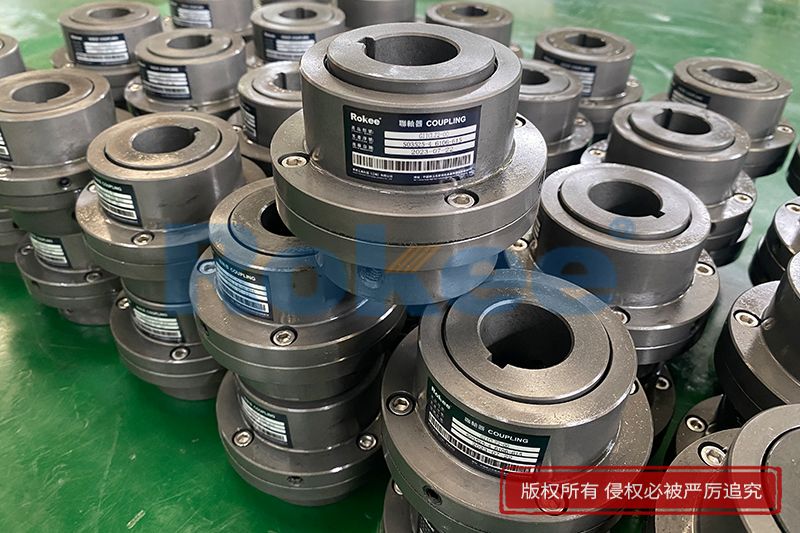
In the realm of industrial power transmission, couplings serve as critical components that bridge rotating shafts, enabling the seamless transfer of torque while accommodating various forms of misalignment. Among the diverse range of couplings available, gear couplings stand out for their robustness, high torque-carrying capacity, and ability to withstand harsh operating conditions. The GIICLZ gear coupling, in particular, has emerged as a preferred choice in numerous heavy-duty industrial settings, owing to its optimized design and reliable performance.
Structural Characteristics of GIICLZ Gear Couplings
The GIICLZ gear coupling is a type of rigid-flexible coupling that incorporates gear teeth meshing to transmit torque. Its structure is meticulously engineered to balance rigidity and flexibility, ensuring efficient power transfer while mitigating the impact of shaft misalignment. Typically, a standard GIICLZ gear coupling consists of four main components: two gear sleeves, two outer flanges, a set of seals, and lubrication fittings. Each component is designed to work in harmony, contributing to the coupling’s overall durability and performance.
The gear sleeves, which are connected to the driving and driven shafts, feature external gear teeth that mesh with the internal gear teeth of the outer flanges. The gear teeth are usually cut using precision machining techniques, ensuring accurate meshing and minimal wear during operation. The choice of gear tooth profile—commonly involute profile—is critical, as it enables smooth torque transmission and reduces stress concentration at the tooth roots. The outer flanges are responsible for connecting the two gear sleeves, forming a rigid connection that maintains the alignment of the gear teeth while allowing a certain degree of angular, radial, and axial misalignment.
Sealing components play a vital role in protecting the gear meshing area from external contaminants such as dust, dirt, and moisture, which can accelerate wear and reduce the service life of the coupling. The seals also prevent the leakage of lubricant, which is essential for reducing friction between the gear teeth. Lubrication fittings, typically in the form of grease nipples or oil injection ports, facilitate the regular replenishment of lubricant, ensuring consistent performance over extended periods. Additionally, the coupling may be equipped with keyways or shrink-fit connections to secure the gear sleeves to the shafts, ensuring a tight and reliable connection that prevents slippage during high-torque operation.
Working Principles of GIICLZ Gear Couplings
The fundamental working principle of the GIICLZ gear coupling revolves around the meshing of gear teeth to transmit torque from the driving shaft to the driven shaft. When the driving shaft rotates, it imparts rotational motion to the connected gear sleeve. The external gear teeth of this sleeve mesh with the internal gear teeth of the outer flange, causing the flange to rotate in synchronization. The second outer flange, which is connected to the first via bolts or other fasteners, then transfers this rotational motion to the second gear sleeve, which in turn drives the driven shaft.
A key aspect of the GIICLZ gear coupling’s functionality is its ability to accommodate misalignment between the driving and driven shafts. In industrial applications, shaft misalignment can occur due to a variety of factors, including installation errors, thermal expansion and contraction of equipment, and structural deformation under load. The GIICLZ coupling addresses three main types of misalignment: angular misalignment (where the shafts are inclined relative to each other), radial misalignment (where the shafts are offset parallel to each other), and axial misalignment (where the shafts move along their axial direction).
The gear meshing design allows for angular misalignment by enabling the gear teeth to slide slightly against each other as the shafts rotate at an angle. For radial misalignment, the clearance between the gear teeth and the flexibility of the coupling components allow for small offsets between the shafts. Axial misalignment is accommodated by the axial movement of the gear sleeves within the outer flanges, which is facilitated by the lubricated gear teeth and the design of the sealing system. By accommodating these forms of misalignment, the GIICLZ gear coupling reduces the stress on the shafts, bearings, and other components of the power transmission system, thereby extending their service life and improving overall system reliability.
Key Advantages of GIICLZ Gear Couplings
The GIICLZ gear coupling offers a range of advantages that make it suitable for use in heavy-duty industrial applications. One of its primary advantages is its high torque-carrying capacity. The gear meshing design provides a large contact area between the teeth, allowing the coupling to transmit significant amounts of torque without suffering from premature wear or failure. This makes it ideal for use in applications such as large motors, pumps, compressors, and conveyors, where high torque levels are common.
Another key advantage of the GIICLZ gear coupling is its excellent misalignment compensation capability. As mentioned earlier, it can accommodate angular, radial, and axial misalignment, which reduces the need for precise alignment during installation and minimizes the impact of operational misalignment on the power transmission system. This not only simplifies the installation process but also reduces maintenance costs and downtime associated with misalignment-related issues.
Durability and long service life are also notable features of the GIICLZ gear coupling. The components are typically manufactured from high-strength materials such as alloy steel, which is resistant to wear, fatigue, and corrosion. Precision machining ensures that the gear teeth mesh accurately, reducing friction and wear during operation. Additionally, the sealing system protects the internal components from contaminants, while regular lubrication ensures smooth operation and further extends the service life of the coupling.
The GIICLZ gear coupling is also known for its compact design. Despite its high torque-carrying capacity, it has a relatively small footprint, which makes it suitable for use in applications where space is limited. Its simple structure also facilitates easy installation and maintenance, as it can be disassembled and reassembled with minimal effort and specialized tools.
Typical Applications of GIICLZ Gear Couplings
Due to their robust design, high torque-carrying capacity, and excellent misalignment compensation, GIICLZ gear couplings find applications in a wide range of industrial sectors. One of the most common applications is in the power generation industry, where they are used to connect turbines to generators. In this application, the coupling must transmit large amounts of torque while accommodating the slight misalignments that may occur due to thermal expansion and contraction of the equipment during operation.
The mining industry also relies heavily on GIICLZ gear couplings. Mining equipment such as crushers, grinders, and conveyors operate under harsh conditions, including high torque, heavy loads, and significant levels of vibration and misalignment. The GIICLZ coupling’s durability and ability to withstand these conditions make it an ideal choice for connecting the motors to the driven components of this equipment.
In the chemical and petrochemical industry, GIICLZ gear couplings are used in pumps, compressors, and mixers. These applications often involve corrosive environments and high-pressure operating conditions, so the coupling’s corrosion-resistant materials and robust sealing system are essential for ensuring reliable performance. The coupling’s ability to accommodate misalignment also helps to protect the sensitive components of pumps and compressors from damage.
Other notable applications of GIICLZ gear couplings include steel manufacturing, where they are used in rolling mills and steelmaking equipment; marine engineering, where they are used to connect ship engines to propellers; and material handling, where they are used in conveyor systems and elevators. In each of these applications, the coupling’s ability to transmit high torque, accommodate misalignment, and withstand harsh operating conditions makes it an indispensable component of the power transmission system.
Maintenance Considerations for GIICLZ Gear Couplings
Proper maintenance is essential for ensuring the optimal performance and long service life of GIICLZ gear couplings. One of the most critical maintenance tasks is regular lubrication. The gear teeth and other moving components require a consistent supply of lubricant to reduce friction, wear, and heat generation. The type of lubricant used should be appropriate for the operating conditions, including temperature, load, and speed. It is also important to follow the manufacturer’s recommendations regarding lubrication intervals and the amount of lubricant to be applied.
Regular inspection of the coupling is another important maintenance practice. Inspections should include checking for signs of wear on the gear teeth, such as pitting, scuffing, or tooth breakage. The seals should also be inspected for leaks, as damaged seals can lead to lubricant loss and contamination of the internal components. Additionally, the bolts and other fasteners should be checked for tightness, as loose fasteners can cause misalignment and reduce the coupling’s performance.
Alignment checks are also necessary to ensure that the shafts are properly aligned. Over time, operational factors such as thermal expansion, vibration, and structural deformation can cause misalignment to occur. Using precision alignment tools, such as laser alignment systems, to check and correct the alignment of the shafts can help to reduce stress on the coupling and other components of the power transmission system.
In the event of damage or excessive wear, it is important to replace the affected components promptly. Using damaged components can lead to further damage to the coupling and other parts of the system, resulting in costly downtime and repairs. When replacing components, it is essential to use parts that are compatible with the GIICLZ gear coupling to ensure proper fit and performance.
Conclusion
The GIICLZ gear coupling is a versatile and reliable component that plays a crucial role in industrial power transmission systems. Its optimized structural design, efficient working principle, and range of key advantages—including high torque-carrying capacity, excellent misalignment compensation, durability, and compact size—make it suitable for use in a wide range of heavy-duty applications across various industrial sectors. By understanding the structural characteristics, working principles, and maintenance requirements of GIICLZ gear couplings, industrial operators can ensure that these components perform optimally, contributing to the overall efficiency, reliability, and longevity of their power transmission systems.
As industrial technology continues to advance, the demand for high-performance power transmission components such as GIICLZ gear couplings is expected to grow. Manufacturers are likely to continue optimizing the design of these couplings, incorporating new materials and manufacturing techniques to further enhance their performance and durability. Whether in power generation, mining, chemical processing, or other industrial sectors, the GIICLZ gear coupling will remain an essential component, enabling the seamless and efficient transfer of power in even the most challenging operating conditions.
« GIICLZ Gear Couplings Export to Mexico » Post Date: 2023/11/22
URL: https://www.rokeecoupling.com/en/customer-cases/giiclz-gear-couplings-export-to-mexico.html
- High Quality Bushed Pin Type Couplings
- Service Life Of Elastic Diaphragm Coupling
- Exploded View of Double Diaphragm Couplings
- Support Seat Diaphragm Coupling Price
- Commonly Used Plum Blossom Couplings Wholesale
- Ball Drum Coupling
- Long Internal Spline Universal Joint Shaft
- Spring Pin Couplings Price
- Which Is The Best Type Of Diaphragm Coupling For The Transmission Seat
- LMS Plum Coupling