Flexible Coupling With Brake Disc
Rokee® provide Flexible Coupling With Brake Disc, non-standard coupling customization, drawing design, batch processing, and export the product to your location.
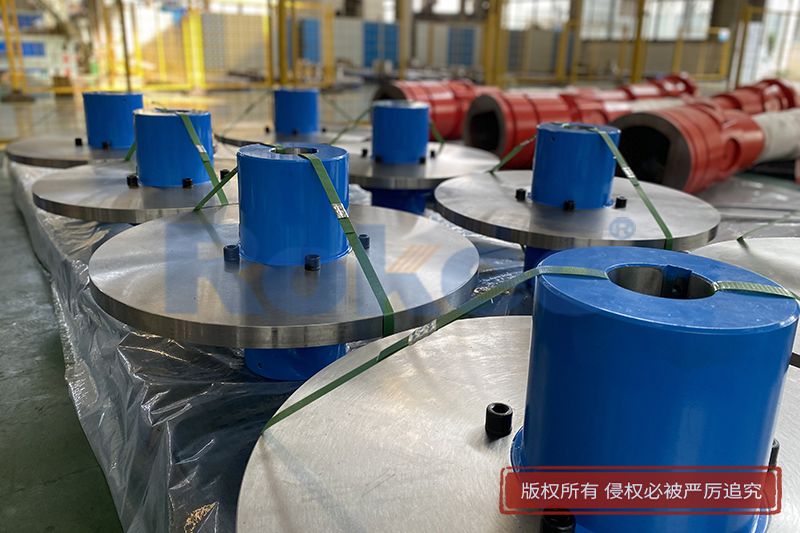
In the realm of industrial power transmission systems, the efficient and reliable transfer of torque from a prime mover to a driven machine is paramount. Among the various components that facilitate this critical process, flexible couplings with brake discs have emerged as indispensable elements, especially in applications where precise motion control, vibration dampening, and rapid stopping capabilities are non-negotiable. Unlike standard couplings, which primarily focus on torque transmission and misalignment compensation, these integrated systems combine the functions of coupling and braking into a single, compact assembly. This integration not only optimizes space utilization but also enhances operational efficiency by reducing the number of components in the power train.
To understand the significance of flexible couplings with brake discs, it is first essential to grasp the fundamental roles of their individual components and how their integration creates a synergistic effect. A flexible coupling, in its basic form, is a mechanical device used to connect two rotating shafts while accommodating for misalignments (angular, parallel, or axial) that may arise due to manufacturing tolerances, thermal expansion, or operational wear. It achieves this flexibility through the use of elastic elements such as rubber, polyurethane, or metal bellows, which absorb shocks and vibrations, thereby protecting the connected machinery from premature failure. On the other hand, a brake disc (or rotor) is a flat, circular component that works in conjunction with brake pads to convert kinetic energy into thermal energy through friction, enabling the rotating system to slow down or come to a complete stop.
The integration of these two components into a single unit – the flexible coupling with brake disc – is a result of the industrial demand for more compact, efficient, and cost-effective power transmission solutions. In traditional setups, a separate coupling and brake system would require additional space, more complex installation, and higher maintenance efforts. By combining them, manufacturers have created a component that not only transmits torque and compensates for misalignments but also provides reliable braking functionality without compromising on performance. This design innovation has made flexible couplings with brake discs particularly suitable for applications where space is constrained, such as in small to medium-sized industrial machinery, automotive drivetrains, and aerospace systems.
The design of a flexible coupling with brake disc is a meticulous process that must balance the conflicting requirements of flexibility, torque capacity, and braking efficiency. At its core, the assembly consists of four main components: the input hub (connected to the prime mover shaft), the output hub (connected to the driven machine shaft), the flexible element (responsible for misalignment compensation and vibration dampening), and the brake disc (integrated into the coupling body). Each component is designed to work in harmony, ensuring that the system can withstand the operational stresses of torque transmission and braking without failure.
The input and output hubs are typically made from high-strength materials such as steel or aluminum alloys, which offer excellent mechanical properties such as high tensile strength, fatigue resistance, and wear resistance. These hubs are precision-machined to ensure a tight fit with the shafts, minimizing slippage during torque transmission. The design of the hubs also includes features such as keyways or splines, which provide a secure connection and prevent relative rotation between the hub and the shaft. In some cases, the hubs may be heat-treated to enhance their surface hardness, further improving their durability in harsh operating conditions.
The flexible element is the heart of the coupling, as it determines the level of misalignment compensation and vibration dampening. The choice of material for the flexible element depends on the specific application requirements, such as torque capacity, operating temperature, and environmental conditions. Rubber and polyurethane are commonly used for low to medium torque applications, as they offer excellent elasticity and vibration absorption properties. For high-torque, high-temperature applications, metal bellows (typically made from stainless steel) are preferred, as they can withstand extreme temperatures and provide superior torque transmission capabilities. The flexible element is attached to the input and output hubs using bolts or clamps, ensuring a secure connection while allowing for the necessary flexibility.
The brake disc, which is integrated into the coupling body, is designed to withstand the high temperatures and mechanical stresses generated during braking. It is usually made from cast iron or carbon fiber-reinforced composites, materials that offer high thermal conductivity and heat resistance. The surface of the brake disc is precision-machined to ensure a smooth, flat contact surface with the brake pads, which is essential for consistent braking performance. In some designs, the brake disc may be ventilated, with fins or channels that facilitate heat dissipation, preventing overheating and brake fade during prolonged or frequent braking operations.
The working principle of a flexible coupling with brake disc is a combination of the principles of torque transmission, misalignment compensation, and friction braking. During normal operation, the prime mover (such as an electric motor or an internal combustion engine) rotates the input hub of the coupling. The torque from the input hub is transmitted to the flexible element, which in turn transfers it to the output hub and the driven machine shaft. As the shafts rotate, the flexible element accommodates for any misalignments between the input and output shafts, absorbing shocks and vibrations that may be generated by the prime mover or the driven machine. This not only ensures smooth torque transmission but also protects the connected machinery from damage caused by excessive vibration or misalignment.
When braking is required, the brake calipers (mounted stationary relative to the coupling) squeeze the brake pads against the rotating brake disc. The friction between the brake pads and the brake disc generates a braking torque that opposes the rotation of the coupling and the connected shafts. As a result, the kinetic energy of the rotating system is converted into thermal energy, which is dissipated into the surrounding environment. The magnitude of the braking torque depends on several factors, including the coefficient of friction between the brake pads and the disc, the pressure applied by the calipers, and the radius of the brake disc. The design of the brake disc and pads is optimized to ensure that the braking torque is sufficient to stop the system within the required time and distance, while also minimizing wear and tear.
One of the key advantages of flexible couplings with brake discs is their compact and integrated design. By combining the functions of coupling and braking into a single unit, these systems eliminate the need for separate coupling and brake components, reducing the overall size and weight of the power transmission system. This is particularly beneficial in applications where space is limited, such as in small industrial machines, electric vehicles, and robotics. The compact design also simplifies installation and assembly, reducing the time and labor required to set up the system.
Another significant advantage is their ability to dampen vibrations and absorb shocks. The flexible element in the coupling acts as a buffer, absorbing the vibrations generated by the prime mover or the driven machine. This not only improves the smoothness of operation but also reduces the stress on the connected components, extending their service life. In addition, the vibration dampening properties of the coupling help to reduce noise levels, creating a more comfortable and safe working environment.
Flexible couplings with brake discs also offer excellent misalignment compensation capabilities. As mentioned earlier, industrial machinery often experiences misalignments between shafts due to various factors such as thermal expansion, manufacturing tolerances, and operational wear. The flexible element in the coupling can accommodate for angular misalignments (up to a certain degree), parallel misalignments, and axial displacements, ensuring that torque is transmitted efficiently even when the shafts are not perfectly aligned. This reduces the risk of premature failure of the shafts, bearings, and other components, minimizing downtime and maintenance costs.
Reliable braking performance is another key benefit of these integrated systems. The brake disc, being an integral part of the coupling, is positioned close to the rotating shafts, ensuring that the braking torque is applied directly and efficiently. This results in shorter stopping times and greater control over the rotating system, which is essential in applications where precise motion control is required, such as in conveyor systems, cranes, and machine tools. In addition, the integrated design reduces the number of moving parts, minimizing the risk of component failure and improving the overall reliability of the braking system.
Cost-effectiveness is also a major advantage of flexible couplings with brake discs. By combining two essential components into a single unit, these systems reduce the overall cost of the power transmission system. This includes not only the cost of the components themselves but also the cost of installation, assembly, and maintenance. The reduced number of components also means fewer parts to inventory and replace, further lowering operational costs. In addition, the extended service life of the connected machinery, due to vibration dampening and misalignment compensation, reduces the need for frequent repairs and replacements, resulting in long-term cost savings.
Flexible couplings with brake discs find applications in a wide range of industries, thanks to their versatile design and multiple benefits. One of the most common applications is in the industrial machinery sector, where they are used in conveyor systems, pumps, compressors, and machine tools. In conveyor systems, for example, the coupling transmits torque from the electric motor to the conveyor belt, while the brake disc ensures that the conveyor stops quickly and safely when required, preventing material spillage or equipment damage. In machine tools, the precise torque transmission and reliable braking capabilities of the coupling help to ensure accurate machining operations, improving the quality of the finished products.
The automotive industry is another major user of flexible couplings with brake discs. They are used in the drivetrains of electric vehicles, hybrid vehicles, and traditional internal combustion engine vehicles. In electric vehicles, the coupling transmits torque from the electric motor to the wheels, while the brake disc provides the necessary braking force. The compact design of the coupling is particularly beneficial in electric vehicles, where space is at a premium due to the presence of batteries and other components. In addition, the vibration dampening properties of the coupling help to improve the ride comfort of the vehicle.
The aerospace industry also utilizes flexible couplings with brake discs in various applications, such as in aircraft landing gear systems and auxiliary power units (APUs). In landing gear systems, the coupling transmits torque from the hydraulic or electric motor to the landing gear mechanism, while the brake disc ensures that the landing gear is locked securely in place during takeoff and landing. The high reliability and compact design of the coupling are critical in aerospace applications, where safety and weight are of utmost importance.
Other applications include robotics, where the precise motion control and compact design of the coupling make it ideal for use in robotic arms and joints. In cranes and hoists, the coupling transmits torque from the motor to the lifting mechanism, while the brake disc ensures that the load is held securely in place, preventing accidental drops. The mining industry also uses these couplings in various equipment, such as mining trucks and conveyor systems, where they are exposed to harsh operating conditions such as high temperatures, dust, and vibration.
Proper maintenance is essential to ensure the long-term performance and reliability of flexible couplings with brake discs. Regular inspection is the first step in maintenance, as it helps to identify potential issues before they escalate into major problems. During inspection, the coupling should be checked for signs of wear, such as cracks in the hubs or flexible element, excessive play between the components, and wear on the brake disc and pads. The bolts and clamps that hold the components together should also be checked for tightness, as loose fasteners can lead to excessive vibration and component failure.
Lubrication is another important aspect of maintenance, as it helps to reduce friction between the moving components and prevent wear. The type of lubricant used depends on the material of the flexible element and the operating conditions. For example, rubber and polyurethane flexible elements may require a different type of lubricant than metal bellows. The lubricant should be applied at regular intervals, as specified by the manufacturer, to ensure optimal performance.
The brake disc and pads also require regular maintenance to ensure reliable braking performance. The brake pads should be checked for wear, and replaced if they are worn beyond the recommended thickness. The brake disc should be checked for warping or scoring, which can affect the contact between the disc and the pads, leading to reduced braking efficiency. If the brake disc is warped or scored, it may need to be resurfaced or replaced. In addition, the brake calipers should be checked for proper operation, ensuring that they apply uniform pressure to the brake pads.
Environmental factors also play a role in the maintenance of flexible couplings with brake discs. In harsh environments such as mining, construction, or chemical plants, the coupling may be exposed to dust, dirt, moisture, or corrosive substances. In such cases, the coupling should be protected with covers or shields to prevent the ingress of contaminants. Regular cleaning of the coupling is also recommended to remove any accumulated dust or debris, which can cause wear and corrosion.
In conclusion, flexible couplings with brake discs are versatile and efficient components that play a critical role in modern industrial power transmission systems. Their integrated design combines the functions of torque transmission, misalignment compensation, vibration dampening, and braking into a single, compact unit, offering numerous advantages such as space savings, improved operational efficiency, reliable performance, and cost-effectiveness. These couplings find applications in a wide range of industries, including industrial machinery, automotive, aerospace, robotics, and mining, among others. Proper maintenance, including regular inspection, lubrication, and replacement of worn components, is essential to ensure their long-term performance and reliability.
As industrial technology continues to evolve, the demand for more efficient and reliable power transmission solutions is expected to grow. Flexible couplings with brake discs are likely to play an even more important role in meeting this demand, as manufacturers continue to innovate and improve their design. Future developments may include the use of advanced materials such as carbon fiber composites and nanomaterials, which offer superior mechanical properties and durability. In addition, the integration of smart technologies such as sensors and monitoring systems may enable real-time monitoring of the coupling's performance, allowing for predictive maintenance and further improving operational efficiency. Regardless of the advancements, flexible couplings with brake discs will remain an indispensable component in industrial power transmission systems, contributing to the smooth and safe operation of machinery worldwide.
« Flexible Coupling With Brake Disc » Post Date: 2023/12/6
URL: https://www.rokeecoupling.com/en/customer-cases/flexible-coupling-with-brake-disc.html
- Plum Coupling For Plunger Pumps
- Ball Joint Drum Couplings Principle
- Flange Type Gear Couplings
- Catalogue of Bush Type Flexible Couplings
- Two Column Pin Tooth Couplings With Brake
- Classification of Jaw Flexible Couplings
- Curved-tooth Gear Coupling Displacement
- Diaphragm Stepped Coupling
- Drawing Of Elastic Pin Toothed Coupling
- Cardan Coupling Specifications