Flange Type Gear Couplings
Rokee® provide Flange Type Gear Couplings, non-standard coupling customization, drawing design, batch processing, and export the product to your location.
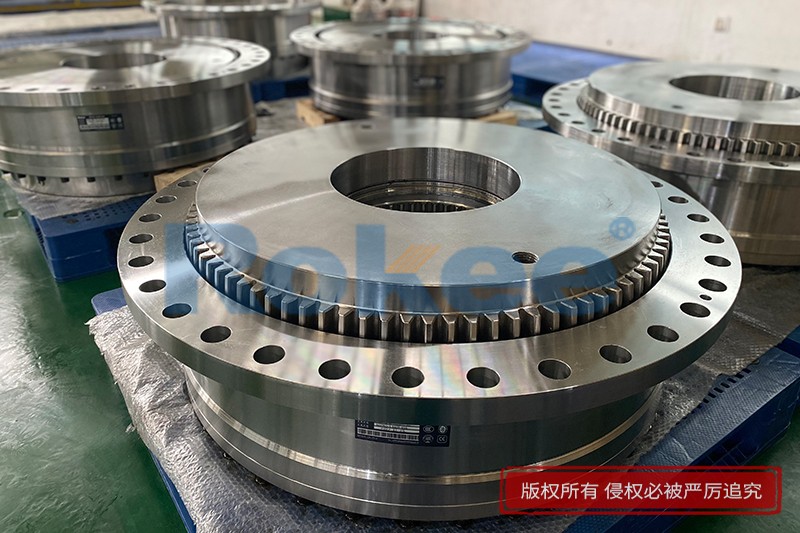
In the realm of mechanical power transmission, couplings play an indispensable role as critical components that connect two rotating shafts, enabling the seamless transfer of torque while accommodating various forms of misalignment. Among the diverse range of couplings available, the flange type gear coupling stands out for its exceptional torque-bearing capacity, robustness, and adaptability to harsh operating conditions.
A flange type gear coupling is a mechanical device designed to transmit high torque between two coaxial shafts through meshing gear teeth, with flanged ends that facilitate rigid connection to the shafts via bolts or studs. Unlike flexible couplings that rely on elastic elements to absorb misalignment, flange type gear couplings achieve flexibility primarily through the relative movement of their gear teeth, making them suitable for applications where high torque transmission is prioritized over extensive vibration damping. The core design of a flange type gear coupling consists of several key components, each contributing to its overall performance and reliability. These components include two gear hubs, an outer sleeve (or gear ring), flanges, and fasteners such as bolts and nuts.
The gear hubs are the primary components that attach directly to the shafts being connected. Each hub features external gear teeth that mesh with the internal gear teeth of the outer sleeve. The gear teeth are typically cut in a helical or straight pattern, with helical teeth being more commonly used due to their ability to reduce noise, distribute load more evenly, and accommodate greater angular misalignment compared to straight teeth. The flanges are integral parts of the gear hubs, extending radially outward to provide a surface for bolting the two halves of the coupling together. The outer sleeve, which encloses the meshing gear teeth, serves to protect the gear teeth from external contaminants such as dust, dirt, and moisture, while also retaining the lubricant necessary for reducing friction and wear between the meshing surfaces.
The working principle of a flange type gear coupling revolves around the meshing of gear teeth to transmit torque. When one shaft rotates, it drives the attached gear hub, whose external teeth engage with the internal teeth of the outer sleeve. This engagement causes the outer sleeve to rotate, which in turn drives the second gear hub and its connected shaft. The design of the gear teeth allows for the accommodation of three main types of misalignment: angular misalignment (where the shafts are not perfectly coaxial but intersect at an angle), parallel misalignment (where the shafts are parallel but offset from each other), and axial misalignment (where the shafts move along their axial direction). The amount of misalignment that a flange type gear coupling can accommodate depends on factors such as the number of gear teeth, the tooth profile, and the clearance between the meshing teeth.
Lubrication is a critical aspect of the working principle, as it ensures the smooth operation of the meshing gear teeth and prevents premature wear. The gear teeth and internal surfaces of the outer sleeve are typically lubricated with a high-pressure, high-temperature grease or oil that can withstand the extreme conditions encountered in heavy-duty applications. The outer sleeve acts as a seal to prevent lubricant leakage and to keep out contaminants, which could otherwise cause abrasion, corrosion, or jamming of the gear teeth.
The selection of materials for flange type gear couplings is a crucial process that directly impacts their performance, durability, and suitability for specific applications. The primary materials used for the gear hubs, outer sleeve, and flanges are various types of alloy steels and carbon steels, chosen for their high strength, toughness, and wear resistance. Carbon steels are often used for less demanding applications where moderate torque and operating conditions are encountered, while alloy steels (such as nickel-chromium steel, molybdenum steel, and chrome-molybdenum steel) are preferred for heavy-duty applications that require higher torque capacity, resistance to impact loads, and durability at elevated temperatures.
In addition to steel, some components of flange type gear couplings may be made from cast iron, particularly for applications where cost is a primary consideration and the operating conditions are not overly severe. However, cast iron is less durable than steel and has lower impact resistance, making it unsuitable for high-torque or high-shock applications. The gear teeth, which are subjected to the highest levels of stress and wear, are often heat-treated to enhance their hardness and wear resistance. Common heat treatment processes include carburizing, quenching, and tempering, which create a hard outer surface on the gear teeth while maintaining a tough core, ensuring both wear resistance and impact strength.
Flange type gear couplings find widespread application across a diverse range of industries, owing to their ability to transmit high torque and accommodate misalignment in harsh operating environments. One of the primary industries where these couplings are extensively used is the manufacturing industry, particularly in heavy machinery such as rolling mills, extruders, and presses. In rolling mills, for example, flange type gear couplings are used to connect the motor to the rolls, transmitting the high torque required to deform metal sheets, plates, and bars. The ability of these couplings to accommodate the slight misalignments that may occur due to the thermal expansion of the rolls or the deflection of the shafts under load makes them ideal for this application.
Another major application area is the mining and mineral processing industry. In mining operations, heavy equipment such as conveyors, crushers, and grinding mills rely on flange type gear couplings to transmit torque from the drive motors to the working components. These couplings must withstand the extreme conditions encountered in mines, including high levels of dust, vibration, and shock loads, as well as the high torque required to process large volumes of ore. The robust design and wear-resistant materials of flange type gear couplings make them well-suited to these demanding conditions.
The power generation industry also utilizes flange type gear couplings in various applications, such as in thermal power plants, where they are used to connect the turbines to the generators. The high torque transmission capacity of these couplings is essential for converting the rotational energy of the turbine into electrical energy. Additionally, in wind power plants, flange type gear couplings may be used in the gearboxes of wind turbines, connecting the low-speed rotor to the high-speed generator, although in some cases, direct-drive systems are used instead. However, in larger wind turbines that require gearboxes to increase the rotational speed, flange type gear couplings remain a reliable choice due to their durability and torque capacity.
Other industries that use flange type gear couplings include the marine industry (for connecting the main engine to the propeller shaft), the construction industry (in heavy equipment such as excavators, bulldozers, and cranes), and the agricultural industry (in large farm machinery such as tractors and harvesters). In each of these industries, the key requirements are high torque transmission, reliability, and the ability to operate in harsh or demanding conditions, which flange type gear couplings are well-equipped to meet.
Proper installation and maintenance are essential for ensuring the optimal performance and longevity of flange type gear couplings. Improper installation can lead to premature wear, increased vibration, reduced torque transmission efficiency, and even catastrophic failure of the coupling or the connected machinery. The installation process typically involves several key steps, starting with the preparation of the shafts. The shaft ends must be clean, free of burrs, and properly machined to the correct diameter to ensure a tight fit with the gear hubs. The hubs are usually press-fitted onto the shafts or secured with keyways and set screws to prevent slippage during operation.
Once the hubs are installed on the shafts, the next step is to align the shafts to minimize misalignment. Shaft alignment is a critical process that involves adjusting the position of one or both shafts to ensure that they are as coaxial as possible. This can be done using various tools, such as dial indicators, laser alignment tools, or optical alignment devices. Proper alignment reduces the stress on the gear teeth and other components of the coupling, extending their service life. After aligning the shafts, the outer sleeve is placed over the meshing gear teeth, and the flanges are bolted together. The bolts must be tightened to the correct torque specification to ensure a secure connection and to prevent relative movement between the flanges.
Maintenance of flange type gear couplings primarily involves regular inspection, lubrication, and replacement of worn components. Regular inspections should be conducted to check for signs of wear, such as excessive tooth wear, pitting, or chipping of the gear teeth, as well as for any signs of lubricant leakage, loose bolts, or damage to the outer sleeve. The frequency of inspections depends on the operating conditions, with more frequent inspections required for couplings operating in harsh environments or under high load conditions.
Lubrication is another key maintenance task. The lubricant in the coupling should be checked regularly and replaced at specified intervals to ensure that the gear teeth remain properly lubricated. The type of lubricant used should be appropriate for the operating temperature, load, and speed of the coupling. In addition, the seals on the outer sleeve should be inspected to ensure that they are intact and functioning properly, as damaged seals can lead to lubricant leakage and contamination of the gear teeth.
If worn or damaged components are detected during inspection, they should be replaced promptly to prevent further damage to the coupling or the connected machinery. Common replacement components include gear hubs, outer sleeves, flanges, bolts, and seals. When replacing components, it is important to ensure that they are compatible with the original coupling design and specifications to maintain the coupling's performance and reliability.
As industrial technology continues to advance, the design and performance of flange type gear couplings are also evolving to meet the changing needs of modern mechanical systems. One of the key emerging trends is the integration of advanced materials and manufacturing processes to enhance the performance and durability of these couplings. For example, the use of composite materials in the outer sleeve or gear hubs is being explored, as composites offer high strength-to-weight ratios, corrosion resistance, and reduced noise levels compared to traditional steel or cast iron.
Another trend is the adoption of computer-aided design (CAD) and finite element analysis (FEA) tools in the design process. These tools allow engineers to optimize the design of the gear teeth, flanges, and other components, ensuring that they can withstand the maximum expected loads and misalignments while minimizing weight and material usage. FEA also enables the simulation of various operating conditions, such as high temperatures, shock loads, and vibration, allowing for the identification of potential weak points in the design before the coupling is manufactured.
The development of smart monitoring systems is also becoming increasingly important in the field of flange type gear couplings. These systems utilize sensors embedded in the coupling to monitor key parameters such as temperature, vibration, and torque in real-time. The data collected by the sensors is transmitted to a central monitoring system, where it is analyzed to detect signs of wear, misalignment, or other potential issues. This allows for predictive maintenance, where maintenance tasks can be scheduled before a failure occurs, reducing downtime and maintenance costs.
In addition, there is a growing focus on improving the energy efficiency of flange type gear couplings. By optimizing the design of the gear teeth and reducing friction between the meshing surfaces, manufacturers are able to reduce energy losses and improve the overall efficiency of the power transmission system. This is particularly important in industries such as power generation and manufacturing, where energy efficiency is a key concern due to rising energy costs and environmental regulations.
Despite the emergence of alternative coupling technologies, such as flexible disc couplings and elastomeric couplings, flange type gear couplings remain a vital component in many heavy-duty mechanical systems due to their unmatched torque-bearing capacity and robustness. As industries continue to demand higher performance, greater reliability, and improved efficiency from their mechanical systems, the ongoing development and innovation in flange type gear coupling technology will ensure that they continue to play a critical role in power transmission for years to come.
In conclusion, flange type gear couplings are essential components in modern mechanical power transmission systems, offering exceptional torque transmission capacity, robustness, and the ability to accommodate misalignment in harsh operating conditions. Their design, which consists of gear hubs, an outer sleeve, flanges, and fasteners, is optimized for high-performance applications across a diverse range of industries, including manufacturing, mining, power generation, marine, construction, and agriculture. Proper installation and maintenance are crucial for ensuring their optimal performance and longevity, while ongoing advancements in materials, manufacturing processes, and monitoring systems are driving the evolution of these couplings to meet the changing needs of modern industry. As the demand for more efficient, reliable, and durable power transmission solutions continues to grow, flange type gear couplings will remain a preferred choice for heavy-duty applications, solidifying their position as a cornerstone of industrial mechanical systems.
« Flange Type Gear Couplings » Post Date: 2023/9/26
URL: https://www.rokeecoupling.com/en/customer-cases/flange-type-gear-couplings.html
- Cross Universal Joint Drawing
- Flange Gear Coupling Price
- Tooth Surface Hardness Of Curved-tooth Gear Coupling
- Bush Pin Coupling Models
- Pin And Sprocket Coupling
- Classification of Crown Gear Couplings
- Common Problems With Curved-tooth Gear Couplings
- Flexible Gear Coupling Advantages
- Rotary Brake Wheel Drum Tooth Coupling
- Motor Toothed Coupling