Expansion Type Coupling
Rokee® provide Expansion Type Coupling, non-standard coupling customization, drawing design, batch processing, and export the product to your location.
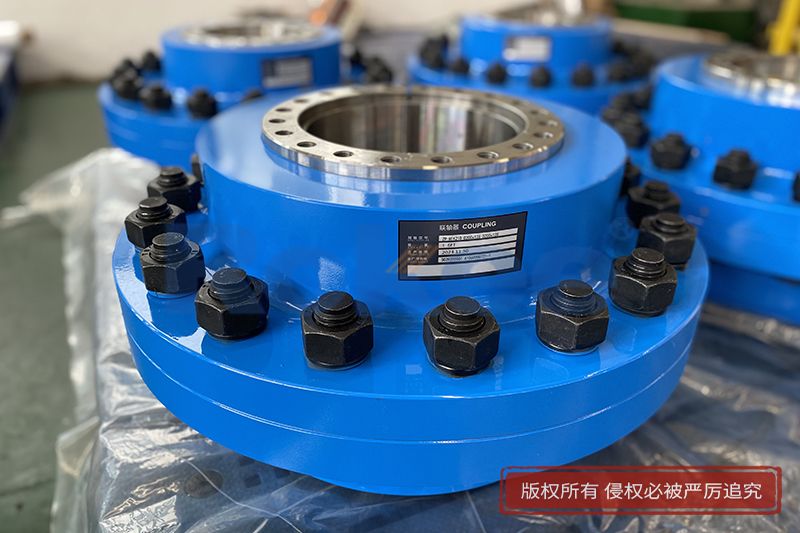
In the realm of mechanical transmission systems, couplings serve as critical components that bridge rotating shafts, enabling the transfer of torque while accommodating various forms of misalignment and compensating for axial, radial, and angular deviations. Among the diverse array of coupling types, expansion type coupling has emerged as a versatile and reliable solution, widely adopted across industries ranging from manufacturing and automotive to energy and aerospace. Unlike rigid couplings that demand precise alignment, expansion type couplings leverage specialized structural designs to absorb displacements, reduce vibration, and protect upstream and downstream equipment from excessive stress.
To comprehend the functionality of expansion type coupling, it is essential to first distinguish it from other coupling categories and grasp its core working mechanism. At its essence, an expansion type coupling is a flexible coupling variant designed to accommodate axial expansion and contraction of shafts, a phenomenon commonly induced by thermal changes during operation. Shafts in mechanical systems are often subjected to temperature fluctuations—for instance, in steam turbines, internal combustion engines, or industrial pumps—where heat generated by friction or process fluids causes shafts to expand, potentially leading to axial displacement. Rigid couplings, which lack flexibility, would transmit this displacement directly to bearings, seals, and other components, resulting in premature wear, leakage, or even catastrophic failure. Expansion type couplings address this challenge by incorporating elastic elements or sliding structures that allow relative axial movement between connected shafts while maintaining torque transmission efficiency.
The working principle of expansion type coupling varies slightly depending on its structural design, but the overarching mechanism revolves around balancing torque transfer with displacement compensation. One common design employs a sleeve with internal splines that engage with external splines on the connected shafts. This splined connection enables axial sliding of the shafts relative to the sleeve, accommodating expansion or contraction, while the spline teeth transmit torque through surface contact. Another prevalent design utilizes elastic components such as rubber diaphragms, bellows, or flexible sleeves. These elastic elements deform elastically under axial, radial, or angular displacement, absorbing the misalignment without compromising torque transfer. In both designs, the key is to ensure that the coupling can withstand the operational torque while providing sufficient flexibility to accommodate displacements within specified limits. Additionally, expansion type couplings often incorporate lubrication systems in splined designs to reduce friction between sliding surfaces, minimizing wear and extending service life.
Expansion type coupling exhibits a set of distinct characteristics that make it suitable for a wide range of industrial applications. First and foremost is its excellent axial compensation capability. Most expansion type couplings can accommodate axial displacements ranging from a few millimeters to several centimeters, depending on the design and size, making them ideal for systems with significant thermal expansion effects. Secondly, they offer moderate to high torque transmission capacity, with some heavy-duty variants capable of handling torque values exceeding 10,000 N·m, catering to both light-duty and heavy-duty applications. Thirdly, expansion type couplings provide good vibration damping performance. The elastic elements or sliding structures in their design can absorb and dissipate vibrational energy generated by rotating shafts, reducing noise and minimizing the impact of vibration on connected equipment such as motors, gearboxes, and pumps. Fourthly, they are relatively easy to install and maintain. Compared to complex flexible couplings with intricate designs, many expansion type couplings feature simple structures that allow for straightforward assembly and disassembly, reducing downtime during maintenance or replacement.
The versatility of expansion type coupling is reflected in its extensive application across numerous industries. In the manufacturing sector, it is widely used in conveyor systems, printing machinery, and machine tools. Conveyor systems, which are essential for material handling in factories and warehouses, often experience thermal expansion of drive shafts due to prolonged operation. Expansion type couplings ensure smooth torque transmission between the motor and conveyor rollers, accommodating axial displacements and preventing jamming. In printing machinery, where precision and stability are paramount, expansion type couplings with low backlash and good concentricity help maintain consistent printing quality by reducing vibration and ensuring accurate shaft synchronization. Machine tools, such as lathes and milling machines, also benefit from expansion type couplings, as they compensate for thermal expansion of spindle shafts, ensuring machining accuracy even during extended operation.
The automotive industry is another major adopter of expansion type coupling. In internal combustion engines, the crankshaft and transmission input shaft are often connected via expansion type couplings. During engine operation, the crankshaft heats up and expands axially, and the coupling accommodates this displacement, protecting the transmission and clutch components from excessive stress. Additionally, in electric vehicles (EVs), expansion type couplings are used in powertrain systems to connect the electric motor to the reduction gearbox. EV powertrains operate at high speeds and generate significant heat, making axial compensation critical for reliable performance. Expansion type couplings in automotive applications are also designed to be compact and lightweight, aligning with the industry’s focus on fuel efficiency and reduced emissions.
In the energy sector, expansion type coupling plays a vital role in power generation equipment such as steam turbines, gas turbines, and wind turbines. Steam turbines, which convert thermal energy into mechanical energy, operate at extremely high temperatures, causing significant axial expansion of the rotor shaft. Expansion type couplings connect the turbine rotor to the generator rotor, accommodating the axial displacement and ensuring efficient torque transfer to generate electricity. Similarly, gas turbines in power plants and aircraft engines rely on expansion type couplings to handle thermal expansion and vibration, ensuring stable operation under harsh conditions. Wind turbines, which operate in variable environmental conditions, use expansion type couplings in their drivetrains to connect the rotor hub to the gearbox or directly to the generator. These couplings not only accommodate axial and radial displacements caused by wind loads and thermal changes but also absorb vibration, protecting the gearbox and generator from damage.
The aerospace industry, known for its stringent requirements for reliability, lightweight design, and high performance, also utilizes expansion type coupling in various applications. In aircraft engines, for example, expansion type couplings are used to connect different sections of the engine shaft, accommodating thermal expansion during takeoff and flight. The couplings in aerospace applications are typically made from high-strength, lightweight materials such as titanium alloys or carbon fiber composites, ensuring they can withstand high temperatures and extreme loads while minimizing weight. Additionally, in satellite and spacecraft propulsion systems, expansion type couplings are used to connect fuel pumps and turbines, accommodating thermal expansion and ensuring precise torque transmission in the vacuum and extreme temperature environments of space.
Designing an effective expansion type coupling requires careful consideration of several key factors to ensure it meets the specific requirements of the application. One of the primary considerations is torque capacity. The coupling must be sized to handle the maximum operational torque of the system, with a safety margin to account for transient loads such as startup shocks. Engineers calculate the required torque capacity based on the power of the motor or prime mover and the operating speed, using formulas such as T = 9550 × P / n, where T is torque in N·m, P is power in kW, and n is speed in rpm. Another critical factor is displacement compensation requirements. The coupling must be designed to accommodate the maximum axial, radial, and angular displacements expected in the application. Axial displacement is often the primary concern for expansion type couplings, so the design must ensure sufficient sliding stroke or elastic deformation to absorb these displacements.
Material selection is also a key aspect of expansion type coupling design. The materials used for the coupling components must possess the necessary mechanical properties, such as high tensile strength, wear resistance, and fatigue resistance. For splined expansion couplings, carbon steel or alloy steel is commonly used for the sleeve and shafts, as these materials offer good strength and machinability. For elastic expansion couplings, the elastic elements are typically made from rubber, polyurethane, or metal bellows. Rubber and polyurethane are cost-effective and offer excellent vibration damping, but they have temperature limitations and may degrade over time when exposed to oils or chemicals. Metal bellows, on the other hand, can withstand higher temperatures and harsh environments, making them suitable for high-temperature applications such as turbines and engines. Additionally, corrosion resistance is an important consideration for couplings used in marine or chemical processing applications, where stainless steel or corrosion-resistant alloys may be required.
Lubrication is another critical design consideration for splined expansion type couplings. The sliding contact between the spline teeth generates friction, which can lead to wear and heat generation. Proper lubrication reduces friction, minimizes wear, and extends the service life of the coupling. Lubricants used for splined couplings include grease and oil, with the selection depending on the operating temperature, speed, and load. High-temperature applications may require synthetic lubricants that can maintain their viscosity and lubricating properties at elevated temperatures. Additionally, the coupling design must incorporate effective sealing to prevent lubricant leakage and protect the spline teeth from contamination by dust, dirt, or process fluids.
As mechanical systems become more advanced, with increasing demands for higher efficiency, reliability, and sustainability, expansion type coupling technology is also evolving to meet these needs. One notable trend is the integration of smart monitoring capabilities. Manufacturers are incorporating sensors into expansion type couplings to monitor parameters such as temperature, vibration, and wear. These sensors collect real-time data, which is transmitted to a central monitoring system, enabling predictive maintenance. By detecting early signs of wear or damage, such as increased vibration or temperature rise, operators can schedule maintenance before a failure occurs, reducing downtime and maintenance costs. This smart technology is particularly valuable in critical applications such as power generation and aerospace, where unplanned downtime can have severe consequences.
Another evolving trend is the development of lightweight and high-strength expansion type couplings. With the growing focus on energy efficiency in industries such as automotive and aerospace, reducing the weight of components is crucial. Manufacturers are using advanced materials such as carbon fiber composites and titanium alloys to design expansion type couplings that are lighter than traditional steel couplings while maintaining or improving torque capacity and durability. Carbon fiber composites offer high strength-to-weight ratios, excellent corrosion resistance, and good vibration damping properties, making them ideal for lightweight applications. Additionally, advances in manufacturing processes such as additive manufacturing (3D printing) are enabling the production of complex coupling designs that were previously difficult or impossible to manufacture using traditional methods. Additive manufacturing allows for the creation of customized spline profiles, elastic element geometries, and internal lubrication channels, optimizing the performance of expansion type couplings for specific applications.
The trend toward environmental sustainability is also influencing the design and manufacturing of expansion type coupling. Manufacturers are focusing on reducing the environmental impact of their products by using recyclable materials, improving energy efficiency during production, and developing couplings with longer service lives. For example, the use of corrosion-resistant materials reduces the need for frequent replacement, minimizing waste. Additionally, the development of lubrication-free expansion type couplings eliminates the risk of lubricant leakage, which can contaminate the environment. These lubrication-free designs use self-lubricating materials such as PTFE (polytetrafluoroethylene) in the spline connections, reducing friction and wear without the need for additional lubrication.
Despite its many advantages, expansion type coupling also faces certain challenges that need to be addressed in future developments. One of the main challenges is balancing flexibility with torque capacity. As applications demand higher torque transmission, the flexibility of the coupling may be compromised, requiring innovative designs to maintain both properties. Another challenge is the limited temperature range of some elastic materials. Rubber and polyurethane elastic elements can degrade at high temperatures, limiting their use in high-temperature applications. Ongoing research is focused on developing new elastic materials that can withstand higher temperatures while maintaining good flexibility and vibration damping properties. Additionally, the cost of advanced materials such as carbon fiber composites and titanium alloys remains high, which may limit their adoption in cost-sensitive applications. Reducing the cost of these materials through advances in manufacturing processes will be crucial for wider adoption.
In conclusion, expansion type coupling is a critical component in modern mechanical transmission systems, offering unique advantages such as axial displacement compensation, vibration damping, and reliable torque transmission. Its versatility makes it suitable for a wide range of applications across industries including manufacturing, automotive, energy, and aerospace. The design of expansion type coupling requires careful consideration of torque capacity, displacement requirements, material selection, and lubrication to ensure optimal performance. As mechanical systems continue to evolve, expansion type coupling technology is advancing to meet the demands of higher efficiency, reliability, and sustainability, with trends such as smart monitoring, lightweight design, and environmental sustainability driving innovation. While challenges remain, ongoing research and development in materials and manufacturing processes are poised to further enhance the performance and versatility of expansion type coupling, ensuring its continued role as a key component in the mechanical systems of the future.
« Expansion Type Coupling » Post Date: 2023/12/6
URL: https://www.rokeecoupling.com/en/customer-cases/expansion-type-coupling.html
- Cross Pin Coupling Drawing
- Drum Coupling Price
- Curved-tooth Gear Coupling Installation Clearance
- Barrel Couplings Supply
- Flexibility Diaphragm Couplings
- Bush Pin Type Flexible Couplings Wholesale
- Jaw Flexible Coupling Calculation
- Cross Universal Coupling Transmits Torque
- End Face Clearance Of Laminated Coupling
- Size Chart of Pin Bush Coupling