Steel Laminated Coupling
Rokee® provide Steel Laminated Coupling, non-standard coupling customization, drawing design, batch processing, and export the product to your location.
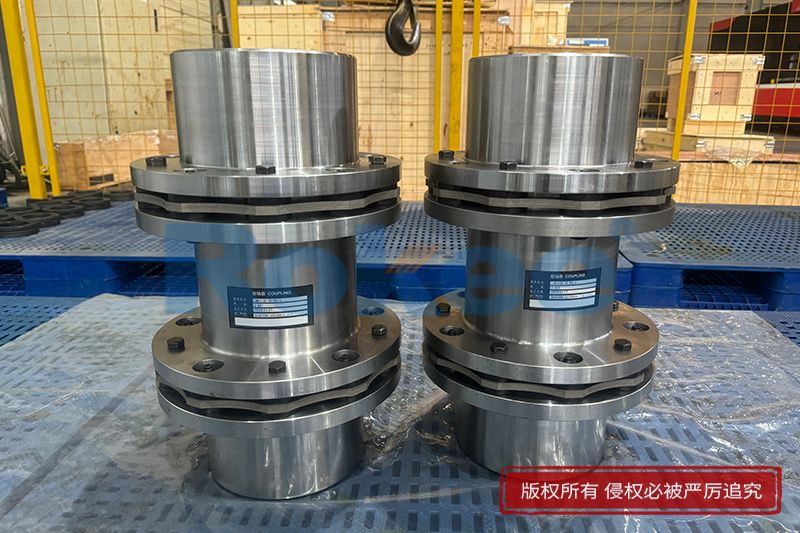
In the realm of power transmission systems, couplings serve as critical components that connect rotating shafts, enabling the transfer of torque while accommodating various forms of misalignment. Among the diverse range of couplings available, steel laminated couplings have emerged as a reliable and versatile solution, widely adopted across numerous industrial sectors. Characterized by their unique construction involving thin steel laminations, these couplings offer a combination of flexibility, strength, and durability that makes them suitable for both light-duty and heavy-duty applications.
To understand the functionality of steel laminated couplings, it is essential to first examine their structural composition. Unlike rigid couplings that offer no flexibility, or elastomeric couplings that rely on rubber or polymer elements for compliance, steel laminated couplings feature a series of thin, flat steel plates (laminations) that are bolted or riveted together to form a flexible element. These laminations are typically made from high-strength steel alloys, such as carbon steel or stainless steel, selected for their ability to withstand high torque loads while maintaining ductility. The thickness of individual laminations can vary depending on the application requirements, with thinner laminations providing greater flexibility and thicker ones offering enhanced torque-carrying capacity.
The core structure of a steel laminated coupling consists of three main parts: two hubs, a set of steel laminations, and fasteners (bolts or rivets). The hubs are designed to attach to the input and output shafts, usually via keyways, shrink fits, or clamping mechanisms to ensure a secure connection. The laminations are positioned between the two hubs, with the fasteners passing through pre-drilled holes in the laminations and hubs to assemble the entire unit. The number of laminations used in a coupling is determined by the torque requirements of the application; more laminations result in higher torque capacity, as the load is distributed across multiple layers of steel.
A key aspect of the design is the arrangement of the laminations. In most cases, the laminations are stacked in parallel, with each lamination oriented to allow flexibility in specific planes. This orientation enables the coupling to accommodate three main types of misalignment: angular misalignment (where the shafts are not colinear but intersect at a point), parallel misalignment (where the shafts are offset but parallel), and axial misalignment (where the shafts move along their axial direction). The flexibility of the steel laminations allows for small to moderate amounts of misalignment without imposing excessive stresses on the shafts or other components of the power transmission system.
The working principle of steel laminated couplings revolves around the ability of the steel laminations to deform elastically under load, accommodating misalignment while transmitting torque efficiently. When torque is applied to the input shaft, it is transferred through the hub to the laminations. The laminations, being rigid in the torsional direction, transmit the torque to the output hub and subsequently to the output shaft. During operation, any misalignment between the shafts causes the laminations to bend slightly. Since the steel is elastic, the laminations return to their original shape once the load is removed, preventing permanent deformation.
Unlike elastomeric couplings, which can suffer from hysteresis losses (energy dissipation as heat) due to the deformation of rubber elements, steel laminated couplings exhibit minimal hysteresis. This is because steel has a linear elastic response within its operating range, meaning that the energy used to deform the laminations is largely recovered when the deformation is reversed. This characteristic makes steel laminated couplings highly efficient in torque transmission, with minimal energy loss, which is particularly beneficial in applications where energy efficiency is a priority.
One of the most notable advantages of steel laminated couplings is their high torque-carrying capacity relative to their size. The use of high-strength steel laminations allows these couplings to transmit large amounts of torque without the need for bulky dimensions, making them suitable for applications where space is limited. Additionally, steel is inherently resistant to high temperatures, chemicals, and environmental factors such as moisture and dust, which makes steel laminated couplings suitable for use in harsh industrial environments where elastomeric couplings might degrade quickly.
Another significant advantage is their long service life and low maintenance requirements. Steel laminations are highly durable and do not suffer from the same wear and tear as rubber elements, which can harden, crack, or degrade over time due to age, temperature, or chemical exposure. As a result, steel laminated couplings typically require less frequent replacement and maintenance, reducing downtime and operational costs for industrial facilities. Furthermore, in the event of damage, individual laminations can be replaced rather than replacing the entire coupling, which further lowers maintenance costs.
Steel laminated couplings also offer excellent torsional stiffness, which is crucial in applications where precise positioning or synchronization is required. Torsional stiffness refers to the resistance of the coupling to twisting under torque, and a high degree of torsional stiffness ensures that the angular displacement between the input and output shafts is minimal. This is particularly important in applications such as machine tools, robotics, and conveyor systems, where precise movement and synchronization are essential for optimal performance.
The versatility of steel laminated couplings is evident in their wide range of industrial applications. One of the most common applications is in electric motor-driven systems, where the coupling connects the motor shaft to the driven equipment (such as pumps, fans, compressors, and gearboxes). In these applications, the coupling must accommodate minor misalignments that may occur during installation or operation, while transmitting the motor’s torque efficiently. Steel laminated couplings are well-suited for this role due to their flexibility and high torque capacity.
Another important application area is in the automotive industry, particularly in heavy-duty vehicles such as trucks, buses, and construction equipment. In these vehicles, steel laminated couplings are used in the powertrain to connect the engine to the transmission or drive axle. The harsh operating conditions in automotive applications, including high temperatures, vibration, and shock loads, require a coupling that is durable and resistant to environmental factors, making steel laminated couplings an ideal choice.
Machine tools are another sector where steel laminated couplings are widely used. Machine tools such as lathes, milling machines, and grinding machines require precise torque transmission and positioning to ensure the accuracy of the machined parts. The high torsional stiffness and minimal backlash of steel laminated couplings make them suitable for these applications, as they help to maintain the precision of the tool’s movement.
In addition to these applications, steel laminated couplings are also used in renewable energy systems, such as wind turbines and solar tracking systems. In wind turbines, the coupling connects the rotor shaft to the gearbox or generator, transmitting the torque generated by the wind while accommodating misalignments caused by wind loads and structural deflection. The durability and high torque capacity of steel laminated couplings make them suitable for the harsh outdoor conditions and high load requirements of wind energy applications.
Other applications include marine propulsion systems, where the coupling connects the engine to the propeller shaft, and industrial conveyor systems, where the coupling ensures the smooth transfer of torque between the drive motor and the conveyor belt. In each of these applications, the unique combination of flexibility, strength, and durability offered by steel laminated couplings makes them a reliable choice for power transmission.
While steel laminated couplings require minimal maintenance, proper care and inspection are essential to ensure their long-term performance and reliability. Regular inspection should include checking for signs of wear or damage to the laminations, such as cracks, bending, or corrosion. It is also important to inspect the fasteners (bolts or rivets) to ensure they are tight and not damaged, as loose fasteners can cause excessive vibration and lead to premature failure of the coupling.
Lubrication is another important maintenance consideration. While the laminations themselves do not require lubrication, the hubs and shaft connections may need periodic lubrication to prevent corrosion and ensure a secure fit. The type of lubricant used should be compatible with the steel and any other materials used in the coupling, and it should be applied according to the manufacturer’s recommendations.
In the event that a lamination is damaged, it is important to replace it promptly to prevent further damage to the coupling or other components of the power transmission system. When replacing laminations, it is crucial to use components that are compatible with the original coupling, as using non-standard laminations can affect the coupling’s performance and torque capacity. Additionally, the coupling should be reassembled correctly, with the fasteners tightened to the specified torque to ensure proper operation.
When selecting a steel laminated coupling for a specific application, several factors should be considered. The first and most important factor is the torque requirement, as the coupling must be able to transmit the maximum torque generated by the system without failure. The type and amount of misalignment expected during operation should also be taken into account, as this will determine the required flexibility of the coupling. Other factors include the operating speed (RPM) of the shafts, the operating temperature, the environmental conditions (such as exposure to moisture, chemicals, or dust), and the space available for the coupling.
It is also important to consider the type of hub connection required. Keyway connections are the most common, but shrink fits or clamping mechanisms may be necessary for high-speed or high-torque applications. The selection of the appropriate coupling should be based on a thorough analysis of the application’s requirements, ensuring that the coupling is both reliable and efficient.
In conclusion, steel laminated couplings are a vital component in modern power transmission systems, offering a unique combination of flexibility, strength, durability, and efficiency. Their design, which utilizes high-strength steel laminations, allows them to accommodate misalignment while transmitting torque efficiently, making them suitable for a wide range of industrial applications. From electric motor-driven systems to automotive powertrains, machine tools, and renewable energy systems, steel laminated couplings play a crucial role in ensuring the reliable and efficient operation of industrial equipment.
With their long service life, low maintenance requirements, and high torsional stiffness, steel laminated couplings provide a cost-effective solution for power transmission needs. Proper selection, installation, and maintenance are essential to maximize their performance and longevity, ensuring that they continue to meet the demands of even the harshest industrial environments. As industrial technology continues to advance, the role of steel laminated couplings is likely to remain prominent, as they offer a proven and reliable solution for the challenges of power transmission.
« Steel Laminated Coupling » Post Date: 2023/12/6
URL: https://www.rokeecoupling.com/en/customer-cases/steel-laminated-coupling.html
- Curved-tooth Gear Coupling Lubrication Method
- Cardan Shaft Couplings Catalogue
- Mixer Toothed Coupling
- Flexible Tyre Coupling Function
- Brake Drum Gear Coupling Standard Sizes
- Laminated Coupling Processing
- Bush Type Flexible Couplings Manufacturer
- Fan Diaphragm Coupling
- 60 Sets Of Drum Gear Couplings Exporting To Mexico
- Flange Type Single Diaphragm Coupling