Flexible Brake Disc Couplings
Rokee® provide Flexible Brake Disc Couplings, non-standard coupling customization, drawing design, batch processing, and export the product to your location.
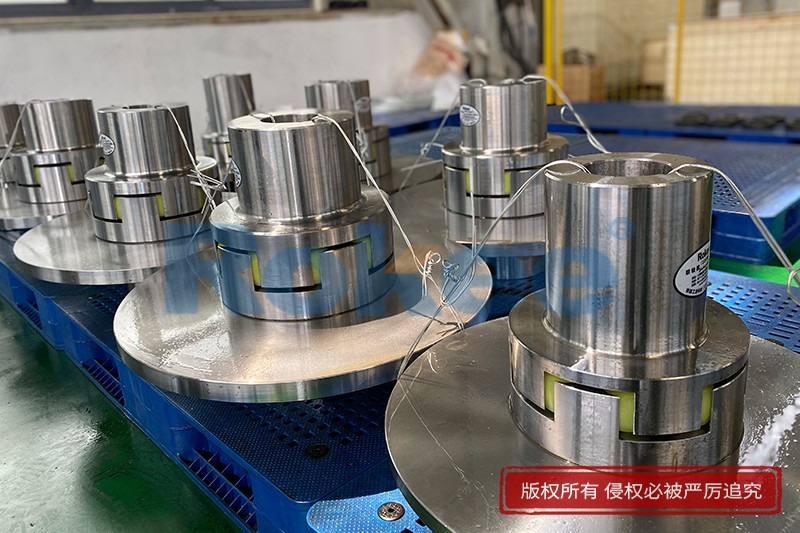
In the realm of mechanical power transmission systems, couplings serve as critical components that connect two rotating shafts, enabling the transfer of torque while accommodating various forms of misalignment. Among the diverse range of couplings available, flexible brake disc couplings have emerged as a preferred choice in numerous industrial applications due to their unique combination of flexibility, torque capacity, and braking functionality. Unlike rigid couplings that demand precise alignment, or other flexible couplings that may lack integrated braking features, flexible brake disc couplings bridge the gap between reliable power transmission and efficient speed control.
The design of a flexible brake disc coupling is a sophisticated integration of structural integrity and flexible elements, tailored to meet the dual requirements of torque transmission and misalignment compensation, along with the additional function of braking. At its core, a typical flexible brake disc coupling consists of several key components: two shaft hubs, a set of flexible discs, a brake disc, and connecting bolts. Each component is meticulously designed to work in harmony, ensuring optimal performance and longevity.
Shaft hubs are the primary interfaces that connect the coupling to the input and output shafts of the connected machinery. They are typically manufactured from high-strength alloy steels or carbon steels, selected for their excellent tensile strength and wear resistance. The inner diameter of the hubs is precision-machined to match the diameter of the shafts, with common connection methods including interference fit, keyway connection, or tapered sleeve connection. These connection methods ensure a secure and slip-free transmission of torque, preventing any loss of power during operation. The outer surface of the hubs is designed to attach to the flexible discs, usually through a series of evenly spaced bolt holes that facilitate uniform force distribution.
Flexible discs are the defining elements that endow the coupling with its flexibility. These discs are typically thin, circular plates made from materials such as stainless steel, titanium alloy, or high-performance composite materials. The choice of material depends on the application requirements, including torque level, operating temperature, and environmental conditions. Stainless steel discs are widely used due to their good corrosion resistance and fatigue strength, while titanium alloy discs are preferred for high-temperature or high-torque applications where weight reduction is also a concern. The design of the flexible discs often incorporates slotted or perforated patterns, which enhance their flexibility by reducing the stiffness of the disc while maintaining sufficient structural strength to transmit torque. The number of flexible discs used in a coupling can vary, with multiple discs stacked together to increase the coupling's torque capacity and flexibility.
The brake disc is an integral component that distinguishes flexible brake disc couplings from other types of flexible couplings. It is mounted between the two sets of flexible discs or attached to one of the hubs, depending on the specific design. The brake disc is typically a thick, circular plate made from heat-resistant and wear-resistant materials, such as gray cast iron, alloy steel, or carbon-carbon composites. The surface of the brake disc is precision-ground to ensure a smooth and flat contact surface for the brake pads, which is essential for efficient braking performance. The size and thickness of the brake disc are determined by the braking torque requirements of the application, with larger and thicker discs capable of dissipating more heat and handling higher braking forces.
Connecting bolts and nuts are used to assemble the various components of the coupling. These fasteners are typically made from high-strength steel and are tightened to specific torque values to ensure a secure connection. Lock washers or thread-locking compounds are often used to prevent the bolts from loosening during operation, which could lead to component failure or reduced performance. In some designs, spacer sleeves are used between the flexible discs to maintain the correct distance between them, ensuring that the discs can flex freely without interference.
The working principle of a flexible brake disc coupling revolves around the coordinated operation of its components to achieve three main functions: torque transmission, misalignment compensation, and braking. When the input shaft rotates, torque is transmitted from the input hub to the flexible discs through the connecting bolts. The flexible discs then transfer the torque to the output hub, which in turn drives the output shaft. During this process, the flexible discs deform elastically to accommodate any misalignment between the input and output shafts, including angular misalignment, parallel misalignment, and axial displacement.
Angular misalignment occurs when the axes of the two shafts are not collinear but intersect at a point, while parallel misalignment occurs when the axes are parallel but offset from each other. Axial displacement refers to the linear movement of one shaft relative to the other along the axial direction. The flexible discs are designed to handle these types of misalignment by bending or stretching elastically, without transferring excessive forces to the connected shafts or bearings. This elastic deformation ensures that the coupling operates smoothly, reducing vibration and wear on the machinery components.
The braking function of the flexible brake disc coupling is activated when the brake pads are pressed against the surface of the brake disc. This creates a frictional force that opposes the rotation of the coupling, thereby slowing down or stopping the connected shafts. The frictional force generated by the brake pads converts the kinetic energy of the rotating machinery into heat, which is dissipated through the brake disc. The design of the brake disc ensures efficient heat dissipation, preventing overheating and ensuring consistent braking performance even during prolonged or frequent braking operations.
Flexible brake disc couplings offer a range of performance advantages that make them suitable for a wide variety of industrial applications. One of the key advantages is their excellent flexibility, which allows them to accommodate significant levels of misalignment without causing excessive stress on the shafts, bearings, or other components. This flexibility reduces vibration and noise during operation, improving the overall stability and reliability of the mechanical system. Compared to rigid couplings, which require precise alignment and can transmit vibrations and shocks between shafts, flexible brake disc couplings act as a buffer, absorbing shocks and reducing the impact of load fluctuations.
Another major advantage is their integrated braking functionality. By combining the functions of a coupling and a brake into a single component, flexible brake disc couplings reduce the complexity and size of the mechanical system. This integration eliminates the need for separate braking components, such as external brakes or brake drums, which saves space, reduces installation costs, and simplifies the overall design of the machinery. The integrated brake disc also ensures that the braking force is applied directly to the rotating shaft, resulting in more efficient and responsive braking performance.
Flexible brake disc couplings also exhibit high torque capacity and load-bearing capability. The use of high-strength materials for the hubs, flexible discs, and brake disc ensures that the coupling can transmit large amounts of torque without deformation or failure. This makes them suitable for heavy-duty applications, such as industrial machinery, marine propulsion systems, and large-scale pumps and compressors. Additionally, the even distribution of torque through the flexible discs and connecting bolts ensures that the load is spread uniformly across the components, reducing the risk of localized stress concentrations and extending the service life of the coupling.
Corrosion resistance and durability are also notable advantages of flexible brake disc couplings. The use of stainless steel, titanium alloy, or other corrosion-resistant materials for the flexible discs and other components ensures that the coupling can operate reliably in harsh environmental conditions, such as high humidity, saltwater, or chemical exposure. This makes them suitable for outdoor applications, marine environments, and chemical processing plants. The robust design of the coupling, combined with the use of high-quality materials, ensures that it can withstand the rigors of continuous operation, reducing the need for frequent maintenance and replacement.
The versatility of flexible brake disc couplings is reflected in their wide range of application areas across various industries. One of the most common applications is in industrial machinery, such as conveyors, mixers, crushers, and extruders. In these applications, the coupling is used to connect the motor to the driven equipment, transmitting torque while accommodating misalignment caused by installation errors or thermal expansion and contraction. The integrated braking function is particularly useful in conveyors and other material handling equipment, where precise speed control and emergency stopping are essential for safety and efficiency.
Marine propulsion systems are another important application area for flexible brake disc couplings. In ships and boats, the coupling connects the engine to the propeller shaft, transmitting the high torque required for propulsion. The flexibility of the coupling accommodates the misalignment that can occur between the engine and the propeller shaft due to the movement of the hull in the water. The integrated brake disc is used to stop the propeller shaft when the ship is docking or in emergency situations, ensuring safe and controlled operation. The corrosion-resistant materials used in the coupling make it suitable for the harsh marine environment, where saltwater and high humidity can cause rapid degradation of other components.
Flexible brake disc couplings are also widely used in the automotive and transportation industry, particularly in commercial vehicles such as trucks, buses, and trains. In these applications, the coupling is used to connect the transmission system to the drive axle, transmitting torque while accommodating misalignment between the components. The integrated braking function provides additional braking power, enhancing the safety and reliability of the vehicle. In high-performance vehicles, such as racing cars, the lightweight and high-torque capacity of titanium alloy flexible brake disc couplings make them an ideal choice, as they contribute to improved performance and fuel efficiency.
Other application areas include power generation systems, such as wind turbines and hydroelectric generators, where the coupling connects the turbine to the generator, transmitting torque while accommodating misalignment caused by the movement of the turbine blades or the expansion of the generator components. The integrated braking function is used to stop the turbine quickly in case of emergencies, preventing damage to the generator and other equipment. Additionally, flexible brake disc couplings are used in pumps, compressors, and other rotating equipment, where their flexibility and braking functionality ensure efficient and reliable operation.
When selecting a flexible brake disc coupling for a specific application, several key factors must be considered to ensure optimal performance and compatibility with the mechanical system. One of the most important factors is the torque capacity of the coupling. The coupling must be capable of transmitting the maximum torque generated by the input shaft without exceeding its design limits. It is essential to calculate the peak torque requirements of the application, taking into account factors such as load fluctuations, start-up torque, and shock loads, and select a coupling with a torque rating that exceeds these requirements to provide a safety margin.
Misalignment capacity is another critical factor to consider. The coupling must be able to accommodate the maximum level of angular, parallel, and axial misalignment that is expected in the application. This requires an understanding of the potential sources of misalignment, such as installation errors, thermal expansion and contraction, and the movement of the connected machinery. Selecting a coupling with a misalignment capacity that matches or exceeds the expected misalignment will ensure that the coupling operates smoothly and does not cause excessive stress on the shafts or bearings.
The operating speed of the coupling is also an important consideration. The coupling must be designed to operate at the maximum rotational speed of the connected shafts without experiencing excessive centrifugal forces, which could lead to component failure. The maximum allowable speed of the coupling is determined by its design, material properties, and the size of the components. It is essential to select a coupling with a maximum speed rating that is higher than the operating speed of the application to ensure safe and reliable operation.
Environmental conditions, such as temperature, humidity, and exposure to chemicals or corrosive substances, must also be taken into account when selecting a flexible brake disc coupling. The material of the coupling components, particularly the flexible discs and brake disc, must be compatible with the environmental conditions to prevent corrosion, degradation, or premature failure. For example, in high-temperature applications, it is important to select a coupling with components made from heat-resistant materials, such as titanium alloy or carbon-carbon composites, while in corrosive environments, stainless steel or other corrosion-resistant materials should be used.
The braking requirements of the application are another key factor in the selection process. The brake disc must be capable of generating the required braking torque to slow down or stop the connected shafts within the specified time frame. The size and material of the brake disc, as well as the type of brake pads used, will affect the braking performance. It is essential to calculate the braking torque requirements of the application and select a coupling with a brake disc that can meet these requirements, taking into account factors such as the weight of the rotating components, the operating speed, and the desired stopping time.
Proper maintenance is essential to ensure the long-term performance and reliability of flexible brake disc couplings. Regular inspection and maintenance can help to identify potential issues early, preventing costly downtime and component failure. One of the key maintenance tasks is the regular inspection of the flexible discs for signs of wear, fatigue, or damage. The discs should be checked for cracks, tears, or deformation, which can occur due to excessive misalignment, overload, or prolonged operation. If any damage is detected, the flexible discs should be replaced immediately to prevent further damage to the coupling or the connected machinery.
The connecting bolts and nuts should also be inspected regularly to ensure that they are tight and secure. Loose bolts can cause excessive vibration, uneven torque distribution, and premature wear of the components. The bolts should be tightened to the specified torque values using a torque wrench, and lock washers or thread-locking compounds should be used to prevent loosening. Additionally, the brake disc and brake pads should be inspected for wear and damage. The surface of the brake disc should be checked for scoring, warping, or uneven wear, which can affect braking performance. The brake pads should be checked for thickness, and replaced if they are worn beyond the recommended limit.
Lubrication is another important maintenance task for flexible brake disc couplings. While some components, such as the flexible discs, may not require lubrication, other components, such as the shaft hubs and connecting bolts, may benefit from periodic lubrication to reduce friction and prevent corrosion. It is important to use the correct type of lubricant for the application, taking into account the operating temperature and environmental conditions. Over-lubrication should be avoided, as excess lubricant can attract dirt and debris, which can cause wear and damage to the components.
Regular alignment checks are also essential to ensure that the coupling is operating within its misalignment limits. Misalignment can increase over time due to the movement of the connected machinery, thermal expansion, or wear of the components. Using precision alignment tools, such as laser alignment systems, to check the alignment of the input and output shafts periodically can help to identify and correct any misalignment issues before they cause damage to the coupling or the machinery. If misalignment is detected, adjustments should be made to the mounting of the connected equipment to restore proper alignment.
In conclusion, flexible brake disc couplings are versatile and reliable components that play a crucial role in modern mechanical power transmission systems. Their unique design, which combines flexibility, torque transmission, and integrated braking functionality, makes them suitable for a wide range of industrial applications, from industrial machinery and marine propulsion systems to automotive and power generation equipment. By understanding their design characteristics, working principles, performance advantages, and application requirements, engineers and maintenance professionals can select and maintain flexible brake disc couplings effectively, ensuring optimal performance, reliability, and safety of the mechanical systems they serve. As technology continues to advance, the materials and design of flexible brake disc couplings are likely to evolve further, enhancing their performance and expanding their range of applications in the future.
« Flexible Brake Disc Couplings » Post Date: 2023/11/6
URL: https://www.rokeecoupling.com/en/customer-cases/flexible-brake-disc-couplings.html
- Exploded View of Bush Type Flexible Couplings
- Customized Cardan Shaft Coupling
- Function Of Laminated Flexible Coupling
- Keyway Diaphragm Coupling
- Quick Fit Type Diaphragm Couplings
- Characteristics Of Elastic Diaphragm Couplings
- Wholesale Of Gear Pin Couplings
- Bushed Pin Flexible Coupling Brands
- Cross Joint Shafts
- Universal Joint Coupling Cross Shaft