Cross Joint Shafts
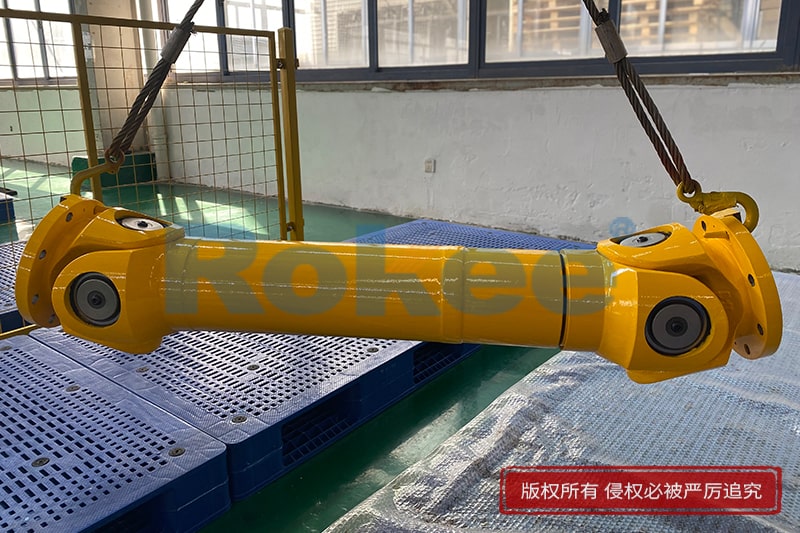
Rokee® is Cross Joint Shafts Supplier from China, Support Customization and Export, due to excellent quality, complete technical services and superior cost performance, Rokee® Cross Joint Shafts have been serving more than 60 countries and regions in the world, effectively operating in many corners of the world.
In the realm of mechanical transmission systems, the cross joint shaft stands as a critical component that enables the transfer of rotational motion and torque between shafts that are not aligned in a straight line. Its ability to accommodate angular misalignment while maintaining efficient power transmission has made it an indispensable part of numerous industrial, automotive, and agricultural applications. From the drivetrains of heavy-duty trucks to the rotating mechanisms of industrial machinery, the cross joint shaft plays a silent yet vital role in ensuring the smooth operation of complex mechanical systems.
-
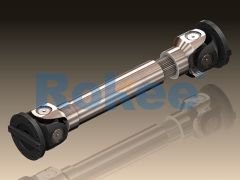
SWC-BH Standard Telescopic Welded Universal Coupling
SWC-BH Universal Coupling adopts integrated fork head layout, with the rotary diameter of 1600mm and torque transmission distance of more than 30m. SWC-BH Cardan Shaft is widely used in steel rolling machinery, crane transport machinery and other heavy equipment fields. -
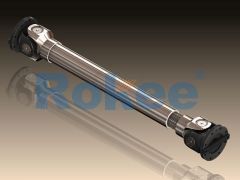
SWC-CH Long Telescopic Welded Universal Coupling
SWC-CH Universal Coupling adopts integrated fork head layout, with the rotary diameter of 1600mm and torque transmission distance of more than 30m. SWC-CH Cardan Shaft is widely used in steel rolling machinery, crane transport machinery and other heavy equipment fields. -
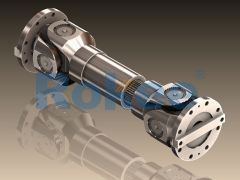
SWC-DH Short Telescopic Welded Universal Coupling
SWC-DH Universal Coupling adopts integrated fork head layout, with the rotary diameter of 1600mm and torque transmission distance of more than 30m. SWC-DH Cardan Shaft is widely used in steel rolling machinery, crane transport machinery and other heavy equipment fields. -
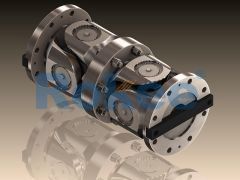
SWC-WD Non-telescopic Short Universal Coupling
SWC-WD Universal Coupling adopts integrated fork head layout, with the rotary diameter of 1600mm and torque transmission distance of more than 30m. SWC-WD Cardan Shaft is widely used in steel rolling machinery, crane transport machinery and other heavy equipment fields. -
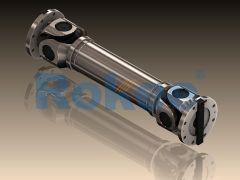
SWC-WH Non-telescopic Welded Universal Coupling
SWC-WH Universal Coupling adopts integrated fork head layout, with the rotary diameter of 1600mm and torque transmission distance of more than 30m. SWC-WH Cardan Shaft is widely used in steel rolling machinery, crane transport machinery and other heavy equipment fields. -
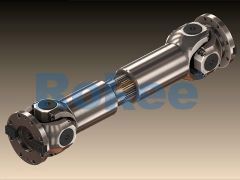
SWP-A Universal Coupling
SWP-A Universal Coupling adopts integrated fork head layout. Similar to the use of the SWC universal coupling, SWP-A Cardan Shaft is mainly used in the field of heavy-duty large equipment, with a rotary diameter of up to 1200mm. -
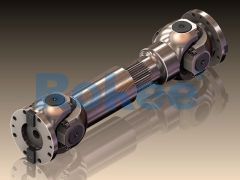
SWP-B Universal Coupling
SWP-B Universal Coupling adopts integrated fork head layout. Similar to the use of the SWC universal coupling, SWP-B Cardan Shaft is mainly used in the field of heavy-duty large equipment, with a rotary diameter of up to 1200mm. -
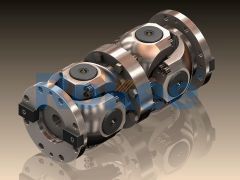
SWP-C Universal Coupling
SWP-C Universal Coupling adopts integrated fork head layout. Similar to the use of the SWC universal coupling, SWP-C Cardan Shaft is mainly used in the field of heavy-duty large equipment, with a rotary diameter of up to 1200mm. -
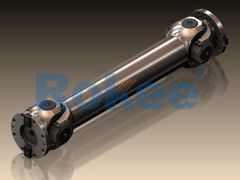
SWP-D Universal Coupling
SWP-D Universal Coupling adopts integrated fork head layout. Similar to the use of the SWC universal coupling, SWP-D Cardan Shaft is mainly used in the field of heavy-duty large equipment, with a rotary diameter of up to 1200mm.
To begin with, it is essential to clarify the basic definition and structural composition of the cross joint shaft. A cross joint shaft, also known as a universal joint shaft or Cardan shaft, is a mechanical device designed to transmit torque and rotational motion between two shafts that intersect at an angle. Unlike rigid shafts that require precise coaxial alignment, the cross joint shaft can accommodate both angular misalignment and, in some cases, axial displacement, making it highly versatile in situations where perfect alignment is difficult or impossible to achieve. The core structure of a typical cross joint shaft consists of four main components: the cross shaft (also called the spider), four bearing assemblies (including bearings and bearing cups), and two yokes (also known as forks). The cross shaft is the central component, with four trunnions extending radially at 90-degree angles to each other. Each trunnion is fitted with a bearing assembly, which allows the cross shaft to rotate freely relative to the yokes. The two yokes are connected to the input and output shafts respectively, and each yoke is equipped with two holes that match the bearing assemblies of the cross shaft. When the input shaft rotates, the torque is transmitted through the yoke to the cross shaft, and then from the cross shaft to the output yoke, thereby driving the output shaft to rotate. This structural design enables the cross joint shaft to adapt to changes in the angle between the input and output shafts, ensuring continuous power transmission.
The working principle of the cross joint shaft is based on the geometric characteristics of its structure and the relative motion between its components. When the input shaft rotates, the yoke connected to it drives the cross shaft to rotate around the axis of the input shaft. At the same time, due to the angular misalignment between the input and output shafts, the cross shaft also undergoes a tilting motion relative to the output yoke. The bearing assemblies installed on the trunnions of the cross shaft reduce the friction between the cross shaft and the yokes, allowing for smooth relative rotation. It should be noted, however, that a single cross joint shaft has a limitation: the angular velocity of the output shaft is not constant when the input shaft rotates at a constant speed. This phenomenon is known as angular velocity fluctuation, which can cause vibration and noise in the transmission system. The degree of angular velocity fluctuation is proportional to the square of the angle between the input and output shafts; the larger the angle, the more severe the fluctuation. To solve this problem, engineers usually adopt a double cross joint shaft configuration, where two cross joint shafts are connected in series with an intermediate shaft. By properly aligning the yokes of the two cross joint shafts (ensuring that the angles of the two joints are equal and the yokes are in the same plane), the angular velocity fluctuations of the two joints can offset each other, resulting in a constant angular velocity of the output shaft. This double-joint design is widely used in applications that require stable and smooth power transmission, such as automotive drivetrains and industrial conveyor systems.
Material selection is a crucial factor that directly affects the performance, service life, and reliability of the cross joint shaft. The choice of materials depends on the specific application requirements, including the magnitude of the transmitted torque, the operating speed, the working environment (such as temperature, humidity, and corrosive conditions), and the load-bearing capacity. For the cross shaft and yokes, which bear the main torque and impact load, high-strength alloy steels are commonly used. Alloy steels such as 40Cr, 45CrNiMoV, and 20CrMnTi are preferred due to their excellent mechanical properties, including high tensile strength, good toughness, and wear resistance. These steels undergo heat treatment processes such as quenching and tempering to further improve their hardness and fatigue resistance, ensuring that they can withstand the repeated stress and impact during long-term operation. The bearing assemblies of the cross joint shaft are usually made of high-carbon chromium bearing steel, such as GCr15, which has high hardness, good wear resistance, and excellent dimensional stability. The bearing cups and other auxiliary components may be made of medium-carbon steel or cast iron, depending on the load requirements. In some special applications, such as those in high-temperature or corrosive environments, stainless steel or heat-resistant alloys may be used to enhance the corrosion resistance and high-temperature stability of the cross joint shaft. Additionally, the surface of the cross shaft trunnions and bearing assemblies is often subjected to surface treatment processes such as chrome plating or nitriding to reduce friction and improve wear resistance.
The cross joint shaft has a wide range of applications across various industries, thanks to its ability to accommodate angular misalignment and transmit torque efficiently. One of the most common applications is in the automotive industry, where cross joint shafts are used in the drivetrains of cars, trucks, buses, and other vehicles. In rear-wheel-drive and four-wheel-drive vehicles, the cross joint shaft connects the transmission output shaft to the drive axle, transmitting the torque generated by the engine to the wheels. Due to the suspension movement of the vehicle, the angle between the transmission shaft and the drive axle changes constantly, and the cross joint shaft can easily adapt to this change, ensuring stable power transmission. In addition, cross joint shafts are also used in the steering systems of some vehicles, enabling the transfer of motion from the steering wheel to the steering gear. In the industrial sector, cross joint shafts are widely used in various machinery and equipment, such as industrial robots, conveyor systems, printing machines, and textile machines. For example, in a conveyor system, the cross joint shaft connects the motor to the conveyor roller, allowing the motor to drive the roller to rotate even if there is a slight angular misalignment between the motor shaft and the roller shaft. In the agricultural field, cross joint shafts are essential components of agricultural machinery such as tractors, harvesters, and irrigation pumps. These machines often operate in harsh environments where the shafts are prone to misalignment due to the uneven terrain and the movement of the machinery. The cross joint shaft can withstand the heavy load and harsh working conditions, ensuring the reliable operation of the agricultural machinery. Furthermore, cross joint shafts are also used in aerospace, marine, and construction equipment, where they play a key role in power transmission between non-aligned shafts.
Proper maintenance of the cross joint shaft is essential to ensure its long service life and reliable performance. Neglecting maintenance can lead to premature wear, failure of components, and even damage to the entire transmission system. The main maintenance tasks for the cross joint shaft include lubrication, inspection, and replacement of worn components. Lubrication is the most important maintenance item, as it reduces friction between the cross shaft trunnions and the bearing assemblies, preventing excessive wear and overheating. The type of lubricant used should be selected according to the working conditions of the cross joint shaft, such as operating temperature and load. Generally, high-temperature resistant grease or gear oil is used for lubrication. The lubrication interval depends on the application and working environment; for heavy-duty applications or harsh environments, the lubrication interval should be shortened. During lubrication, it is necessary to ensure that the lubricant fully fills the bearing assemblies, and the old lubricant should be drained before adding new lubricant to avoid mixing with impurities.
Regular inspection is another important part of maintenance. Inspections should include checking for signs of wear, damage, or looseness of the components. For example, checking whether the bearing assemblies are loose or have excessive play, whether the cross shaft trunnions are worn or scratched, and whether the yokes have cracks or deformation. In addition, it is also necessary to check the alignment of the input and output shafts, as excessive angular misalignment can increase the load on the cross joint shaft and accelerate wear. If any worn or damaged components are found during inspection, they should be replaced in a timely manner to avoid further damage. For example, if the bearings are worn out, they should be replaced with new ones of the same specification; if the cross shaft is damaged, it should be replaced to ensure the normal operation of the cross joint shaft. In addition, during the disassembly and assembly of the cross joint shaft, it is necessary to follow the correct procedures to avoid damaging the components. For example, when removing the bearing cups, special tools should be used to prevent deformation of the yokes; when assembling, the components should be aligned correctly to ensure smooth operation.
With the continuous development of mechanical engineering technology, the cross joint shaft is also undergoing constant improvement and innovation to meet the increasing requirements of modern machinery for high efficiency, high reliability, and lightweight design. One of the main development trends is the optimization of structural design. By using advanced simulation software such as finite element analysis (FEA), engineers can simulate the stress distribution and fatigue life of the cross joint shaft under different working conditions, thereby optimizing the structure of the cross shaft, yokes, and other components. This optimization can reduce the weight of the cross joint shaft while improving its load-bearing capacity and fatigue resistance, making it more suitable for lightweight and high-performance machinery. Another development trend is the application of new materials and surface treatment technologies. The development of high-strength, lightweight materials such as composite materials and titanium alloys provides new possibilities for the manufacturing of cross joint shafts. These materials can further reduce the weight of the cross joint shaft and improve its corrosion resistance and high-temperature performance. At the same time, advanced surface treatment technologies such as physical vapor deposition (PVD) and chemical vapor deposition (CVD) can further improve the wear resistance and service life of the cross joint shaft components.
In addition, the integration of intelligent technologies into the cross joint shaft is also an emerging trend. With the development of the Internet of Things (IoT) and industrial automation, intelligent sensors can be installed on the cross joint shaft to monitor its operating status in real time, such as temperature, vibration, and torque. This real-time monitoring allows for predictive maintenance, where potential faults can be detected and addressed before they lead to component failure. For example, if the sensor detects an abnormal increase in temperature or vibration of the cross joint shaft, it can send an alarm to the control system, prompting maintenance personnel to inspect and maintain the component in a timely manner. This predictive maintenance not only improves the reliability of the cross joint shaft but also reduces maintenance costs and downtime. Furthermore, the development of modular design is also improving the versatility and interchangeability of cross joint shafts. Modular design allows for the combination of different components (such as yokes, cross shafts, and bearing assemblies) according to specific application requirements, making it easier to customize cross joint shafts for different applications and reducing the production cycle and cost.
Despite its widespread use and continuous improvement, the cross joint shaft still faces some challenges in certain high-performance applications. For example, in applications with extremely high speeds or large angular misalignments, the existing cross joint shaft designs may have limitations in terms of stability and service life. To address these challenges, researchers are exploring new structural designs, such as flexible universal joints and constant velocity joints, which can better accommodate large angular misalignments and maintain constant angular velocity. However, these new designs often have higher costs and more complex structures, making them suitable for specific high-end applications. For most general applications, the traditional cross joint shaft still remains the preferred choice due to its simplicity, reliability, and cost-effectiveness.
In conclusion, the cross joint shaft is a fundamental and indispensable component in mechanical transmission systems, with its unique ability to transmit torque between non-aligned shafts. Its simple yet effective structural design, combined with appropriate material selection, enables it to adapt to a wide range of applications across various industries. Proper maintenance practices are essential to ensure its long service life and reliable performance, while ongoing technological innovations in structural design, materials, and intelligent monitoring are driving its continuous evolution. As mechanical systems become increasingly complex, lightweight, and intelligent, the cross joint shaft will continue to play a crucial role in ensuring efficient and reliable power transmission. Future research and development will focus on addressing the remaining challenges in high-performance applications and further improving the performance, reliability, and intelligence of the cross joint shaft, making it an even more vital part of the modern mechanical industry.
« Cross Joint Shafts » Post Date: 2024/7/11
URL: https://www.rokeecoupling.com/en/tags/cross-joint-shafts.html