Pump Claw Coupling
Rokee® is a Pump Claw Coupling Supplier from China, customized pump claw coupling according to the drawings which provided by the customer, selling chinese national standard pump claw coupling, support export, due to excellent quality, complete technical services and superior cost performance, Rokee® industrial coupling have been serving more than 60 countries and regions in the world, effectively operating in many corners of the world.
The plum coupling is composed of two semi-couplings with convex claws and a plum-shaped flexible non-metallic element whose hardness can be adjusted. By embedding the plum-shaped flexible element into the two semi-couplings to realize the connection, it has the characteristics of compensating the relative displacement of the two axes, reducing vibration and buffering, simple structure and easy maintenance without lubrication.
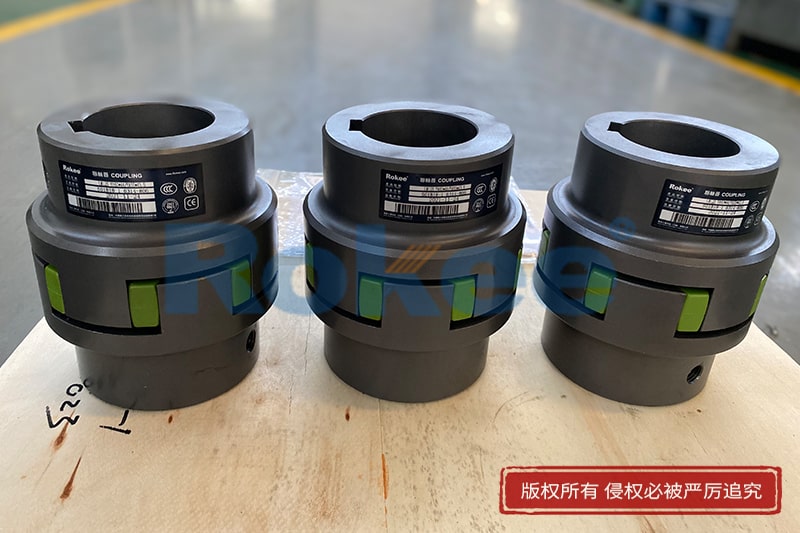
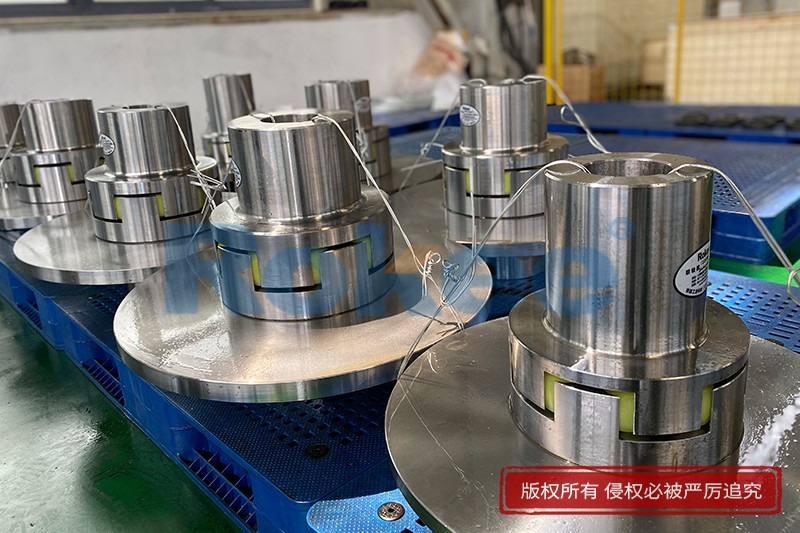
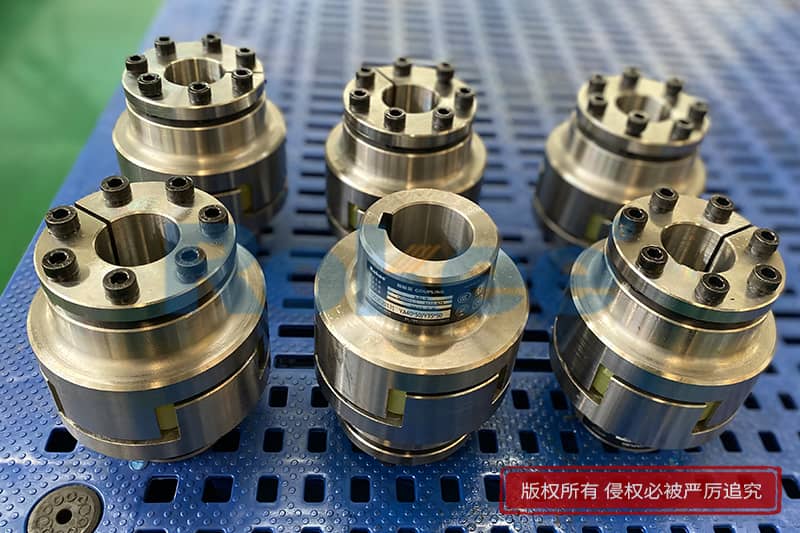
Flexible plum blossom coupling is made up of semi-shaft coupling with the same protruding claw and flexible component.utilizing the plum blossom elastic component put between the protruding claw and two half shaft coupling.in order to realize the connection of two semiaxis devices.
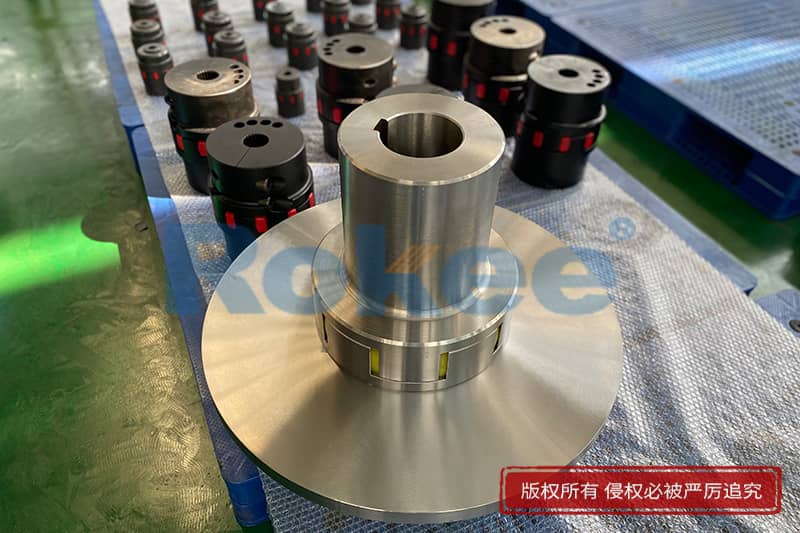

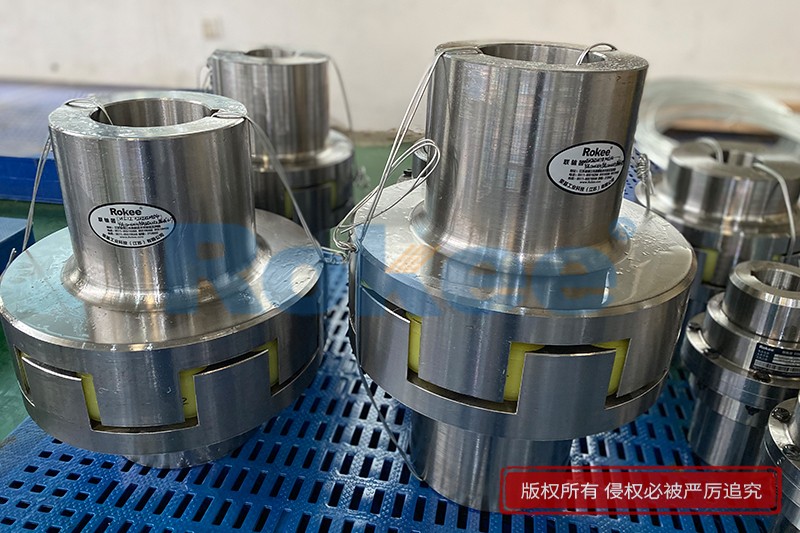
Jaw coupling has compensating by two axle to be relative skew,reducing shaking buffering.smaller diameter simple structure.without lubricating.bearing large capacity,and convenient repair But the semi-shaft coupling needs to move along the axial while changing the elastic component.

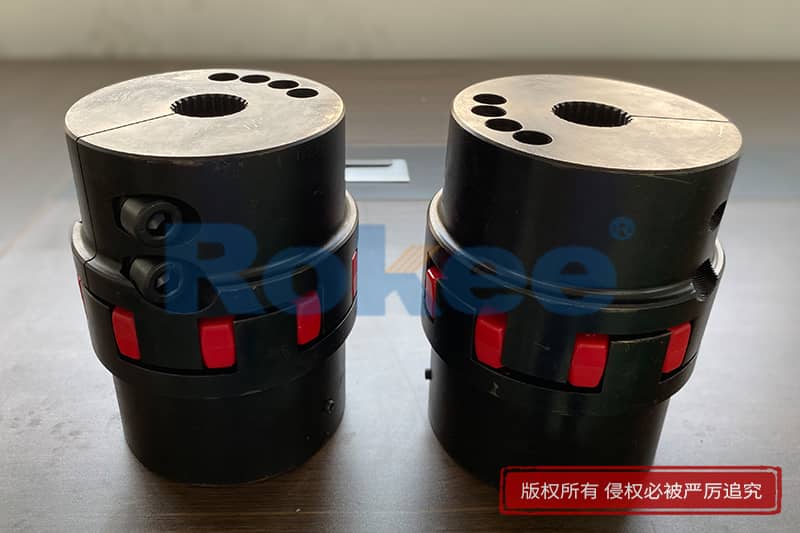
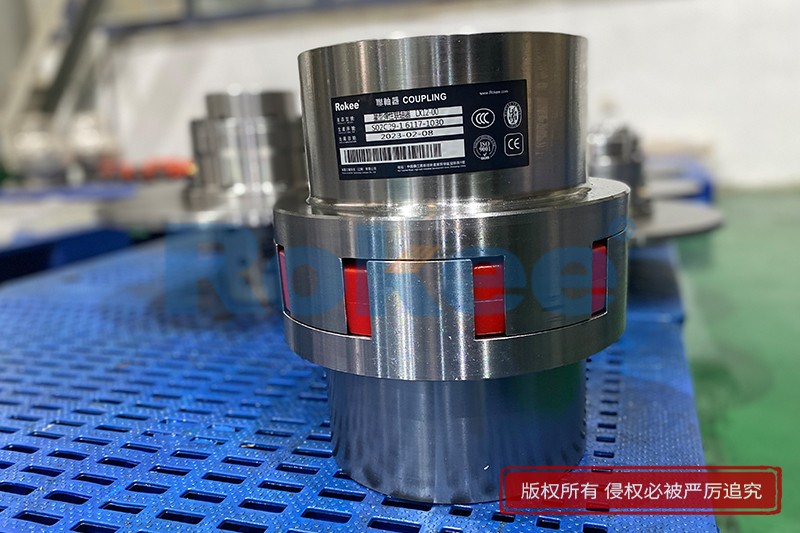
Claw coupling is suitable for two with axis,start frequent,positive and negative change,low-speed and medium speed.medium and small powerrotate axle department,requiring working dependability high working position;it is not suitable for the heavily loaded and restricted axial in size.Two axis put in the difficult position after exchange of flexible component.
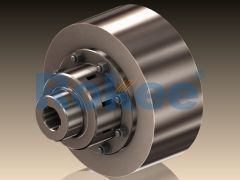
![Pump Claw Coupling,LMPK Plum-shaped Flexible Coupling]()
LMPK Plum-shaped Flexible Coupling
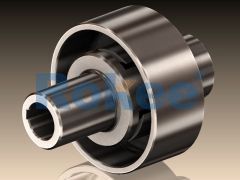
LMPK Plum-shaped Flexible Coupling adopts split brake disc design, suitable for situations where braking is required and eliminating the need of axially moving the semi-coupling when replacing the elastomer.![Pump Claw Coupling,LMZ-II Plum-shaped Flexible Coupling]()
LMZ-II Plum-shaped Flexible Coupling
LMZ-II Plum-shaped Flexible Coupling adopts integral brake wheel design, suitable for situations where braking is required.![Pump Claw Coupling,LMZ-I Plum-shaped Flexible Coupling]()
LMZ-I Plum-shaped Flexible Coupling
LMZ-I Plum-shaped Flexible Coupling adopts split brake wheel design, suitable for situations where braking is required.![Pump Claw Coupling,LMS Plum-shaped Flexible Coupling]()
LMS Plum-shaped Flexible Coupling
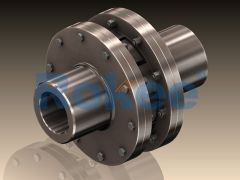
LMS Plum-shaped Flexible Coupling adopts double transition flange connection, which eliminates the need of axially moving the semi-coupling when replacing the elastomer.![Pump Claw Coupling,LMD Plum-shaped Flexible Coupling]()
LMD Plum-shaped Flexible Coupling
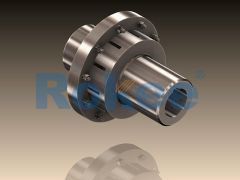
LMD Plum-shaped Flexible Coupling is added with transition connection, which eliminates the need of axially moving the semi-coupling when replacing the elastomer.![Pump Claw Coupling,LM Plum-shaped Flexible Coupling]()
LM Plum-shaped Flexible Coupling
LM Plum-shaped Flexible Coupling is the basic form of this series of couplings.
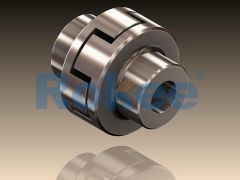
In the realm of mechanical power transmission, couplings serve as the critical link between rotating shafts, enabling the seamless transfer of torque while accommodating misalignments and reducing operational stress. Among the diverse range of coupling types available, pump claw couplings stand out for their unique combination of simplicity, efficiency, and versatility, making them a preferred choice in numerous industrial and commercial pumping systems.
1. Understanding Pump Claw Couplings: Definition and Core Functions
A pump claw coupling is a type of flexible coupling specifically engineered for use in pumping applications, designed to connect the motor shaft to the pump impeller shaft. Its name derives from the distinctive claw-like projections (or teeth) on its two main rotating components, which interlock with a flexible elastomeric element placed between them. Unlike rigid couplings, which require precise alignment and offer no flexibility, pump claw couplings are classified as flexible couplings, capable of accommodating three types of misalignment: angular misalignment (where shafts intersect at an angle), parallel misalignment (where shafts are offset parallel to each other), and axial misalignment (where shafts move along their axial direction).
The core functions of a pump claw coupling extend beyond mere torque transmission. Firstly, it acts as a shock absorber, dampening vibrations generated by the motor or pump during operation, thereby reducing noise and minimizing wear on other system components such as bearings and seals. Secondly, it provides overload protection; in the event of a sudden torque spike or jamming of the pump impeller, the elastomeric element can deform or shear, preventing damage to the motor, pump, or other critical machinery. Thirdly, it compensates for thermal expansion and contraction of shafts, which occurs due to temperature fluctuations during operation, ensuring consistent performance even under varying thermal conditions. These functions make pump claw couplings indispensable in maintaining the stability and efficiency of pumping systems, particularly in applications where operating conditions are dynamic or harsh.
2. Design and Operational Principles of Pump Claw Couplings
The design of a pump claw coupling is relatively straightforward, consisting of three primary components: two claw-shaped hubs, a flexible insert (also known as a spider or elastomer), and fastening elements (such as bolts or set screws) to secure the hubs to the respective shafts. Each hub features a series of evenly spaced claws—typically 3 to 6, depending on the coupling size and torque rating—that are designed to mesh with the corresponding grooves in the flexible insert. The hubs are usually manufactured with a bore that matches the diameter of the motor and pump shafts, and may include keyways or clamping mechanisms to ensure a secure, slip-free connection.
The operational principle of a pump claw coupling revolves around the interaction between the rigid hubs and the flexible insert. When the motor shaft rotates, it drives the input hub, which in turn transfers torque to the flexible insert via the interlocking claws. The insert then transmits this torque to the output hub, which rotates the pump shaft. The flexibility of the insert is the key to the coupling’s ability to accommodate misalignments; as the shafts deviate from perfect alignment, the insert deforms elastically, absorbing the resulting forces and allowing the hubs to rotate smoothly without generating excessive stress.
Several design variations of pump claw couplings exist to suit different application requirements. For example, some couplings feature curved or rounded claws, which distribute stress more evenly across the insert and reduce the risk of premature failure compared to sharp-edged claws. Others may incorporate a split-hub design, which allows for easy installation and removal without the need to disassemble the entire shaft assembly—a significant advantage in tight spaces or for large-scale pumping systems. Additionally, the number of claws and the thickness of the insert can be adjusted to modify the coupling’s torque capacity, flexibility, and damping characteristics, ensuring compatibility with a wide range of pump sizes and operating conditions.
3. Material Selection for Pump Claw Couplings: Factors and Considerations
The performance and durability of a pump claw coupling are heavily influenced by the materials used in its construction. The selection of materials for the hubs and flexible insert must take into account several key factors, including the operating torque, speed, temperature, environmental conditions (such as exposure to chemicals, moisture, or dust), and the type of pump application.
For the hubs, the most common materials are cast iron, steel, and aluminum. Cast iron is widely used due to its excellent castability, good wear resistance, and cost-effectiveness, making it suitable for medium-torque, low-to-medium speed applications such as centrifugal pumps in water treatment plants. Steel—particularly carbon steel or alloy steel—offers higher strength and torque capacity than cast iron, making it ideal for heavy-duty pumping applications, high-speed operations, or environments where the coupling may be subjected to high levels of stress. Aluminum, on the other hand, is lightweight and corrosion-resistant, making it suitable for applications where weight reduction is a priority, such as portable pumps or marine pumping systems, although it has a lower torque capacity compared to steel or cast iron.
The flexible insert is typically made from elastomeric materials, which exhibit high elasticity, good damping properties, and resistance to wear. The most common elastomers used include natural rubber, nitrile rubber (NBR), ethylene propylene diene monomer (EPDM), and polyurethane. Natural rubber offers excellent flexibility and damping but has limited resistance to oil, chemicals, and high temperatures, making it suitable for clean, low-temperature water pumping applications. Nitrile rubber is resistant to oil and fuel, making it ideal for pumping systems that handle petroleum-based fluids or operate in oily environments, such as industrial hydraulic systems. EPDM provides superior resistance to heat, ozone, and weathering, making it suitable for outdoor pumping applications or systems that operate at high temperatures, such as boiler feed pumps. Polyurethane offers higher wear resistance and load-bearing capacity than rubber, with good resistance to chemicals and abrasion, making it suitable for heavy-duty applications or pumping systems that handle abrasive fluids.
In addition to the primary materials, the fastening elements (bolts, set screws) are typically made from high-strength steel to ensure a secure connection between the hubs and shafts. In corrosive environments, these elements may be coated with zinc or other corrosion-resistant materials to prevent rust and degradation.
4. Applications of Pump Claw Couplings Across Industries
Pump claw couplings are utilized in a wide range of industries and applications, thanks to their versatility, reliability, and ability to accommodate the varying demands of different pumping systems. Below are some of the key industries and applications where pump claw couplings are commonly employed:
4.1 Water and Wastewater Treatment
In water and wastewater treatment plants, pump claw couplings are extensively used in centrifugal pumps, submersible pumps, and diaphragm pumps. These applications require couplings that can handle medium to high flow rates, accommodate minor misalignments caused by pipe stress or foundation settlement, and dampen vibrations to ensure quiet operation. Cast iron or steel hubs with EPDM or nitrile rubber inserts are commonly used here, as they offer good resistance to moisture and chemicals present in wastewater.
4.2 Chemical Processing
The chemical processing industry relies on pumping systems to transfer a wide range of corrosive, toxic, or viscous fluids. Pump claw couplings used in this industry must be constructed from corrosion-resistant materials, such as stainless steel hubs and polyurethane or EPDM inserts, to withstand exposure to harsh chemicals. Additionally, the couplings must provide reliable torque transmission and vibration damping to prevent leaks or spills, which can have serious safety and environmental consequences.
4.3 Oil and Gas
In the oil and gas industry, pump claw couplings are used in crude oil pumps, fuel transfer pumps, and water injection pumps. These applications involve high pressures, high temperatures, and exposure to oil and petroleum-based fluids, requiring couplings with steel hubs and nitrile rubber or polyurethane inserts. The couplings must also be capable of handling high torque and speed, while accommodating misalignments caused by thermal expansion or vibration from nearby machinery.
4.4 HVAC Systems
Heating, ventilation, and air conditioning (HVAC) systems use pumps to circulate water or refrigerant throughout buildings. Pump claw couplings in HVAC applications are typically lightweight, with aluminum or cast iron hubs and natural rubber or EPDM inserts, to handle low to medium torque and speed. They must also provide effective vibration damping to reduce noise levels, ensuring a comfortable indoor environment.
4.5 Agriculture
In agricultural applications, pump claw couplings are used in irrigation pumps, sprayer pumps, and fertilizer transfer pumps. These couplings must be durable, corrosion-resistant (to withstand exposure to water, fertilizer, and outdoor weather conditions), and easy to maintain. Cast iron hubs with EPDM inserts are commonly used here, as they offer good reliability and cost-effectiveness for agricultural operations.
4.6 Marine and Offshore
Marine and offshore pumping systems, such as ballast pumps, bilge pumps, and seawater cooling pumps, require couplings that can withstand harsh marine environments, including saltwater corrosion, high humidity, and vibration. Aluminum or stainless steel hubs with EPDM or polyurethane inserts are preferred in these applications, as they offer excellent corrosion resistance and durability.
5. Installation Best Practices for Pump Claw Couplings
Proper installation of pump claw couplings is critical to ensuring their optimal performance, reliability, and lifespan. Poor installation can lead to excessive wear, vibration, misalignment, and premature failure of the coupling or other system components. Below are the key best practices to follow during installation:
5.1 Shaft Alignment
While pump claw couplings can accommodate minor misalignments, proper shaft alignment is essential to minimize stress on the coupling and extend its life. Before installing the coupling, the motor and pump shafts should be aligned both radially (parallel misalignment) and axially (angular misalignment) using precision tools such as dial indicators or laser alignment systems. The maximum allowable misalignment varies depending on the coupling size and type, but as a general rule, it should not exceed 0.2 mm for parallel misalignment and 0.5 degrees for angular misalignment.
5.3 Hub Installation
The hubs should be installed on the motor and pump shafts with a tight, slip-free fit. If the hubs have a keyway, the key should be properly seated in the shaft keyway before sliding the hub onto the shaft. Set screws or bolts should be tightened to the manufacturer’s recommended torque specifications to ensure a secure connection. Over-tightening can damage the shaft or hub, while under-tightening can lead to slippage and wear.
5.3 Insert Installation
The flexible insert should be carefully placed between the two hubs, ensuring that the claws of both hubs fully engage with the insert’s grooves. The insert should fit snugly but not be forced into place, as this can cause deformation or damage to the elastomeric material. In some cases, a small amount of lubricant (compatible with the insert material) may be used to ease installation, but excessive lubrication should be avoided as it can attract dust and debris.
5.4 Final Inspection
After installation, a final inspection should be performed to ensure that all components are properly assembled, the shafts are aligned, and there is no interference between the coupling and other system components (such as pipes, brackets, or guards). The coupling should be manually rotated to check for smooth operation, with no binding or excessive play.
6. Maintenance and Troubleshooting of Pump Claw Couplings
Regular maintenance is essential to keep pump claw couplings operating efficiently and to prevent unexpected failures. The maintenance requirements are relatively simple, thanks to the coupling’s straightforward design, but consistent attention can significantly extend its lifespan. Below are the key maintenance tasks and troubleshooting tips:
6.1 Regular Inspection
Pump claw couplings should be inspected regularly—typically every 3 to 6 months, depending on the operating conditions—for signs of wear, damage, or misalignment. During inspection, check for cracks or chips in the hubs, wear or degradation of the flexible insert (such as hardening, cracking, or tearing), loose fastening elements, and signs of excessive vibration or overheating. If any of these issues are detected, immediate action should be taken to repair or replace the affected components.
6.2 Lubrication
Most pump claw couplings do not require regular lubrication, as the flexible insert acts as a self-lubricating element. However, if the coupling has set screws or bolts that are exposed to corrosive environments, they may need to be lubricated periodically with a corrosion-resistant lubricant to prevent seizing.
6.3 Insert Replacement
The flexible insert is the most wear-prone component of the pump claw coupling and will eventually need to be replaced. The frequency of replacement depends on the operating conditions, but as a general rule, inserts should be replaced every 1 to 2 years, or sooner if signs of wear are detected. Replacement is a simple process: remove the fastening elements, separate the hubs, remove the old insert, and install a new one. It is important to use an insert that is compatible with the coupling size and material, as specified by the manufacturer.
6.4 Troubleshooting Common Issues
Common issues with pump claw couplings include excessive vibration, noise, premature insert failure, and shaft slippage. Excessive vibration or noise is often caused by misalignment, worn inserts, or loose hubs. To resolve this, check and correct the shaft alignment, replace the insert if worn, and tighten any loose fastening elements. Premature insert failure can be caused by overloading, high temperatures, exposure to incompatible chemicals, or misalignment. To prevent this, ensure that the coupling is properly sized for the application, use an insert material compatible with the operating conditions, and maintain proper alignment. Shaft slippage is typically caused by under-tightened set screws or a worn keyway. To resolve this, tighten the set screws to the recommended torque or replace the key if the keyway is worn.
7. Emerging Trends in Pump Claw Coupling Design and Technology
The field of mechanical power transmission is constantly evolving, and pump claw couplings are no exception. Several emerging trends are shaping the design and development of these couplings, driven by the need for improved efficiency, reliability, and sustainability, as well as the growing demands of advanced pumping systems.
One key trend is the development of high-performance elastomeric materials for the flexible insert. Manufacturers are investing in research to create elastomers that offer higher torque capacity, better resistance to heat, chemicals, and abrasion, and longer lifespans. For example, new polyurethane blends with enhanced thermal stability and chemical resistance are being developed for use in harsh industrial applications, while advanced rubber compounds with improved damping properties are being used to reduce vibration and noise in precision pumping systems.
Another trend is the integration of smart technology into pump claw couplings. Smart couplings equipped with sensors can monitor key parameters such as temperature, vibration, and torque in real time, providing early warning of potential issues such as misalignment, wear, or overloading. This allows maintenance professionals to perform predictive maintenance, reducing downtime and improving the overall reliability of the pumping system. Additionally, data from smart couplings can be integrated into industrial Internet of Things (IIoT) platforms, enabling remote monitoring and control of pumping systems.
Sustainability is also becoming a key focus in coupling design. Manufacturers are using more eco-friendly materials, such as recycled steel and aluminum for the hubs, and biodegradable elastomers for the inserts. Additionally, the design of couplings is being optimized to reduce energy consumption, by minimizing friction and improving torque transmission efficiency. This not only reduces the environmental impact of pumping systems but also lowers operating costs for end-users.
Finally, there is a growing trend toward customization of pump claw couplings. As pumping systems become more specialized, manufacturers are offering custom-designed couplings tailored to the specific requirements of individual applications. This includes custom sizes, materials, and design features, such as split hubs for easy installation, or specialized inserts for unique chemical or temperature conditions. Customization ensures that the coupling is perfectly matched to the application, maximizing performance and reliability.
8. Conclusion
Pump claw couplings are essential components in modern pumping systems, providing a reliable, efficient, and flexible link between motor and pump shafts. Their simple design, versatility, and ability to accommodate misalignments, dampen vibrations, and protect against overloads make them a preferred choice across a wide range of industries, from water treatment and chemical processing to oil and gas and agriculture. By understanding the design principles, material considerations, installation best practices, and maintenance requirements of pump claw couplings, professionals can optimize the performance and lifespan of their pumping systems.
As technology advances, pump claw couplings continue to evolve, with new materials, smart features, and customization options enhancing their capabilities. Whether in standard or custom configurations, these couplings will remain a critical part of mechanical power transmission, supporting the efficient and reliable operation of pumping systems around the world. By staying informed about the latest trends and best practices, engineers and maintenance professionals can ensure that they select and maintain the right pump claw coupling for their specific application, contributing to the overall efficiency and sustainability of their operations.
« Pump Claw Coupling » Post Date: 2023/9/16
URL: https://www.rokeecoupling.com/en/blog/pump-claw-coupling.html