Curved Claw Couplings
Rokee® is a Curved Claw Couplings Supplier from China, customized curved claw couplings according to the drawings which provided by the customer, selling chinese national standard curved claw couplings, support export, due to excellent quality, complete technical services and superior cost performance, Rokee® industrial coupling have been serving more than 60 countries and regions in the world, effectively operating in many corners of the world.
The plum coupling is composed of two semi-couplings with convex claws and a plum-shaped flexible non-metallic element whose hardness can be adjusted. By embedding the plum-shaped flexible element into the two semi-couplings to realize the connection, it has the characteristics of compensating the relative displacement of the two axes, reducing vibration and buffering, simple structure and easy maintenance without lubrication.
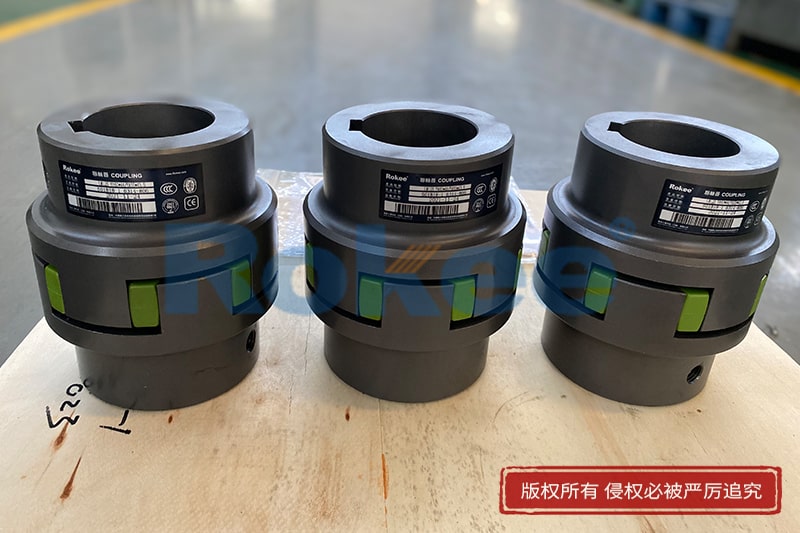
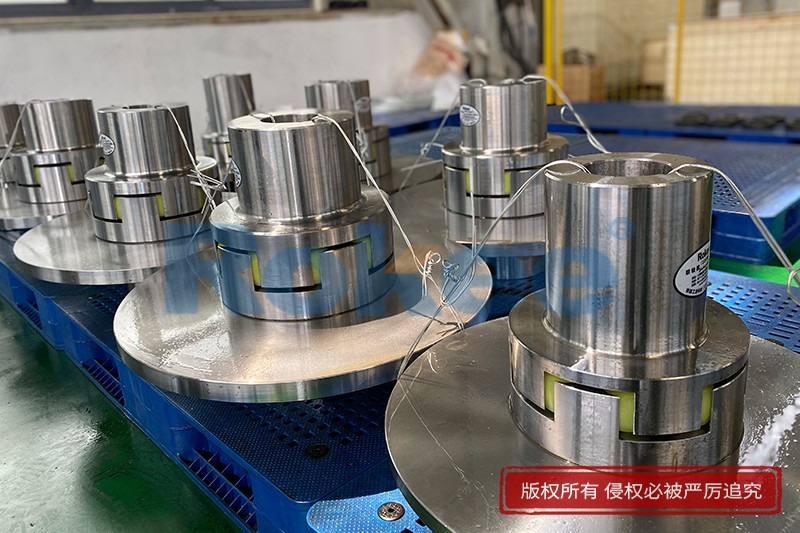
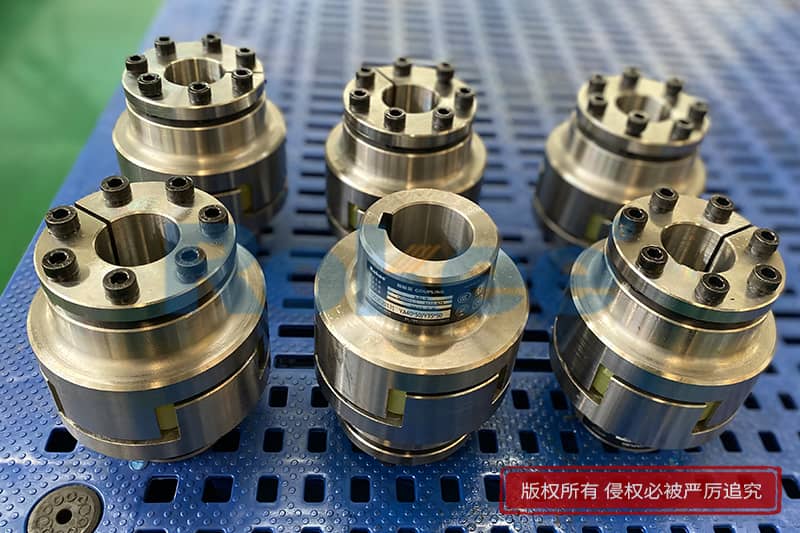
Flexible plum blossom coupling is made up of semi-shaft coupling with the same protruding claw and flexible component.utilizing the plum blossom elastic component put between the protruding claw and two half shaft coupling.in order to realize the connection of two semiaxis devices.
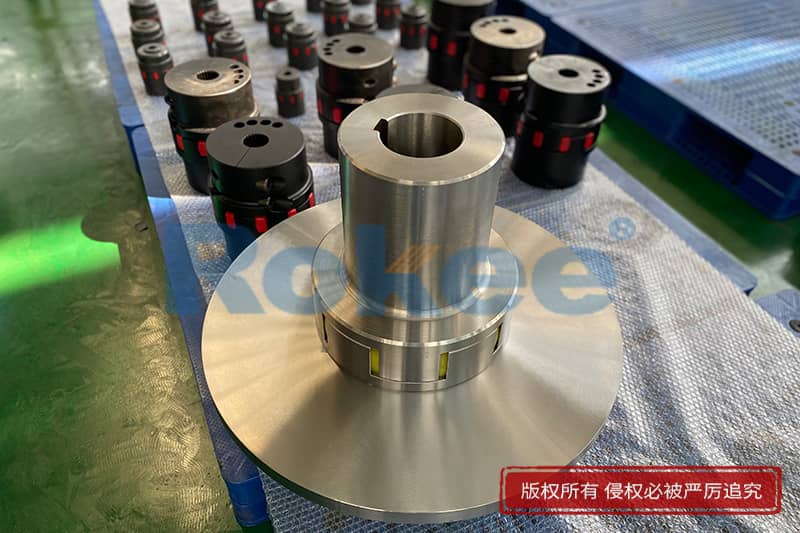

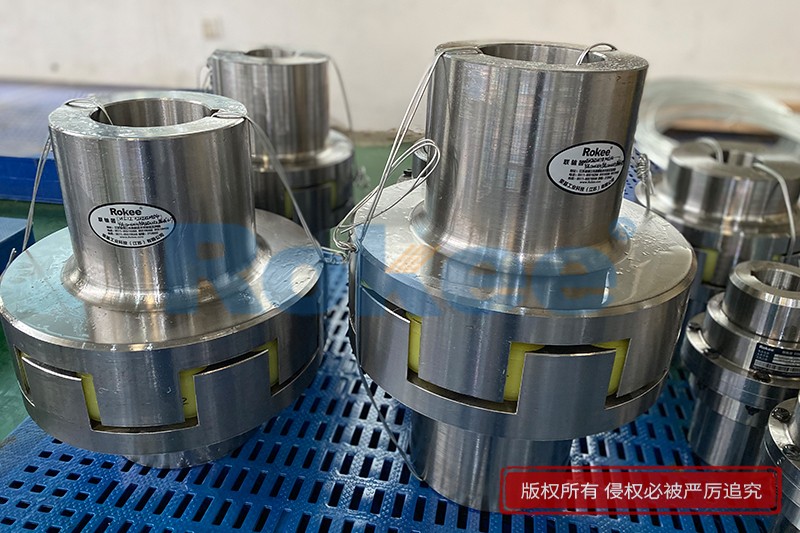
Jaw coupling has compensating by two axle to be relative skew,reducing shaking buffering.smaller diameter simple structure.without lubricating.bearing large capacity,and convenient repair But the semi-shaft coupling needs to move along the axial while changing the elastic component.

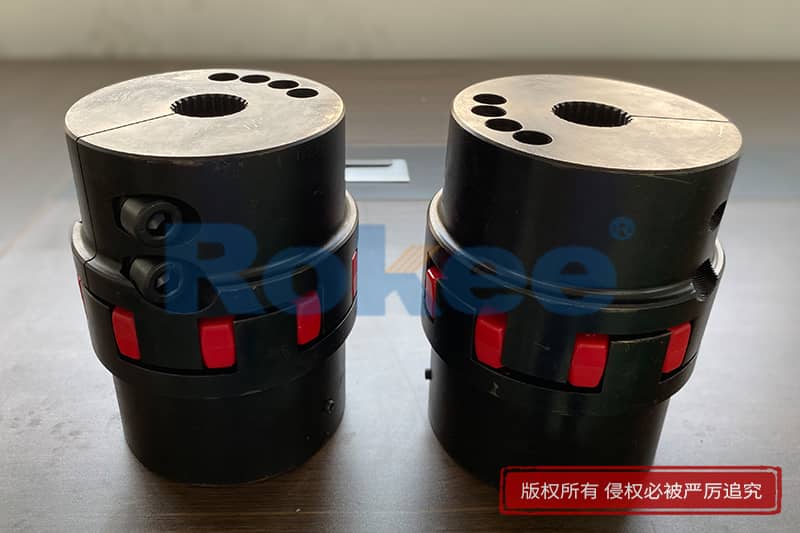
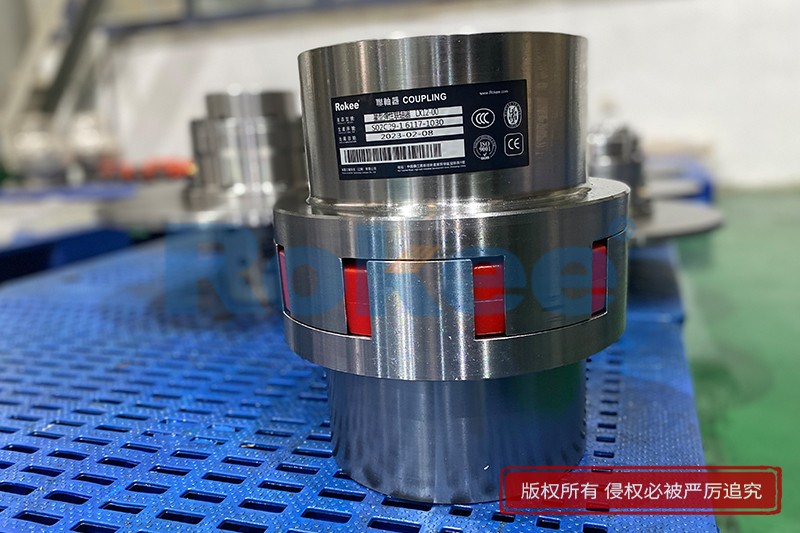
Claw coupling is suitable for two with axis,start frequent,positive and negative change,low-speed and medium speed.medium and small powerrotate axle department,requiring working dependability high working position;it is not suitable for the heavily loaded and restricted axial in size.Two axis put in the difficult position after exchange of flexible component.
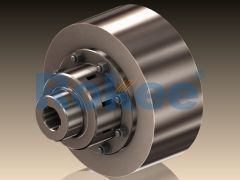
![Curved Claw Couplings,LMPK Plum-shaped Flexible Coupling]()
LMPK Plum-shaped Flexible Coupling
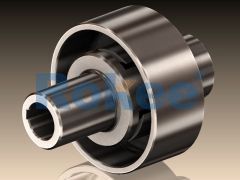
LMPK Plum-shaped Flexible Coupling adopts split brake disc design, suitable for situations where braking is required and eliminating the need of axially moving the semi-coupling when replacing the elastomer.![Curved Claw Couplings,LMZ-II Plum-shaped Flexible Coupling]()
LMZ-II Plum-shaped Flexible Coupling
LMZ-II Plum-shaped Flexible Coupling adopts integral brake wheel design, suitable for situations where braking is required.![Curved Claw Couplings,LMZ-I Plum-shaped Flexible Coupling]()
LMZ-I Plum-shaped Flexible Coupling
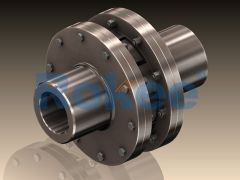
LMZ-I Plum-shaped Flexible Coupling adopts split brake wheel design, suitable for situations where braking is required.![Curved Claw Couplings,LMS Plum-shaped Flexible Coupling]()
LMS Plum-shaped Flexible Coupling
LMS Plum-shaped Flexible Coupling adopts double transition flange connection, which eliminates the need of axially moving the semi-coupling when replacing the elastomer.![Curved Claw Couplings,LMD Plum-shaped Flexible Coupling]()
LMD Plum-shaped Flexible Coupling
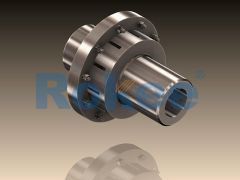
LMD Plum-shaped Flexible Coupling is added with transition connection, which eliminates the need of axially moving the semi-coupling when replacing the elastomer.![Curved Claw Couplings,LM Plum-shaped Flexible Coupling]()
LM Plum-shaped Flexible Coupling
LM Plum-shaped Flexible Coupling is the basic form of this series of couplings.
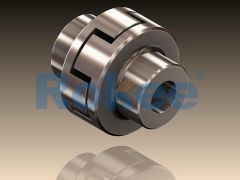
In the realm of mechanical power transmission, couplings serve as critical components that bridge rotating shafts, enabling the seamless transfer of torque while accommodating misalignments and mitigating operational stresses. Among the diverse range of coupling types available, the curved claw coupling stands out for its unique combination of simplicity, cost-effectiveness, and reliability. Designed with interlocking curved claws that engage to transmit power, this coupling type has become a staple in numerous industrial and commercial applications, from small-scale machinery to heavy-duty industrial systems.
Design Characteristics of Curved Claw Couplings
The curved claw coupling is a type of flexible coupling, distinguished by its core structure of two claw-shaped hubs and an elastomeric element that sits between them. Unlike rigid couplings, which require precise alignment of shafts, flexible couplings like the curved claw design are engineered to accommodate angular, parallel, and axial misalignments, thereby reducing wear on shafts, bearings, and other connected components. The key design features of curved claw couplings include the curved profile of the claws, the elastomeric insert, and the hub configurations, each of which contributes to the coupling’s overall performance and functionality.
The hubs of a curved claw coupling are typically manufactured as two separate components, each featuring a series of evenly spaced claws with a curved profile. The curvature of the claws is a defining design element, as it allows for smoother engagement between the hubs and the elastomeric insert compared to straight-claw designs. This curved profile minimizes stress concentrations at the points of contact, reducing the risk of fatigue failure and extending the coupling’s service life. The number of claws can vary depending on the application requirements, with more claws generally enabling higher torque transmission capacity. Common claw counts range from 3 to 6, though specialized designs may feature more for specific high-torque applications.
Between the two clawed hubs lies an elastomeric insert, often referred to as a spider or cushion. This insert is responsible for absorbing shocks and vibrations, dampening noise, and accommodating misalignments. The elastomeric material is typically molded to match the curved profile of the claws, ensuring a tight and secure fit that prevents slippage during operation. The insert may also feature additional design elements, such as grooves or notches, to enhance flexibility and improve heat dissipation. In some designs, the insert is split into segments, allowing for easier installation and replacement without the need to disassemble the entire shaft assembly—a significant advantage in maintenance-intensive environments.
The hubs of curved claw couplings are designed to mount onto the ends of the shafts they connect, with common mounting methods including keyway connections, set screws, or compression fittings. Keyway mounts are particularly prevalent, as they provide a secure, torque-resistant connection by means of a key that fits into slots machined into both the hub and the shaft. Set screw mounts, on the other hand, offer simplicity and ease of installation, with screws tightened against the shaft to hold the hub in place. Compression fittings, which use a clamping mechanism to secure the hub to the shaft, are ideal for applications where shaft damage must be minimized.
Operational Principles of Curved Claw Couplings
The fundamental principle of operation of a curved claw coupling revolves around the transfer of torque from one shaft to another through the interengagement of the curved claws and the elastomeric insert. When the driving shaft rotates, it imparts rotational force to the corresponding hub, which in turn presses against the elastomeric insert. The insert then transmits this torque to the driven hub, causing the driven shaft to rotate. The curved profile of the claws ensures that the contact between the hub and the insert is gradual and uniform, reducing friction and wear during operation.
A key aspect of the curved claw coupling’s operation is its ability to accommodate various types of shaft misalignment. Angular misalignment, which occurs when the shafts are not colinear but intersect at a common point, is compensated for by the flexibility of the elastomeric insert. As the shafts rotate, the curved claws move slightly relative to each other, and the insert deforms elastically to absorb the angular offset. Parallel misalignment, where the shafts are parallel but offset from each other, is similarly accommodated by the lateral flexibility of the insert. Axial misalignment, or endplay between the shafts, is handled by the axial compression and expansion of the elastomeric material.
Another critical function of the curved claw coupling is vibration damping. Rotating machinery often generates vibrations due to imbalances, uneven load distribution, or operational fluctuations. These vibrations can cause excessive noise, accelerate component wear, and even lead to structural damage if not mitigated. The elastomeric insert in the curved claw coupling acts as a shock absorber, absorbing and dissipating vibrational energy before it is transmitted to other parts of the system. The curved profile of the claws enhances this damping effect by reducing the impact forces between the hub and the insert, resulting in smoother and quieter operation.
In addition to torque transmission and misalignment accommodation, curved claw couplings also provide a degree of overload protection. If the torque exceeds the coupling’s rated capacity, the elastomeric insert may deform excessively or shear, preventing damage to the shafts, bearings, and other critical components. This sacrificial nature of the insert makes it a cost-effective component to replace, as opposed to repairing or replacing more expensive machinery parts. However, it is important to note that this overload protection is limited, and for applications with frequent overloads, specialized couplings with more robust protection mechanisms may be required.
Material Considerations for Curved Claw Couplings
The performance and durability of a curved claw coupling are heavily influenced by the materials used in its construction. The selection of materials for the hubs and the elastomeric insert is based on a variety of factors, including the application’s torque requirements, operating temperature, environmental conditions, and chemical exposure. Each material option offers distinct advantages and limitations, making it essential to match the material to the specific application needs.
For the hubs, the most common materials are cast iron, steel, and aluminum. Cast iron is a popular choice for general-purpose applications due to its high strength, durability, and cost-effectiveness. It offers good resistance to wear and deformation, making it suitable for medium-torque applications such as pumps, fans, and conveyors. Steel hubs, particularly carbon steel or alloy steel, are used for high-torque applications where greater strength and rigidity are required. Steel is also more resistant to impact loads, making it ideal for heavy-duty industrial machinery such as compressors, gearboxes, and electric motors in manufacturing plants. Aluminum hubs, on the other hand, are lightweight and offer good corrosion resistance, making them suitable for applications where weight is a critical factor, such as automotive components, small electric motors, and portable machinery. However, aluminum has lower strength than steel or cast iron, limiting its use to low-to-medium torque applications.
The elastomeric insert is typically made from materials such as natural rubber, nitrile rubber (NBR), ethylene propylene diene monomer (EPDM), silicone rubber, or polyurethane. Natural rubber offers excellent flexibility and vibration damping properties, making it suitable for general-purpose applications operating at moderate temperatures. However, it has limited resistance to oil, chemicals, and high temperatures, restricting its use in harsh environments. Nitrile rubber (NBR) is widely used in applications where oil resistance is required, such as in hydraulic systems, engines, and industrial machinery that comes into contact with petroleum-based fluids. It offers good mechanical properties and can withstand temperatures ranging from -40°C to 120°C, making it versatile for many industrial applications.
Ethylene propylene diene monomer (EPDM) is chosen for applications that require resistance to weathering, ozone, and high temperatures. It can withstand temperatures up to 150°C and is resistant to water, steam, and many chemicals, making it suitable for outdoor applications, heating systems, and food processing machinery. Silicone rubber offers the widest temperature range of any elastomeric material, withstanding temperatures from -60°C to 200°C. It also provides excellent resistance to ozone and weathering, but it has lower mechanical strength and oil resistance compared to other materials. Silicone rubber is typically used in high-temperature applications such as industrial ovens, turbines, and aerospace components.
Polyurethane is a durable elastomeric material that offers high tensile strength, good abrasion resistance, and excellent load-bearing capacity. It is suitable for high-torque applications and can withstand moderate temperatures up to 80°C. Polyurethane inserts are often used in applications where long service life and resistance to wear are critical, such as in conveyors, material handling equipment, and industrial gearboxes. However, polyurethane has limited resistance to high temperatures and certain chemicals, so it may not be suitable for harsh environments.
Advantages of Curved Claw Couplings
Curved claw couplings offer a range of advantages that make them a preferred choice for many mechanical power transmission applications. One of the primary advantages is their simplicity of design and ease of installation. Unlike complex couplings that require specialized tools or precise alignment during installation, curved claw couplings can be installed quickly and easily, reducing downtime and installation costs. The split elastomeric insert design, in particular, allows for easy replacement without disassembling the shaft assembly, further simplifying maintenance.
Another significant advantage is their ability to accommodate multiple types of misalignments. As flexible couplings, curved claw designs can handle angular, parallel, and axial misalignments, which are common in many mechanical systems due to manufacturing tolerances, thermal expansion, or operational stresses. By accommodating these misalignments, the coupling reduces wear on shafts, bearings, and seals, extending the service life of the entire system and reducing maintenance costs over time.
Curved claw couplings also excel in vibration damping and noise reduction. The elastomeric insert absorbs vibrational energy and dampens noise, resulting in smoother and quieter operation of the machinery. This is particularly beneficial in applications where noise reduction is a priority, such as in residential areas, office buildings, or food processing facilities. The curved profile of the claws enhances this damping effect by minimizing impact forces between the hub and the insert, further improving operational comfort.
Cost-effectiveness is another key advantage of curved claw couplings. Compared to other types of flexible couplings, such as jaw couplings or disc couplings, curved claw designs are generally more affordable to manufacture and purchase. The materials used, such as cast iron and natural rubber, are cost-effective, and the simple design reduces production costs. Additionally, the ease of maintenance and replacement of the elastomeric insert ensures that ongoing maintenance costs are kept low, making curved claw couplings an economical choice for budget-conscious applications.
The versatility of curved claw couplings is also worth noting. They are available in a wide range of sizes and configurations, making them suitable for a diverse range of applications, from small electric motors to large industrial machinery. They can be customized to meet specific torque requirements, shaft sizes, and environmental conditions, further expanding their applicability. Whether used in pumps, fans, conveyors, compressors, or automotive components, curved claw couplings provide reliable torque transmission and misalignment accommodation.
Limitations of Curved Claw Couplings
While curved claw couplings offer numerous advantages, they also have certain limitations that must be considered when selecting a coupling for a specific application. One of the primary limitations is their limited torque capacity compared to more robust coupling types, such as gear couplings or grid couplings. The elastomeric insert, which is a critical component of the coupling, can only withstand a certain amount of torque before deforming or shearing. As a result, curved claw couplings are not suitable for extremely high-torque applications, such as large industrial turbines or heavy-duty mining equipment.
Another limitation is the temperature range constraint imposed by the elastomeric insert. Most elastomeric materials have a limited operating temperature range, and exposure to temperatures outside this range can cause the insert to degrade, harden, or soften, reducing its performance and service life. For example, natural rubber inserts may fail at temperatures above 80°C, while even high-temperature materials like silicone rubber have a maximum operating temperature of around 200°C. This makes curved claw couplings unsuitable for applications with extreme temperature conditions, such as high-temperature furnaces or cryogenic systems.
Chemical resistance is another area where curved claw couplings may be limited. The elastomeric insert can be susceptible to degradation when exposed to certain chemicals, such as oils, solvents, acids, or bases. While materials like NBR or EPDM offer improved chemical resistance, no elastomeric material is resistant to all chemicals. In applications where the coupling is exposed to harsh chemicals, such as in chemical processing plants or oil refineries, specialized couplings with chemical-resistant materials or designs may be required.
Curved claw couplings also have limited axial displacement capacity compared to some other flexible coupling types. While they can accommodate small amounts of axial misalignment, excessive axial movement can cause the elastomeric insert to become compressed or stretched beyond its elastic limit, leading to premature failure. This makes them unsuitable for applications where significant axial displacement is expected, such as in systems with thermal expansion or contraction of long shafts.
Finally, the elastomeric insert in curved claw couplings has a finite service life and will eventually degrade over time due to fatigue, wear, and environmental factors. Regular inspection and replacement of the insert are required to ensure the continued performance and reliability of the coupling. In applications where maintenance is difficult or infrequent, this can be a significant disadvantage, as a failed insert can lead to costly downtime and damage to other components.
Practical Applications of Curved Claw Couplings
Despite their limitations, curved claw couplings are widely used in a variety of industrial, commercial, and residential applications due to their simplicity, reliability, and cost-effectiveness. Their ability to accommodate misalignments, dampen vibrations, and transmit torque efficiently makes them suitable for a diverse range of machinery and equipment.
One of the most common applications of curved claw couplings is in pumps and compressors. Pumps and compressors are used in numerous industries, including water treatment, oil and gas, manufacturing, and HVAC systems. These machines often experience shaft misalignments due to thermal expansion, installation tolerances, or operational stresses. Curved claw couplings accommodate these misalignments, reducing wear on the pump or compressor shafts and bearings. The vibration damping properties of the coupling also help to reduce noise and improve the overall efficiency of the equipment. In water treatment plants, for example, curved claw couplings are used to connect electric motors to centrifugal pumps, ensuring reliable water transfer with minimal maintenance.
Another major application area is conveyor systems. Conveyors are used extensively in manufacturing, mining, agriculture, and logistics to transport materials from one location to another. The shafts of conveyor motors and rollers often require flexible coupling to accommodate misalignments caused by the long length of the conveyor or uneven load distribution. Curved claw couplings are ideal for this application due to their ability to handle parallel and angular misalignments, as well as their durability and low maintenance requirements. The elastomeric insert also helps to dampen vibrations caused by the movement of materials, reducing noise and extending the service life of the conveyor components.
Curved claw couplings are also commonly used in electric motors and gearboxes. Electric motors are the primary power source for many mechanical systems, and gearboxes are used to adjust the speed and torque of the motor output. The connection between the motor and gearbox requires a flexible coupling to accommodate misalignments and dampen vibrations. Curved claw couplings are often chosen for this application due to their simplicity and cost-effectiveness. They ensure efficient torque transmission between the motor and gearbox, reducing wear on the motor bearings and gearbox components. In manufacturing plants, for example, curved claw couplings are used to connect electric motors to gearboxes in assembly lines, ensuring smooth and reliable operation of the production equipment.
In the automotive industry, curved claw couplings find applications in various components, such as power steering systems, air conditioning compressors, and auxiliary pumps. These components require compact, lightweight couplings that can accommodate misalignments and dampen vibrations. Aluminum hubs and polyurethane or nitrile rubber inserts are often used in automotive applications to reduce weight and improve resistance to oil and other automotive fluids. The curved claw design ensures reliable torque transmission in the confined spaces of automotive engines and chassis.
Other applications of curved claw couplings include HVAC systems (fans, blowers), agricultural machinery (harvesters, tractors), food processing equipment (mixers, conveyors), and small-scale industrial machinery (drills, lathes). In each of these applications, the coupling’s ability to provide flexible torque transmission, accommodate misalignments, and reduce vibrations makes it an essential component for ensuring the reliability and efficiency of the equipment.
Maintenance and Troubleshooting of Curved Claw Couplings
Proper maintenance is essential to ensure the long service life and reliable performance of curved claw couplings. Regular inspection and maintenance can help to identify potential issues early, preventing costly downtime and damage to other components. The key maintenance tasks for curved claw couplings include inspection of the elastomeric insert, checking for misalignment, tightening fasteners, and lubrication (if required).
The elastomeric insert is the most critical component to inspect, as it is subject to wear, fatigue, and degradation over time. Signs of insert failure include cracks, tears, hardening, softening, or excessive wear on the contact surfaces. If any of these signs are present, the insert should be replaced immediately to prevent damage to the hubs, shafts, or bearings. The frequency of insert replacement depends on the application’s operating conditions, with high-vibration or high-temperature applications requiring more frequent inspections and replacements.
Checking for shaft misalignment is another important maintenance task. Excessive misalignment can put additional stress on the coupling and the connected components, leading to premature failure. Misalignment can be detected using tools such as dial indicators or laser alignment systems. If misalignment is detected, the shafts should be realigned to within the coupling’s specified limits. Regular inspection of the hubs and fasteners is also necessary to ensure that the coupling is securely mounted to the shafts. Loose set screws or keyways can cause slippage, leading to torque loss and excessive wear.
Lubrication is generally not required for curved claw couplings, as the elastomeric insert acts as a self-lubricating component. However, in some applications where the coupling is exposed to dust, dirt, or other contaminants, periodic cleaning may be necessary to prevent the buildup of debris, which can interfere with the coupling’s operation. It is important to use compatible cleaning agents that do not damage the elastomeric insert.
When troubleshooting curved claw couplings, common issues include excessive noise, vibration, torque loss, and premature insert failure. Excessive noise or vibration may indicate misalignment, a worn insert, or loose fasteners. Torque loss can be caused by slippage due to loose hubs or a damaged insert. Premature insert failure may be the result of excessive torque, high temperatures, chemical exposure, or misalignment. By identifying and addressing these issues promptly, the performance and service life of the coupling can be significantly extended.
Conclusion
Curved claw couplings are a versatile and cost-effective solution for mechanical power transmission, offering a unique combination of simplicity, reliability, and flexibility. Their design, which features curved claws and an elastomeric insert, enables them to accommodate misalignments, dampen vibrations, and transmit torque efficiently, making them suitable for a wide range of applications across various industries. The selection of materials for the hubs and insert is critical to ensuring the coupling’s performance in specific operating conditions, with options available for general-purpose, high-torque, high-temperature, and chemical-resistant applications.
While curved claw couplings have certain limitations, such as limited torque capacity and temperature constraints, their advantages—including ease of installation, low maintenance requirements, and cost-effectiveness—make them a preferred choice for many mechanical systems. Proper maintenance, including regular inspection of the elastomeric insert and shaft alignment, is essential to ensuring the coupling’s long service life and reliable performance.
As industrial machinery continues to evolve, the demand for efficient and reliable power transmission components remains high. Curved claw couplings, with their proven performance and adaptability, are likely to remain a key component in modern mechanical systems, providing a practical and economical solution for torque transmission and misalignment accommodation. By understanding the design, functionality, and applications of curved claw couplings, engineers and maintenance professionals can make informed decisions when selecting couplings for their specific needs, ensuring the optimal performance and reliability of their machinery.
« Curved Claw Couplings » Post Date: 2023/10/9
URL: https://www.rokeecoupling.com/en/blog/curved-claw-couplings.html
Tags: Claw Couplings, pu sandwich panel line