Precision Couplings
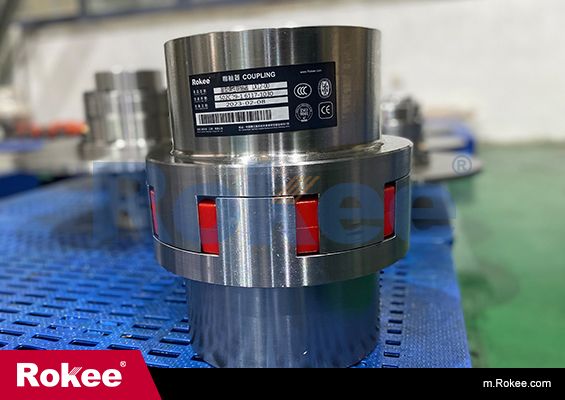
Rokee® is Precision Couplings Supplier from China, Support Customization and Export, due to excellent quality, complete technical services and superior cost performance, Rokee® Precision Couplings have been serving more than 60 countries and regions in the world, effectively operating in many corners of the world.
The Precision Coupling is a small but extremely important part in modern servo drive systems. It needs to be extremely accurate and responsive, and transmit the torque, speed and position control signals output by the drive device to achieve as little delay and error as possible. The zero-backlash plum-shaped flexible coupling, metal diaphragm coupling, bellows coupling and other precision servo couplings developed by Rokee are our powerful products in the market.
In the intricate landscape of modern mechanical engineering, the seamless transmission of motion and torque stands as a fundamental requirement for the optimal performance of countless systems. From high-speed industrial machinery to precision medical devices, the components responsible for connecting rotating shafts play a pivotal role in ensuring efficiency, accuracy, and reliability. Among these components, precision couplings emerge as unsung heroes, bridging the gap between different shaft elements while mitigating the effects of misalignment, reducing vibration, and preserving the integrity of power transmission.
At its essence, a precision coupling is a mechanical device designed to connect two rotating shafts—often from different components such as motors, gearboxes, or actuators—to transmit torque and rotational motion with minimal loss or deviation. Unlike standard couplings, which may prioritize basic connectivity over accuracy, precision couplings are engineered to maintain tight tolerances, ensuring that the rotational position of the driven shaft closely mirrors that of the driving shaft. This level of precision is non-negotiable in applications where even the slightest angular or positional error can lead to compromised performance, product defects, or catastrophic system failure. Beyond torque transmission and precision alignment, modern precision couplings also serve secondary functions, including damping vibrations, accommodating thermal expansion or contraction of shafts, and protecting downstream components from shock loads.
The classification of precision couplings is primarily based on their design principles, flexibility characteristics, and the types of misalignment they can accommodate. The most common types include rigid precision couplings, flexible precision couplings, and semi-flexible precision couplings, each tailored to specific application requirements. Rigid precision couplings, as the name suggests, offer no flexibility and are designed for applications where shafts are perfectly aligned. Constructed from high-strength materials such as steel or aluminum alloys, these couplings provide a rigid connection that ensures zero backlash—making them ideal for precision positioning systems where positional accuracy is paramount. However, their lack of flexibility means they cannot accommodate any misalignment, requiring meticulous installation and alignment to prevent excessive stress on shafts and bearings.
Flexible precision couplings, by contrast, are engineered with built-in flexibility to accommodate various types of misalignment, including angular misalignment (where shafts are tilted relative to each other), parallel misalignment (where shafts are offset but parallel), and axial misalignment (where shafts move along their axial direction). This flexibility is achieved through specialized design features such as elastomeric elements, flexible discs, or bellows. Elastomeric precision couplings, for example, use rubber or polyurethane inserts to absorb vibration and compensate for misalignment. These couplings are widely used in applications that require damping capabilities, such as electric motors driving pumps or conveyors. Disc-type precision couplings, on the other hand, utilize thin metal discs arranged in a stack to provide flexibility while maintaining high torsional stiffness. The metal discs offer excellent precision and are resistant to high temperatures and chemical exposure, making them suitable for high-speed and high-performance applications like aerospace actuators or precision machining centers.
Bellows couplings represent another prominent category of flexible precision couplings. Characterized by their corrugated metal bellows, these couplings offer exceptional flexibility in angular and axial directions while maintaining near-zero backlash. The bellows design also provides excellent torsional rigidity, ensuring precise torque transmission even at high rotational speeds. Due to their compact size and high precision, bellows couplings are commonly found in semiconductor manufacturing equipment, robotic arms, and other miniaturized precision systems. Semi-flexible precision couplings, meanwhile, strike a balance between rigidity and flexibility, offering limited misalignment compensation while maintaining higher torsional stiffness than fully flexible couplings. These couplings are often used in intermediate applications where moderate misalignment is expected but precision remains a key concern.
The performance of precision couplings is defined by a set of critical characteristics that directly influence their suitability for specific applications. Torsional stiffness is one of the most important parameters, referring to the coupling’s resistance to torsional deformation under torque. High torsional stiffness is essential for precision applications, as it ensures that the rotational motion is transmitted without lag or distortion. Backlash, the amount of rotational play between the driving and driven shafts, is another critical factor. Precision couplings are designed to minimize backlash, with high-end models offering near-zero backlash to ensure precise positional control. Vibration damping capability is also vital, as excessive vibration can degrade system performance, increase wear on components, and generate noise. Couplings with effective damping properties help to absorb and dissipate vibrational energy, enhancing the overall stability of the system.
Temperature resistance is another key performance characteristic, particularly for applications operating in extreme environments. Precision couplings must be able to maintain their performance and structural integrity over a wide range of temperatures, from the freezing conditions of aerospace applications to the high-heat environments of industrial furnaces. Material selection plays a crucial role here, with high-temperature alloys, stainless steel, and specialized polymers being used to withstand extreme thermal conditions. Additionally, the maximum torque capacity and rotational speed of a precision coupling are critical parameters that must be matched to the requirements of the application. Exceeding these limits can lead to coupling failure, resulting in costly downtime and potential damage to other system components.
The applications of precision couplings span across a diverse range of industries, each leveraging their unique capabilities to meet specific engineering challenges. In the manufacturing sector, precision couplings are integral to machining centers, CNC lathes, and robotic automation systems. In CNC machining, for example, bellows or disc-type couplings are used to connect the servo motor to the lead screw, ensuring precise linear motion of the machine tool. This level of precision is essential for producing complex components with tight tolerances, such as those used in the automotive or aerospace industries. Robotic arms, meanwhile, rely on compact and high-precision couplings to transmit motion between their various joints, enabling smooth and accurate movement in applications ranging from assembly line operations to surgical robotics.
The aerospace and defense industries demand precision couplings that can withstand extreme conditions, including high temperatures, high vibrations, and harsh chemical environments. These couplings are used in aircraft engines, flight control systems, and missile guidance systems, where reliability and precision are non-negotiable. In aircraft engines, for instance, precision couplings connect the turbine to the gearbox, transmitting high torque at extremely high rotational speeds while accommodating slight misalignments caused by thermal expansion. The medical device industry also relies heavily on precision couplings, particularly in equipment such as MRI machines, surgical robots, and diagnostic instruments. In surgical robots, for example, precision couplings ensure that the surgeon’s movements are accurately translated into the movements of the surgical tools, minimizing the risk of error and improving patient outcomes.
The semiconductor and electronics manufacturing industries represent another key application area for precision couplings. Semiconductor manufacturing equipment, such as wafer handlers and lithography machines, requires ultra-precise motion control to produce microchips with nanoscale features. Precision couplings used in these applications must offer near-zero backlash, high torsional stiffness, and exceptional repeatability to ensure the accuracy of the manufacturing process. Additionally, the couplings must be compatible with the cleanroom environments of semiconductor facilities, requiring materials that do not generate particles or outgases. The renewable energy sector, including wind and solar power systems, also utilizes precision couplings in turbine generators and solar tracking systems. In wind turbines, for example, precision couplings connect the rotor to the generator, transmitting torque while accommodating misalignments caused by wind-induced vibrations and thermal expansion.
Selecting the right precision coupling for a specific application requires a systematic evaluation of several key factors, starting with the type and magnitude of misalignment expected between the shafts. Angular misalignment, parallel misalignment, and axial movement must be carefully measured, as different coupling types are designed to accommodate different ranges of misalignment. For applications with significant misalignment, flexible couplings such as bellows or disc-type models are preferred, while rigid couplings are suitable only for perfectly aligned shafts. The required level of precision is another critical factor, with applications such as CNC machining or semiconductor manufacturing demanding near-zero backlash and high torsional stiffness, making bellows or disc-type couplings the optimal choice.
Torque and speed requirements must also be carefully considered, as the coupling must be capable of transmitting the maximum torque generated by the driving shaft without exceeding its torque capacity. Similarly, the coupling’s maximum rotational speed must match or exceed the operating speed of the system to prevent failure. Environmental conditions, such as temperature, humidity, chemical exposure, and the presence of debris or dust, also influence coupling selection. For high-temperature applications, couplings made from stainless steel or high-temperature alloys are recommended, while elastomeric couplings may be unsuitable due to their limited temperature resistance. In cleanroom environments, couplings with smooth surfaces and non-particulating materials are essential to maintain the integrity of the manufacturing process.
Installation and maintenance requirements should also be taken into account when selecting a precision coupling. Rigid couplings require precise alignment during installation, which may increase installation time and cost, while flexible couplings are more forgiving in terms of alignment. Additionally, some couplings, such as elastomeric models, require regular replacement of the elastomeric elements due to wear, while metal disc or bellows couplings have longer service lives and require minimal maintenance. Finally, cost considerations play a role in the selection process, with high-precision couplings such as bellows or disc-type models typically costing more than standard elastomeric couplings. However, the long-term benefits of improved performance, reduced downtime, and extended component life often justify the higher initial investment.
The field of precision couplings is continuously evolving, driven by advancements in materials science, manufacturing technology, and the growing demand for higher precision and efficiency in mechanical systems. One of the key trends shaping the future of precision couplings is the development of lightweight and high-strength materials. The use of advanced composites, such as carbon fiber-reinforced polymers, is gaining traction, as these materials offer a unique combination of low weight, high torsional stiffness, and excellent corrosion resistance. Lightweight couplings are particularly beneficial in aerospace and automotive applications, where reducing weight can improve fuel efficiency and overall performance.
Another significant trend is the integration of smart technologies into precision couplings. The development of “smart couplings” equipped with sensors to monitor torque, temperature, vibration, and misalignment is revolutionizing predictive maintenance in industrial systems. These sensors collect real-time data, which is transmitted to a central monitoring system, allowing engineers to detect potential issues before they lead to coupling failure. Smart couplings also enable condition-based maintenance, reducing downtime and extending the service life of both the coupling and the surrounding components. Additionally, advancements in additive manufacturing (3D printing) are enabling the production of complex and customized precision couplings with intricate geometries that were previously impossible to achieve with traditional manufacturing methods. 3D printing allows for the creation of couplings tailored to specific application requirements, improving performance and reducing lead times.
The demand for miniaturized precision couplings is also on the rise, driven by the growing trend toward smaller and more compact mechanical systems, particularly in the electronics, medical device, and robotics industries. Manufacturers are developing ultra-compact couplings with reduced size and weight, without compromising on precision or torque capacity. These miniaturized couplings are essential for applications such as micro-robots, portable medical devices, and small-scale electronic components, where space is at a premium.
In conclusion, precision couplings are indispensable components in modern mechanical systems, playing a critical role in ensuring the accurate and reliable transmission of motion and torque. Their diverse types, ranging from rigid to flexible models, are tailored to meet the specific requirements of a wide range of industries, including manufacturing, aerospace, medical, semiconductor, and renewable energy. The selection of the right precision coupling requires a thorough understanding of application-specific factors such as misalignment, precision requirements, torque and speed, environmental conditions, and maintenance needs. As technology continues to advance, the future of precision couplings lies in the development of lightweight materials, smart monitoring capabilities, additive manufacturing, and miniaturization, further enhancing their performance and expanding their range of applications. As mechanical systems become increasingly complex and demanding, the importance of precision couplings in maintaining efficiency, accuracy, and reliability will only continue to grow, solidifying their position as a cornerstone of modern engineering.
« Precision Couplings » Post Date: 2023/8/19
URL: https://www.rokeecoupling.com/en/tags/precision-couplings.html