Micro Universal Joint
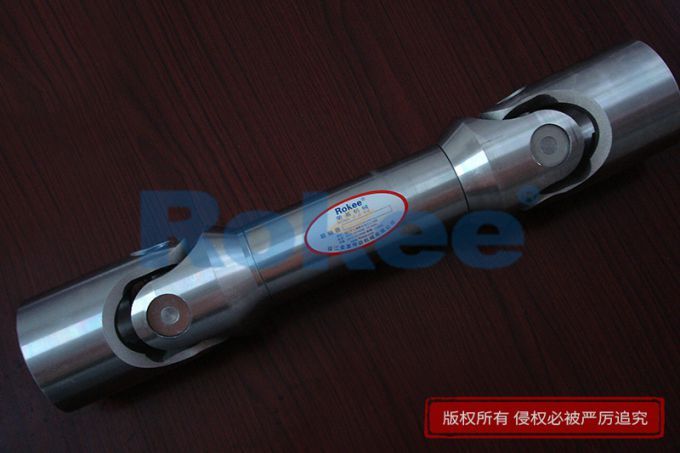
Rokee® is Micro Universal Joint Supplier from China, Support Customization and Export, due to excellent quality, complete technical services and superior cost performance, Rokee® Micro Universal Joint have been serving more than 60 countries and regions in the world, effectively operating in many corners of the world.
Micro Universal Joint is a connection between two objects, typically shafts, that allows relative rotation in two axes. Micro Universal Joint is made up of two revolute joints with perpendicular and intersecting axes. Micro Universal Joints allow drive shafts to move up and down with the suspension while the shaft is moving so power can be transmitted when the drive shaft isn’t in a straight line between the transmission and drive wheels.
In the realm of mechanical transmission, precision and miniaturization have become pivotal drivers of innovation. Among the numerous components that enable efficient power transfer in compact systems, the micro universal joint stands out as a critical element. Defined by its small size, high torque capacity relative to its dimensions, and ability to accommodate angular misalignment between rotating shafts, this component has found widespread application across industries ranging from aerospace and robotics to medical devices and consumer electronics. Unlike standard universal joints, which are often designed for heavy-duty industrial use, micro universal joints are engineered to operate in confined spaces without compromising performance or reliability.
To understand the significance of micro universal joints, it is first essential to grasp the fundamental concept of universal joints (U-joints) in general. A universal joint is a mechanical coupling that connects two shafts, allowing them to rotate at the same speed while accommodating varying angles between them. This angular misalignment may arise due to structural constraints, dynamic movement of components, or design requirements. Traditional U-joints consist of two yokes (fork-shaped components) attached to the respective shafts, connected by a cross-shaped intermediate member (the cross or spider) with needle bearings at each of its four ends. This configuration enables the transfer of torque through the cross, even as the angle between the shafts changes. Micro universal joints adhere to this basic principle but are scaled down significantly, with dimensions typically ranging from a few millimeters to a few centimeters. This miniaturization imposes unique challenges in terms of design, material selection, and manufacturing, as the component must maintain structural integrity and performance despite its small size.
The design of micro universal joints is a delicate balance between size, strength, and functionality. Engineers must optimize each component to ensure that the joint can withstand the required torque, operate at the desired rotational speed, and accommodate the maximum angular misalignment specified for the application. One of the key design considerations is the geometry of the yokes and cross. The yokes must be sufficiently robust to transmit torque without bending or breaking, yet compact enough to fit within the available space. The cross, which is the central load-bearing component, must be designed with precise dimensions to ensure smooth rotation of the needle bearings and minimize friction. In micro joints, the needle bearings are also miniaturized, requiring high-precision manufacturing to ensure that they can handle the loads and speeds without premature failure. Additionally, the design must account for the effects of miniaturization on stress distribution—smaller components are more susceptible to stress concentrations, which can lead to fatigue and failure over time. To mitigate this, engineers often use finite element analysis (FEA) to simulate the stress distribution under various operating conditions and optimize the component geometry accordingly.
Material selection is another critical aspect of micro universal joint design, as the materials must provide the necessary strength, durability, and wear resistance while being compatible with the miniaturization process. Common materials used for micro universal joints include high-strength alloys, such as stainless steel, titanium, and aluminum alloys, as well as engineering plastics for certain low-load applications. Stainless steel is a popular choice due to its excellent corrosion resistance, high tensile strength, and good wear properties, making it suitable for applications in harsh environments or those requiring long-term reliability. Titanium alloys are preferred in aerospace and medical applications where weight reduction is a priority, as they offer a high strength-to-weight ratio. Aluminum alloys are used in applications where weight is a concern but the torque requirements are lower, as they are lighter than steel but have lower strength. Engineering plastics, such as PEEK (polyether ether ketone) and PTFE (polytetrafluoroethylene), are used in low-torque, high-speed applications where friction must be minimized and corrosion resistance is essential. These plastics can also be molded into complex shapes, simplifying the manufacturing process for micro components. The choice of material is closely tied to the application requirements, including torque capacity, operating environment, temperature range, and weight constraints.
The working mechanism of a micro universal joint is similar to that of a standard U-joint but with adaptations to suit its small size. When torque is applied to one shaft, it is transmitted through the yoke attached to that shaft to the cross. The cross then transfers the torque to the other yoke, which in turn drives the second shaft. The needle bearings at the ends of the cross allow the cross to rotate freely within the yokes as the angle between the shafts changes. This rotation of the cross accommodates the angular misalignment, ensuring that both shafts rotate at the same speed. However, it is important to note that a single universal joint introduces a degree of velocity fluctuation, especially at large angles. This fluctuation occurs because the effective radius of the cross relative to the yokes changes as the joint rotates. To mitigate this, many applications use double universal joints (also known as Cardan joints), which consist of two U-joints connected by an intermediate shaft. When properly aligned, the velocity fluctuations from the first joint are canceled out by the second, resulting in smooth, constant-speed transmission. This configuration is particularly important in precision applications, such as robotics and medical devices, where velocity stability is critical.
The advantages of micro universal joints are numerous, making them indispensable in a wide range of miniaturized applications. One of the primary advantages is their compact size, which allows them to fit into tight spaces where other types of couplings would be too large. This is especially important in applications such as small robots,微型电机, and medical devices, where space is at a premium. Another key advantage is their ability to accommodate angular misalignment, which simplifies the design of mechanical systems by reducing the need for precise alignment of shafts. This flexibility also makes micro universal joints suitable for applications where components move dynamically, such as the articulated arms of robots. Additionally, micro universal joints offer high torque capacity relative to their size, enabling them to transmit significant power in small packages. They also have a simple, robust design that requires minimal maintenance, making them reliable in harsh or remote environments. Finally, the wide range of materials available for micro universal joints allows engineers to tailor the component to the specific requirements of the application, whether it be high strength, corrosion resistance, or weight reduction.
The applications of micro universal joints span across multiple industries, each leveraging the component’s unique properties to solve specific engineering challenges. In the aerospace industry, micro universal joints are used in small satellite systems, unmanned aerial vehicles (UAVs), and aerospace actuators. In small satellites, for example, they are used to transmit power from miniaturized motors to various subsystems, such as solar panel deployment mechanisms and antenna positioning systems. The compact size and high reliability of micro universal joints make them ideal for these applications, where weight and space are critical factors and failure can have catastrophic consequences. In the robotics industry, micro universal joints are essential components in the articulated joints of small robots, such as robotic arms used in manufacturing and surgical robots. They enable the precise movement of the robot’s limbs while transmitting the necessary torque to drive the joints. The ability to accommodate angular misalignment is particularly important in robotic systems, where the joints must move freely in multiple directions.
The medical device industry is another major user of micro universal joints, with applications ranging from surgical instruments to diagnostic equipment. In minimally invasive surgical tools, such as laparoscopes and endoscopes, micro universal joints are used to transmit rotational motion from the handle to the working end of the instrument, allowing surgeons to manipulate the tool inside the patient’s body with precision. The compact size of these joints is essential for minimizing the size of the surgical incision, reducing patient trauma and recovery time. In diagnostic equipment, such as ultrasound probes and small-scale imaging systems, micro universal joints are used to position sensors and lenses, enabling precise imaging of internal organs. The reliability and corrosion resistance of these joints are critical in medical applications, where sterility and long-term performance are essential.
The consumer electronics industry also uses micro universal joints in a variety of products, including cameras, portable audio devices, and small appliances. In digital cameras, for example, they are used in the lens focusing and zoom mechanisms, enabling smooth, precise movement of the lens elements. In portable audio devices, such as headphones and speakers, micro universal joints are used to adjust the position of the earcups or speaker drivers, providing a comfortable fit for the user. In small appliances, such as electric toothbrushes and handheld mixers, they are used to transmit power from the motor to the working head, accommodating the angular misalignment between the motor shaft and the tool head.
Maintenance of micro universal joints is relatively simple, but it is essential to ensure their long-term performance and reliability. The primary maintenance requirement is lubrication of the needle bearings to minimize friction and wear. In micro joints, the bearings are often pre-lubricated during manufacturing with a high-performance lubricant, such as a synthetic grease, which provides long-term lubrication without the need for frequent reapplication. However, in applications where the joint is exposed to harsh environments, such as high temperatures, moisture, or dust, periodic lubrication may be necessary. Another important maintenance task is inspection for wear and damage. This includes checking for signs of corrosion, cracks in the yokes or cross, and excessive play in the joint. Excessive play can indicate worn bearings or damage to the cross, which can lead to reduced performance or failure. In some cases, worn components can be replaced, but in many micro applications, the joint is a single integrated component, so replacement of the entire joint may be necessary. Proper storage and handling of micro universal joints are also important to prevent damage, as their small size makes them susceptible to bending or crushing.
Looking to the future, the development of micro universal joints is likely to be driven by several key trends, including the increasing demand for miniaturization, the growing adoption of electric and autonomous systems, and advancements in manufacturing technology. As mechanical systems continue to become smaller and more complex, the demand for micro universal joints with even smaller dimensions and higher performance will increase. This will require further innovations in design and material science, such as the use of advanced composites and nanomaterials to improve strength and reduce weight. The growing adoption of electric vehicles (EVs), UAVs, and autonomous robots will also drive demand for micro universal joints, as these systems require compact, efficient power transmission components. Additionally, advancements in manufacturing technologies, such as additive manufacturing (3D printing), will enable the production of micro universal joints with more complex geometries and tighter tolerances. 3D printing allows for the creation of custom-designed joints tailored to specific applications, reducing lead times and production costs. It also enables the production of joints with internal lubrication channels and other features that improve performance and reliability.
Another emerging trend is the integration of sensors into micro universal joints to enable condition monitoring. By embedding small sensors, such as strain gauges or accelerometers, into the joint, engineers can monitor torque, temperature, vibration, and wear in real time. This data can be used to predict maintenance needs, prevent unexpected failures, and optimize the performance of the mechanical system. This is particularly important in critical applications, such as aerospace and medical devices, where reliability is paramount. Additionally, the use of smart materials, such as shape-memory alloys, in micro universal joints may enable self-healing or adaptive functionality, further improving their reliability and performance.
Despite the many advantages and advancements in micro universal joint technology, there are still challenges to overcome. One of the main challenges is the limited torque capacity of very small joints, which can restrict their use in high-power applications. To address this, engineers are exploring new designs, such as multi-cross joints and integrated gear systems, to increase torque capacity without increasing size. Another challenge is the high cost of manufacturing micro universal joints with tight tolerances, which can make them prohibitively expensive for some consumer applications. However, as manufacturing technologies continue to advance, the cost of production is expected to decrease, making micro universal joints more accessible for a wider range of applications.
In conclusion, the micro universal joint is a critical component in modern miniaturized mechanical systems, enabling efficient power transmission, accommodating angular misalignment, and operating reliably in confined spaces. Its design, material selection, and manufacturing are tailored to meet the unique requirements of small-scale applications, with a focus on precision, strength, and compactness. The component’s wide range of applications across aerospace, robotics, medical devices, and consumer electronics highlights its versatility and importance. As technology continues to advance, the future of micro universal joints looks promising, with innovations in design, materials, and manufacturing expected to further improve their performance, reduce their size, and expand their applications. Whether in the precision movement of a surgical robot, the deployment of a small satellite, or the focusing mechanism of a digital camera, the micro universal joint plays an indispensable role in powering the miniaturized technologies that shape our modern world.
« Micro Universal Joint » Post Date: 2023/11/8
URL: https://www.rokeecoupling.com/en/tags/micro-universal-joint.html