Flexible Tyre Couplings
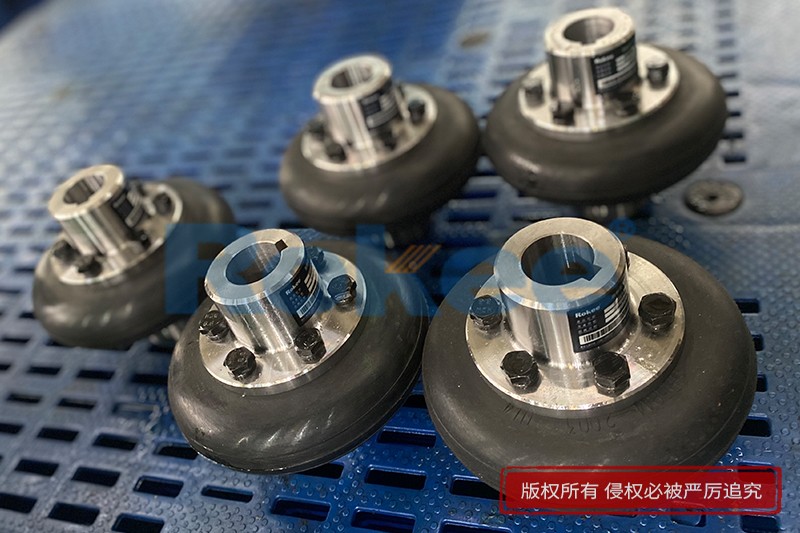
Rokee® is Flexible Tyre Couplings Supplier from China, Support Customization and Export, due to excellent quality, complete technical services and superior cost performance, Rokee® Flexible Tyre Couplings have been serving more than 60 countries and regions in the world, effectively operating in many corners of the world.
Flexible Tyre Coupling adopts tyre body-shaped rubber elements, which are connected with two semi-couplings through bolts to realize torque transmission and displacement compensation. Tyre coupling has high elastic performance, small torsional rigidity, strong damping capacity, large axial compensation capacity, and good damping performance.
-
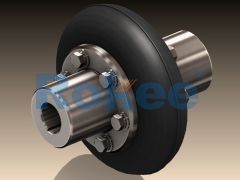
UL Elastic Tyre Coupling
UL Tyre Coupling adopts the structure of vulcanizing and bonding the tyre body with the metal connecting plate with threaded holes, which is then directly connected to the two semi-couplings by bolts for torque transmission and other displacement compensation. -
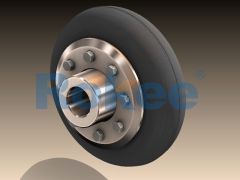
LLA Elastic Tyre Coupling
The LLA Tyre Coupling uses two semi-couplings to connect both sides of the elastic tyre body through internal pressing plates and bolts, making it easy to replace the elastic tyre body. -
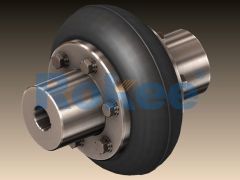
LLB Elastic Tyre Coupling
In the realm of mechanical transmission systems, couplings serve as critical components that connect two shafts to transmit power while accommodating various forms of misalignment. Among the diverse types of couplings available, flexible tyre couplings have emerged as a preferred choice in numerous industrial and automotive applications due to their unique combination of flexibility, damping capacity, and ease of maintenance.
To begin with, it is essential to define what a flexible tyre coupling is. At its core, a flexible tyre coupling is a type of elastic coupling that utilizes a tyre-shaped elastic element (often referred to as the "tyre") to connect the driving shaft and the driven shaft. Unlike rigid couplings, which require precise alignment and offer no flexibility, flexible tyre couplings are designed to absorb shaft misalignments, dampen vibrations, and reduce noise during operation. The tyre element acts as the central component that enables these functions, as it can deform elastically under load while maintaining the ability to transmit torque. The basic structure of a flexible tyre coupling typically consists of three main parts: two metal hubs (or flanges) that attach to the respective shafts, and the elastic tyre element that connects these two hubs. The hubs are usually machined to fit the shaft diameters, with common attachment methods including keyways, set screws, or compression fittings to ensure a secure connection. The tyre element, on the other hand, is designed with a specific shape and thickness to optimize its flexibility and torque-carrying capacity.
The working principle of a flexible tyre coupling revolves around the elastic deformation of the tyre element. When power is transmitted from the driving shaft to the driven shaft, the torque is first transferred from the driving shaft to its corresponding hub, then to the tyre element, and finally to the driven hub and shaft. During this process, if there is any misalignment between the two shafts—such as angular misalignment (where the shafts are not colinear but intersect at a point), parallel misalignment (where the shafts are parallel but offset), or axial misalignment (where the shafts move along their axial direction)—the tyre element deforms to accommodate this misalignment without causing excessive stress on the shafts or other components. Additionally, the elastic nature of the tyre element allows it to absorb vibrations generated by the driving source (such as an electric motor or an internal combustion engine) before they are transmitted to the driven equipment. This vibration damping capability is crucial for reducing wear and tear on both the coupling itself and the connected machinery, thereby extending their service life.
Material selection plays a pivotal role in determining the performance and durability of flexible tyre couplings, particularly for the elastic tyre element. The most commonly used materials for the tyre element include natural rubber, synthetic rubber (such as neoprene, nitrile rubber, and silicone rubber), and polyurethane. Each of these materials possesses distinct properties that make them suitable for different operating conditions. Natural rubber, for example, offers excellent elasticity and flexibility, making it ideal for applications that require high damping capacity and moderate temperature resistance. However, it may not perform well in environments exposed to oil, ozone, or extreme temperatures. Synthetic rubber materials, on the other hand, are often formulated to address these limitations. Neoprene rubber, for instance, exhibits good resistance to oil, ozone, and weathering, making it suitable for outdoor or industrial environments where such exposures are common. Nitrile rubber is particularly resistant to petroleum-based oils and fuels, making it a preferred choice for automotive and hydraulic applications. Silicone rubber, meanwhile, offers exceptional high-temperature resistance, enabling its use in applications where operating temperatures exceed the range of other rubber materials. Polyurethane is another popular material for tyre elements, known for its high wear resistance, good load-carrying capacity, and resistance to abrasion and chemicals. The choice of material for the tyre element depends on various factors, including the operating temperature range, the presence of corrosive substances, the required torque capacity, and the level of vibration damping needed.
The metal hubs of flexible tyre couplings are typically made from high-strength metals such as carbon steel, alloy steel, or aluminum alloy. Carbon steel is widely used due to its high strength, durability, and cost-effectiveness, making it suitable for most general-purpose applications. Alloy steel is preferred for high-torque applications or environments where increased strength and resistance to fatigue are required. Aluminum alloy, on the other hand, is chosen for applications where weight reduction is a priority, such as in automotive or aerospace applications, as it offers a good balance of strength and lightweight properties. The hubs are usually manufactured through processes such as forging, casting, or machining to ensure precise dimensions and high structural integrity, which is essential for maintaining a secure connection with the shafts and transmitting torque efficiently.
One of the key advantages of flexible tyre couplings is their excellent ability to accommodate various types of shaft misalignment. In practical mechanical systems, perfect alignment between two shafts is often difficult to achieve due to factors such as installation errors, thermal expansion and contraction of components during operation, and structural deflection under load. Rigid couplings would transfer the stress caused by this misalignment to the shafts, bearings, and other components, leading to premature wear and failure. Flexible tyre couplings, however, use the elastic deformation of the tyre element to absorb the misalignment, thereby reducing the stress on the connected components and improving the overall reliability of the system. This misalignment accommodation capability also simplifies the installation process, as it does not require the same level of precision as rigid couplings, saving time and labor costs.
Another significant advantage of flexible tyre couplings is their superior vibration damping and noise reduction properties. Vibrations are a common issue in mechanical transmission systems, often caused by the imbalance of rotating components, the pulsating nature of the driving source, or the interaction between moving parts. These vibrations can not only cause excessive noise but also lead to fatigue damage in components over time. The elastic tyre element of flexible tyre couplings acts as a buffer, absorbing and dissipating vibrational energy before it is transmitted to the driven equipment. This not only reduces noise levels in the workplace but also protects sensitive components such as bearings, gears, and electrical motors from vibration-induced damage. In applications where quiet operation is essential, such as in residential areas or precision manufacturing facilities, flexible tyre couplings are particularly advantageous.
Flexible tyre couplings also offer the benefits of easy installation and maintenance. Their simple structural design, consisting of only two hubs and a tyre element, makes them easy to assemble and disassemble without the need for specialized tools or complex procedures. When the tyre element becomes worn or damaged due to prolonged use, it can be easily replaced without removing the hubs from the shafts, which significantly reduces downtime and maintenance costs. This ease of maintenance is a crucial factor in industrial applications where equipment uptime is critical for productivity. Additionally, the absence of sliding or rolling contact between the tyre element and the hubs minimizes wear and tear, further reducing the need for frequent maintenance.
Furthermore, flexible tyre couplings are known for their high torque-carrying capacity relative to their size and weight. The tyre element is designed to distribute torque evenly across its surface, allowing the coupling to transmit large amounts of power without compromising its flexibility. This makes them suitable for a wide range of applications, from small-scale machinery such as pumps and fans to large industrial equipment such as compressors, conveyors, and crushers. The lightweight nature of many flexible tyre couplings, particularly those with aluminum alloy hubs, also helps to reduce the overall weight of the transmission system, which can improve energy efficiency and reduce the load on supporting structures.
The applications of flexible tyre couplings are diverse and span across numerous industries, thanks to their versatile performance characteristics. In the automotive industry, they are commonly used in the transmission systems of vehicles, connecting the engine to the gearbox or the gearbox to the drive shaft. Their vibration damping properties help to reduce noise and improve the smoothness of power transmission, enhancing the driving experience. They are also used in auxiliary systems such as power steering pumps and air conditioning compressors, where they accommodate misalignments and absorb vibrations from the engine.
In the industrial sector, flexible tyre couplings find widespread use in various types of machinery. They are commonly employed in pump and fan systems, where they connect electric motors to the impellers or blades. The ability to accommodate misalignments and dampen vibrations is particularly important in these applications, as pumps and fans often operate at high speeds and are prone to vibration. Flexible tyre couplings are also used in compressors, which generate high levels of vibration due to the reciprocating motion of their components. By absorbing these vibrations, the couplings help to protect the compressor's internal components and extend its service life. Other industrial applications include conveyors, where they connect the drive motor to the conveyor belt system, and crushers, where they transmit power from the motor to the crushing mechanism while accommodating the misalignments caused by the heavy loads and structural deflection.
In the agricultural industry, flexible tyre couplings are used in farm machinery such as tractors, harvesters, and irrigation pumps. These machines often operate in harsh and uneven terrain, leading to frequent misalignments between shafts. The flexibility and durability of flexible tyre couplings make them well-suited for these conditions, ensuring reliable power transmission even in challenging environments. They also help to reduce the impact of vibrations on the operator, improving comfort and reducing fatigue.
In addition to these industries, flexible tyre couplings are also used in marine applications, such as in the propulsion systems of small boats and ships, where they connect the engine to the propeller shaft. Their ability to accommodate misalignments caused by the movement of the hull and dampen vibrations from the engine is essential for ensuring smooth and reliable operation. They are also used in renewable energy systems, such as wind turbines, where they connect the turbine rotor to the generator, absorbing the vibrations and misalignments caused by wind turbulence.
Despite their numerous advantages, the proper selection and maintenance of flexible tyre couplings are essential to ensure their optimal performance and longevity. When selecting a flexible tyre coupling, several factors need to be considered, including the torque requirement of the application, the maximum speed of the shafts, the type and magnitude of shaft misalignment, the operating temperature range, and the environmental conditions (such as the presence of oil, chemicals, or moisture). It is crucial to choose a coupling with a torque capacity that exceeds the maximum torque generated by the driving source to avoid overloading and premature failure. Additionally, the tyre element material should be selected based on the operating temperature and environmental conditions to ensure that it does not degrade over time.
Regular maintenance is also important to keep flexible tyre couplings in good working condition. This includes periodic inspections of the tyre element for signs of wear, cracking, or deformation, as well as checking the tightness of the hub attachments (such as set screws or keyways) to ensure a secure connection. If the tyre element shows any signs of damage, it should be replaced immediately to prevent further damage to the shafts or other components. In addition, lubrication may be required for certain types of hubs, such as those with keyways, to reduce friction and wear. However, it is important to note that the tyre element itself should not be lubricated, as this can reduce its friction and grip, affecting the transmission of torque.
Another important maintenance practice is to ensure that the shafts are properly aligned as much as possible, even though flexible tyre couplings can accommodate misalignment. Excessive misalignment beyond the coupling's rated capacity can cause premature wear of the tyre element and increase the stress on the shafts and bearings. Therefore, periodic alignment checks and adjustments should be performed, especially after the initial installation and after any major maintenance or component replacement.
In conclusion, flexible tyre couplings are versatile and essential components in modern mechanical transmission systems, offering a unique combination of flexibility, vibration damping, ease of maintenance, and high torque-carrying capacity. Their ability to accommodate shaft misalignments and reduce vibrations makes them suitable for a wide range of applications across various industries, including automotive, industrial, agricultural, marine, and renewable energy. The selection of the appropriate material for the tyre element and hubs, based on the operating conditions, is crucial to ensuring their performance and durability. Regular maintenance, including inspections, tyre element replacement, and alignment checks, is also essential to maximize their service life and ensure the reliable operation of the connected machinery. As mechanical systems continue to evolve and demand higher efficiency and reliability, flexible tyre couplings will undoubtedly remain a key component in power transmission, contributing to the smooth and efficient operation of countless devices and equipment.
« Flexible Tyre Couplings » Post Date: 2023/9/1
URL: https://www.rokeecoupling.com/en/tags/flexible-tyre-couplings.html
- 2023-11-23Flexible Tyre Couplings Supply
- 2023-11-23Flexible Tyre Coupling Working Principle
- 2023-11-23Flexible Tyre Coupling Purpose
- 2023-11-23Flexible Tyre Coupling Function
- 2023-11-23Flexible Tyre Coupling Structural Diagram
- 2023-11-23Types of Flexible Tyre Couplings
- 2023-11-23Models of Flexible Tyre Couplings
- 2023-11-16Flexible Tyre Coupling Specifications
- 2023-11-16Flexible Tyre Coupling Price
- 2023-11-16Flexible Tyre Coupling Disadvantages
- 2023-11-16Flexible Tyre Coupling Customized
- 2023-11-16Flexible Tyre Coupling Advantages
- 2023-11-11Flexible Tyre Coupling For Sale
- 2023-11-11Flexible Tyre Coupling Size Calculation
- 2023-11-11Flexible Tyre Couplings Manufacturer
- 2023-11-10Flexible Tyre Coupling Procurement
- 2023-11-10Flexible Tyre Coupling Size Chart
- 2023-11-09Flexible Tyre Coupling Drawing
- 2023-11-09Flexible Tyre Couplings Company
- 2023-11-09Flexible Tyre Coupling Applications
- 2023-11-09Flexible Tyre Coupling Manufacturing Enterprise
- 2023-11-09Flexible Tyre Coupling Parts
- 2023-11-09Flexible Tyre Coupling Tagging
- 2023-11-09Flexible Tyre Couplings Wholesale
- 2023-11-09Flexible Tyre Couplings Supplier
- 2023-11-09Flexible Tyre Couplings Factory
- 2023-11-09Flexible Tyre Coupling Design
- 2023-11-09Catalogue of Flexible Tyre Couplings