Flexible Spider Couplings
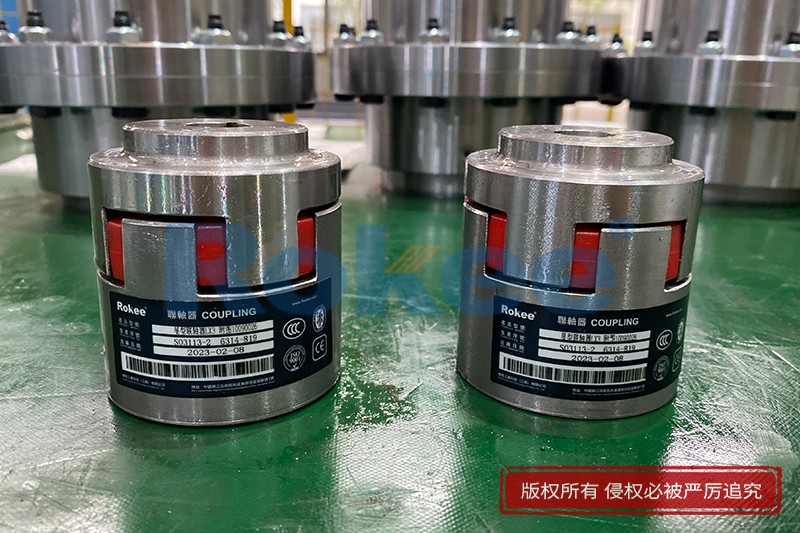
Rokee® is Flexible Spider Couplings Supplier from China, Support Customization and Export, due to excellent quality, complete technical services and superior cost performance, Rokee® Flexible Spider Couplings have been serving more than 60 countries and regions in the world, effectively operating in many corners of the world.
Flexible Spider Coupling is made of engineering plastic as an elastic element, suitable for connecting two coaxial transmission shaft systems. Flexible Spider Coupling has the properties of compensating for relative deviation between two shafts, buffering, shock absorption, and wear resistance. Flexible Spider Coupling is widely used in various situations, transmitting torque of 20-35000 N.M, and working temperature of -35-+80. Polyurethane elastomers are limited by convex claw blocks.
In the realm of mechanical power transmission, couplings play an indispensable role as connectors between rotating shafts, ensuring the seamless transfer of torque while accommodating various forms of misalignment. Among the diverse range of coupling types available, flexible spider couplings have emerged as a reliable and versatile solution, widely adopted across numerous industrial sectors. Characterized by their simple yet effective design, these couplings utilize an elastomeric element—commonly referred to as the "spider"—to bridge two hubs, combining the benefits of flexibility with robust torque-carrying capacity.
To appreciate the functionality of flexible spider couplings, it is first necessary to examine their basic structural components. Unlike rigid couplings, which offer no flexibility and require precise alignment between shafts, flexible spider couplings are engineered with three core parts: two metal hubs, an elastomeric spider insert, and in some cases, clamping elements or set screws for secure attachment to the shafts. The metal hubs, typically manufactured from high-strength materials such as steel, aluminum, or cast iron, are designed with a series of radial grooves or slots along their mating faces. These grooves are specifically shaped to accommodate the lobes of the spider insert, creating a secure interlock that enables torque transmission. The spider, which serves as the coupling’s flexible element, is positioned between the two hubs, with its lobes fitting snugly into the grooves of each hub. The design of the spider—including its number of lobes, shape, and material—directly influences the coupling’s performance characteristics, such as its torque capacity, flexibility, and resistance to wear and tear.
The working principle of flexible spider couplings revolves around the synergistic interaction between the rigid hubs and the elastic spider. When torque is applied to one of the shafts, the corresponding hub transfers this torque to the spider via the contact between the hub’s grooves and the spider’s lobes. The elastomeric nature of the spider allows it to deform slightly under load, which enables the coupling to accommodate three primary types of shaft misalignment: angular misalignment (where the shafts are not colinear but intersect at a point), parallel misalignment (where the shafts are parallel but offset from one another), and axial misalignment (where the shafts move toward or away from each other along their axial axis). This flexibility is crucial in mechanical systems, as perfect shaft alignment is often difficult to achieve and maintain due to factors such as manufacturing tolerances, thermal expansion and contraction, vibration, and structural settling. By absorbing these misalignments, flexible spider couplings reduce stress on the shafts, bearings, and other components, thereby extending the service life of the entire system.
Another key function of the spider insert is vibration damping. Rotating machinery inherently generates vibration, which can lead to noise, component fatigue, and reduced system efficiency. The elastomeric material of the spider acts as a shock absorber, absorbing and dissipating vibrational energy before it is transmitted to adjacent components. This vibration-damping capability not only improves the operational smoothness of the machinery but also enhances the working environment by reducing noise levels. Additionally, the spider can help to mitigate the effects of torque fluctuations, providing a more consistent power transfer and protecting sensitive equipment from sudden torque spikes.
The advantages of flexible spider couplings are numerous, making them a preferred choice for many applications. One of the most significant benefits is their simplicity of design and ease of installation. Unlike complex coupling types that require specialized tools or expertise for assembly, flexible spider couplings can be quickly installed and disassembled, minimizing downtime during maintenance or replacement. The absence of moving parts (other than the deformable spider) also contributes to their reliability, as there are fewer components that can fail or require lubrication. This low-maintenance characteristic is particularly valuable in industrial settings where equipment uptime is critical.
Versatility is another standout feature of flexible spider couplings. They are available in a wide range of sizes and configurations, making them suitable for use with shafts of varying diameters and torque requirements. From small-scale applications such as electric motors in household appliances to large industrial pumps and conveyors, flexible spider couplings can be tailored to meet the specific needs of the system. Additionally, the ability to replace the spider insert without removing the entire coupling or disconnecting the shafts simplifies maintenance and reduces costs. When the spider becomes worn or damaged, it can be easily swapped out, extending the life of the more expensive metal hubs.
Material selection is a critical factor in determining the performance and durability of flexible spider couplings. The choice of material for the hubs and the spider insert must be carefully considered based on the application’s operating conditions, including torque load, rotational speed, temperature, and exposure to chemicals or environmental contaminants.
For the metal hubs, steel is a common choice due to its high strength, durability, and resistance to wear. It is ideal for heavy-duty applications where high torque transmission is required, such as in industrial machinery, construction equipment, and marine propulsion systems. Aluminum, on the other hand, is lighter in weight and offers good corrosion resistance, making it suitable for applications where weight reduction is a priority, such as in automotive components, aerospace systems, and light-duty industrial equipment. Cast iron is another option, known for its rigidity and low cost, but it is less resistant to impact and corrosion compared to steel and aluminum.
The spider insert is typically made from elastomeric materials, which are selected for their flexibility, elasticity, and resistance to wear and tear. The most commonly used elastomers include natural rubber, nitrile rubber (NBR), ethylene propylene diene monomer (EPDM), silicone rubber, and polyurethane. Each material offers distinct properties that make it suitable for specific operating conditions. Natural rubber, for example, provides excellent flexibility and vibration damping but has limited resistance to oil, heat, and chemicals. Nitrile rubber, by contrast, offers superior oil and fuel resistance, making it ideal for applications in the automotive and hydraulic industries where exposure to petroleum-based fluids is common. EPDM is highly resistant to heat, ozone, and weathering, making it suitable for outdoor applications or systems operating at elevated temperatures. Silicone rubber can withstand extreme temperatures, both high and low, and is resistant to ozone and UV radiation, making it suitable for aerospace and high-temperature industrial applications. Polyurethane is a durable, abrasion-resistant material that offers good load-carrying capacity and resistance to oils and chemicals, making it a versatile choice for a wide range of industrial applications.
The diverse properties of flexible spider couplings make them suitable for a wide array of applications across various industries. In the industrial sector, they are commonly used in pumps, compressors, fans, conveyors, and electric motors. For example, in a pump system, the flexible spider coupling connects the motor shaft to the pump shaft, accommodating misalignments that may occur due to thermal expansion or mounting inconsistencies, while also damping vibrations to ensure smooth operation. In the automotive industry, these couplings are used in drive shafts, power steering systems, and auxiliary components such as alternators and water pumps. Their compact design and vibration-damping capabilities make them ideal for use in vehicles, where space is limited and smooth operation is essential for driver comfort.
The aerospace industry also utilizes flexible spider couplings in various applications, such as in aircraft engines, auxiliary power units (APUs), and flight control systems. In these applications, the couplings must be lightweight, reliable, and capable of withstanding extreme temperatures and vibration, making materials such as aluminum hubs and silicone rubber spiders a popular choice. The medical equipment industry also relies on flexible spider couplings for precision applications such as centrifuges, medical pumps, and diagnostic equipment. The low vibration and precise torque transmission offered by these couplings are critical for ensuring the accuracy and reliability of medical devices.
In addition to these industrial and commercial applications, flexible spider couplings are also used in household appliances, such as washing machines, dryers, and refrigerators. In a washing machine, for example, the coupling connects the motor to the drum, accommodating misalignments and damping vibrations during the spin cycle, ensuring quiet and efficient operation.
Proper maintenance is essential to ensure the optimal performance and longevity of flexible spider couplings. While these couplings are designed to be low-maintenance, regular inspection and care can help to prevent unexpected failures and extend their service life. The primary maintenance tasks for flexible spider couplings include regular inspection of the spider insert for signs of wear, damage, or degradation, inspection of the hubs for cracks or wear, and checking the tightness of clamping elements or set screws.
The spider insert is the most wear-prone component of the coupling, as it is subjected to continuous deformation and friction during operation. Signs of spider wear include cracking, tearing, hardening, or softening of the elastomeric material, as well as excessive play between the spider and the hubs. If any of these signs are detected, the spider should be replaced immediately to prevent further damage to the hubs or shafts. The frequency of spider replacement depends on the application’s operating conditions, with high-torque, high-vibration, or high-temperature applications requiring more frequent replacement.
Inspection of the metal hubs should focus on checking for cracks, corrosion, or wear along the groove surfaces. Damaged hubs can cause uneven torque distribution, leading to premature spider failure and potential damage to the shafts. If cracks or excessive wear are detected, the hubs should be replaced. Additionally, the clamping elements or set screws that secure the hubs to the shafts should be checked regularly to ensure they are tight. Loose fasteners can cause the hubs to slip on the shafts, resulting in reduced torque transmission, increased vibration, and potential shaft damage.
Lubrication is generally not required for flexible spider couplings, as the elastomeric spider acts as a self-lubricating element. However, in some cases, such as when the coupling is exposed to harsh environmental conditions or high temperatures, a light coating of compatible lubricant may be applied to the hub grooves to reduce friction and extend the life of the spider. It is important to use a lubricant that is compatible with the elastomeric material of the spider, as some lubricants can cause degradation of the rubber or polyurethane.
When selecting a flexible spider coupling for a specific application, several key factors must be considered to ensure optimal performance. These factors include the required torque capacity, the maximum allowable misalignment, the rotational speed of the shafts, the operating temperature range, the environmental conditions (such as exposure to chemicals, moisture, or dust), and the shaft diameter. The torque capacity of the coupling must be sufficient to handle the maximum torque generated by the system, with a safety margin to account for torque spikes or overloads. The maximum allowable misalignment of the coupling should match or exceed the expected misalignment in the system, to prevent excessive stress on the coupling and other components. The rotational speed must also be considered, as high-speed applications may require couplings with balanced hubs to reduce vibration and prevent premature failure.
In conclusion, flexible spider couplings are a vital component in modern mechanical power transmission systems, offering a unique combination of flexibility, reliability, and ease of maintenance. Their simple yet effective design, which utilizes an elastomeric spider insert to bridge two metal hubs, enables them to accommodate shaft misalignments, dampen vibrations, and transmit torque efficiently across a wide range of applications. The selection of appropriate materials for the hubs and spider insert is critical to ensuring the coupling’s performance and durability in specific operating conditions. From industrial machinery and automotive systems to aerospace applications and household appliances, flexible spider couplings play a crucial role in ensuring the smooth and reliable operation of rotating equipment. By following proper maintenance practices and selecting the right coupling for the application, engineers and maintenance professionals can maximize the service life of their equipment and minimize downtime. As technology continues to advance, the design and material capabilities of flexible spider couplings are likely to evolve further, making them an even more versatile and indispensable solution in the field of mechanical power transmission.
« Flexible Spider Couplings » Post Date: 2023/12/23
URL: https://www.rokeecoupling.com/en/tags/flexible-spider-couplings.html