Universal Shaft For Steel Mills
Rokee® provide Universal Shaft For Steel Mills, non-standard coupling customization, drawing design, batch processing, and export the product to your location.
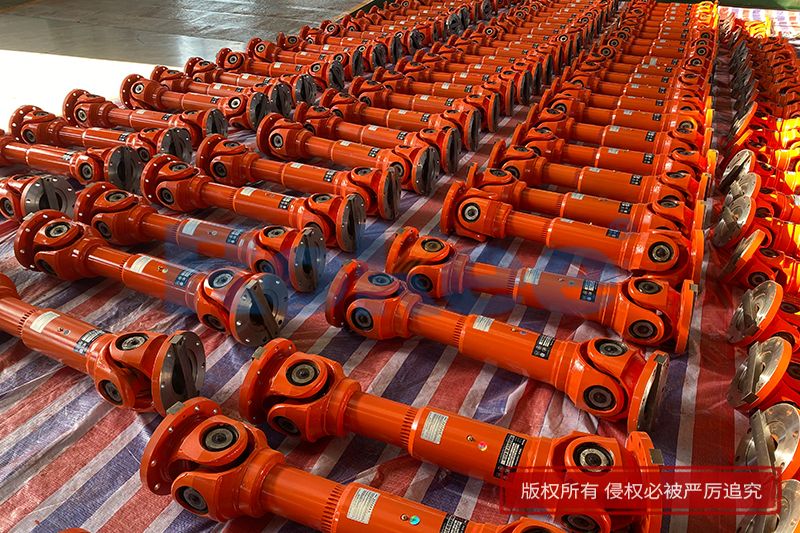
The steel industry stands as the backbone of modern manufacturing, supporting sectors ranging from construction and automotive to energy and infrastructure. Within the complex network of steel production equipment, universal shafts play an indispensable role, serving as the critical link that transmits power and torque between misaligned components. Operating in harsh environments characterized by high temperatures, heavy loads, and continuous vibration, these components are engineered to withstand extreme conditions while ensuring seamless and reliable operation.
At its core, a universal shaft—also known as a universal joint shaft or cardan shaft—is a mechanical component designed to transmit rotational power from one shaft to another when the two shafts are not aligned perfectly. Unlike rigid shafts that require precise coaxial alignment, universal shafts accommodate angular misalignment, parallel offset, and even axial movement between the driving and driven shafts. This unique capability makes them ideal for steel mill applications, where large-scale equipment such as rolling mills, converters, and conveyors often operate with inherent misalignments due to their size, weight, and operational dynamics.
The basic structure of a universal shaft for steel mills typically consists of several key components: universal joints (at both ends), a shaft body, flanges, and sometimes a sliding sleeve. Universal joints, the heart of the assembly, are designed with cross-shaped bearings that allow rotational movement at various angles. The shaft body, usually constructed from high-strength alloy steel, is responsible for bearing the torque and transmitting power. Flanges facilitate secure connection to the driving and driven equipment, ensuring that power is transferred efficiently without slippage. Sliding sleeves, when included, accommodate axial expansion and contraction caused by temperature variations—a common occurrence in steel mills where equipment is exposed to extreme heat during production processes such as smelting and rolling.
One of the primary reasons universal shafts are indispensable in steel mills is their ability to handle high torque and heavy loads. Steel production processes, particularly hot rolling and cold rolling, require massive amounts of power to shape and form steel billets into finished products. Rolling mills, for example, exert tremendous pressure on the steel, which in turn places significant torque demands on the power transmission system. Universal shafts designed for these applications are engineered with robust materials and structural designs to withstand torque loads ranging from thousands to hundreds of thousands of newton-meters, ensuring that power is transmitted reliably even under peak operational conditions.
Temperature resistance is another critical characteristic of universal shafts for steel mills. Steel production involves processes that generate extreme heat, such as blast furnaces operating at temperatures exceeding 1500°C and hot rolling mills where steel is processed at temperatures above 1000°C. Proximity to these heat sources exposes universal shafts to high ambient temperatures, which can degrade materials, reduce lubrication efficiency, and compromise structural integrity. To address this, manufacturers use high-temperature-resistant alloys for the shaft body and universal joint components. Additionally, specialized lubricants with high thermal stability are employed to ensure that the bearings and moving parts remain properly lubricated and functional even in extreme heat environments.
Vibration and shock absorption are also key considerations in the design of universal shafts for steel mills. The operation of large-scale steel mill equipment generates significant vibration and shock loads, which can cause premature wear and failure of mechanical components. Universal shafts are designed with flexible joints and damping mechanisms to absorb these vibrations and shocks, reducing stress on the shaft and the connected equipment. This not only extends the service life of the universal shaft but also minimizes the risk of downtime caused by component failure, ensuring continuous production.
The application of universal shafts in steel mills is diverse, covering nearly all key production processes. One of the most prominent applications is in rolling mills, including hot rolling mills, cold rolling mills, and section rolling mills. In a hot rolling mill, for example, universal shafts transmit power from the main drive motor to the work rolls, which are responsible for shaping the heated steel billets. Due to the large size of the work rolls and the need for adjustable roll gaps, the drive shafts and work rolls are often misaligned, making universal shafts the ideal power transmission solution. Similarly, in cold rolling mills, where precision is critical, universal shafts ensure that power is transmitted smoothly and accurately, maintaining consistent roll speed and pressure for high-quality finished products.
Another important application is in continuous casting machines, which are used to convert molten steel into solid billets, blooms, or slabs. Continuous casting machines operate with a series of rollers that guide and support the steel as it solidifies. Universal shafts transmit power to these rollers, accommodating the misalignments that occur due to the thermal expansion of the rollers and the structural movement of the casting machine. Without reliable universal shafts, the continuous casting process would be prone to interruptions, leading to reduced production efficiency and increased material waste.
Universal shafts are also used in other steel mill equipment, such as converters, electric arc furnaces, and material handling systems. Converters, which are used to convert pig iron into steel, rely on universal shafts to transmit power to the tilting mechanism, allowing the converter to be tilted for charging and tapping. Electric arc furnaces, which melt scrap steel to produce new steel, use universal shafts in their electrode lifting and rotating mechanisms. Material handling systems, such as conveyors and hoists, also utilize universal shafts to transmit power to the drive rollers and pulleys, ensuring the efficient movement of raw materials and finished products throughout the mill.
The performance and reliability of universal shafts directly impact the overall efficiency and productivity of steel mills. A well-designed and properly maintained universal shaft can minimize downtime, reduce maintenance costs, and improve the quality of finished steel products. Conversely, a poorly maintained or improperly selected universal shaft can lead to frequent breakdowns, unplanned downtime, and increased production costs. Therefore, proper selection, installation, and maintenance of universal shafts are critical for the smooth operation of steel mills.
When selecting a universal shaft for a steel mill application, several factors must be considered. First and foremost is the torque requirement, which is determined by the power of the drive motor and the operational demands of the equipment. The universal shaft must be capable of handling the maximum torque generated during operation to avoid overload and failure. Second, the operating temperature must be taken into account, as high temperatures can affect the material properties and lubrication of the shaft. Selecting a universal shaft with high-temperature-resistant materials and appropriate lubrication is essential for reliable operation in hot environments.
Another important factor is the amount of misalignment between the driving and driven shafts. The universal shaft must be designed to accommodate the maximum angular misalignment and parallel offset of the application. Exceeding the recommended misalignment limits can lead to increased wear, vibration, and reduced service life. Additionally, the length of the universal shaft must be carefully selected to ensure that it can transmit power efficiently while accommodating any axial movement of the shafts.
Installation is another critical step in ensuring the reliable operation of universal shafts. Proper alignment of the universal shaft with the driving and driven shafts is essential to minimize stress and wear. During installation, the shafts should be aligned as closely as possible to the recommended misalignment limits. Additionally, the flanges must be securely fastened to ensure a tight and reliable connection. Improper installation, such as loose fasteners or excessive misalignment, can lead to premature failure of the universal shaft and the connected equipment.
Regular maintenance is essential to extend the service life of universal shafts and ensure their reliable operation. Maintenance activities for universal shafts in steel mills typically include lubrication, inspection, and replacement of worn components. Lubrication is particularly important, as it reduces friction between the moving parts of the universal joint and prevents corrosion. In high-temperature environments, lubricants can degrade quickly, so regular lubrication checks and replacements are necessary to ensure optimal performance.
Inspection of universal shafts should be conducted regularly to identify signs of wear, damage, or fatigue. This includes checking for cracks in the shaft body and flanges, wear on the universal joint bearings, and looseness in the fasteners. Any signs of damage or wear should be addressed immediately to prevent further deterioration and potential failure. Additionally, the alignment of the universal shaft should be checked periodically, as misalignment can increase over time due to the vibration and thermal expansion of the equipment.
In recent years, advancements in materials and manufacturing technologies have led to improvements in the performance and reliability of universal shafts for steel mills. The use of high-strength, lightweight alloys has allowed for the design of universal shafts that can handle higher torque loads while reducing the overall weight of the assembly. This not only improves the efficiency of power transmission but also reduces the stress on the connected equipment. Additionally, advancements in lubrication technology have led to the development of high-performance lubricants that offer better thermal stability and wear resistance, extending the service life of universal shafts in harsh steel mill environments.
Another trend in the development of universal shafts for steel mills is the integration of condition monitoring technologies. Condition monitoring systems, such as vibration sensors and temperature sensors, can be installed on universal shafts to real-time monitor their operational status. These systems can detect early signs of wear, damage, or misalignment, allowing maintenance personnel to take proactive measures before a failure occurs. This predictive maintenance approach can significantly reduce downtime, improve maintenance efficiency, and lower overall production costs.
Despite the advancements in design and technology, universal shafts in steel mills still face significant challenges. The harsh operating environment, characterized by high temperatures, heavy loads, and continuous vibration, continues to place extreme demands on these components. Additionally, the increasing demand for higher production efficiency and lower energy consumption in the steel industry requires universal shafts to be more efficient and reliable than ever before. Manufacturers are constantly working to develop new materials and designs that can meet these evolving demands, ensuring that universal shafts remain a critical and reliable component of steel mill operations.
In conclusion, universal shafts are essential components in steel mills, playing a vital role in power transmission between misaligned components. Their ability to handle high torque, resist extreme temperatures, and absorb vibration makes them ideal for the harsh operating conditions of steel production. From rolling mills and continuous casting machines to converters and material handling systems, universal shafts are used in nearly all key processes, directly impacting the efficiency, productivity, and quality of steel production. Proper selection, installation, and maintenance of universal shafts are critical for ensuring their reliable operation, minimizing downtime, and reducing production costs. With ongoing advancements in materials, manufacturing technologies, and condition monitoring systems, universal shafts are poised to become even more efficient and reliable, supporting the continued growth and development of the global steel industry.
« Universal Shaft For Steel Mills » Post Date: 2023/9/26
URL: https://www.rokeecoupling.com/en/customer-cases/universal-shaft-for-steel-mills.html
- Angle of Bush Type Coupling
- Drum Coupling Internal Structure
- Components of Bush Pin Type Flexible Coupling
- Jaw Coupling Design
- Membrane Disc Coupling Applications
- Flexible Diaphragm Coupling Structural Diagram
- Grease of Pin Bush Type Flexible Couplings
- Size Calculation of Bushed Pin Flexible Coupling
- Drum Type Gear Coupling With Brake Wheel
- Uses of Curved Jaw Coupling