Brake Disc Flexible Coupling
Rokee® provide Brake Disc Flexible Coupling, non-standard coupling customization, drawing design, batch processing, and export the product to your location.
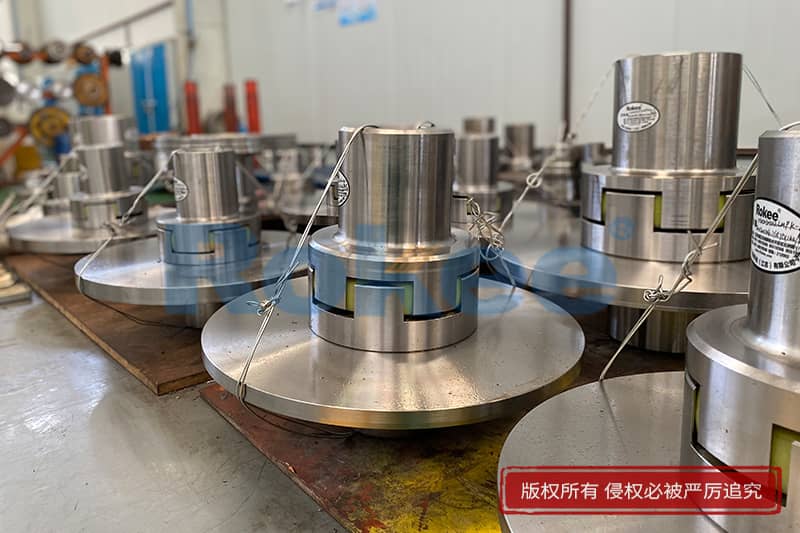
In the realm of mechanical power transmission systems, couplings play a pivotal role in connecting two rotating shafts to transmit torque while accommodating various forms of misalignment. Among the diverse types of couplings available, the brake disc flexible coupling stands out as a specialized component that integrates the functions of torque transmission and braking, making it indispensable in numerous industrial and automotive applications.
To begin with, it is essential to define what a brake disc flexible coupling is. Essentially, this type of coupling is a mechanical device that connects the output shaft of a prime mover (such as an electric motor, diesel engine, or hydraulic motor) to the input shaft of a driven machine (including pumps, compressors, conveyors, and gearboxes). What distinguishes it from standard flexible couplings is the integration of a brake disc (or brake rotor) into its structure, which allows for the transmission of torque and the application of braking force within a single, compact assembly. The flexibility of the coupling is achieved through elastic elements or flexible joints, which enable it to compensate for axial, radial, and angular misalignments between the connected shafts, thereby reducing stress on the shafts, bearings, and other components of the power transmission system.
The design of a brake disc flexible coupling typically consists of several core components, each serving a specific function. The primary elements include the two hubs, which are attached to the driving and driven shafts respectively; the flexible elements (such as rubber bushes, polyurethane pads, or metal bellows) that facilitate flexibility and misalignment compensation; the brake disc, which is mounted either on one of the hubs or on a central sleeve connecting the two hubs; and the connecting bolts or fasteners that secure the components together. The hubs are usually made of high-strength metals such as steel or cast iron to withstand the transmitted torque and the forces generated during braking. The choice of material for the flexible elements depends on the application requirements, including the operating temperature, torque capacity, and the degree of misalignment to be accommodated. For instance, rubber elements are suitable for applications with moderate torque and temperature ranges, while metal bellows are preferred for high-temperature, high-torque environments where greater rigidity and durability are required.
The brake disc itself is a critical component of the coupling, designed to work in conjunction with a brake caliper or brake shoes to generate frictional force for stopping or decelerating the rotating shafts. The design of the brake disc must ensure adequate heat dissipation, as the frictional force generated during braking produces a significant amount of heat. To address this, brake discs are often designed with cooling fins or vents that increase the surface area available for heat transfer, preventing overheating and ensuring consistent braking performance. Additionally, the brake disc must be dimensioned to withstand the mechanical stresses imposed by both the braking force and the transmitted torque, requiring precise engineering and material selection.
Understanding the working principle of a brake disc flexible coupling involves examining two key functions: torque transmission and braking. During normal operation (i.e., when braking is not applied), the coupling transmits torque from the driving shaft to the driven shaft through the hubs and the flexible elements. The flexible elements allow for minor misalignments between the shafts, which may occur due to manufacturing tolerances, thermal expansion and contraction, or structural deflection. By accommodating these misalignments, the coupling reduces the occurrence of excessive vibration, noise, and premature wear of the shafts and bearings. When braking is required, the brake caliper (or brake shoes) clamps onto the brake disc, creating a frictional force that opposes the rotation of the disc. This frictional force is transmitted through the coupling to the shafts, causing them to decelerate or come to a complete stop. The integration of these two functions into a single component eliminates the need for separate coupling and braking systems, resulting in a more compact and cost-effective solution.
One of the primary advantages of brake disc flexible couplings is their compact and integrated design. By combining torque transmission and braking capabilities, these couplings reduce the overall size and complexity of the power transmission system, making them ideal for applications where space is limited. For example, in automotive drivetrains, industrial machinery with tight installation spaces, or mobile equipment, the compact design of brake disc flexible couplings allows for more efficient use of available space, enabling the design of smaller and lighter systems without compromising performance.
Another significant advantage is their ability to compensate for shaft misalignments. As mentioned earlier, flexible elements within the coupling can accommodate axial (linear movement along the shaft axis), radial (lateral displacement of the shaft), and angular (tilting of the shaft) misalignments. This compensation is crucial because even minor misalignments can lead to increased vibration, noise, and premature failure of shafts, bearings, and seals. By reducing these stresses, brake disc flexible couplings extend the service life of the entire power transmission system, reducing maintenance costs and downtime.
Brake disc flexible couplings also offer excellent torque transmission efficiency. The rigid connection between the hubs and the brake disc (when not braking) ensures that a high percentage of the torque generated by the prime mover is transmitted to the driven machine, minimizing power loss. This is particularly important in applications where energy efficiency is a priority, such as in electric vehicles, industrial pumps, and compressors, where even small power losses can result in significant energy waste over time.
In addition to their torque transmission and misalignment compensation capabilities, the integrated braking function of these couplings provides reliable and responsive stopping power. The brake disc is designed to withstand repeated braking cycles, ensuring consistent performance even in high-demand applications. This reliability is critical in safety-critical applications, such as in elevators, cranes, and conveyor systems, where the ability to stop quickly and safely is essential to prevent accidents and damage to equipment.
The versatility of brake disc flexible couplings is another key advantage, as they can be adapted to a wide range of applications across various industries. Let’s explore some of the most common application scenarios in detail.
In the automotive industry, brake disc flexible couplings are widely used in drivetrains, particularly in electric vehicles (EVs) and hybrid electric vehicles (HEVs). In these vehicles, the coupling connects the electric motor to the transmission or differential, transmitting torque while accommodating misalignments between the motor and the drivetrain components. The integrated brake disc provides a compact braking solution, which is essential in EVs where space is at a premium due to the presence of large battery packs. Additionally, the braking function helps to regenerate energy in EVs, improving overall energy efficiency.
Industrial machinery is another major application area for brake disc flexible couplings. They are commonly used in pumps and compressors, where they connect the motor to the pump/compressor shaft. The misalignment compensation capability of the coupling is particularly beneficial in these applications, as pumps and compressors often experience axial and radial misalignments due to thermal expansion and contraction during operation. The integrated brake disc allows for quick and safe stopping of the pump/compressor, which is important for maintenance and emergency situations.
Conveyor systems, which are widely used in manufacturing, mining, and logistics, also rely on brake disc flexible couplings. These systems typically use electric motors to drive the conveyor belts, and the coupling connects the motor to the gearbox or drive roller. The braking function is essential in conveyor systems to prevent the belt from slipping or moving when the motor is stopped, particularly in inclined conveyor applications where the weight of the load could cause the belt to reverse direction. The flexibility of the coupling also helps to reduce vibration, ensuring smooth operation of the conveyor system.
Construction and agricultural equipment, such as excavators, loaders, and tractors, also utilize brake disc flexible couplings. These machines operate in harsh environments with significant vibrations and misalignments, making the flexible coupling’s ability to compensate for misalignments and absorb shocks crucial. The integrated braking function provides reliable stopping power, which is essential for the safe operation of these machines in rugged terrain.
Elevators and cranes are safety-critical applications where brake disc flexible couplings play a vital role. In elevators, the coupling connects the electric motor to the traction sheave, transmitting torque to lift the elevator car. The braking function ensures that the elevator stops quickly and securely in the event of a power failure or emergency. Similarly, in cranes, the coupling connects the motor to the hoisting mechanism, and the brake disc provides the necessary stopping force to prevent the load from falling.
While brake disc flexible couplings offer numerous advantages, proper maintenance is essential to ensure their long-term performance and reliability. There are several key maintenance considerations that should be followed to maximize the service life of these couplings.
First and foremost, regular inspection of the coupling components is critical. This includes checking the hubs, flexible elements, brake disc, and fasteners for signs of wear, damage, or corrosion. The flexible elements, in particular, are prone to wear over time due to repeated flexing and exposure to environmental factors such as heat, moisture, and chemicals. Signs of wear on flexible elements may include cracks, tears, or a loss of elasticity. If any of these signs are detected, the flexible elements should be replaced immediately to prevent coupling failure.
The brake disc should also be inspected regularly for wear, warping, or cracking. Wear on the brake disc can reduce its thickness, which may affect braking performance. Warping or cracking of the brake disc can cause uneven braking, vibration, and noise. If the brake disc is worn beyond the manufacturer’s recommended limit or is damaged, it should be replaced to ensure safe and reliable braking.
Proper lubrication is another important maintenance requirement. While some flexible elements (such as rubber bushes) do not require lubrication, the hubs, fasteners, and brake components may need periodic lubrication to reduce friction and prevent corrosion. It is important to use the correct type of lubricant recommended by the coupling manufacturer, as using the wrong lubricant can damage the flexible elements or reduce the effectiveness of the braking system.
Alignment of the connected shafts is also crucial for the proper operation of the brake disc flexible coupling. Even though the coupling can accommodate minor misalignments, excessive misalignment can place additional stress on the flexible elements and other components, leading to premature wear and failure. Regular alignment checks should be performed using precision tools such as dial indicators or laser alignment systems. If misalignment is detected, the shafts should be realigned to the manufacturer’s recommended tolerances.
Finally, it is important to follow the manufacturer’s recommended maintenance schedule and operating limits. Overloading the coupling (i.e., transmitting more torque than it is designed to handle) can cause premature failure of the components. Similarly, operating the coupling beyond its temperature range can damage the flexible elements and reduce the effectiveness of the braking system. By adhering to the manufacturer’s guidelines, users can ensure that the coupling operates within its optimal parameters, maximizing its service life and performance.
In conclusion, the brake disc flexible coupling is a versatile and essential component in modern power transmission systems. Its integrated design, which combines torque transmission and braking capabilities, offers numerous advantages, including compactness, misalignment compensation, high torque transmission efficiency, and reliable braking performance. These characteristics make it suitable for a wide range of applications across industries such as automotive, industrial machinery, construction, agriculture, and transportation. Proper maintenance, including regular inspection, lubrication, and alignment, is essential to ensure the long-term reliability and performance of brake disc flexible couplings. As technology continues to advance, it is likely that these couplings will be further optimized to meet the evolving needs of modern machinery, particularly in areas such as energy efficiency, durability, and safety. Whether in electric vehicles, industrial pumps, or conveyor systems, the brake disc flexible coupling will remain a critical component in ensuring the efficient and reliable operation of power transmission systems for years to come.
« Brake Disc Flexible Coupling » Post Date: 2023/9/26
URL: https://www.rokeecoupling.com/en/customer-cases/brake-disc-flexible-coupling.html
- Jaw Coupling For Pumps
- Flexible Plum Blossom Couplings Company
- Flexible Membrane Coupling Price
- Universal Joint Coupling Accuracy
- Gear Coupling Spline
- Large Straight Gear Couplings
- Internal & External Toothed Couplings
- Membrane Coupling Types
- Types of Pin Bush Type Couplings
- Elastic Diaphragm Coupling With Hinge