SWC Universal Joints
Rokee® provide SWC Universal Joints, non-standard coupling customization, drawing design, batch processing, and export the product to your location.
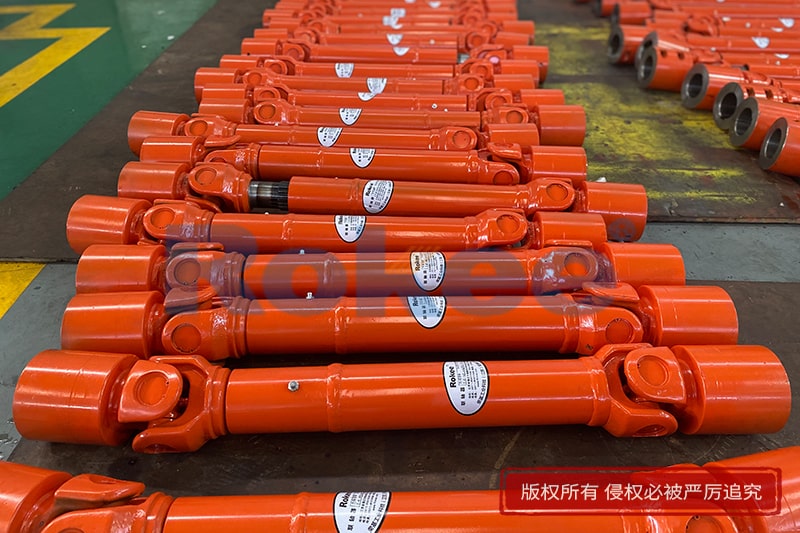
In the realm of mechanical power transmission, the ability to transfer torque and rotational motion between non-aligned shafts is a critical requirement for countless industrial, automotive, and aerospace systems. Among the various components designed to meet this need, the SWC universal joint stands out as a robust and versatile solution. Short for "Spherical Worm Cross" or "Shaft-Way Coupling" (depending on regional terminology), the SWC universal joint is engineered to accommodate large angular offsets, handle high torque loads, and operate reliably in harsh environments.
1. Fundamental Principles of SWC Universal Joints
At its core, a universal joint (also known as a U-joint) is a mechanical coupling that connects two shafts, allowing them to rotate at an angle relative to each other while transmitting torque. The SWC universal joint represents an advanced iteration of the basic U-joint design, optimized for enhanced performance in demanding conditions. Unlike simple Cardan joints, which are limited by small angular offsets and potential velocity fluctuations, SWC universal joints incorporate spherical geometry and precision-engineered components to overcome these limitations.
The primary function of an SWC universal joint is to maintain a consistent transfer of rotational power between shafts that are not collinear. This is achieved through a combination of cross-shaped components, bearings, and spherical housings. When torque is applied to the input shaft, the cross (or spider) of the joint rotates, transferring the force to the output shaft via the bearings. The spherical design of the SWC joint allows for a larger range of angular deflection compared to standard U-joints, making it suitable for applications where shafts are significantly misaligned.
One of the key advantages of SWC universal joints is their ability to minimize velocity variation, also known as angular velocity fluctuation. In simple U-joints, the output shaft speed can vary slightly as the joint rotates, especially at large angles, which can cause vibration and wear. SWC joints address this issue through improved geometric design, ensuring that the angular velocity of the output shaft remains more consistent with the input shaft, even at maximum angular offsets. This feature is crucial for maintaining smooth operation in high-speed applications.
2. Structural Characteristics of SWC Universal Joints
SWC universal joints are composed of several key components, each playing a vital role in their overall performance. Understanding the structure of these joints is essential for appreciating their capabilities and limitations.
2.1 Core Components
The main components of an SWC universal joint include the cross (spider), yokes, bearings, spherical housing, and seals. The cross is a central component with four trunnions (protruding shafts) that are perpendicular to each other. Each trunnion is fitted with a bearing, which allows the cross to rotate smoothly within the yokes. The yokes are the connecting parts that attach the joint to the input and output shafts; they feature a forked design that accommodates the cross and bearings.
The spherical housing is a distinguishing feature of SWC universal joints, setting them apart from standard U-joints. This housing encloses the cross and bearings, providing support and allowing for the large angular deflection that SWC joints are known for. The spherical shape ensures that the bearings maintain proper alignment with the trunnions even as the joint rotates at extreme angles. Seals are another critical component, preventing the ingress of dirt, dust, and moisture into the joint and retaining lubricant, which is essential for reducing friction and wear.
2.2 Design Variations
SWC universal joints are available in several design variations to suit different applications. The most common types include single SWC joints, double SWC joints, and telescopic SWC joints. Single SWC joints are used for applications with moderate angular offsets, while double SWC joints (consisting of two single joints connected by an intermediate shaft) are ideal for larger offsets and applications requiring minimal velocity fluctuation. Telescopic SWC joints incorporate a sliding mechanism that allows for axial movement between the shafts, making them suitable for systems where shaft lengths may vary due to thermal expansion or vibration.
Another important design consideration is the bearing type used in the SWC joint. Common bearing types include needle bearings, ball bearings, and roller bearings. Needle bearings are often preferred for SWC joints due to their high load-carrying capacity and compact size, which is essential for fitting within the spherical housing. The choice of bearing type depends on the specific application requirements, such as torque load, rotational speed, and operating environment.
3. Key Applications of SWC Universal Joints
SWC universal joints are widely used across various industries due to their ability to handle high torque, large angular offsets, and harsh operating conditions. Below are some of the most common application areas:
3.1 Industrial Machinery
In industrial settings, SWC universal joints are used in a wide range of machinery, including conveyors, pumps, compressors, and mixers. Conveyor systems, for example, often require power transmission between non-aligned shafts, and SWC joints provide a reliable solution for transferring torque while accommodating the angular offsets inherent in these systems. Pumps and compressors, which operate at high speeds and handle heavy loads, benefit from the SWC joint's ability to maintain smooth operation and minimize vibration.
Another important industrial application is in rolling mills, where SWC universal joints are used to transmit power from the motor to the rolling rolls. Rolling mills operate under extreme conditions, with high torque loads and significant shaft misalignment, making SWC joints an ideal choice due to their robustness and ability to handle these demanding requirements. Additionally, SWC joints are used in industrial robots, where precise power transmission and flexibility are essential for the robot's movement and operation.
3.2 Automotive and Transportation
The automotive industry relies heavily on universal joints for power transmission, and SWC joints are used in various vehicle types, including trucks, buses, and off-road vehicles. In heavy-duty trucks, SWC joints are often used in the driveline, connecting the transmission to the rear axle. These joints must handle the high torque generated by the engine while accommodating the angular movement of the axle as the vehicle travels over uneven terrain.
Off-road vehicles, such as construction equipment and agricultural machinery, also benefit from the use of SWC universal joints. These vehicles operate in harsh environments with significant shaft misalignment, and SWC joints provide the durability and flexibility needed to ensure reliable power transmission. Additionally, SWC joints are used in some automotive steering systems, where they help transfer motion from the steering wheel to the steering rack, allowing for smooth and precise steering control.
3.3 Aerospace and Defense
In the aerospace and defense sectors, SWC universal joints are used in aircraft, helicopters, and military vehicles. Aircraft engines, for example, use SWC joints to transmit power to various components, such as pumps and generators. These joints must meet strict performance requirements, including high reliability, light weight, and resistance to extreme temperatures and pressures. Helicopters rely on SWC joints in their rotor systems, where they help transfer torque from the engine to the rotor blades while accommodating the complex angular movements of the rotor.
Military vehicles, such as tanks and armored personnel carriers, also use SWC universal joints in their drivelines and suspension systems. These vehicles operate in extreme conditions, including rough terrain, high temperatures, and exposure to dust and debris, making SWC joints an ideal choice due to their robustness and ability to withstand these harsh environments.
3.4 Renewable Energy Systems
With the growing focus on renewable energy, SWC universal joints are increasingly being used in wind turbines and solar tracking systems. Wind turbines require power transmission from the rotor to the generator, and the shafts involved often have significant angular offsets due to the turbine's design. SWC joints provide a reliable solution for transferring torque while accommodating these offsets, ensuring efficient power generation. Solar tracking systems, which adjust the position of solar panels to follow the sun, use SWC joints to transmit motion between the drive mechanism and the tracking arm, allowing for precise and smooth movement.
4. Material Selection and Manufacturing Processes
The performance and durability of SWC universal joints are heavily dependent on the materials used and the manufacturing processes employed. The selection of materials must take into account the application requirements, such as torque load, rotational speed, operating temperature, and exposure to corrosive environments.
4.1 Material Selection
The cross and yokes of SWC universal joints are typically made from high-strength alloy steels, such as 40Cr, 45MnB, or 20CrMnTi. These materials offer excellent tensile strength, fatigue resistance, and wear resistance, making them suitable for handling high torque loads. The bearings are often made from hardened steel, such as GCr15, which provides high hardness and wear resistance. In some applications, where corrosion resistance is a priority, stainless steel or alloy steels with corrosion-resistant coatings are used.
The spherical housing is usually made from cast iron or aluminum alloy. Cast iron is preferred for heavy-duty applications due to its high strength and durability, while aluminum alloy is used in lightweight applications, such as aerospace and automotive, to reduce overall weight. Seals are typically made from rubber or polyurethane, which provide excellent resistance to lubricants and environmental factors.
4.2 Manufacturing Processes
The manufacturing of SWC universal joints involves several key processes, including forging, machining, heat treatment, and assembly. The cross and yokes are often forged from steel billets to improve their mechanical properties, such as strength and fatigue resistance. Forging involves heating the steel to a high temperature and shaping it using a die, which results in a dense and uniform structure.
After forging, the components undergo machining to achieve the required dimensions and surface finish. Machining processes include turning, milling, drilling, and grinding. Precision grinding is particularly important for the trunnions and bearing surfaces, as it ensures smooth operation and proper alignment of the bearings. Heat treatment is another critical process, involving quenching and tempering to harden the steel and improve its mechanical properties. The heat treatment process must be carefully controlled to avoid distortion and ensure consistent performance.
Finally, the components are assembled, with the bearings fitted onto the trunnions and the cross inserted into the yokes. The spherical housing is then attached, and the seals are installed to prevent lubricant leakage and contamination. Quality control is an essential part of the manufacturing process, with each joint undergoing inspection to ensure it meets the required specifications.
5. Maintenance and Troubleshooting of SWC Universal Joints
Proper maintenance is essential for ensuring the long-term performance and reliability of SWC universal joints. Regular maintenance can help prevent premature failure, reduce downtime, and lower maintenance costs. Below are some key maintenance practices and troubleshooting tips:
5.1 Maintenance Practices
Lubrication is the most important maintenance task for SWC universal joints. The bearings and trunnions require regular lubrication to reduce friction and wear. The type of lubricant used depends on the application requirements, such as operating temperature and load. Grease is the most common lubricant for SWC joints, as it provides excellent lubrication and stays in place even at high speeds. It is important to follow the manufacturer's recommendations for lubrication intervals and the amount of lubricant to use.
Regular inspection is another key maintenance practice. Inspections should include checking for signs of wear, such as excessive play in the joint, unusual noise during operation, or leakage of lubricant. The seals should also be inspected for damage, as a damaged seal can allow contamination to enter the joint, leading to premature wear. If any signs of wear or damage are detected, the joint should be repaired or replaced immediately.
In addition to lubrication and inspection, proper installation is essential for the performance of SWC universal joints. The joint should be aligned correctly to minimize stress and wear. Misalignment can cause excessive load on the bearings and trunnions, leading to premature failure. It is also important to ensure that the shafts are properly secured to the yokes, as loose connections can cause vibration and damage to the joint.
5.2 Troubleshooting Common Issues
Despite proper maintenance, SWC universal joints may experience issues from time to time. Some of the most common problems include excessive noise, vibration, and premature wear. Excessive noise during operation is often a sign of insufficient lubrication or worn bearings. If the noise is accompanied by vibration, it may indicate misalignment of the joint or damage to the cross or yokes.
Premature wear of the bearings or trunnions can be caused by several factors, including insufficient lubrication, contamination, misalignment, or overloading. If wear is detected, the affected components should be replaced. In some cases, the entire joint may need to be replaced if the damage is severe.
Another common issue is lubricant leakage, which is usually caused by a damaged seal. The seal should be replaced immediately to prevent contamination of the joint. If the leakage persists after replacing the seal, it may indicate a problem with the housing or the fit of the seal, which should be inspected and repaired.
6. Future Trends in SWC Universal Joint Technology
As technology advances and industries continue to demand higher performance and efficiency, the design and development of SWC universal joints are evolving. Below are some of the key trends shaping the future of SWC universal joint technology:
6.1 Lightweight and High-Strength Materials
One of the main trends is the use of lightweight and high-strength materials, such as carbon fiber composites and advanced alloys. These materials offer excellent strength-to-weight ratios, making them ideal for applications where weight reduction is a priority, such as aerospace and automotive. Carbon fiber composites are also resistant to corrosion and fatigue, which can improve the durability and lifespan of SWC joints.
6.2 Improved Lubrication Systems
Advancements in lubrication technology are also driving the development of SWC universal joints. Self-lubricating bearings, which incorporate solid lubricants such as PTFE, are becoming increasingly popular. These bearings eliminate the need for regular lubrication, reducing maintenance requirements and improving reliability. Additionally, advanced lubricants with improved thermal stability and wear resistance are being developed, allowing SWC joints to operate in even more extreme conditions.
6.3 Smart Monitoring and Predictive Maintenance
The integration of smart sensors and monitoring systems is another important trend. Smart SWC universal joints are equipped with sensors that measure temperature, vibration, and wear, providing real-time data on the joint's performance. This data can be used to predict potential failures and schedule maintenance before a breakdown occurs, reducing downtime and maintenance costs. The use of IoT (Internet of Things) technology allows for remote monitoring of the joints, making it easier to manage large fleets of machinery.
6.4 Optimization Through Simulation and Modeling
Advancements in computer simulation and modeling tools are enabling engineers to optimize the design of SWC universal joints. Finite Element Analysis (FEA) is used to simulate the performance of the joint under various load and operating conditions, allowing for the identification of potential stress points and the optimization of the design. This results in more efficient and reliable SWC joints that are tailored to specific application requirements.
7. Conclusion
The SWC universal joint is a critical component in mechanical power transmission, offering a robust and versatile solution for transferring torque between non-aligned shafts. Its unique structural design, which incorporates spherical geometry and precision-engineered components, allows it to handle high torque loads, large angular offsets, and harsh operating conditions. SWC universal joints are widely used across various industries, including industrial machinery, automotive, aerospace, and renewable energy, and their performance is heavily dependent on material selection, manufacturing processes, and proper maintenance.
As technology continues to advance, the future of SWC universal joint technology looks promising, with trends such as lightweight materials, improved lubrication systems, smart monitoring, and simulation-driven design shaping the development of more efficient and reliable joints. By understanding the fundamental principles, structural characteristics, and key applications of SWC universal joints, engineers and industry professionals can make informed decisions about their selection, installation, and maintenance, ensuring optimal performance and longevity.
In conclusion, the SWC universal joint plays an indispensable role in modern mechanical systems, and its continued evolution will be crucial in meeting the growing demands of industries worldwide. Whether in heavy-duty industrial machinery, high-performance automotive systems, or cutting-edge renewable energy technologies, the SWC universal joint remains a cornerstone of power transmission, enabling the smooth and efficient operation of countless applications.
« SWC Universal Joints » Post Date: 2023/8/31
URL: https://www.rokeecoupling.com/en/customer-cases/swc-universal-joints.html
- Star Coupling & Plum Coupling
- Purpose of Bush Type Couplings
- Elastic Diaphragm Coupling Diaphragm Material
- Flattening Machine Universal Coupling
- Universal Joint Couplings Professional Manufacturer
- Universal Coupling Of Roller Press
- Gear Couplings Wholesale Manufacturer
- Pin Bush Type Flexible Coupling Drawing
- Distributor Of Drum Gear Couplings
- Long Shaft Coupling