SWC Cardan Shaft
Rokee® provide SWC Cardan Shaft, non-standard coupling customization, drawing design, batch processing, and export the product to your location.
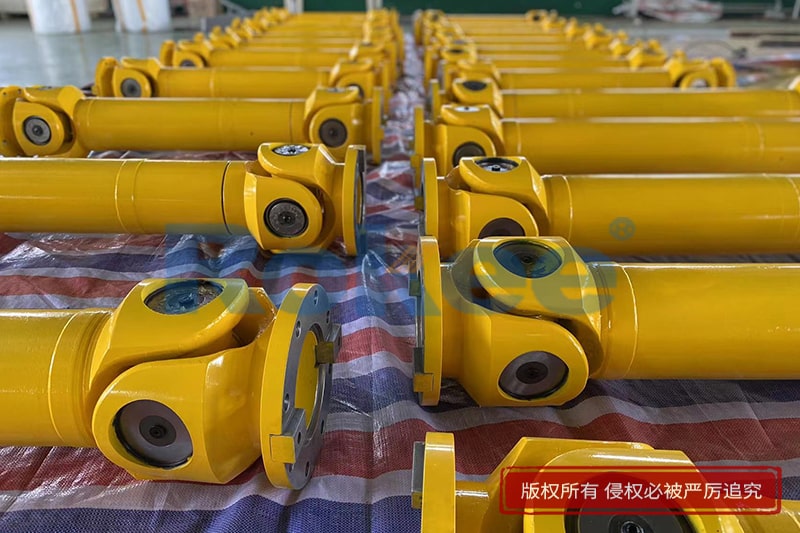
In the realm of mechanical power transmission, the search for efficient, reliable, and versatile components has been a driving force behind industrial innovation. Among the various devices that facilitate the transfer of rotational motion and torque between non-aligned shafts, the SWC Cardan Shaft stands out as a critical and widely used solution. This robust mechanical component has evolved to meet the demanding requirements of diverse industries, from heavy machinery and automotive engineering to aerospace and renewable energy. Unlike conventional shaft systems that require precise alignment to operate effectively, the SWC Cardan Shaft is engineered to accommodate angular misalignments, axial displacements, and radial offsets, making it an indispensable part of complex mechanical assemblies.
1. Understanding the Fundamentals of SWC Cardan Shaft
The term "Cardan Shaft" traces its origins to the Italian mathematician and physicist Gerolamo Cardano, who first described the principles of the universal joint—a core component of the shaft system. The SWC Cardan Shaft, a specialized variant of this design, is distinguished by its robust construction and enhanced performance capabilities. At its essence, a SWC Cardan Shaft is a mechanical assembly that consists of two universal joints (also known as Hooke's joints) connected by an intermediate shaft. This configuration enables the transmission of torque and rotational motion between two shafts that are not in a straight line, a condition commonly encountered in various mechanical systems.
One of the key characteristics that sets the SWC Cardan Shaft apart from other types of Cardan shafts is its optimized cross-bearing design. The cross-bearing, which serves as the pivot point for the universal joints, is engineered to withstand high levels of torque and radial loads, ensuring stable operation even under extreme conditions. Additionally, the SWC design incorporates features that minimize friction and wear, extending the service life of the component. Unlike simpler universal joint systems that may suffer from uneven torque transmission at high angles of misalignment, the SWC Cardan Shaft is designed to maintain consistent performance across a wide range of operating conditions, making it suitable for high-speed and high-torque applications.
2. Design and Construction of SWC Cardan Shaft
The design and construction of the SWC Cardan Shaft are tailored to meet the specific requirements of different applications, but all variants share a set of core components. These components work in tandem to ensure efficient power transmission while accommodating misalignments. The primary parts of a typical SWC Cardan Shaft include the universal joints (each consisting of a cross, bearings, and yokes), the intermediate shaft, and connecting flanges or splines.
2.1 Universal Joints: The Pivot of Power Transmission
The universal joints are the most critical components of the SWC Cardan Shaft, as they enable the transfer of torque between misaligned shafts. Each universal joint comprises a cross (also referred to as a spider), four bearings, and two yokes. The cross is a central component with four arms, each of which is fitted with a bearing. These bearings allow the cross to rotate freely within the yokes, which are connected to the input and output shafts (or the intermediate shaft). The design of the cross and bearings is crucial for the performance of the SWC Cardan Shaft—high-quality bearings with low friction coefficients ensure smooth operation, while a robust cross construction enables the component to withstand high torque loads.
In SWC Cardan Shafts, the universal joints are often designed with self-lubricating bearings, which eliminate the need for frequent lubrication and reduce maintenance requirements. This feature is particularly beneficial in applications where access to the shaft is limited or where continuous operation is essential. Additionally, the yokes are typically made from high-strength materials such as alloy steel, which provides the necessary rigidity and durability to withstand the stresses of power transmission.
2.2 Intermediate Shaft: Connecting and Stabilizing
The intermediate shaft serves as the link between the two universal joints, transmitting torque from the input joint to the output joint. The length of the intermediate shaft varies depending on the application, with longer shafts used to connect shafts that are widely separated. The design of the intermediate shaft is critical for maintaining the stability of the SWC Cardan Shaft during operation. To minimize vibration and ensure smooth rotation, the intermediate shaft is often balanced to precise tolerances. This balancing process involves removing or adding small amounts of material to the shaft to ensure that its center of mass aligns with its axis of rotation.
The material used for the intermediate shaft is selected based on the application's torque and speed requirements. For high-torque applications such as heavy machinery, the shaft is typically made from high-strength alloy steel, which offers excellent tensile strength and fatigue resistance. In lighter applications, such as automotive systems, carbon steel may be used to reduce weight while maintaining adequate performance.
2.3 Connecting Components: Flanges and Splines
The SWC Cardan Shaft is connected to the input and output shafts via flanges or splines. Flange connections are commonly used in applications where a rigid and secure connection is required. The flanges are bolted to the shafts, ensuring that torque is transmitted efficiently without slippage. Spline connections, on the other hand, allow for axial displacement between the SWC Cardan Shaft and the connected shafts. This feature is particularly useful in applications where thermal expansion or contraction of the shafts may occur, as it prevents the buildup of axial stresses that could damage the component.
Spline connections consist of a grooved shaft (male spline) that fits into a corresponding grooved hub (female spline). The design of the splines ensures that torque is transmitted evenly across the contact area, reducing wear and extending the service life of the connection. In some SWC Cardan Shaft designs, the splines are coated with a low-friction material to further enhance performance and reduce maintenance.
3. Operational Mechanism: How SWC Cardan Shaft Transmits Power
The operational mechanism of the SWC Cardan Shaft is based on the principles of the universal joint, but its two-joint configuration addresses the limitations of a single universal joint. A single universal joint suffers from a phenomenon known as "angular velocity fluctuation," where the output shaft rotates at a non-uniform speed even if the input shaft rotates at a constant speed. This fluctuation occurs because the angle between the input and output shafts changes during rotation, leading to variations in the torque transmission rate.
The SWC Cardan Shaft overcomes this limitation by using two universal joints connected by an intermediate shaft. For the output shaft to rotate at a constant speed, the two universal joints must be aligned such that the angles of misalignment between the input shaft and the intermediate shaft are equal to the angles of misalignment between the intermediate shaft and the output shaft. This configuration ensures that the angular velocity fluctuations caused by the first universal joint are canceled out by the second universal joint, resulting in smooth and uniform power transmission.
When the input shaft rotates, it drives the first universal joint, which transmits torque to the intermediate shaft. The intermediate shaft then rotates and drives the second universal joint, which transfers the torque to the output shaft. During this process, the universal joints accommodate any angular misalignment between the shafts, allowing the SWC Cardan Shaft to operate effectively even when the input and output shafts are not in a straight line. Additionally, the spline connections (if used) allow for axial movement between the shafts, ensuring that the SWC Cardan Shaft can adapt to changes in the distance between the input and output shafts.
4. Key Applications of SWC Cardan Shaft
The versatility and robustness of the SWC Cardan Shaft make it suitable for a wide range of applications across various industries. Its ability to accommodate misalignments, transmit high torque, and operate at high speeds has made it an essential component in many mechanical systems. Below are some of the key application areas where SWC Cardan Shafts are commonly used:
4.1 Heavy Machinery and Construction Equipment
Heavy machinery and construction equipment, such as excavators, loaders, bulldozers, and cranes, rely heavily on SWC Cardan Shafts for power transmission. In these applications, the shafts are used to connect the engine to the transmission, the transmission to the axles, and the hydraulic pumps to the power take-off (PTO) units. The harsh operating conditions of construction sites, including uneven terrain and frequent shocks and vibrations, require components that are durable and reliable. The SWC Cardan Shaft's robust construction and ability to accommodate misalignments make it ideal for these applications, ensuring that power is transmitted efficiently even in challenging conditions.
4.2 Automotive Industry
In the automotive industry, SWC Cardan Shafts are used in a variety of vehicles, including trucks, buses, and off-road vehicles. These shafts are typically used to connect the transmission to the rear axle in rear-wheel-drive and four-wheel-drive vehicles. The SWC Cardan Shaft's ability to accommodate the angular misalignment between the transmission and the axle (caused by the vehicle's suspension movement) ensures smooth power transmission and a comfortable ride. Additionally, in high-performance vehicles, SWC Cardan Shafts are used to transmit high torque at high speeds, making them an essential component for achieving optimal performance.
4.3 Aerospace and Aviation
The aerospace and aviation industry requires components that are lightweight, reliable, and capable of operating in extreme conditions. SWC Cardan Shafts are used in aircraft engines and auxiliary power units (APUs) to transmit power between various components. The lightweight design of SWC Cardan Shafts (achieved through the use of high-strength, lightweight materials such as titanium alloys) makes them suitable for aerospace applications, where weight reduction is critical for improving fuel efficiency and performance. Additionally, the SWC Cardan Shaft's ability to accommodate misalignments ensures that power is transmitted efficiently even in the confined spaces of an aircraft engine.
4.4 Renewable Energy Systems
Renewable energy systems, such as wind turbines and solar tracking systems, rely on SWC Cardan Shafts for power transmission. In wind turbines, SWC Cardan Shafts are used to connect the turbine rotor to the gearbox and the gearbox to the generator. The SWC Cardan Shaft's ability to accommodate the misalignment between the rotor and the gearbox (caused by wind-induced vibrations and the turbine's yaw movement) ensures that power is transmitted efficiently, maximizing the energy output of the turbine. In solar tracking systems, SWC Cardan Shafts are used to drive the tracking mechanism, allowing the solar panels to follow the sun's movement and optimize energy collection.
4.5 Industrial Machinery and Manufacturing
Industrial machinery and manufacturing equipment, such as conveyors, pumps, compressors, and machine tools, also use SWC Cardan Shafts for power transmission. In conveyor systems, SWC Cardan Shafts are used to connect the motor to the conveyor belt, ensuring that the belt moves smoothly and efficiently. In pumps and compressors, SWC Cardan Shafts transmit power from the motor to the impeller or rotor, enabling the equipment to move fluids or gases. In machine tools, SWC Cardan Shafts are used to transmit power to the cutting tools, ensuring precise and efficient machining operations.
5. Performance Advantages of SWC Cardan Shaft
The SWC Cardan Shaft offers several performance advantages over other types of power transmission components, making it a preferred choice for many applications. These advantages include:
5.1 High Torque Transmission Capacity
One of the primary advantages of the SWC Cardan Shaft is its ability to transmit high levels of torque. The robust construction of the universal joints, intermediate shaft, and connecting components allows the SWC Cardan Shaft to withstand the high torque loads encountered in heavy machinery, automotive, and industrial applications. This high torque transmission capacity makes the SWC Cardan Shaft suitable for use in applications where large amounts of power need to be transferred between shafts.
5.2 Accommodation of Misalignments
Unlike rigid shafts that require precise alignment, the SWC Cardan Shaft can accommodate angular misalignments, axial displacements, and radial offsets. This feature is particularly useful in applications where the input and output shafts cannot be perfectly aligned, such as in construction equipment, automotive suspension systems, and wind turbines. The ability to accommodate misalignments reduces the need for precise installation and alignment, simplifying the assembly process and reducing maintenance costs.
5.3 Smooth and Uniform Power Transmission
The two-joint configuration of the SWC Cardan Shaft ensures that the output shaft rotates at a constant speed, even if the input shaft rotates at a constant speed and there is angular misalignment. This eliminates the angular velocity fluctuation associated with single universal joints, resulting in smooth and uniform power transmission. Smooth power transmission reduces vibration and noise, improving the overall performance and reliability of the mechanical system.
5.4 High Speed Capability
SWC Cardan Shafts are designed to operate at high speeds, making them suitable for applications such as high-performance automotive systems, aerospace engines, and industrial machinery. The balanced design of the intermediate shaft and the low-friction bearings in the universal joints ensure that the SWC Cardan Shaft can rotate at high speeds without excessive vibration or wear.
5.5 Durability and Long Service Life
The use of high-strength materials, such as alloy steel and titanium alloys, and the optimized design of the SWC Cardan Shaft ensure that it is durable and has a long service life. The self-lubricating bearings (in many designs) reduce friction and wear, further extending the service life of the component. Additionally, the robust construction of the SWC Cardan Shaft makes it resistant to shocks, vibrations, and other harsh operating conditions, ensuring reliable performance over an extended period.
6. Maintenance Considerations for SWC Cardan Shaft
While the SWC Cardan Shaft is designed to be durable and reliable, proper maintenance is essential to ensure optimal performance and extend its service life. The following are some key maintenance considerations for SWC Cardan Shafts:
6.1 Lubrication
Lubrication is critical for the smooth operation of the SWC Cardan Shaft, as it reduces friction between the moving components (such as the cross bearings and splines). In SWC Cardan Shafts with self-lubricating bearings, the lubricant is sealed within the bearings, reducing the need for frequent lubrication. However, it is still important to inspect the lubricant level and condition regularly. For SWC Cardan Shafts without self-lubricating bearings, lubrication should be performed at regular intervals, following the manufacturer's recommendations. The type of lubricant used should be appropriate for the application's operating conditions, such as temperature, speed, and torque.
6.2 Inspection and Monitoring
Regular inspection and monitoring of the SWC Cardan Shaft are essential to detect potential issues before they lead to component failure. During inspection, the following aspects should be checked: the condition of the universal joints (including the cross, bearings, and yokes), the alignment of the shaft, the condition of the intermediate shaft (for signs of wear, corrosion, or damage), and the tightness of the connecting bolts and flanges. Additionally, vibration monitoring can be used to detect abnormal vibrations, which may indicate misalignment, unbalance, or wear of the components.
6.3 Alignment Adjustment
Proper alignment of the SWC Cardan Shaft is critical for optimal performance. Over time, the alignment of the shaft may change due to wear, vibration, or thermal expansion. If misalignment is detected during inspection, it should be adjusted promptly to prevent excessive wear, vibration, and torque loss. Alignment adjustment involves adjusting the position of the input and output shafts to ensure that the angles of misalignment between the shafts and the intermediate shaft are equal (for constant speed transmission).
6.4 Replacement of Worn Components
If worn or damaged components (such as bearings, cross shafts, or yokes) are detected during inspection, they should be replaced promptly to prevent further damage to the SWC Cardan Shaft and the connected mechanical system. When replacing components, it is important to use high-quality replacement parts that are compatible with the SWC Cardan Shaft's design and specifications.
7. Future Trends and Innovations in SWC Cardan Shaft Design
As industries continue to evolve and demand higher performance, reliability, and efficiency from mechanical components, the design and technology of SWC Cardan Shafts are also advancing. Some of the key future trends and innovations in SWC Cardan Shaft design include:
7.1 Lightweight Materials
The use of lightweight materials, such as carbon fiber composites and titanium alloys, is becoming increasingly common in SWC Cardan Shaft design. These materials offer high strength-to-weight ratios, reducing the overall weight of the shaft while maintaining or improving its performance. Lightweight SWC Cardan Shafts are particularly beneficial in aerospace, automotive, and renewable energy applications, where weight reduction is critical for improving fuel efficiency and energy output.
7.2 Smart Monitoring Systems
The integration of smart monitoring systems into SWC Cardan Shafts is another emerging trend. These systems use sensors to monitor key performance parameters, such as temperature, vibration, and torque, in real time. The data collected by the sensors is transmitted to a central monitoring system, allowing for predictive maintenance and early detection of potential issues. Smart monitoring systems can significantly improve the reliability and availability of SWC Cardan Shafts, reducing downtime and maintenance costs.
7.3 Improved Lubrication Systems
Advancements in lubrication technology are also enhancing the performance and service life of SWC Cardan Shafts. Self-lubricating bearings with extended lubricant life and high-temperature resistance are being developed, reducing the need for frequent lubrication and maintenance. Additionally, lubrication systems that automatically adjust the lubricant flow based on operating conditions are being explored, ensuring optimal lubrication at all times.
7.4 Customized Designs for Specific Applications
As industries become more specialized, there is a growing demand for customized SWC Cardan Shaft designs that are tailored to the specific requirements of individual applications. Manufacturers are using advanced design tools, such as finite element analysis (FEA), to optimize the design of SWC Cardan Shafts for specific torque, speed, and misalignment requirements. Customized designs ensure that the SWC Cardan Shaft performs optimally in its intended application, improving overall system performance and reliability.
8. Conclusion
The SWC Cardan Shaft is a critical component in modern mechanical power transmission systems, offering efficient, reliable, and versatile torque and motion transfer between non-aligned shafts. Its robust design, ability to accommodate misalignments, high torque transmission capacity, and smooth operation make it suitable for a wide range of applications across various industries, including heavy machinery, automotive, aerospace, renewable energy, and industrial manufacturing. Proper maintenance, including lubrication, inspection, alignment adjustment, and replacement of worn components, is essential to ensure the optimal performance and long service life of the SWC Cardan Shaft.
As industries continue to evolve, the design and technology of SWC Cardan Shafts are advancing to meet the growing demand for higher performance, reliability, and efficiency. The use of lightweight materials, integration of smart monitoring systems, improved lubrication technology, and customized designs are among the key trends shaping the future of SWC Cardan Shafts. With these innovations, the SWC Cardan Shaft is poised to remain a vital component in mechanical power transmission systems for years to come, supporting the continued growth and innovation of various industries.
« SWC Cardan Shaft » Post Date: 2023/9/23
URL: https://www.rokeecoupling.com/en/customer-cases/swc-cardan-shaft.html
- Supply of Brake Drum Couplings
- Spring Sleeve Pin Couplings Design
- Drum Shaped Gear Coupling For High-speed Trains
- Grease of Bushed Pin Type Flexible Coupling
- Curved-tooth Gear Coupling Drawing Method
- Diaphragm Flange Couplings
- Cardan Coupling Structural Diagram
- Pin Bush Flexible Coupling Advantages
- Plum Coupling For Guide Rail
- Angle of Bushed Pin Type Flexible Coupling