Precision Small Universal Joint Coupling
Rokee® provide Precision Small Universal Joint Coupling, non-standard coupling customization, drawing design, batch processing, and export the product to your location.
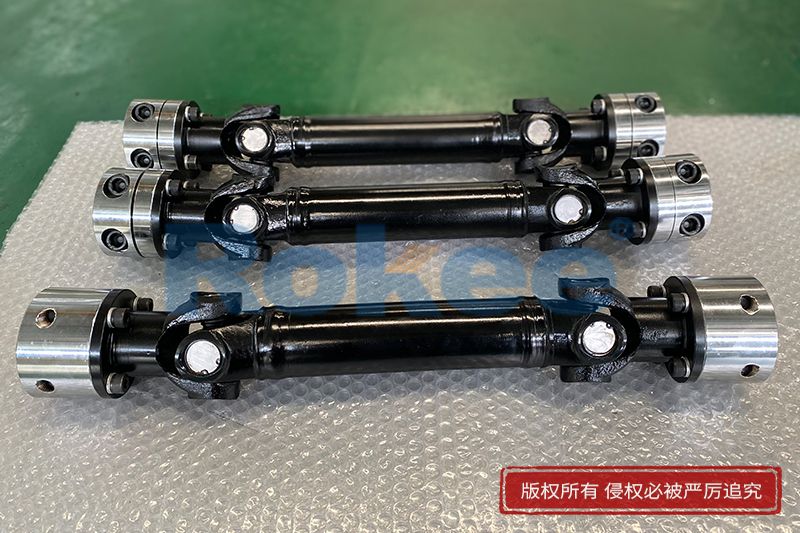
In the realm of mechanical power transmission, precision and compactness are often the defining factors between efficient operation and system failure. Among the various components that facilitate torque transfer while accommodating misalignments, precision small universal joint couplings stand out as indispensable elements in countless small-scale and high-precision mechanical systems. These couplings, characterized by their compact size, high rotational accuracy, and ability to transmit power at varying angles, play a critical role in bridging the gap between rotating shafts that are not perfectly aligned. From industrial automation equipment to medical devices and consumer electronics, their versatility and reliability make them a cornerstone of modern mechanical engineering.
To fully appreciate the value of precision small universal joint couplings, it is essential to first understand their fundamental definition and operational mechanism. A universal joint coupling, commonly referred to as a U-joint, is a mechanical device designed to connect two rotating shafts, allowing for the transmission of torque and rotational motion even when the shafts are at an angle to each other. Unlike rigid couplings, which require near-perfect alignment between shafts, universal joint couplings can accommodate both angular misalignment (the angle between the two shafts) and, in some cases, axial misalignment (parallel offset between the shafts). Precision small universal joint couplings are a specialized subset of these devices, optimized for applications where space is limited, and rotational accuracy is paramount. Typically featuring smaller dimensions—with shaft diameters often ranging from a few millimeters to several centimeters—and tighter manufacturing tolerances, these couplings minimize backlash, vibration, and power loss, ensuring consistent performance in high-precision operations.
The design of precision small universal joint couplings is a careful balance of materials, geometry, and manufacturing precision, all tailored to meet the demands of small-scale, high-accuracy applications. At the core of most universal joint couplings is the cross-and-bearing design, which consists of a central cross (also known as a spider) with four trunnions, each fitted with a bearing. These bearings connect the cross to two yokes—one attached to the input shaft and the other to the output shaft. When the input shaft rotates, the cross transfers the torque to the output shaft, even as the angle between the two shafts changes. For precision small couplings, this basic design is refined to reduce size and enhance accuracy. The yokes are often made from lightweight yet high-strength materials to minimize inertia, while the cross and bearings are manufactured with extremely tight tolerances to reduce backlash—the amount of play or free movement between the components. In some high-precision variants, needle bearings or ball bearings are used to reduce friction and ensure smooth rotation, further enhancing the coupling’s performance.
Material selection is a critical aspect of the design process for precision small universal joint couplings, as it directly impacts the coupling’s strength, durability, weight, and resistance to wear and corrosion. Common materials used for the yokes and cross include high-strength alloys such as aluminum alloy, steel, and stainless steel. Aluminum alloy is favored for applications where weight reduction is a priority, such as in aerospace or portable equipment, due to its lightweight properties and good corrosion resistance. Steel, on the other hand, offers superior strength and rigidity, making it ideal for high-torque applications in industrial machinery. Stainless steel is often used in harsh environments, such as those involving moisture, chemicals, or high temperatures, as it provides excellent corrosion resistance. The bearings within the coupling are typically made from hardened steel or ceramic materials; ceramic bearings, in particular, offer higher hardness, lower friction, and better resistance to wear than traditional steel bearings, making them suitable for high-speed and high-precision applications.
One of the most distinguishing features of precision small universal joint couplings is their high rotational accuracy. Unlike standard universal joint couplings, which may exhibit significant backlash and vibration at high speeds, precision variants are engineered to minimize these issues. Backlash is reduced through precise machining of the cross, trunnions, and bearings, ensuring a tight fit between components. This tight fit not only improves rotational accuracy but also reduces the amount of noise and vibration generated during operation, which is crucial in applications where noise levels must be kept to a minimum, such as in medical devices or laboratory equipment. Additionally, precision small universal joint couplings are designed to maintain their performance even at high rotational speeds, with some models capable of operating at speeds exceeding 10,000 revolutions per minute (RPM). This high-speed capability is achieved through careful balancing of the components, which reduces centrifugal forces and prevents excessive vibration.
Another key characteristic of precision small universal joint couplings is their ability to accommodate misalignment while maintaining efficient power transmission. Angular misalignment is the most common type of misalignment in mechanical systems, and precision small U-joints can typically accommodate angles ranging from a few degrees up to 45 degrees, depending on the design. Some advanced models, such as double universal joint couplings (which consist of two U-joints connected by an intermediate shaft), can accommodate even larger angles or compensate for parallel misalignment. This ability to handle misalignment is critical in many applications, as it reduces the stress on other components in the system, such as bearings and shafts, extending their service life. Additionally, precision small universal joint couplings are designed to have low power loss, meaning that most of the torque applied to the input shaft is transmitted to the output shaft, making them highly efficient.
The versatility of precision small universal joint couplings is reflected in their wide range of applications across various industries. One of the primary application areas is industrial automation, where these couplings are used in small-scale actuators, servo motors, and robotic arms. In robotic systems, for example, precision small U-joints are used to connect the various joints of the robot arm, allowing for precise movement and torque transmission while accommodating the angular misalignments that occur as the arm moves. Servo motors, which are used to control the position, velocity, and acceleration of mechanical components in automation systems, also rely on precision small universal joint couplings to connect to lead screws or other mechanical components, ensuring accurate and responsive control. The high rotational accuracy and low backlash of these couplings are essential in these applications, as even small deviations can lead to errors in the system’s performance.
The medical device industry is another sector where precision small universal joint couplings play a vital role. Medical devices such as surgical robots, diagnostic equipment, and patient monitoring systems require extremely high precision and reliability to ensure patient safety. In surgical robots, for instance, precision small U-joints are used to transmit motion from the control unit to the surgical instruments, allowing surgeons to perform minimally invasive procedures with unparalleled accuracy. Diagnostic equipment, such as CT scanners and MRI machines, also use these couplings in their rotating components, where high rotational accuracy and low vibration are essential for producing clear images. The compact size of precision small universal joint couplings is particularly advantageous in medical devices, as these devices are often required to be small and lightweight to be portable or to fit in confined spaces.
Consumer electronics and automotive applications also benefit from the use of precision small universal joint couplings. In consumer electronics, these couplings are used in small motors found in devices such as cameras, printers, and small appliances. For example, in digital cameras, precision small U-joints are used to connect the motor that drives the lens focus or zoom mechanism, ensuring smooth and precise movement. In the automotive industry, precision small universal joint couplings are used in various small-scale components, such as windshield wiper motors, power window mechanisms, and HVAC systems. While larger U-joints are used in the drivetrain of vehicles, the small precision variants are essential for the reliable operation of these smaller, more intricate systems.
Aerospace and defense applications also rely on precision small universal joint couplings for their high performance and reliability in extreme conditions. In aerospace systems, such as small unmanned aerial vehicles (UAVs) or satellite components, these couplings are used to transmit torque in confined spaces while withstanding the high vibrations and temperature fluctuations encountered during flight. The lightweight materials used in the construction of these couplings are particularly important in aerospace applications, where weight reduction is critical for improving fuel efficiency and payload capacity. In defense applications, such as small arms or surveillance equipment, precision small U-joints ensure reliable performance in harsh environments, making them an essential component of these systems.
Selecting the right precision small universal joint coupling for a specific application requires careful consideration of several key factors. The first factor to consider is the torque requirement of the system. The coupling must be capable of transmitting the maximum torque generated by the input shaft without failing or deforming. It is important to select a coupling with a torque rating that exceeds the maximum torque of the system to provide a safety margin. The second factor is the misalignment angle that the coupling will need to accommodate. Different couplings are designed to handle different ranges of angular misalignment, so it is essential to choose a coupling that can handle the maximum misalignment expected in the system. If the system requires compensation for parallel misalignment, a double universal joint coupling or a different type of coupling may be necessary.
The rotational speed of the system is another important factor to consider. High-speed applications require couplings that are carefully balanced to reduce vibration and prevent premature wear. It is important to select a coupling that is rated for the maximum rotational speed of the system to ensure reliable operation. The size and space constraints of the application also play a critical role in the selection process. Precision small universal joint couplings are available in a range of sizes, so it is important to choose a coupling that fits within the available space while still meeting the torque and misalignment requirements.
Material compatibility is another factor to consider, especially in harsh environments. If the application involves exposure to moisture, chemicals, or high temperatures, it is important to select a coupling made from materials that can withstand these conditions. For example, stainless steel or ceramic components may be necessary for applications in corrosive environments. Finally, the cost and availability of the coupling should also be considered. While precision small universal joint couplings are available from a variety of manufacturers, it is important to choose a coupling that offers good value for money while still meeting the performance requirements of the application.
Proper maintenance is essential to ensure the long-term performance and reliability of precision small universal joint couplings. Regular inspection is the first step in maintenance, as it allows for the early detection of potential issues such as wear, corrosion, or loose components. During inspection, the coupling should be checked for signs of damage, such as cracks in the yokes or cross, excessive play in the bearings, or signs of corrosion. If any issues are detected, the coupling should be repaired or replaced immediately to prevent further damage to the system.
Lubrication is another critical aspect of maintenance for precision small universal joint couplings. Most couplings require regular lubrication to reduce friction between the moving components, prevent wear, and extend the service life of the coupling. The type of lubricant used depends on the material of the coupling and the operating conditions of the system. For example, high-temperature applications may require a synthetic lubricant that can withstand elevated temperatures, while applications in corrosive environments may require a lubricant that offers additional corrosion protection. It is important to follow the manufacturer’s recommendations for lubrication frequency and type to ensure optimal performance.
Proper installation is also essential for the performance of precision small universal joint couplings. During installation, the shafts should be aligned as accurately as possible to minimize the amount of misalignment that the coupling needs to accommodate. This not only reduces stress on the coupling but also extends the service life of other components in the system. Additionally, the coupling should be installed with the correct torque to ensure that the components are securely fastened without being over-tightened, which can cause damage to the threads or the coupling itself.
In conclusion, precision small universal joint couplings are essential components in a wide range of small-scale and high-precision mechanical systems. Their compact size, high rotational accuracy, and ability to accommodate misalignment make them versatile and reliable solutions for torque transmission in applications where space is limited and precision is paramount. From industrial automation and medical devices to consumer electronics and aerospace systems, these couplings play a critical role in ensuring the efficient and reliable operation of modern mechanical systems. The design of precision small universal joint couplings is a careful balance of materials, geometry, and manufacturing precision, with each component tailored to meet the specific demands of the application. Selecting the right coupling requires careful consideration of factors such as torque requirements, misalignment angles, rotational speed, size constraints, and material compatibility. Proper maintenance, including regular inspection, lubrication, and proper installation, is essential to ensure the long-term performance and reliability of these couplings.
As technology continues to advance, the demand for higher precision and more compact mechanical components is only expected to grow. This will likely drive further innovations in the design and manufacturing of precision small universal joint couplings, with improvements in materials, lubrication, and manufacturing processes leading to even higher performance and reliability. Whether in the operating room, the factory floor, or the sky, precision small universal joint couplings will continue to be a vital part of the mechanical systems that power our modern world.
« Precision Small Universal Joint Coupling » Post Date: 2023/11/28
URL: https://www.rokeecoupling.com/en/customer-cases/precision-small-universal-joint-coupling.html
- Claw Coupling Characteristics
- Ball Joint Drum Couplings Manufacturer
- Flexible Coupling Assembly Drawing
- Rubber Ring Pin Coupling
- Structural Diagram of Brake Drum Gear Couplings
- Curved-tooth Gear Coupling Design Requirements
- Efficiency of Bushed Pin Type Coupling
- Cardan Coupling Parts
- Roughing Mill Plum Blossom Pad Coupling
- Flexible Tyre Coupling For Sale